


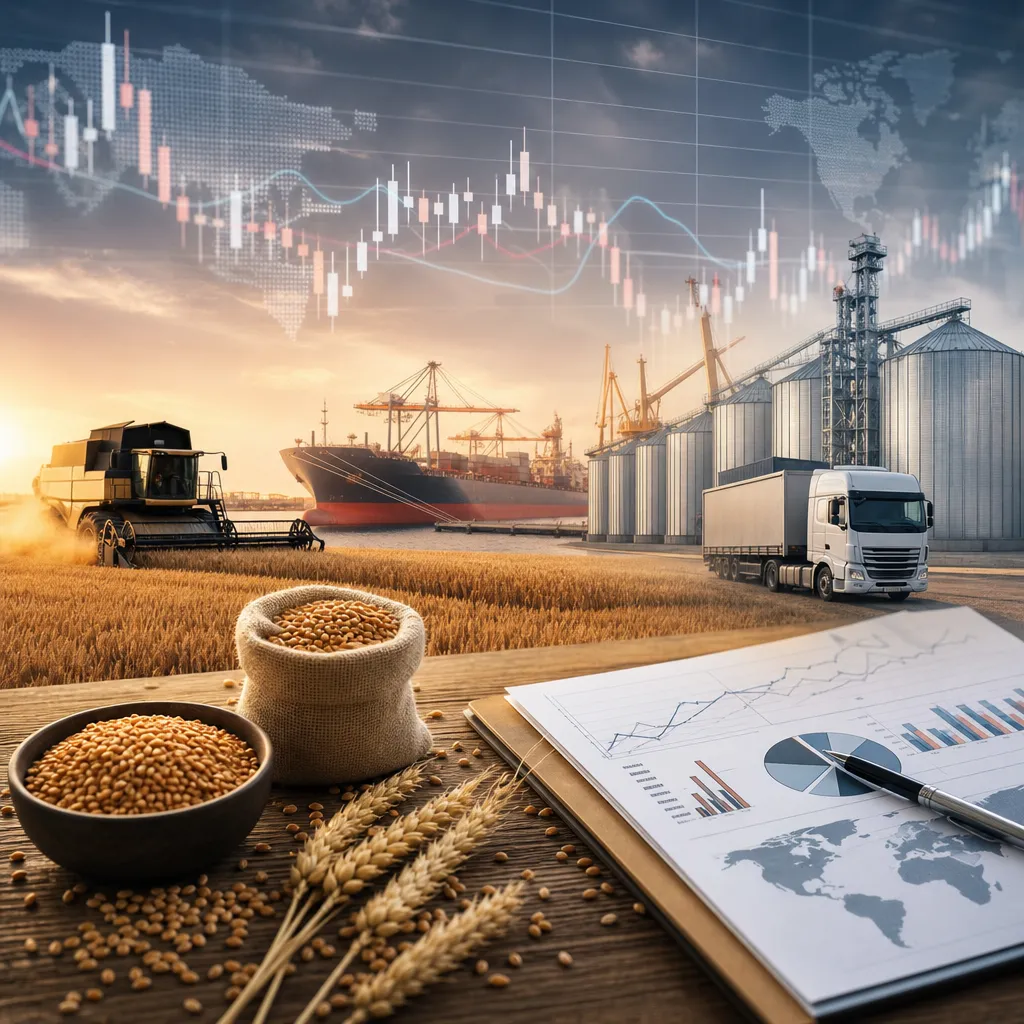
China wheat futures refers mainly to standardized wheat derivative contracts traded on Chinese commodity exchanges, especially the Zhengzhou Commodity Exchange, within China’s domestic grain market system. The market is tied to a very large wheat-consuming country where policy, state reserves, milling demand, feed substitution, and regional logistics all matter alongside weather and global wheat trends. Prices are usually discussed in renminbi, also called yuan, and the physical market is commonly valued in yuan per metric ton, while international comparisons often refer to export benchmarks quoted in U.S. dollars per metric ton. For anyone following China wheat prices, it is essential to separate exchange futures from real inland cash prices, delivered mill prices, and imported wheat values at Chinese ports.
China is one of the world’s most important wheat producers and consumers, but it is not usually defined by the same export-oriented pricing structure seen in major Black Sea or North American wheat markets. That means China wheat futures are primarily a domestic price-discovery and risk-management tool, not simply a reflection of seaborne export wheat values. The futures market helps mills, traders, processors, and other participants manage price risk, while physical grain still moves through buyers such as mills, grain companies, reserve-related channels, and regional merchants. Understanding the market requires looking at both the exchange and the real-world grain trade inside China.
What the China wheat futures market is
The core organized futures venue for wheat in China is the Zhengzhou Commodity Exchange, commonly referred to as ZCE or CZCE. Zhengzhou is in Henan Province, a major wheat-producing and wheat-consuming region in central China, making it a logical location for a domestic wheat futures market.
China’s wheat futures market is designed to provide a standardized contract that allows market participants to hedge changes in wheat prices. A futures contract is not the same thing as a truckload purchase from a farmer or a mill delivery contract. Instead, it is a financial and exchange-cleared instrument with defined quality, delivery terms, and expiration rules. Some users hedge actual physical exposure, while others trade the contract for price exposure only and close the position before delivery.
In practical terms, China wheat futures are most relevant for:
- Flour mills managing raw material costs
- Grain traders managing inventory risk
- Processors and feed users watching substitution economics
- Market analysts tracking domestic sentiment and policy influence
- Speculators and spread traders using the contract for directional or relative-value trades
Where the market operates and how it fits into China’s grain system
The exchange-traded market operates through the Zhengzhou Commodity Exchange, but the physical wheat market is spread across China’s major wheat belt and consumption centers. Important producing provinces include Henan, Shandong, Anhui, Hebei, Jiangsu, and parts of central and northern China more broadly. These areas are important because local harvest pressure, storage capacity, transport costs, and milling demand can all affect physical prices.
China’s wheat market is heavily domestic in character. Unlike export-dominant markets where port bids are the main benchmark, China often trades around inland procurement, reserve management, transport to flour mills, and quality differences between regions. Imported wheat can still matter, especially for blending or when global prices are competitive, but domestic policy and internal supply-demand balances often have more influence on local price behavior than in more open export systems.
Physical wheat in China is generally bought and sold in yuan per metric ton. Futures pricing is also relevant to domestic yuan-denominated trade. For global context, analysts often compare Chinese wheat values with international benchmarks such as U.S. wheat futures or export quotations from major origins, but those are not direct substitutes for a Chinese mill’s actual delivered wheat cost.
| Market layer | Where it operates | What it represents | Main users |
|---|---|---|---|
| Futures market | Zhengzhou Commodity Exchange | Standardized forward price exposure and hedging | Traders, mills, hedgers, investors |
| Local cash market | Producing provinces and consumption regions | Spot or forward physical grain transactions | Farmers, merchants, mills, grain companies |
| Delivered mill market | Urban and industrial demand centers | Price including transport and quality requirements | Flour mills, processors, suppliers |
| Import market | Chinese ports and import channels | Foreign-origin wheat cost into China | Importers, state-linked buyers, industrial users |
How wheat prices are formed in China
China wheat prices are formed through a mix of domestic supply and demand, quality differences, logistics, policy, and futures market expectations. Futures can influence market sentiment and hedging behavior, but the actual cash price paid for wheat depends on much more than the screen quote.
The most important distinctions are:
- Futures price: the exchange-traded value of a standardized contract for a specific delivery month
- Cash price: the current spot price for physical wheat in a local market
- Delivered price: the cost of getting wheat to a mill, warehouse, or user, including freight and handling
- Import price: the landed or port-related cost for foreign-origin wheat entering China
- Basis: the difference between the local physical price and the relevant futures benchmark
Basis is critical. A mill in Henan may be looking at ZCE wheat futures, but the wheat it actually buys will be priced according to local supply, quality specs, protein, moisture, test weight, storage condition, and trucking cost. A strong local milling demand area can trade above the futures benchmark, while a harvest-surplus region with weak nearby demand may trade below it.
China’s market also responds to factors that may be stronger than in some other countries:
- Reserve buying and stock releases
- Food security policy priorities
- State-linked grain management mechanisms
- Substitution between wheat and corn in feed use when economics shift
- Regional transport bottlenecks or cost changes
- Import policy and quarantine or quality requirements
How China wheat futures relate to global wheat benchmarks
International wheat benchmarks such as Chicago wheat or other major export-origin values are useful reference points, but they do not directly set the domestic Chinese wheat price on a one-for-one basis. China is a very large internal market with its own policy framework, logistics, and quality demand structure.
Global wheat prices still matter because they affect the economics of imports, feed substitution, and replacement value. If global wheat becomes much cheaper or much more expensive, Chinese buyers will notice. But the pass-through into Chinese domestic values can be incomplete or delayed due to import controls, reserve management, internal freight costs, and domestic inventory conditions.
For that reason, analysts should be careful not to equate:
- ZCE wheat futures with an international FOB export quote
- CBOT wheat futures with a Chinese inland wheat procurement price
- Port import values with farmgate wheat in central China
| Price type | Typical currency/unit | What it tells you | Why it may differ from other prices |
|---|---|---|---|
| China wheat futures | Yuan, exchange quotation | Standardized domestic benchmark for future delivery month | Reflects hedging, expectations, contract rules, liquidity |
| Local cash wheat | Yuan per metric ton | Spot physical value in a region | Changes with quality, location, harvest pressure, buyer competition |
| Delivered mill price | Yuan per metric ton | User’s all-in wheat cost | Includes transport, timing, milling specs, urgency |
| Imported wheat value | Often compared in U.S. dollars per metric ton, then converted for domestic use | Replacement cost from overseas origin | Affected by ocean freight, currency, policy, port costs, origin quality |
Where to check China wheat futures prices and market information online
If you need the current or recent wheat futures price in China, the first place to check is the Zhengzhou Commodity Exchange. The exchange is the primary official source for contract quotations, trading information, and market notices.
Other practical sources include:
- Zhengzhou Commodity Exchange: official contract information, settlements, and market data
- Broker and futures trading platforms in China: real-time or delayed quotes, charts, and account access for eligible market participants
- National Bureau of Statistics of China: broad economic and some agricultural context
- USDA Foreign Agricultural Service: useful for outside readers following China wheat production, consumption, and import trends
- Market commentary from grain companies, mill channels, and Chinese commodity news services: often useful for regional cash tone, though users should verify source quality
Readers should remember that an exchange quote is not the same as a local wheat bid from a flour mill or grain buyer. To understand physical trade, market participants often need province-level information from merchants, processors, or regional reporting channels. In many grain markets, especially in China, the best view of actual nearby physical demand may come from buyer procurement indications rather than headline futures alone.
How wheat is actually bought and sold in China’s physical market
Physical wheat in China is not normally bought simply by clicking the futures price and assuming that is the cash market. Real trade involves quality specifications, logistics, counterparty relationships, and delivery terms.
The main physical channels typically include:
- Farmers or local aggregators selling to grain merchants
- Merchants storing and reselling wheat to mills or larger trading companies
- Flour mills buying directly from local suppliers or through procurement networks
- State-linked or reserve-related procurement and auction channels influencing available supply
- Importers and industrial users sourcing foreign wheat when permitted and economic
Physical contracts may specify moisture, impurity limits, test weight, protein, delivery point, loading conditions, payment terms, and acceptance standards. A nearby spot purchase for immediate milling demand can be priced differently from a later shipment contract. During harvest, farm-level or collection-point prices can weaken relative to consumer-region delivered values because storage and transport become especially important.
For exporters, China is usually more important as a destination market than as a globally dominant wheat export pricing origin. For import-related trade, the transaction chain may include overseas seller, trading company, freight booking, port handling, customs and inspection compliance, then onward sale to domestic users.
How hedging and futures trading work in practice
Futures trading and physical grain ownership should be kept separate. A trader can buy or sell wheat futures without moving a single ton of physical grain, while a mill can purchase physical wheat and use futures to reduce price risk.
Physical grain market
- Usually takes place between farmers, merchants, mills, processors, or importers
- Requires agreement on quality, quantity, delivery place, timing, and payment
- Involves transport, storage, and counterparty performance risk
- Often uses local cash values, delivered quotes, or negotiated formulas
Futures and options market
- Takes place on the exchange through a licensed broker or futures company
- Uses margin and daily mark-to-market, not full payment for the grain value up front
- Allows hedging against rising or falling prices
- Can involve leverage, so risk management is essential
- May be closed before expiry, meaning no physical delivery occurs
A flour mill worried about wheat prices rising may buy futures as a hedge while it continues procuring physical wheat through normal suppliers. A merchant holding inventory may sell futures to protect the value of stock in storage. The main risk in either case is basis risk: futures and local cash prices may not move by exactly the same amount.
Main factors that drive trends and forecasts
Any forecast for China wheat futures should be approached as a scenario, not a certainty. The market can be affected by domestic and international forces at the same time.
The key variables usually include:
- Weather and yield: drought, excessive rain, disease pressure, and harvest quality can tighten or loosen domestic supply
- Harvest progress: rapid harvest can pressure near-term cash prices, while storage issues can change later availability
- Reserve policy: government procurement, stock rotation, and reserve sales can influence nearby supply and sentiment
- Milling demand: flour consumption, food demand, and processor margins matter for wheat usage
- Feed demand: when corn becomes expensive, wheat may gain feed demand support in some ration settings
- Import competitiveness: global wheat prices, freight, and currency shifts affect replacement cost
- Energy and transport costs: these affect drying, storage, milling, and inland delivery economics
A bullish scenario for China wheat futures would usually involve production or quality concerns, firm milling demand, or tighter domestic availability. A bearish scenario would more likely include a comfortable crop, improved logistics, softer demand, or policy actions that increase market supply. But the final outcome depends on how these factors interact, especially within China’s policy framework.
Practical FAQs about the China wheat futures market
Where can I check China wheat futures prices?
The official starting point is the Zhengzhou Commodity Exchange. Market participants may also use broker platforms and professional data services for real-time or delayed quotations.
Are China wheat futures the same as the price Chinese farmers receive?
No. Futures are a standardized exchange benchmark. Farm or local cash prices depend on basis, quality, buyer location, freight, storage, and regional supply-demand conditions.
What currency and unit are usually used in China wheat markets?
Domestic physical wheat is commonly discussed in yuan per metric ton. International import comparisons are often made in U.S. dollars per metric ton before conversion into domestic cost terms.
Why can local wheat prices in China differ from global wheat prices?
Because China’s market is strongly shaped by domestic production, reserve management, logistics, and policy. Global benchmarks matter, but they do not automatically determine local inland Chinese prices.
How do mills and grain companies use wheat futures in China?
They use futures mainly to hedge price risk. A mill may hedge future wheat purchases, while a grain company may hedge inventory already in storage or grain contracted for later delivery.
Can someone trade China wheat futures without taking delivery of grain?
Yes. Many futures users offset their position before expiration. In that case, they gain or lose on price movement without making or taking physical delivery.
Is China mainly a wheat export market or an import market?
China is primarily a massive domestic wheat producer and consumer. In world trade terms, it is more important as a large internal market and at times an importer than as a dominant wheat export pricing origin.
What should I watch first if I want to understand the next move in China wheat futures?
Start with domestic crop conditions, reserve-related policy signals, milling demand, and the relationship between domestic prices and import replacement values. Those factors usually explain more than any single foreign benchmark alone.
Sources
- Zhengzhou Commodity Exchange
- USDA Foreign Agricultural Service
- National Bureau of Statistics of China