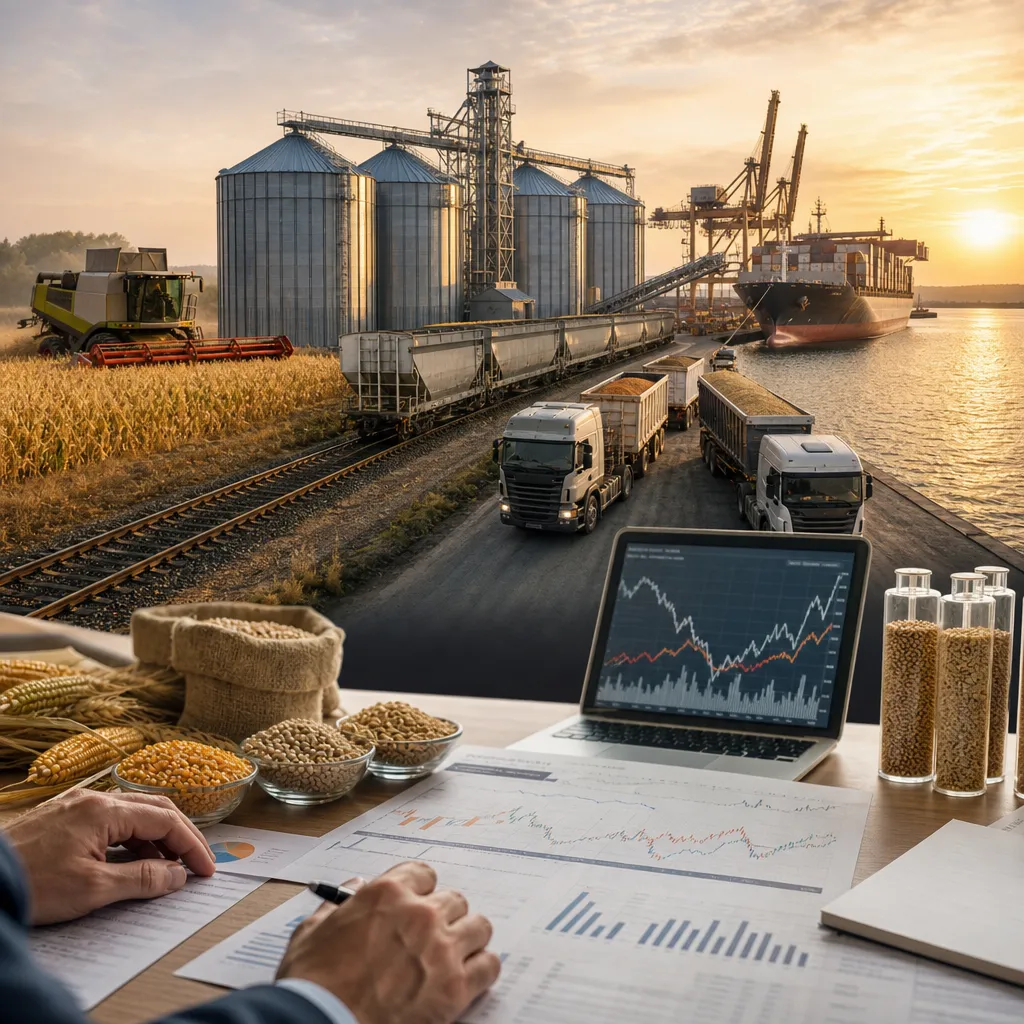


EU rapeseed price trends matter well beyond the farm gate because rapeseed is a major European oilseed used for vegetable oil, animal feed meal, and biodiesel feedstock. In practice, “EU rapeseed prices” do not refer to one single number: the market includes exchange-traded futures, inland cash bids, crusher purchase prices, and export or import values at different locations. The core benchmark for European rapeseed is the Euronext rapeseed futures market, while physical prices across the European Union are shaped by basis, logistics, quality, and local supply-demand conditions. For anyone following the market, it is essential to distinguish between a futures quote on screen and the actual price paid for seed delivered to a crusher, silo, or port.
Geographically, the EU rapeseed market spans major producing countries such as France, Germany, Poland, Romania, and the Czech Republic, while trade flows also connect the bloc to import origins outside the EU. Prices are usually discussed in euros per metric tonne. The market is deeply linked to vegetable oils, energy policy, biodiesel economics, and competition from soybean, sunflower seed, and canola markets worldwide.
What the EU rapeseed market is
Rapeseed is one of the EU’s most important oilseed crops. It is crushed into rapeseed oil and rapeseed meal. The oil is used in food and industrial markets, especially biodiesel, while the meal is used in livestock feed. As a result, rapeseed prices in the EU are not driven only by crop size; they also reflect demand from crushers, feed makers, and the renewable fuels sector.
The European Union is both a major producer and a structural participant in international oilseed trade. Domestic output is important, but the EU may also rely on imports of rapeseed and competing oils or meals depending on crop conditions, relative prices, and demand. This means EU rapeseed price trends are influenced by both internal conditions, such as weather and harvest quality, and external factors, including Black Sea supply, Canadian canola markets, and global vegetable oil demand.
| Market element | What it means | Typical use |
|---|---|---|
| Euronext rapeseed futures | Exchange-traded benchmark for European rapeseed | Price discovery, hedging, market reference |
| Local cash bid | Price offered by a local buyer for physical seed | Farmer sales, merchant purchases |
| Delivered crusher price | Price for rapeseed delivered to a processing plant | Physical procurement by crushers |
| FOB/CIF trade value | Export or import value tied to port shipment terms | International trade and import parity |
Where the market operates
The benchmark financial market for EU rapeseed is Euronext, historically often referred to by market participants as MATIF. This is where rapeseed futures are traded and watched across Europe. The contract is commonly used by crushers, merchants, cooperatives, exporters, importers, and speculative traders as the main pricing reference for the EU market.
The physical market operates across inland collection points, country elevators, cooperatives, crusher plants, feed manufacturers, and ports. In France and Germany especially, inland rapeseed prices often track Euronext futures closely, but the physical value in any district can rise above or fall below the benchmark depending on basis. Basis is simply the difference between the local cash price and the futures price.
Ports matter because they connect the EU balance sheet to world trade. Import needs or export opportunities can shift inland values, especially in surplus or deficit regions. Where crushers are active and transport is efficient, delivered plant demand can support stronger local cash markets. Where logistics are tighter or local supply is heavy during harvest, discounts can widen.
How EU rapeseed prices are formed
Price formation starts with the benchmark but never ends there. A Euronext rapeseed futures price is not the same as the exact physical price paid somewhere in the EU. To reach a real-world transaction value, buyers and sellers add or subtract basis depending on a range of practical factors.
The key price components are:
- Futures benchmark: the exchange-traded reference price for a given delivery month.
- Basis: the local premium or discount to the benchmark.
- Quality: oil content, moisture, impurities, and other contract terms can change the payable value.
- Location: farm gate, ex-store, delivered crusher, and port values differ because transport costs differ.
- Timing: old crop and new crop values can diverge sharply.
- Currency: the EU market is euro-denominated, but competing imports and global oilseed values are influenced by other currencies.
- Supply and demand: crop size, crusher demand, biodiesel margins, and competing oilseed prices all matter.
For example, a farmer may watch Euronext online but receive an actual local bid from a cooperative or merchant that reflects local transport, storage, and demand. A crusher may pay a stronger delivered price than a nearby silo if it urgently needs coverage. An importer may compare seaborne alternatives against domestic rapeseed. None of these values is “wrong”; they represent different market points.
| Price type | Where used | What affects it |
|---|---|---|
| Futures price | Exchange | Market expectations, fund activity, macro moves, crop outlook |
| Farm-gate cash price | Local physical market | Basis, buyer competition, transport, quality, harvest pressure |
| Delivered crusher price | Processor procurement | Crush demand, logistics, inventory needs, quality specs |
| FOB/CIF value | Import-export trade | Port basis, freight, insurance, international supply-demand |
Main drivers behind EU rapeseed price trends
The first major driver is the EU crop itself. Autumn planting conditions, winter survival, spring moisture, heat during flowering and pod fill, and harvest weather all influence yield and quality. Because rapeseed is sensitive to establishment and weather stress, expectations can shift well before harvest.
The second driver is crusher demand. Rapeseed prices are closely linked to crush margins, which depend on both rapeseed oil and rapeseed meal markets. If oil demand is strong and biodiesel economics improve, crushers may compete more aggressively for seed. If meal demand weakens or oil values soften, crusher buying interest may cool.
The third driver is energy and biofuel policy. In Europe, renewable fuel rules can materially affect demand for vegetable oils and therefore support or pressure rapeseed values. That link is stronger than in some grain markets because rapeseed oil has a direct role in fuel blending economics.
The fourth driver is the wider oilseed complex. Soybeans, soybean oil, sunflower oil, palm oil, and canola all influence rapeseed pricing through substitution and spread relationships. EU rapeseed does not trade in isolation. A sharp move in global vegetable oils can shift rapeseed values even if EU field conditions are unchanged.
The fifth driver is trade and currency. The euro matters because imported oilseeds and oils compete with domestic supply. Freight, trade disruptions, and policy changes can alter import parity and export competitiveness, especially for processing industries near key logistics corridors or ports.
How rapeseed is actually bought and sold in the EU
Physical market
Most physical rapeseed is traded through established commercial channels rather than through the exchange itself. Farmers typically sell to cooperatives, merchants, local collectors, crushers, or storage operators. Contracts may be spot, forward, or formula-based, and can include detailed quality terms on moisture, impurities, and oil content.
A typical chain may look like this:
- Farmer harvests and stores rapeseed or delivers directly at harvest.
- Buyer tests quality and confirms contract terms.
- Price is fixed either outright or by reference to futures plus or minus basis.
- Seed moves to a silo, merchant position, crusher, or port.
- Buyer manages resale, processing, export, or hedge exposure.
Payment terms, contract performance, and counterparty reliability are important practical considerations. Farmers and commercial firms often work with known local counterparties because logistics, weighing, quality testing, and settlement all matter as much as headline price.
Futures and options market
Futures and options are financial tools used for price risk management and trading. They do not automatically mean a participant is buying or selling a truckload of seed. A crusher may buy futures to hedge future physical purchases. A merchant may sell futures against owned inventory. A speculative trader may trade price direction without ever handling physical rapeseed.
Access to futures usually takes place through a regulated broker or trading platform that offers Euronext market access. Users need a brokerage account and must understand margin, contract months, expiry, and basis risk. Basis risk is important because a hedge on Euronext may not move exactly in line with a specific inland cash market.
This distinction is crucial: online trading provides price exposure, while physical trade involves ownership, movement, quality, finance, and delivery obligations.
Where to check EU rapeseed prices and market information online
For the benchmark futures market, the primary reference is Euronext. That is the standard place to check official contract information and futures market references for rapeseed.
For EU-wide balance-sheet and policy context, the European Commission provides agricultural market information and reporting that help readers understand crop outlook, trade, and sector developments.
For broader trade, production, and commodity fundamentals, readers also commonly use USDA reports, especially for international oilseed context. While USDA is not an EU price source, it is widely used for comparative supply-demand analysis.
For actual local cash prices, the most practical sources are often:
- Local cooperatives and grain merchants
- Crusher bid sheets or direct procurement desks
- Regional agricultural market bulletins
- Broker platforms that display futures and cash indications separately
Readers should be careful not to treat a visible futures quote as the exact farm or delivered price. Local cash bids may differ because of basis, quality premiums or discounts, timing, and transport cost.
Trend analysis and forward-looking scenarios
Any forecast for EU rapeseed prices should be framed as scenarios rather than certainty. This market is highly sensitive to weather, policy, vegetable oil demand, and the crop outlook in competing exporters.
Several broad scenarios are useful:
| Scenario | Conditions | Possible market implication |
|---|---|---|
| Tighter EU balance sheet | Poor crop conditions, lower yields, steady crusher demand | Supportive prices, stronger basis in deficit regions |
| Comfortable supply | Good yields, smoother imports, moderate processing demand | Weaker nearby premiums, harvest pressure on cash markets |
| Vegetable oil-led rally | Strong biodiesel economics or broader oil complex strength | Rapeseed futures and crusher demand may strengthen |
| Macro or currency pressure | Weak external demand, shifting currencies, softer commodities | Benchmark may weaken even if local fundamentals are stable |
In practical terms, analysts usually watch crop development, harvested area, crusher margins, import competition, and energy market direction together. Looking at only one factor can be misleading in rapeseed.
Practical guide for market participants
For farmers, the key is to monitor both futures and local bids. A strong Euronext market does not always translate into the best local selling opportunity if basis weakens. Conversely, a moderate futures level can still produce an attractive cash bid when crushers or merchants need nearby tonnage.
For merchants and cooperatives, the market is a spread business as much as a flat-price business. Procuring rapeseed, managing quality, financing stocks, and hedging with futures are all interconnected. Port and inland relationships matter.
For processors, the decision is not only whether rapeseed is expensive or cheap, but whether the crush margin justifies coverage. Input cost, oil demand, and meal demand all feed into procurement timing.
For traders or investors using futures, understanding contract month structure and basis risk is essential. A futures position can hedge price direction, but it does not remove local physical execution risk. That is why commercial firms combine exchange tools with real procurement and sales discipline.
FAQ
What is the main benchmark for EU rapeseed prices?
The main benchmark is Euronext rapeseed futures. It is the standard reference for European rapeseed price discovery, but it is not the same as a local farm-gate or delivered crusher price.
In what currency and unit are EU rapeseed prices usually discussed?
EU rapeseed prices are usually discussed in euros per metric tonne. Physical contracts may specify additional quality and delivery terms.
Where can I check current EU rapeseed prices?
For the benchmark futures market, check Euronext. For physical prices, check local cooperative bids, merchant quotations, crusher procurement indications, and regional agricultural market reports. The physical bid you can actually trade may differ from the futures screen.
Why is the local cash price different from the futures price?
The difference is basis. Basis reflects location, quality, transport, storage, buyer competition, timing, and local supply-demand conditions. A futures price is only the benchmark starting point.
How is rapeseed physically traded in the EU?
Most rapeseed is traded through cooperatives, merchants, crushers, and storage operators under spot or forward contracts. Buyers normally specify quality terms, delivery point, and payment conditions.
Can I buy EU rapeseed futures online?
Yes, market participants typically access Euronext futures through a regulated broker or trading platform. That gives financial exposure to the benchmark, not automatic ownership of physical seed.
What are the biggest drivers of EU rapeseed price trends?
The main drivers are EU crop conditions, crusher demand, biodiesel and vegetable oil economics, competing oilseed markets, trade flows, and currency movements.
Does the EU rapeseed market depend on imports?
It can. The EU is an important producer, but import needs may arise depending on domestic crop size, crush demand, and relative prices versus external suppliers and substitute oilseeds.
Sources
- Euronext
- European Commission
- USDA Foreign Agricultural Service