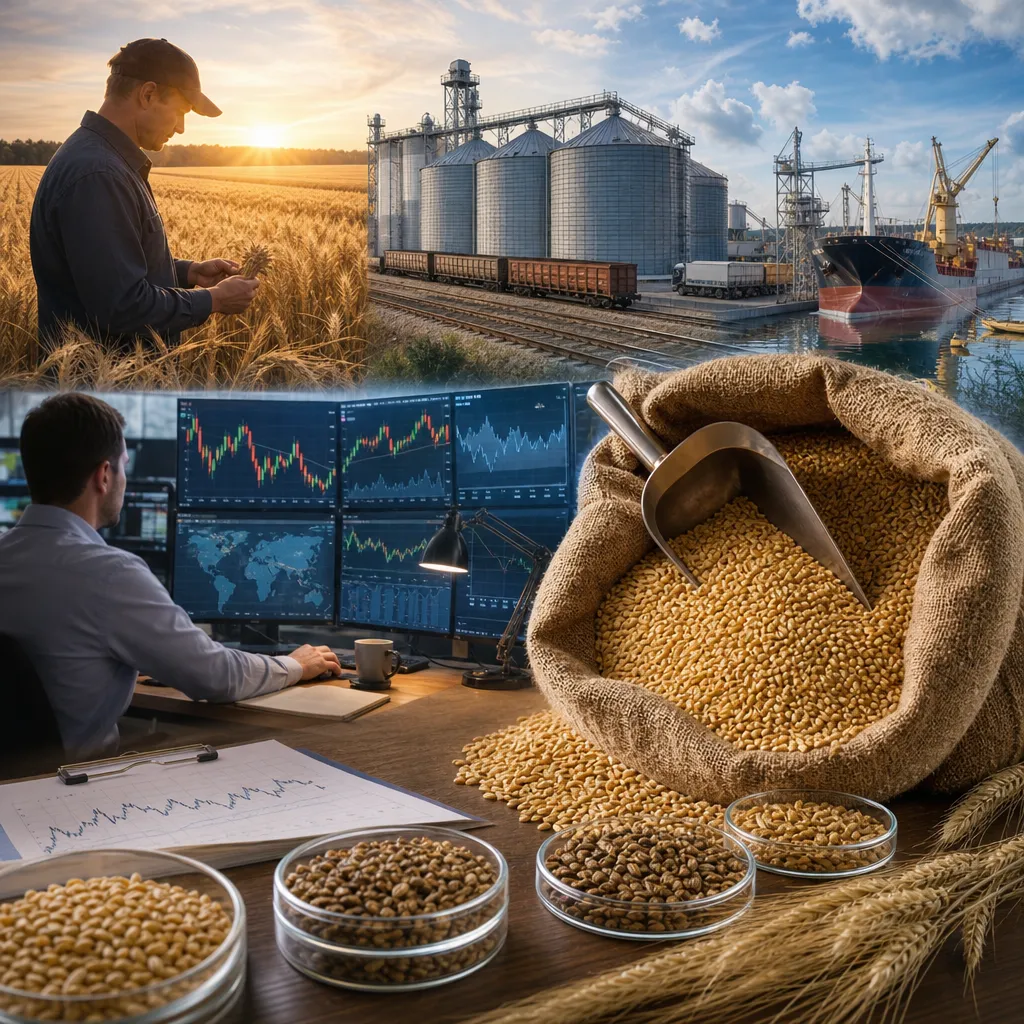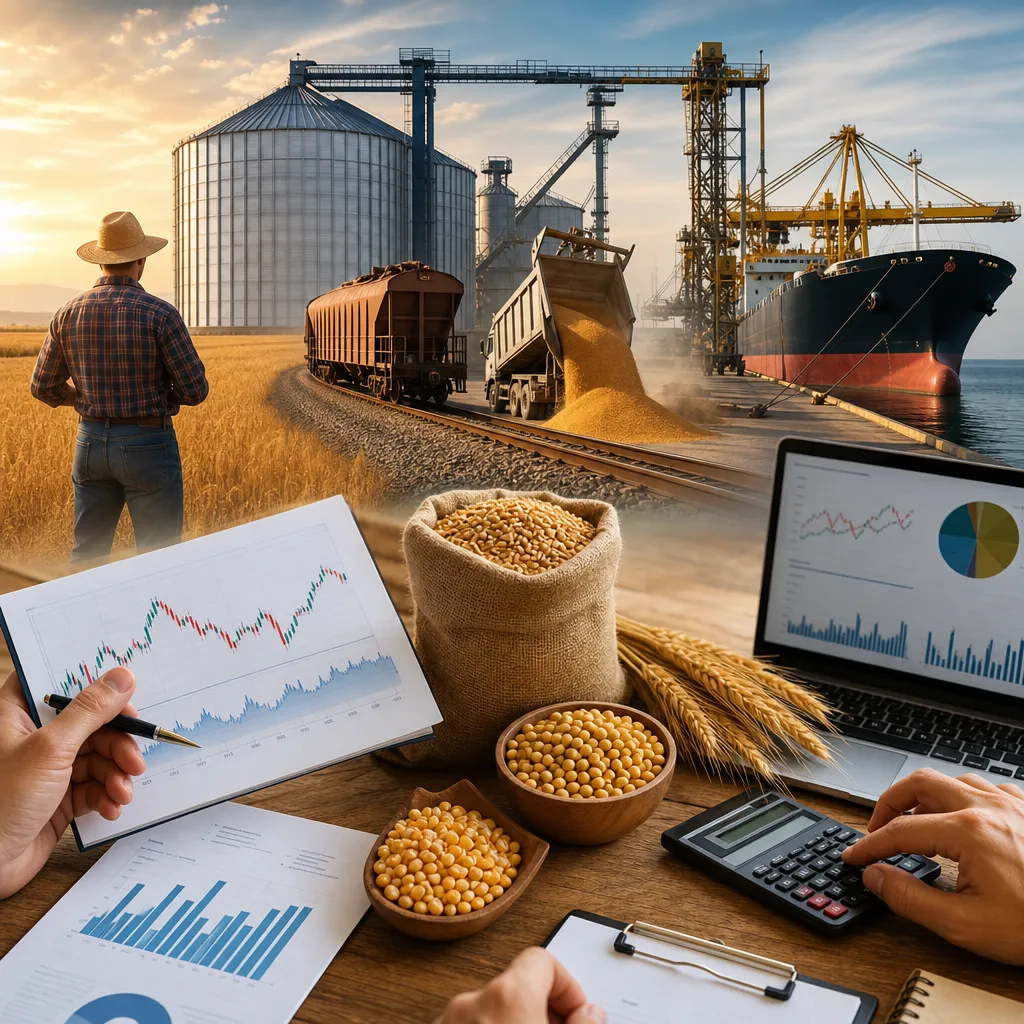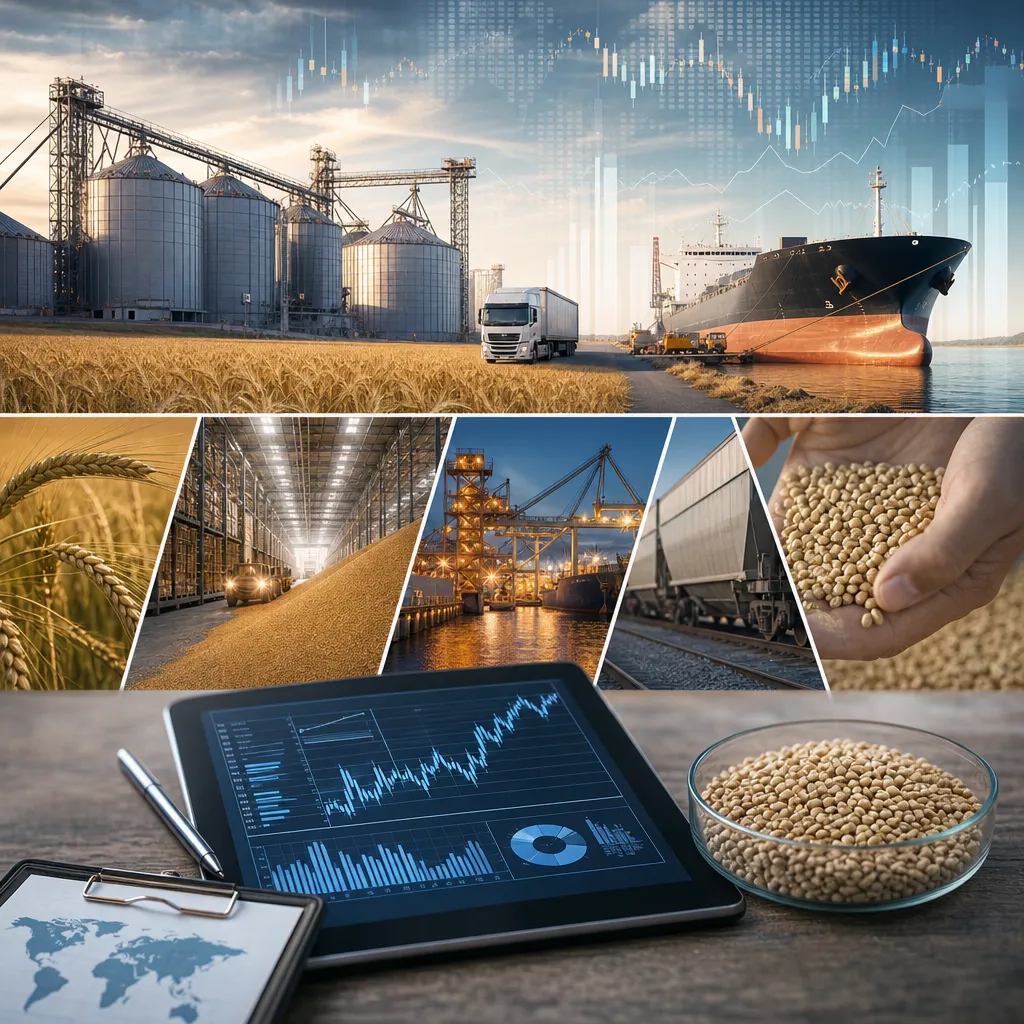

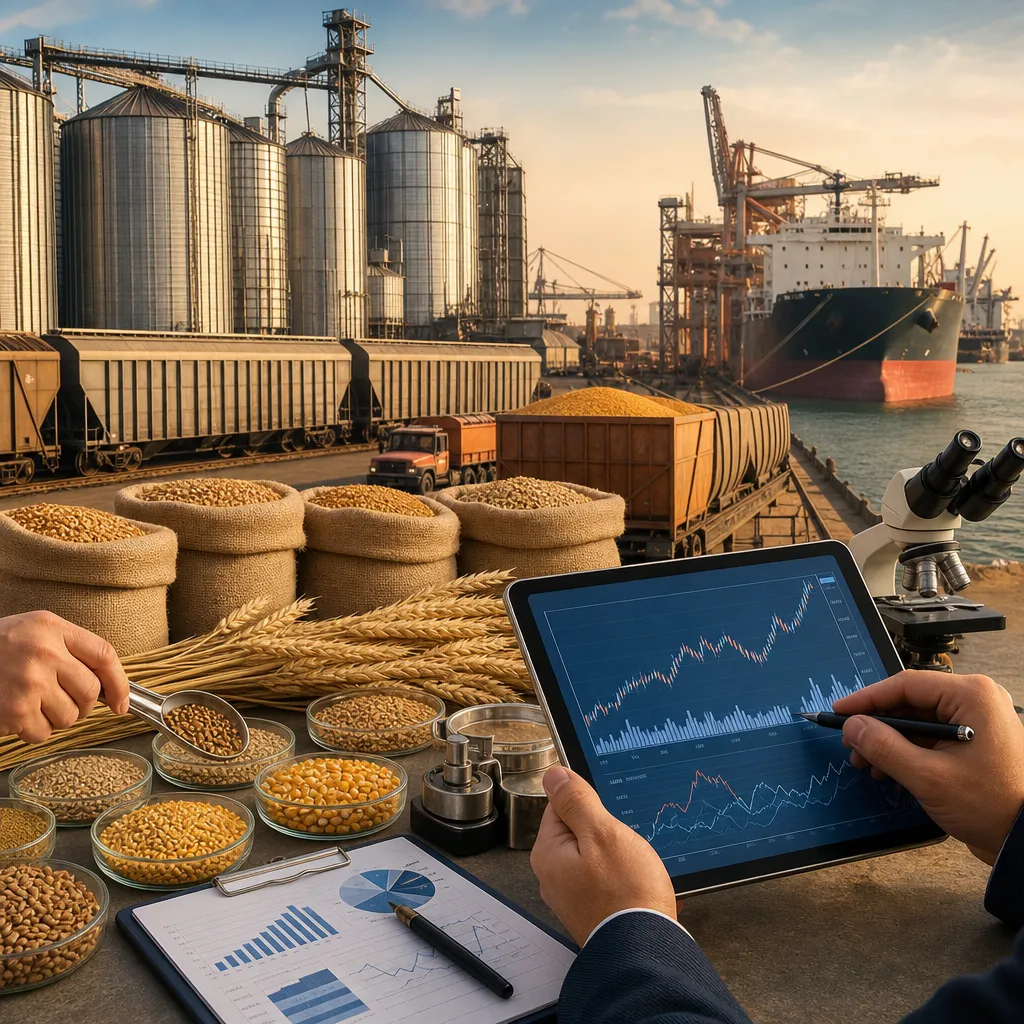
Contango in grain markets means deferred futures contracts trade at higher prices than nearby contracts. In practice, this usually reflects the cost of carrying grain forward in time: storage, financing, insurance, shrink, and handling, adjusted for expectations about future supply and demand. It matters because it affects hedging decisions, storage economics, basis behavior, spreads between contract months, and the difference between a screen price and a local cash bid. For farmers, merchandisers, processors, and traders, contango is not just a chart pattern; it is a market signal about whether the market is willing to pay enough to store grain.
In grains, contango is most often observed in futures listed on regulated exchanges such as CME Group for corn, wheat, soybeans, soybean meal, soybean oil, oats, canola-related benchmarks through relevant exchanges in other jurisdictions, and rice where applicable. But the economic effect also shows up in the physical market through cash carry, warehouse decisions, and forward bids from elevators, cooperatives, grain merchants, and processors. Understanding how the futures curve connects to local basis is essential, because the futures market is standardized and exchange-traded, while physical grain is priced at a specific place, with specific quality, freight, and delivery terms. A farmer may see contango on the board and still find that local storage is unattractive if basis weakens or handling costs are high.
What contango means in grain markets
Contango exists when a later-delivery futures month is priced above an earlier month. If December corn futures trade below March corn futures, and March is below May, the market is in contango across those months. The opposite structure is called backwardation, where nearby futures are higher than deferred months.
In grain markets, contango often appears when supplies are adequate and the market does not need immediate grain badly enough to bid up nearby contracts. The deferred premium can represent a form of carry, meaning the market is paying someone to hold grain from one period to another. That does not guarantee a profit. It only indicates that the futures curve is pricing time at a positive value.
Contango is most useful when it is compared with real holding costs. A spread on the board may look generous, but once storage expenses, interest, aeration, insurance, quality risk, and basis movement are included, the apparent opportunity may disappear.
How contango works mechanically
The basic economics are straightforward. Grain held in storage ties up capital, occupies space, and may lose quality or weight over time. A deferred futures contract therefore tends to be priced above a nearby contract when the market is comfortable with supply and must compensate storage holders for carrying grain.
This relationship is commonly described by a cost-of-carry framework. In practical terms, the deferred premium is influenced by:
- Storage cost: commercial warehouse charges, on-farm storage costs, handling, drying, and shrink.
- Financing cost: the interest cost of owning grain rather than selling it now.
- Insurance and quality risk: spoilage, infestation, moisture issues, and grade loss.
- Expected basis movement: local cash basis may strengthen or weaken before deferred sale.
- Supply confidence: large stocks and smooth logistics often support contango.
If the deferred futures premium is smaller than total carry costs, the market is not fully paying for storage. If it is larger, storing grain and hedging may be attractive, especially for commercial firms with efficient storage and logistics. This is why merchants and elevators watch inter-month spreads closely.
| Term | What it means | Why it matters in grains |
|---|---|---|
| Contango | Deferred futures higher than nearby futures | Can indicate the market is willing to pay some carry for storage |
| Backwardation | Nearby futures higher than deferred futures | Often signals tight nearby supply or urgent demand |
| Carry | The premium for holding grain over time | Used to compare storage economics against board spreads |
| Basis | Local cash price minus or plus futures price | Determines what a farmer or buyer actually pays or receives locally |
Where you see contango: futures screens versus physical grain markets
Contango is easiest to observe on futures exchange price boards. For US grains, readers typically check CME Group contract months for corn, soybeans, wheat classes, oats, and rough rice. Brokers, charting platforms, market terminals, and agricultural software also display futures curves. The exchange price is standardized by contract specifications such as delivery month, quality standard, and delivery location rules.
Physical grain markets work differently. Farmers and commercial sellers usually see local cash bids from:
- country elevators, cooperatives, and local grain buyers,
- processors such as ethanol plants, crush plants, flour mills, feed mills, and rice mills,
- export elevators and terminal markets,
- grain merchants and brokers arranging spot or forward movement.
These local bids may be published on elevator websites, cooperative apps, text message services, local merchandising sheets, or direct contract offers. In many regions, official market reporting services also publish representative cash prices or basis indications. A futures market in contango does not mean every local bid improves over time. Freight, regional supply, plant demand, river conditions, rail service, and export congestion can all change the basis independently of futures spreads.
That distinction is critical. Futures contango exists online and on regulated exchanges. Physical grain value exists at a location and quality specification. A local cash contract can be weaker even while the board shows attractive carry.
How farmers, elevators, and traders use contango
Contango has practical uses across the grain chain.
For farmers
A farmer may compare spot sale revenue with the economics of storing grain and pricing later. This commonly involves:
- checking the nearby and deferred futures months,
- checking local cash bids for current and forward delivery,
- estimating on-farm storage cost, interest, and expected loss,
- deciding whether to sell now, store unpriced, forward contract, hedge with futures, or use an option.
If the forward cash bid improves by less than total carry cost, storage may not pay. If the farmer stores grain without hedging, they retain price risk. If they hedge on the exchange, they reduce futures exposure but still carry basis risk and operational risk.
For elevators and merchants
Commercial firms often use contango more systematically. An elevator may buy grain in harvest pressure, store it, sell deferred futures or hedge inventory, and try to earn the carry plus basis improvement. This depends on storage capacity, freight access, financing lines, hedge execution, and the ability to meet grade and delivery requirements.
For processors and end users
Millers, feed manufacturers, crushers, and ethanol producers monitor contango to plan coverage. If deferred prices are only modestly above nearby values, they may choose to buy prompt physical grain and extend inventory. If carry is expensive or basis is expected to improve later, they may delay physical purchase and hedge price risk separately.
For speculators and spread traders
Some traders do not handle grain at all. They trade calendar spreads between nearby and deferred futures through a regulated futures broker. This is financial trading, not physical grain ownership. It still involves margin, leverage, and volatility, and outcomes are affected by weather, USDA reports, export pace, funds positioning, and delivery-period dynamics.
How to evaluate whether contango creates a real storage opportunity
The key question is not whether contango exists, but whether the market is paying enough carry to cover your actual costs and risks.
| Factor to check | How to check it | Main risk or limitation |
|---|---|---|
| Futures spread | Compare nearby and deferred months on the exchange | Spread alone does not include local costs |
| Local basis | Check elevator, processor, or export bids for both periods | Basis can weaken even if futures carry exists |
| Storage cost | Estimate bin, warehouse, drying, aeration, handling, and shrink | Often underestimated on farm |
| Interest cost | Calculate financing on grain value over time | Higher rates can erase carry quickly |
| Quality risk | Assess moisture, insect, mold, and grade risk during storage | Losses may exceed the value of the carry |
A common practical method is to compare three prices:
- the spot cash bid today,
- the forward cash bid for the target delivery month,
- the expected cash value if grain is stored and hedged separately.
This helps separate futures carry from basis expectations. In many cases the best information comes directly from local merchandisers, not from the futures board alone.
Where to check prices, spreads, bids, and reports
For exchange-traded grain futures and options, CME Group is the core reference for contract specifications, months, delivery rules, and official settlement information for major US grain contracts. Brokerage platforms, market terminals, and agricultural analytics services often present the same futures data in easier chart form, including forward curves and calendar spreads.
For positioning data that may affect contango or spread behavior, the CFTC publishes the Commitments of Traders report. This shows broad categories of market participation in futures and options. It is not a timing tool by itself, but it helps analysts understand whether commercial hedgers or managed money are heavily involved in a market structure move.
For supply-and-demand context, USDA reports are essential in US-linked grain markets. The most widely used include:
- WASDE: broad balance sheets for crops, trade, and ending stocks.
- Crop Production: production and yield estimates.
- Crop Progress: planting, condition, and harvest pace.
- Grain Stocks: inventory snapshots that can change carry expectations.
- Export Sales: weekly demand signal for internationally traded grains.
For international context, FAO and national agriculture ministries or statistics agencies help track production, import demand, and trade changes outside the US. In export-sensitive crops such as wheat, corn, soybeans, canola, and barley, global supply shifts can flatten or steepen contango.
For local physical pricing, readers usually need to check:
- elevator and cooperative bid sheets,
- processor bids,
- merchant forward contract offers,
- official agricultural market reporting services where available.
Contango, hedging, and delivery: what happens in real transactions
A futures contract is not the same as a grain sale contract. Futures are standardized financial instruments traded on an exchange through a futures broker. Physical grain transactions are private commercial agreements between a seller and a buyer, often facilitated by an elevator, merchant, cooperative, broker, or processor.
In a typical hedged storage strategy, a commercial grain holder may buy physical grain, store it, and sell futures against that inventory. Later, they lift the hedge and sell the grain physically. Their result depends on the futures spread captured, the basis at purchase and sale, storage and finance costs, and whether quality remains in spec.
Delivery against futures is possible in some grain contracts, but many market participants never make or take exchange delivery. Most hedge or speculate financially and offset before expiration. Physical market users usually prefer ordinary cash contracts because delivery point, freight route, grade, moisture, discounts, and payment timing can be negotiated directly with a buyer.
Anyone considering futures access normally needs a regulated futures brokerage account and must understand initial margin, maintenance margin, and daily mark-to-market. This is different from opening a grain account with a local elevator or cooperative to market harvested bushels. One is an exchange-traded financial relationship; the other is a commercial grain merchandising relationship.
What can change contango in grains
Contango is not static. It can widen, narrow, disappear, or flip into backwardation as conditions change.
- Large harvests and high stocks: often support carry because the market has enough supply.
- Storage bottlenecks: can pressure nearby cash and nearby futures during harvest.
- Weather threats: can raise nearby urgency or alter new-crop expectations.
- Export surges: may tighten nearby supply and flatten the curve.
- Freight disruptions: river, rail, truck, or port problems can distort local basis relative to futures.
- Interest rates: higher financing costs can affect what level of carry is needed.
- Government policy: biofuels, trade restrictions, or stockholding policies may change nearby-demand pressure.
Because of these variables, contango should be read as a market condition, not as a fixed opportunity. A storage trade that works in one region or crop year may not work in another.
Common mistakes when interpreting contango
- Assuming deferred futures equal a guaranteed better farm price. Local basis can offset the entire futures premium.
- Ignoring full carrying cost. On-farm storage is not free.
- Confusing board carry with physical demand. A market can be in contango while a local processor still bids aggressively, or the reverse.
- Using futures without understanding margin risk. Hedging reduces price exposure but does not remove cash-flow pressure from margin calls.
- Overlooking contract quality and delivery terms. Physical grain value depends on grade, moisture, damage, protein, oil content, and location.
Is contango bullish or bearish for grain prices?
By itself, contango is usually associated with comfortable supply and normal storage incentives, which is often interpreted as less bullish than backwardation. But it is not a simple directional forecast. A market can remain in contango while absolute prices rise or fall.
Where can I check whether corn, wheat, or soybean futures are in contango?
You can compare contract months on CME Group futures listings or through a futures broker’s trading platform, charting service, or agricultural market data software. Look at the nearby contract and one or more deferred contracts in the same crop.
Does contango mean I should store my grain after harvest?
Not automatically. You need to compare the futures carry and forward cash bids against your real storage, interest, handling, and quality costs. Also check local basis, because that often determines whether storage pays.
Can I trade contango without buying physical grain?
Yes. Calendar spreads between grain futures months can be traded through a regulated futures broker. That is a leveraged financial trade, not a physical grain transaction, and it carries margin and volatility risk.
How is contango different from a local elevator forward contract?
Contango refers to the relationship between futures months on an exchange. A forward contract from an elevator or processor is a physical cash agreement for a specific delivery period, location, and quality. It may reflect futures carry, basis, freight, and the buyer’s own needs.
Which reports are most useful for understanding changes in contango?
USDA WASDE, Grain Stocks, Crop Progress, Crop Production, and Export Sales are widely used for US-linked grain markets. CFTC Commitments of Traders helps interpret participation in futures and options, while local bid sheets show the physical market impact.
Can contango exist in the futures market while local cash grain is hard to move?
Yes. Futures can show normal carry while local logistics are poor due to weak rail service, river issues, harvest congestion, or limited nearby demand. That is why local basis and freight conditions must be checked separately.
Sources
- CME Group
- USDA
- U.S. Commodity Futures Trading Commission