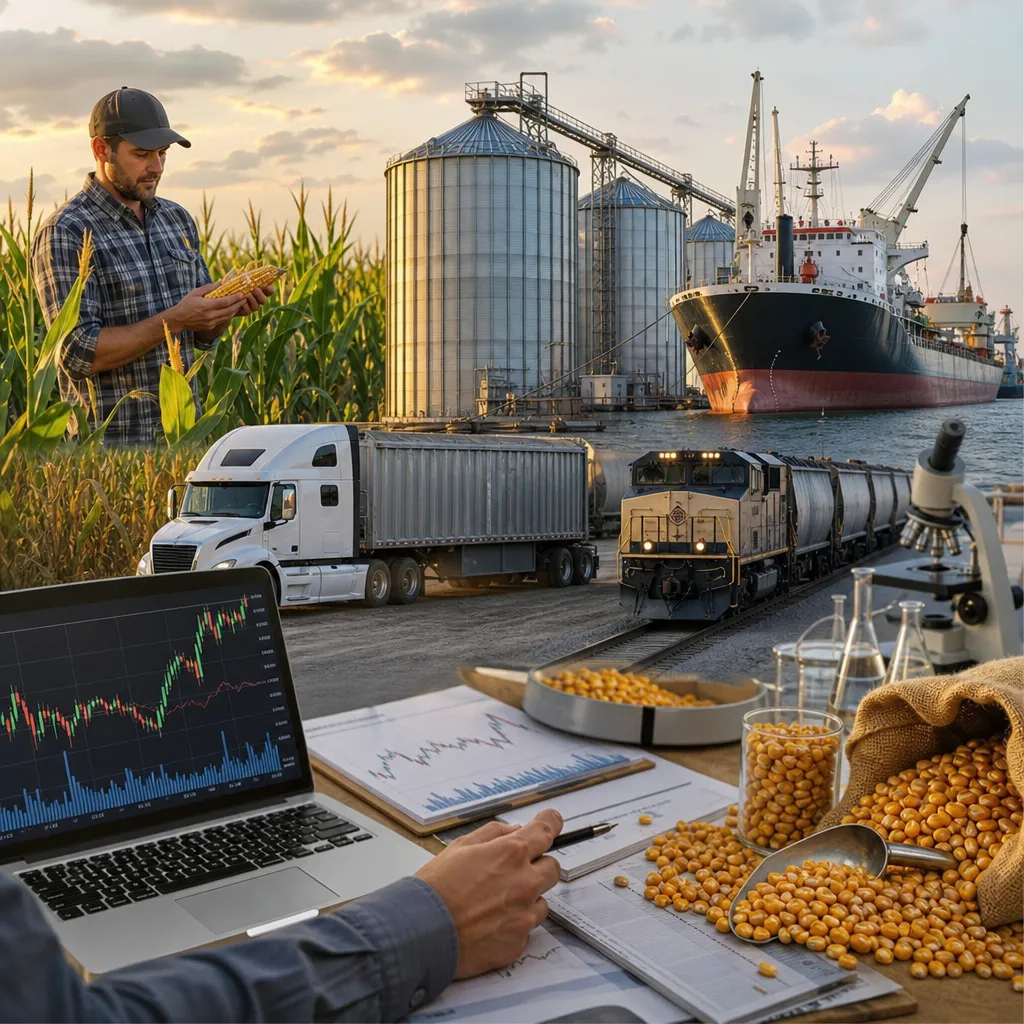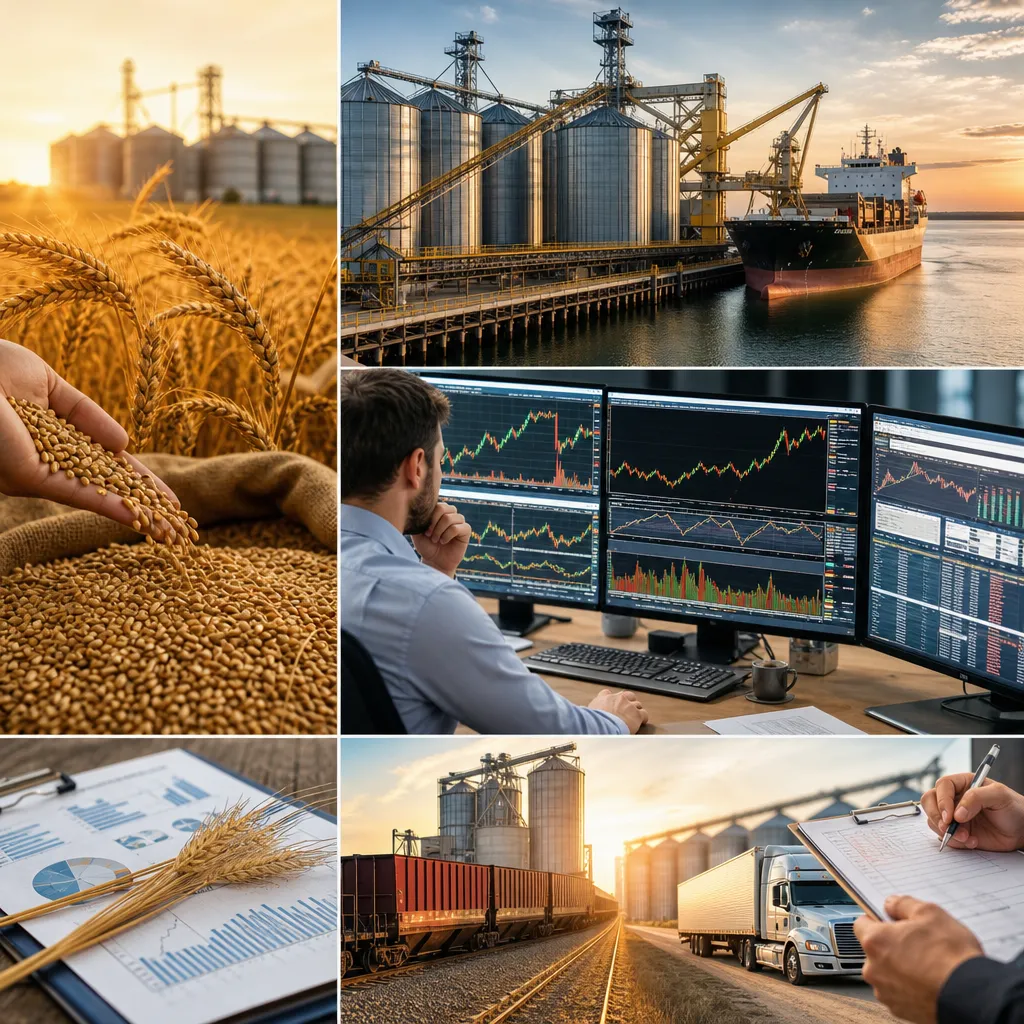






The US corn market is centered in the United States, with the deepest pricing reference point in Chicago futures and the largest physical grain flows concentrated across the Midwest, Plains, Southeast, and export corridors on the Gulf, Pacific Northwest, and Great Lakes. It is one of the world’s most influential agricultural markets because the US is a major producer, consumer, and exporter of corn, and because US corn futures help set price expectations far beyond the country’s borders. In practice, however, there is no single “US corn price”: farmers, feed mills, ethanol plants, exporters, and traders may all face different prices depending on location, quality, timing, and logistics. Understanding the US corn outlook therefore means understanding both the national balance sheet and the regional cash market.
For most commercial users, the market is watched through two lenses at the same time: futures on the Chicago Board of Trade, now part of CME Group, and local cash bids posted by elevators, processors, and exporters. The outlook changes with acreage, weather, crop conditions, harvest pressure, storage, feed demand, ethanol margins, exports, and competition from other major suppliers. Readers looking for “current” prices should check live futures on exchange-linked market platforms and compare them with local physical bids, because a futures quote is not the same thing as a farm-gate price.
What the US corn market covers
The US corn market refers to the production, domestic use, storage, transport, export trade, and risk management of corn grown and consumed in the United States. The commodity is commonly quoted in US dollars per bushel in futures markets and often in dollars per bushel or dollars per ton in physical trade, depending on the buyer and region. International counterparties may also discuss values in US dollars per metric ton, especially for export business.
Geographically, the heart of production is the Corn Belt, including states such as Iowa, Illinois, Nebraska, Minnesota, Indiana, and surrounding areas. But the market is national. Corn moves by truck, rail, and barge to livestock regions, ethanol plants, food and industrial users, and export terminals. A local bid in Iowa can behave differently from a delivered export bid at the US Gulf because transport cost, nearby supply, and buyer demand differ.
The US is not just a grower of corn; it is also a large consumer. Major demand channels include feed, ethanol, exports, and food, seed, and industrial use. Because domestic use is so large, the outlook depends not only on crop size but also on whether processors and feeders remain active and whether export business is competitive against origins such as Brazil, Argentina, and Ukraine when available.
Where the benchmark price is formed
The most important benchmark is CBOT corn futures, traded through CME Group. This is the reference market used by farmers, grain merchants, ethanol producers, livestock feeders, hedge funds, and commercial hedgers across the US and internationally. The futures market helps establish a transparent benchmark for expected value at different delivery months, but it does not automatically equal the price in any town, elevator, or export terminal.
In the physical market, the actual transaction price is usually built from two parts:
- Futures price: the exchange benchmark for a specific contract month.
- Basis: the local adjustment, positive or negative, reflecting regional supply and demand, freight, storage, quality, and buyer competition.
If a processor says it is bidding “December futures plus” or “March futures under,” that is basis language. A strong local market may have a firmer basis because a plant needs grain nearby. A weak local market may have a softer basis because supplies are heavy, storage is tight, or freight is constrained. During harvest, cash prices often reflect seasonal pressure if many sellers move grain at the same time.
| Price type | Where it is usually quoted | What it means |
|---|---|---|
| CBOT futures | CME-linked market data platforms and brokers | Exchange benchmark for a delivery month; not the exact local physical price |
| Cash bid | Country elevators, cooperatives, ethanol plants, feed mills, processors | Local spot or forward buying price for physical corn at a stated location |
| Basis | Elevator bid sheets, merchandiser quotes, market commentary | Difference between local cash price and relevant futures contract |
| Delivered price | Processor, feed mill, or end-user quote | Price including delivery to the buyer’s facility |
| FOB export value | Export market reporting and trader indications | Price loaded free on board at an export point, before ocean freight |
| CIF import value | International trade discussions | Price including cost, insurance, and freight to the destination port |
How the US physical corn market actually operates
Most physical corn in the US is not sold directly on the futures exchange. Farmers usually sell to local elevators, cooperatives, ethanol plants, feed mills, or grain merchants. Those buyers may then store, process, ship, resell, or hedge that grain. Exporters source corn inland and move it to terminal positions for shipment overseas.
Common physical marketing channels include:
- Spot cash sale: immediate sale at the posted local bid.
- Forward contract: price and delivery timing arranged ahead of harvest or for later movement.
- Hedge-to-arrive style arrangements: futures component fixed first, basis fixed later, depending on the contract terms offered by the buyer.
- Basis contract: basis fixed against a futures month, with futures pricing completed later.
- Storage and delayed sale: grain held on-farm or in commercial storage and marketed later.
Before a transaction, the buyer typically specifies moisture, test weight, damage, foreign material, delivery period, settlement terms, and any discount schedule. This matters because two buyers in the same region may post different bids for the same day, depending on quality needs and logistics. Payment is tied to the contract and the buyer’s normal settlement process, so counterparty risk and contract clarity matter in physical trade.
Export trade is usually handled by large grain companies and commercial trading houses. They purchase inland, arrange freight by rail or barge, accumulate volume at terminals, and sell to overseas buyers. The farm-level seller is therefore usually connected to exports indirectly through a chain of local and terminal basis relationships.
Major logistics and export channels
US corn moves through several well-known corridors. Corn from the Midwest may move by barge down the inland waterway system to export positions on the Gulf. Other volumes move by rail to domestic users or to export outlets in the Pacific Northwest. Great Lakes and Atlantic routes can also matter seasonally or regionally. Truck remains essential for first-mile movement from farm to elevator or processor.
These logistics routes matter because freight costs and transport efficiency influence basis. A region with easy barge access during strong export demand may see more supportive basis than an inland surplus area facing rail congestion or local storage pressure. Likewise, river conditions, rail availability, fuel prices, and export loading pace can all shape local cash values even when futures are relatively stable.
For international buyers, US Gulf values often carry major importance because the Gulf is a widely watched export origin for corn. But Gulf values are still not equal to every inland cash price. The spread between inland and export markets reflects elevation charges, transport, handling, timing, and merchant margin.
What drives the US corn market outlook
The outlook is usually built around scenarios rather than certainty. Several variables matter at the same time, and their interaction is what moves both futures and basis.
| Key factor | Why it matters | Typical market effect |
|---|---|---|
| Planted acreage | Determines potential crop size before yield is known | Larger area can weigh on expectations; smaller area can tighten outlook |
| Weather and yield | Corn is highly sensitive to growing conditions | Adverse weather can support prices; favorable weather can pressure them |
| Harvest pace | Affects near-term physical supply and storage needs | Fast harvest can pressure basis; slow harvest can tighten nearby supply |
| Ethanol demand | A major domestic consumption channel | Improved processing margins can support local bids |
| Feed demand | Livestock and poultry sectors absorb large volumes | Strong feeding demand can support cash movement |
| Export competitiveness | US origin competes with other exporters | Better competitiveness can lift export demand and terminal basis |
| US dollar | Affects relative export pricing | A stronger dollar can make exports less competitive |
| Stocks and storage | Carryout levels influence market tightness | Large stocks may limit rallies; tighter stocks can sharpen reactions |
Seasonality also matters. During planting and pollination, weather risk can dominate futures. During harvest, physical supply pressure often becomes more visible in basis and nearby cash trade. Later in the marketing year, export pace, ethanol demand, and storage economics may become more important.
How to check US corn prices and market information online
Readers should separate benchmark futures information from local physical bids.
For exchange-based benchmark pricing, CME Group is the key reference for CBOT corn futures. Many brokers, financial data platforms, and agricultural market services republish delayed or live futures data, depending on subscription type. Futures are usually displayed by contract month, so users should pay attention to whether they are looking at the nearby contract or a later delivery month.
For official supply-and-demand and crop reporting, the US Department of Agriculture is essential. Practical USDA sources include:
- WASDE for national and global supply-demand outlooks.
- NASS for acreage, production, crop progress, and stocks-related reporting.
- FAS Export Sales for weekly export demand signals.
- AMS for many regional and terminal market reports.
For local cash bids, the most practical sources are often the websites or bid pages of country elevators, cooperatives, ethanol plants, feed mills, and regional grain merchants. Those bids are location-specific and may change during the day. A producer in Illinois and a producer in Nebraska should not assume they can use the same cash quote.
For policy and trader positioning context, the CFTC can be useful because its reports show categories of futures and options positioning. That is not a cash price source, but it helps readers understand broader speculative and commercial participation.
Futures and options versus physical grain
The US corn market has both a real-world grain trade and a financial risk-management market. They are connected, but they are not the same thing.
Physical grain trading involves actual ownership, quality specifications, movement, delivery, and payment. It usually takes place between farmers, elevators, cooperatives, processors, feeders, and exporters. Contracts specify moisture, grade factors, delivery window, and settlement terms. Storage costs, transport, and local basis are central.
Futures and options trading takes place through a regulated brokerage account with access to CME markets. Users post margin, manage leverage, and can offset positions before expiry. A hedger uses futures or options to reduce price risk on physical grain exposure; a speculator seeks price movement without owning grain. Hedging helps manage futures risk, but it does not eliminate basis risk unless the full cash exposure is managed carefully.
A farmer may watch corn futures online, sell corn physically to a local ethanol plant, and use a hedge or option separately. An investor may trade corn futures without ever taking delivery. Keeping these roles separate is essential to understanding the US market.
Practical outlook scenarios for the US corn market
A useful outlook is scenario-based rather than predictive. Three broad frameworks are commonly used:
- Large crop, steady demand: futures may face pressure if acreage and yield are favorable, while harvest basis can weaken in surplus regions unless storage or demand absorbs the crop efficiently.
- Weather-reduced crop, normal demand: futures may strengthen as the market prices tighter supply, and basis may also firm in deficit areas if end users need nearby grain.
- Large crop, weak export or processing demand: even if production is strong, burdensome supply and slower offtake can limit price recovery, especially where logistics or storage become strained.
In any scenario, regional differences matter. A national headline may suggest ample corn, while a specific livestock or processing zone still pays up for nearby supply. That is why local bids, basis patterns, and end-user demand should be monitored alongside national reports.
Frequently asked questions
Where is the main benchmark for US corn pricing?
The main benchmark is CBOT corn futures traded through CME Group in Chicago. It is the reference market for hedging and price discovery, but local cash prices can differ significantly from futures.
Where can I check current US corn prices?
Check CME-linked futures data for the benchmark and local elevator, cooperative, ethanol plant, processor, or feed mill bid sheets for actual cash prices. USDA market reports can also provide regional pricing context.
Why is my local cash bid different from the futures quote?
Because the cash bid includes basis. Basis reflects local supply and demand, transport cost, storage, buyer competition, quality factors, and the value of grain at that specific location.
What unit is used in the US corn market?
Futures are commonly discussed in US dollars per bushel. Physical and export transactions may also be discussed in dollars per ton or per metric ton, depending on the market and counterparties.
How is corn usually sold physically in the US?
Most physical grain is sold to local elevators, cooperatives, processors, feed users, or merchants through cash sales, forward contracts, basis contracts, or other commercial arrangements. Exporters usually source grain through inland procurement networks rather than directly from every farm.
How do exporters and ports affect inland corn prices?
Strong export demand can improve terminal values and support inland basis, especially in regions with efficient river or rail access. Weak export demand can have the opposite effect, even if futures remain relatively stable.
Can I trade US corn without buying physical grain?
Yes. Corn futures and options can be traded through a brokerage account for hedging or speculation. That provides financial exposure to price movements, but it is different from owning, storing, or delivering actual corn.
What reports matter most for the US corn outlook?
USDA WASDE, NASS acreage and production reports, crop progress reports, grain stocks reports, and export sales data are among the most widely followed official sources.
Sources
- US Department of Agriculture
- CME Group
- US Commodity Futures Trading Commission