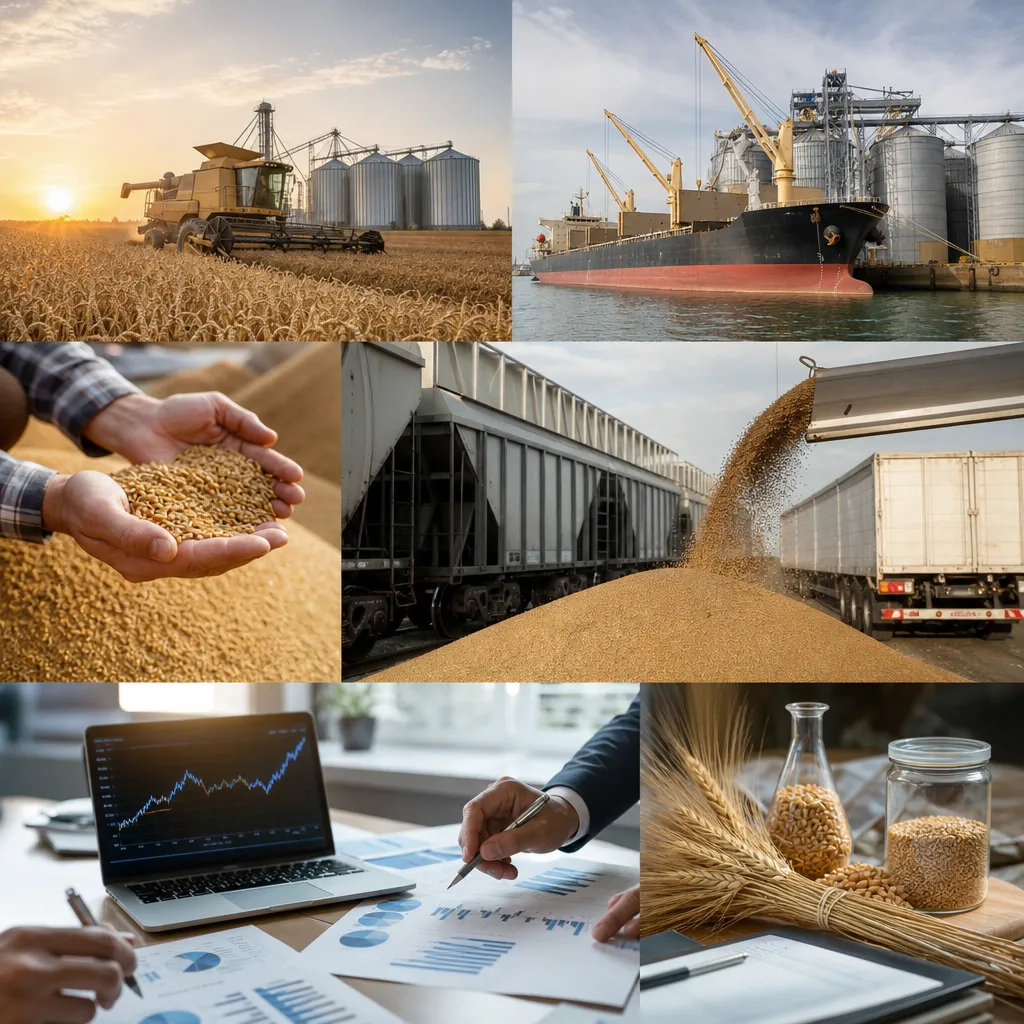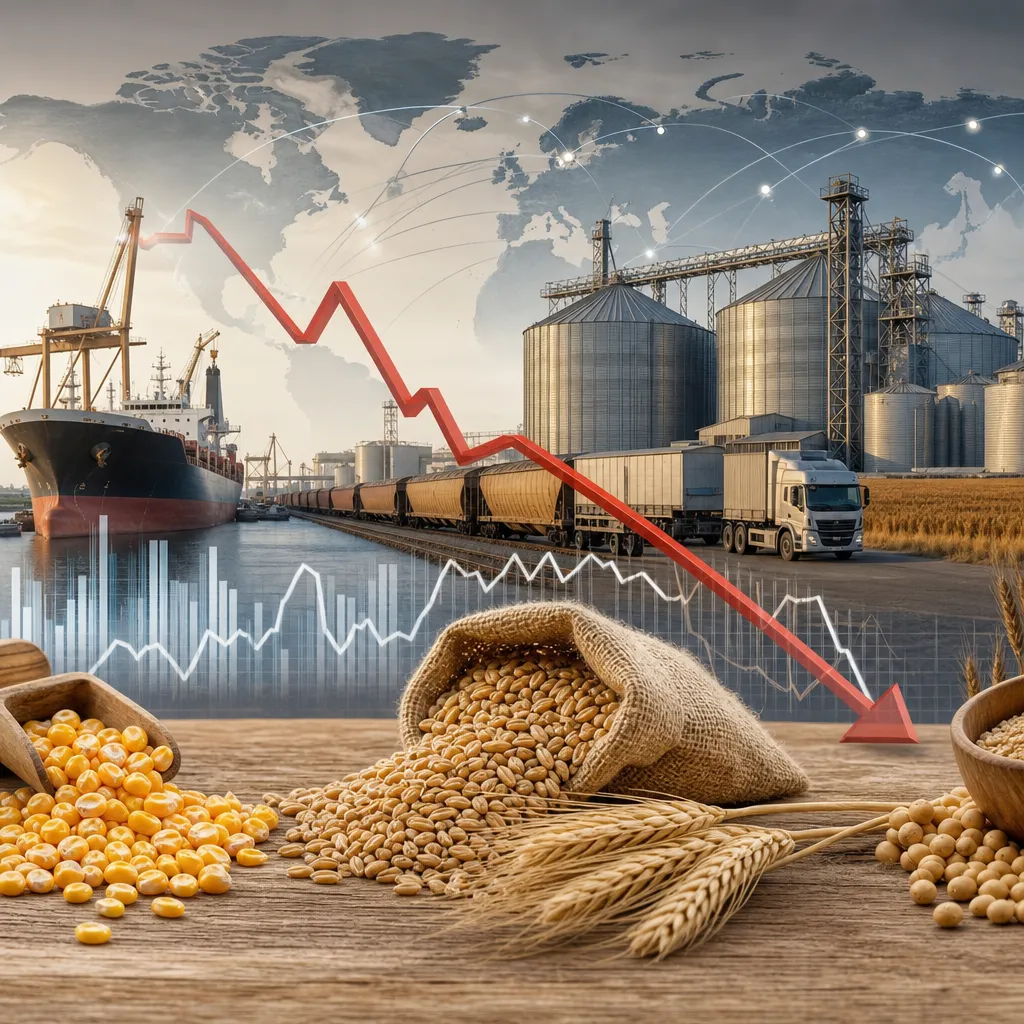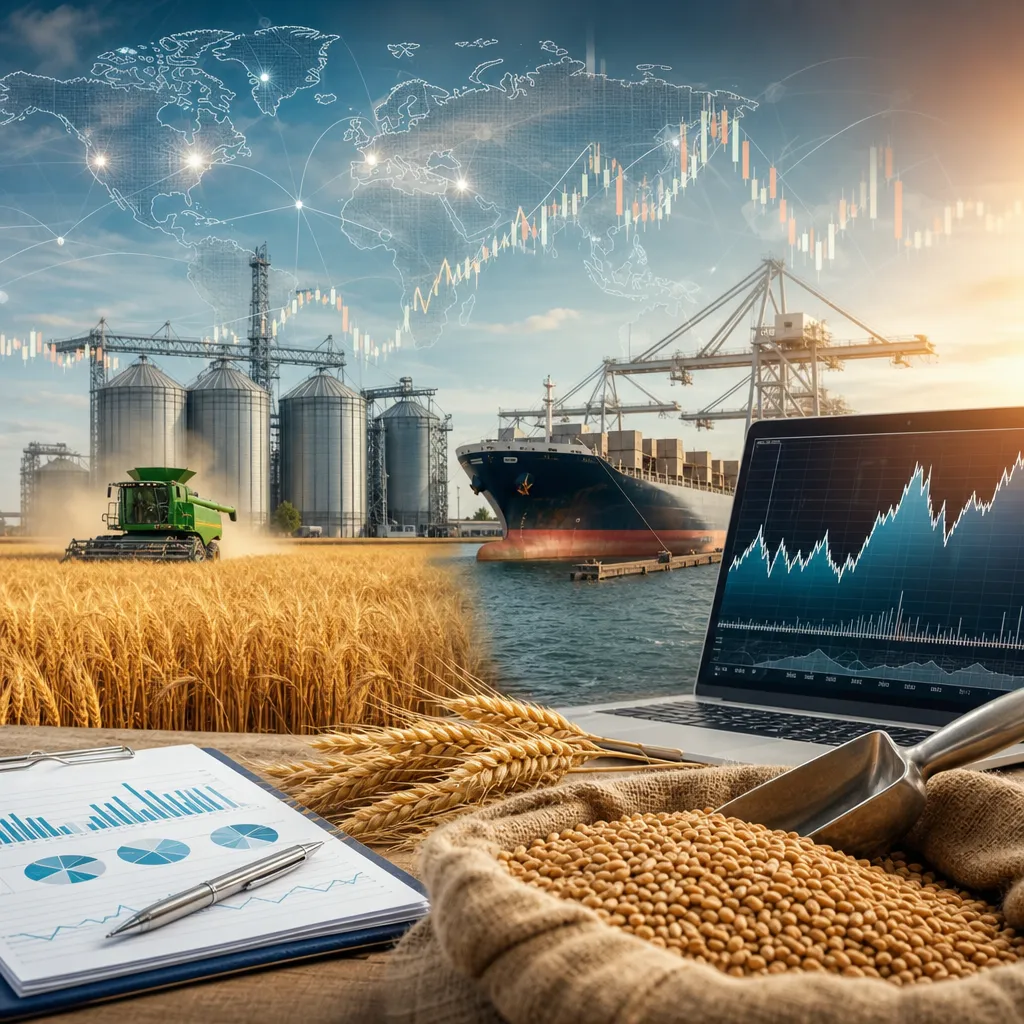




Wheat prices can go much higher than normal when the market believes supply will be too small, too uncertain, or too hard to move to end users. In practice, the ceiling is not fixed by one number; it is set by how severe the supply shock is, how low global stocks are relative to use, how badly weather damages key exporters, and whether buyers can switch to corn, rice, barley, or other feed grains. The fastest price spikes usually happen in futures markets first, especially on major exchanges, but the price a farmer or grain buyer actually pays in the physical market depends on basis, freight, quality, storage, and delivery location. To understand how high wheat can go, readers need to separate exchange prices from local cash prices and then follow the specific reports, market venues, and logistics that connect them.
Why wheat prices can rise sharply
Wheat is both a staple food grain and, in some regions, a feed grain. That makes its price unusually sensitive to weather, geopolitics, export restrictions, and substitution with other crops. A drought in a large exporter, poor planting conditions in a major producer, or disruption at Black Sea ports can change the global balance quickly.
The market usually reacts to a combination of factors rather than one issue alone:
- Production risk: lower acreage, poor emergence, winterkill, drought, heat, frost, or harvest rain.
- Stocks risk: low ending stocks or low stocks-to-use leave less buffer.
- Export risk: if a major exporter reduces shipments, importers must compete for alternative supplies.
- Currency moves: a weaker exporter currency can encourage exports; a stronger dollar can pressure some import demand.
- Freight and logistics: rail issues, river problems, port congestion, or high ocean freight can tighten nearby supply.
- Policy shocks: export taxes, export bans, import tariff changes, or food-security buying by governments.
When several of these happen together, prices can overshoot what seems justified by annual supply-and-demand tables because nearby users still need grain immediately. That is especially true for milling wheat with strict protein or test-weight requirements.
How high is “high” in wheat markets?
In wheat, “high” should be judged relative to the market structure, not just an absolute price. Traders usually ask three practical questions:
- How high versus recent years? A price may be historically expensive even if not at an all-time nominal high.
- How high versus competing grains? If wheat gets too expensive relative to corn or barley, feed demand can ration itself.
- How high versus local cash demand? A terminal market may be very strong while an interior surplus area remains weaker because freight absorbs much of the move.
There is no reliable universal maximum because wheat prices are shaped by both exchange trading and physical bottlenecks. Prices can rise until demand is rationed, imports are pulled in, substitute grains become attractive, or producers release stored grain. In extreme episodes, the market may trade sharply above long-run averages for a short time, especially in nearby futures contracts.
Where wheat prices are quoted and what those prices actually mean
The most widely watched wheat futures benchmarks are listed on regulated exchanges. In the United States, the CME Group lists major wheat contracts including Chicago soft red winter wheat, Kansas City hard red winter wheat, and Minneapolis spring wheat. These are futures prices, not local farmgate prices.
A local cash wheat price is normally quoted by:
- grain elevators,
- agricultural cooperatives,
- flour mills,
- feed manufacturers,
- grain merchants,
- exporters at port positions,
- cash grain brokers or merchandisers.
Cash prices are usually expressed as a futures reference plus or minus basis. Basis reflects local supply, freight, storage pressure, quality premiums or discounts, and buyer demand. A farmer might see a strong futures rally but only part of that move reaches the local bid if elevators are full, rail freight is expensive, or quality is weak.
| Price type | Where to find it | What it represents | Who uses it |
|---|---|---|---|
| Futures price | Commodity exchange data, broker platforms, CME market pages, data vendors | Standardized exchange-traded contract price | Traders, hedgers, analysts, elevators, exporters |
| Local cash bid | Elevators, cooperatives, merchants, mill bid sheets, farm marketing portals | Physical grain bid at a specific location and quality | Farmers, truckers, merchandisers, processors |
| Export or port value | Export merchants, trade publications, government reporting, tender markets | Value at a loading point or export channel | Exporters, importers, shipping participants |
| Delivered processor bid | Mills, feed companies, poultry and livestock integrators | Price for grain delivered to end user with quality terms | Farmers, merchants, commercial sellers |
If a reader wants the current market, the correct process is to check the relevant futures contract and then compare it with current local bids from elevators or buyers in the delivery region. A screen quote alone does not show the actual physical sale price.
What determines whether a rally can continue
Wheat rallies last longer when the problem is structural rather than temporary. A one-week weather scare may cause volatility, but a multi-month rally usually needs evidence that the world balance sheet is tightening.
The most important indicators are:
- Global production and ending stocks: commonly tracked in USDA WASDE reports.
- Exporter crop conditions: especially in the United States, Russia, the European Union, Canada, Australia, Argentina, and Ukraine.
- Import demand: tenders from major importers can confirm whether buyers still need coverage at higher prices.
- Spread behavior: nearby futures gaining on deferred contracts can signal immediate tightness.
- Basis strength: strong interior or port basis suggests cash demand is real, not only speculative.
- Quality separation: milling wheat may rise more than feed wheat if protein is short.
A rally becomes harder to sustain when users can switch away from wheat. Feed formulas may move toward corn, sorghum, or barley. Some importing countries may delay purchases, use state stocks, or buy lower-quality wheat if price spreads widen too far.
How futures, options, and hedging fit into the price story
When people ask how high wheat can go, they are often looking at futures. Wheat futures are standardized contracts traded on regulated exchanges. Traders access them through a futures broker and a margin account. The contract can be used for speculation or hedging, but it is financially leveraged, so losses can exceed initial margin deposits if the market moves sharply.
Options on wheat futures are another tool. A buyer of a call option can gain from a price rise with limited premium risk, while a farmer or commercial user may use options to define risk instead of taking a fully open futures position. Options are not simple insurance; the premium cost, strike selection, time decay, and liquidity matter.
Physical grain sellers and buyers often use futures to hedge price exposure while keeping basis open. For example:
- a farmer may forward-contract wheat with a local elevator,
- an elevator may hedge that purchase in futures,
- a mill may buy physical wheat and hedge input costs,
- an exporter may buy country grain and hedge until vessel execution.
This is why a futures spike can be dramatic even before physical grain changes hands at the same pace. Futures reflect expectations and risk transfer; the physical market adds freight, grades, timing, and local inventory constraints.
| Market channel | How it works | Main risk | Typical users |
|---|---|---|---|
| Futures | Exchange-traded standardized contract through a broker | Margin calls, leverage, basis mismatch | Hedgers, speculators, merchants, processors |
| Options | Right, not obligation, tied to futures contract | Premium cost, time decay, strategy complexity | Farmers, commercial firms, risk managers |
| Cash grain sale | Physical sale to elevator, coop, merchant, mill, or feed buyer | Basis swings, quality discounts, counterparty terms | Farmers, merchants, processors |
| Forward cash contract | Future delivery agreement with physical buyer | Production shortfall, delivery obligation, basis terms | Farmers, elevators, mills |
Where to check whether the market is truly tight
The best way to judge whether wheat can continue higher is to combine official reports with cash-market evidence.
Official and exchange sources
- USDA WASDE: global and U.S. supply, use, trade, and ending stocks. Widely used for balance-sheet direction.
- USDA Crop Progress: weekly U.S. crop condition and planting/harvest pace data.
- USDA Export Sales: shows booked exports and shipment pace.
- CFTC Commitments of Traders: shows how major categories of futures traders are positioned.
- CME Group: official futures contract specifications, expiration schedules, and exchange price data.
- FAO: broader global food and grain market context.
Physical-market checks
- local elevator bid sheets,
- cooperative cash bid pages,
- merchant and mill procurement bids,
- port basis indications where available,
- government or regional agricultural market reporting services.
If futures rise but local basis weakens, the rally may be more financial than physical in that location. If both futures and basis rise together, the market is usually sending a stronger signal of real-demand tightness.
How physical wheat is actually bought and sold
Physical wheat does not move by clicking on a futures quote. In practice, wheat is bought and sold through a chain of commercial participants. A farmer may deliver to an elevator or cooperative. That grain may then be stored, blended, hedged, railed to a domestic mill, trucked to a feed user, or assembled for export by a merchant.
Key commercial terms usually include:
- Delivery point: farm pickup, elevator, mill, warehouse, rail loading point, or port.
- Quality: grade, protein, moisture, test weight, falling number, damage, foreign material.
- Basis: difference between local cash value and futures benchmark.
- Freight: trucking, rail, barge, or ocean cost allocation.
- Storage: whether grain is sold at harvest or held on-farm or commercially.
- Payment terms: timing, title transfer, and any contract discounts or claims.
Where the wheat is sold matters as much as the broad market direction. A landlocked surplus region may have weaker bids even in a global rally, while a protein-short milling market may pay significant premiums. That is why “how high can wheat prices go” has both a board answer and a local answer.
Storage, logistics, and quality can extend or limit price spikes
High prices do not always bring immediate physical relief because grain must still be moved and meet specifications. On-farm storage can delay sales, commercial storage can smooth seasonal flows, and exporters need dependable rail, barge, or truck capacity. If logistics tighten, nearby prices can rise rapidly even when total annual supply is not critically low.
Quality can create a second market inside the wheat market. A year with large feed wheat production but scarce milling-quality wheat can produce very high premiums for specific grades. Buyers should not assume all wheat values move together.
For farmers and commercial holders, storage decisions should weigh:
- quality deterioration risk,
- financing cost,
- shrink and handling loss,
- local basis outlook,
- carry structure in futures,
- opportunity to hedge while holding grain.
Practical ways to think about upside scenarios
A sensible forecast approach uses scenarios rather than a single price target.
Bullish scenario: major exporter crop losses, strong import demand, low stocks-to-use, and logistics disruption. In this case, nearby futures and cash basis can both strengthen, especially for milling grades.
Moderately supportive scenario: production concerns exist, but other exporters compensate and buyers ration demand. Prices can stay elevated without becoming extreme.
Bearish or limiting scenario: good harvests in multiple exporters, larger-than-expected stocks, weak feed demand, or substitution into corn and barley. In that case, rallies can fade even after sharp weather scares.
The practical lesson is that wheat prices can go very high when the world cannot easily replace lost exportable supply. But the local price a business can buy or sell at depends on basis, freight, quality, and counterparty terms, not just exchange headlines.
Where can I check wheat prices right now?
Check exchange futures through CME Group market data or a regulated futures broker platform, then compare those quotes with local elevator, cooperative, mill, or merchant cash bids. Futures show the benchmark; local bids show the real physical trade price in your area.
Is the futures price the same as the price a farmer receives?
No. A farmer usually receives a local cash price, which is the relevant futures reference adjusted by basis, quality premiums or discounts, and delivery terms. Freight and local supply pressure can make the cash price very different from the exchange quote.
Where does wheat trading take place?
Financial wheat trading takes place on regulated futures exchanges through brokers. Physical wheat trading takes place through elevators, cooperatives, merchants, mills, feed companies, exporters, and negotiated contracts between commercial counterparties.
How do buyers know if a wheat rally is caused by real shortage or speculation?
They compare futures behavior with cash basis, export activity, tender demand, crop conditions, and official supply-and-demand reports. If nearby basis and physical premiums strengthen along with futures, the market is more likely facing genuine tightness.
Can options be used instead of futures to manage high wheat prices?
Yes, many hedgers use options to define risk more clearly than an outright futures position. But options still involve premium cost, time decay, and strategy risk, so they should be understood before use.
Who usually buys physical wheat directly from farmers?
Most commonly elevators, cooperatives, grain merchants, mills, feed manufacturers, and sometimes exporters or brokers acting for end users. The exact route depends on region, crop quality, transport access, and whether the grain is intended for food, feed, or export channels.
What reports matter most for judging how high wheat can go?
USDA WASDE is central for global balance sheets. USDA Crop Progress, USDA Export Sales, CFTC Commitments of Traders, and official exchange contract information are also important. In many regions, local cash bid sheets and government market reporting are just as important as the headline futures market.
Can high wheat prices exist even if corn or soybeans are cheaper?
Yes. Wheat has its own quality classes, food-use demand, and export channels. However, very high wheat prices are often limited by feed substitution into corn, barley, sorghum, or other grains where formulation and regional availability allow it.
Sources
- USDA World Agricultural Supply and Demand Estimates
- CME Group wheat futures contract specifications and market data
- CFTC Commitments of Traders