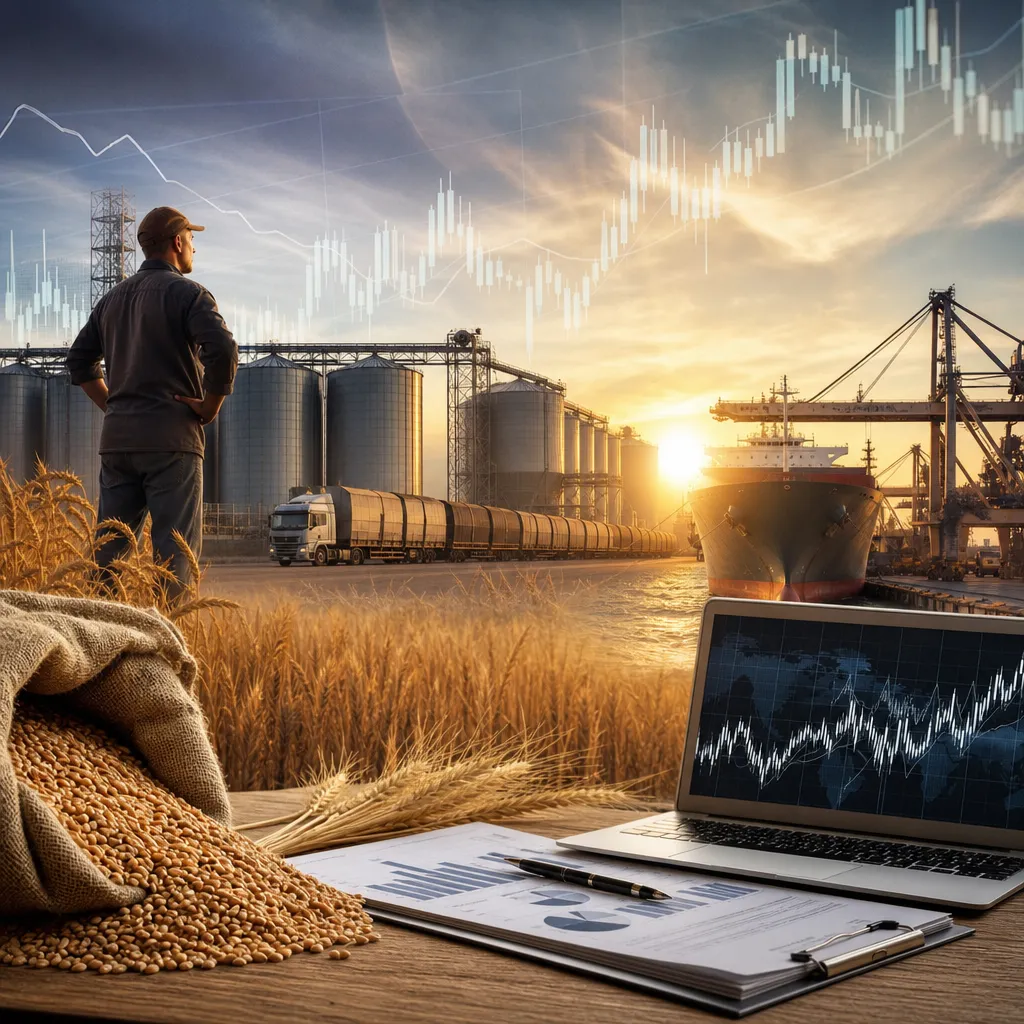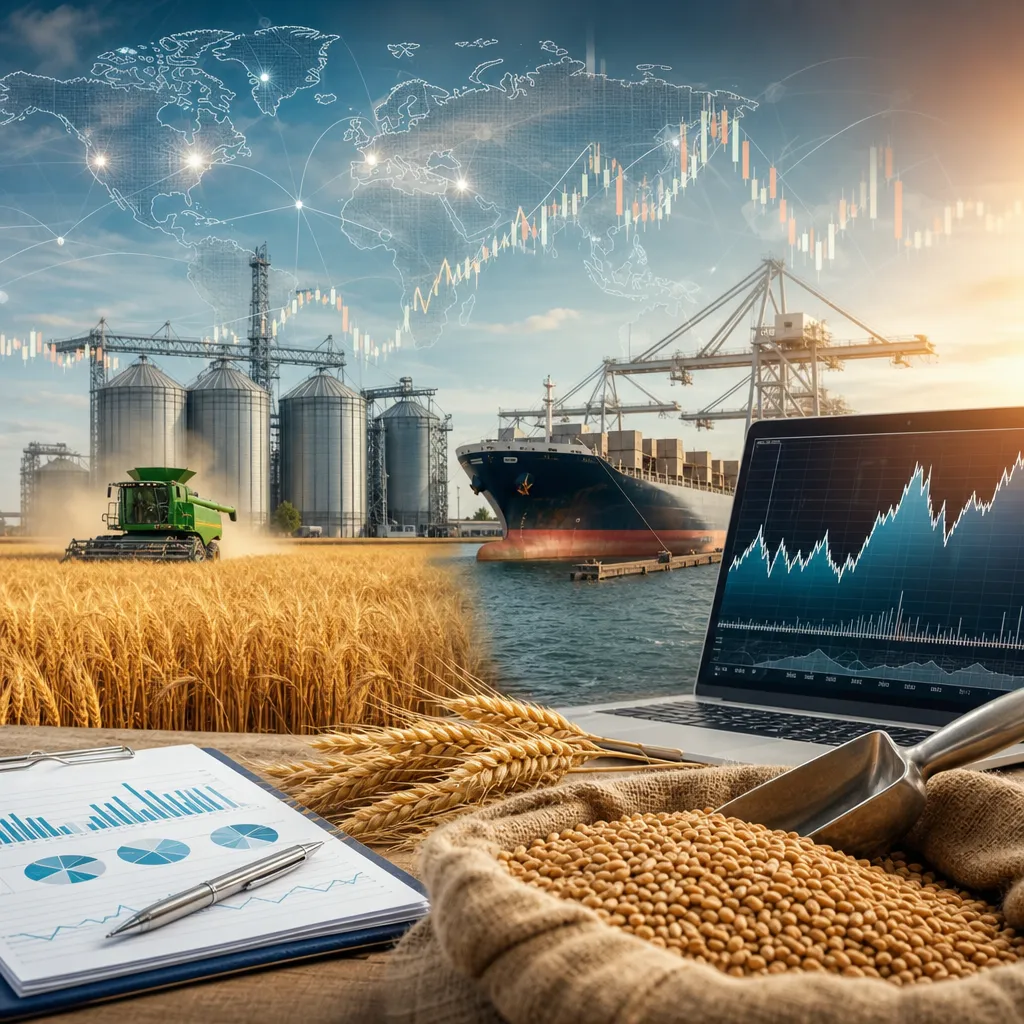
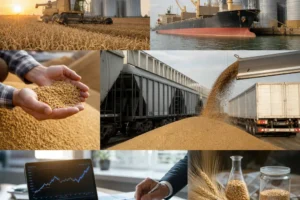
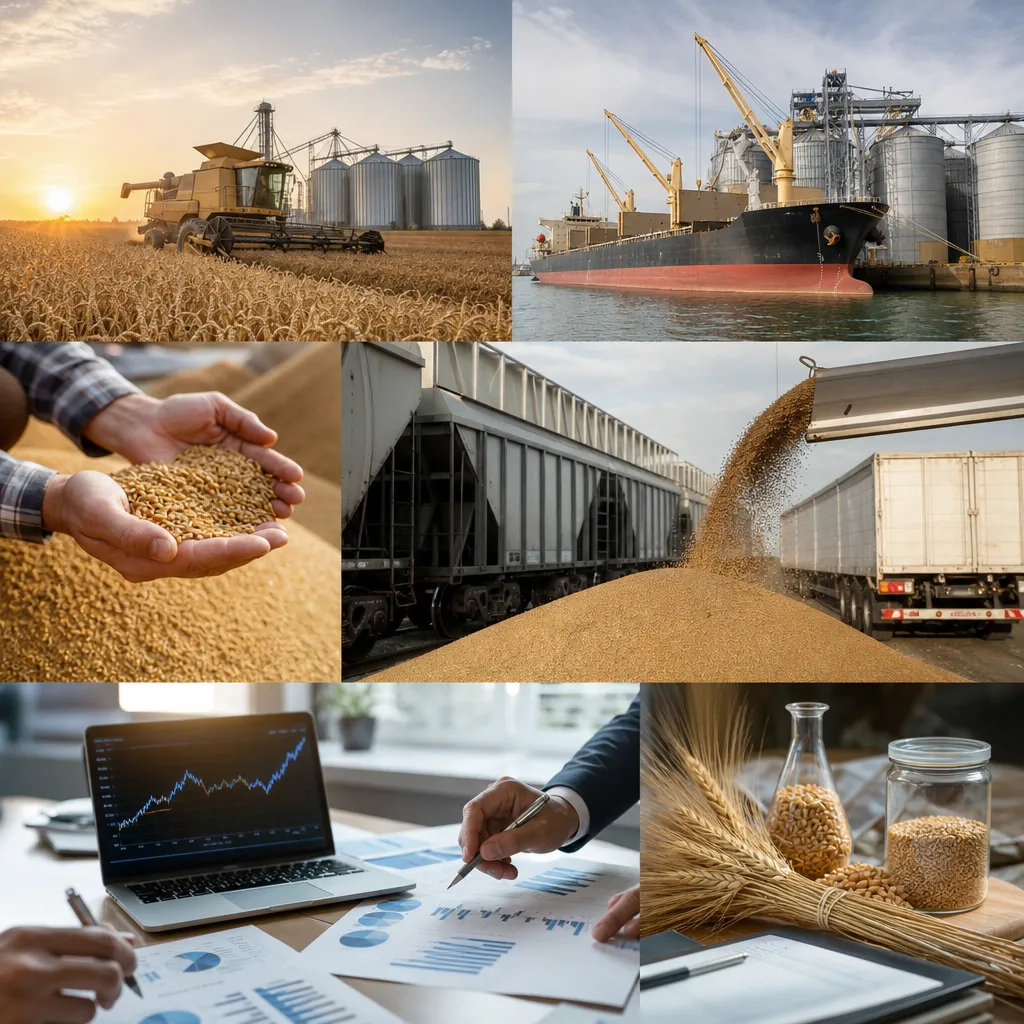
The European Union wheat market is not a single cash marketplace but a connected system of farm-gate buyers, inland merchants, mills, feed compounders, exporters, ports, and financial markets spread across many member states. Wheat is produced across major growing regions such as France, Germany, Poland, Romania, and other parts of Central, Western, and Eastern Europe, while pricing is heavily influenced by the Euronext wheat futures market, global Black Sea competition, currency moves in the euro, and domestic logistics. In practice, an EU wheat trade can begin with a farmer selling to a local cooperative, continue through storage and blending, and end as flour wheat delivered to a mill or as export wheat loaded at a port. Understanding the difference between futures, basis, quality premiums, and physical delivery terms is essential for anyone using the EU wheat market professionally.
Within the EU, wheat prices are usually discussed in euros per metric tonne. The most important financial benchmark for milling wheat is typically the Euronext wheat futures contract, formerly widely referred to as MATIF wheat. However, local physical prices in the EU can differ significantly from a futures quote because the physical market reflects quality, location, freight, crop conditions, storage, and local buyer competition.
What the EU wheat market includes
The EU wheat market mainly refers to the trade in common wheat, especially milling wheat used for flour, and feed wheat used in animal rations where quality is lower or where feed demand is stronger. Durum wheat is also important in some regions, but it is a distinct market and should not be confused with common milling wheat.
Geographically, the market operates across the European Union, but it is not uniform. France has long been central to EU wheat pricing and export flows, while Germany is important in both production and domestic use. Poland, Romania, Bulgaria, and Hungary matter for regional balances and export competitiveness, especially into Mediterranean and nearby destination markets. Spain and Italy are major consuming markets and, depending on crop conditions, can also be significant import destinations within the EU system.
Because wheat moves across borders inside the single market, local wheat values are often influenced by both domestic conditions and neighboring-country prices. A drought in one member state, congestion at a major export port, or a change in North African import demand can affect prices well beyond one region.
Where the market operates and how wheat moves
EU wheat trading happens in several layers at once. The physical market starts in inland crop regions, where farmers sell to:
- cooperatives,
- country elevators and collectors,
- independent grain merchants,
- mills and flour processors,
- feed manufacturers,
- exporters sourcing for ports.
From there, grain can move by truck, rail, river barge, or vessel depending on the origin and destination. Western European wheat may move toward major Atlantic export terminals, while Central and Eastern European wheat may move toward domestic mills, Danube routes, Adriatic outlets, Baltic ports, or Black Sea-connected logistics where applicable within EU territory. The exact route matters because inland freight can materially change the net price paid to the seller.
The financial benchmark side of the market operates through Euronext, where wheat futures and options are used by merchants, processors, exporters, and financial participants. A company may buy physical wheat locally while selling futures to hedge price risk, or buy futures first and later source physical grain against expected demand. That is why online price discovery and real-world grain movement are related but not identical.
| Market layer | Where it operates | Main users | What price means |
|---|---|---|---|
| Futures market | Euronext | Hedgers, traders, funds, merchants, mills | A standardized benchmark for future delivery conditions, not the exact local farm price |
| Inland cash market | Farm regions, cooperatives, inland silos | Farmers, merchants, domestic users | Actual physical bid at a named location, often reflecting local basis |
| Delivered consumer market | Mills, feed plants, processors | Buyers needing grain at their facility | Price including transport into the buyer’s site |
| Export market | Ports and export terminals | Exporters, international importers, brokers | FOB or port-based value for exportable wheat meeting shipment quality |
How EU wheat prices are formed
EU wheat price formation begins with the benchmark but ends with the actual local trade. The benchmark most often watched is the Euronext milling wheat futures price. That futures price reflects broad expectations about supply, demand, macroeconomic conditions, and international competitiveness. But no farmer or mill should treat that quote as an automatic physical transaction price.
The physical cash price is usually built from:
- the futures benchmark,
- a basis or premium/discount versus futures,
- protein and other quality characteristics,
- location and freight,
- delivery timing,
- storage and financing costs,
- local supply and buyer competition,
- export parity or import parity,
- currency effects against other origins.
Basis is the difference between the local cash price and the relevant futures price. A strong local demand zone, such as an area with active mills or tight nearby supply, may have a firmer basis. A remote surplus area during harvest, especially where storage is tight, may trade at a weaker basis.
Price terminology matters:
- Futures price: standardized exchange benchmark.
- Cash bid: what a local buyer offers at a named location.
- Delivered price: value including transport to a mill, feed plant, or warehouse.
- FOB price: free on board at port, used in export trade.
- CIF price: cost, insurance, and freight to the buyer’s destination, used more often by importers evaluating landed cost.
In the EU, quality can be especially important because milling wheat demand often depends on protein, Hagberg falling number, specific weight, moisture, and other contract parameters. Two wheat lots from the same area can therefore have very different values.
How wheat is actually bought and sold in the EU
Physical grain trade
The physical wheat market usually works through direct commercial relationships rather than through a public exchange order book for every local transaction. Common channels include:
- Farmers selling spot at harvest to a cooperative or merchant.
- Forward contracts agreed before harvest for a set delivery window.
- Storage arrangements where the seller delays pricing.
- Delivered contracts into mills or feed users.
- Export procurement where merchants assemble and blend wheat for port shipment.
A physical contract normally specifies more than just price. It may include quantity, delivery period, protein or other quality standards, moisture, tolerances, weighing rules, payment terms, and remedies for quality shortfall. Counterparty quality matters. Traders should evaluate the credit strength and execution reliability of the buyer or seller, especially when dealing outside established cooperative or merchant channels.
For exporters, the chain is more complex. A merchant may buy inland, move grain to store, blend lots to target export quality, position volume to a port, and then execute a vessel shipment for an overseas buyer. Export values can support inland prices when world demand is competitive, but port demand can also weaken if rival origins undercut EU offers.
Futures and options trading
Futures and options are used mainly for price risk management, not because every participant wants to own or move physical grain. A merchant buying wheat from farmers may sell futures to hedge inventory exposure. A mill may buy futures to lock in part of its input cost. Speculators also trade the market, but they are taking financial exposure rather than arranging truck, rail, storage, or vessel loading.
To access futures, traders normally need a broker or suitable trading intermediary that offers access to Euronext products. Futures involve margin, daily price movement, and leverage. That makes them useful for hedging but potentially risky for anyone who does not understand contract expiry, liquidity, basis risk, and cash-flow demands from margin calls.
Owning a futures position is not the same as owning wheat in a silo. Likewise, selling physical wheat does not remove all risk if quality, logistics, or basis remains uncertain.
| Feature | Physical wheat trade | Futures/options trade |
|---|---|---|
| Where it happens | Cooperatives, merchants, mills, feed users, exporters, ports | Exchange access through broker or trading platform |
| What is traded | Real grain with quality and delivery terms | Standardized financial contracts linked to grain value |
| Main purpose | Ownership transfer and supply chain execution | Hedging or speculation |
| Key risks | Quality, storage, logistics, counterparty, payment | Leverage, margin calls, contract timing, basis mismatch |
| Price expression | Cash, delivered, or FOB value in euros per tonne | Exchange quote for a standardized contract month |
Where to check EU wheat prices and market information online
If you need an exact current wheat price, you should check the relevant market directly because there is no single number that represents all EU wheat. A futures quote is not the same as a local inland bid, and a port export indication is not the same as a farm-gate price.
Useful places to monitor the market include:
- Euronext for official wheat futures information and contract references.
- European Commission market observatories and agricultural information for EU grain market context.
- USDA, especially world grain balance and trade reports that affect EU competitiveness and export outlook.
- National agriculture ministries or statistical offices for crop progress, production updates, and domestic balance signals.
- Local cooperatives, grain merchants, and processors for actual cash bids and delivery terms.
- Port market reports and merchant indications where export channels are important.
For practical trading, professionals usually compare several layers of information at once: exchange futures, local buyer bids, freight costs, quality spreads, and international export demand. That comparison is what turns a benchmark price into a realistic transaction decision.
EU wheat as a production, consumption, export, and import market
The EU is one of the world’s major wheat producing and consuming regions. It has large domestic flour, feed, starch, and industrial demand, but it is also an important wheat exporter when crop size and quality are favorable. This dual role matters because EU prices are shaped by both domestic consumption and world export competition.
In years of strong harvest and good milling quality, EU wheat can compete actively into destinations such as North Africa and the Mediterranean basin. In tighter years, more wheat stays inside the bloc and some member states may rely more on inflows from elsewhere in the union or from outside it, depending on quality and freight economics.
Currency is critical. EU wheat is commonly priced domestically in euros, but international wheat competition is often judged against other exporter origins in globally traded terms. A stronger euro can make EU wheat less competitive in export channels, while a weaker euro can support export demand if other factors remain equal.
Main drivers and practical forecast scenarios
No forecast for EU wheat should be treated as certain. The market is highly sensitive to weather, yield, quality, trade competition, and macro conditions. The most useful approach is scenario analysis.
| Scenario | What could cause it | Possible market implication |
|---|---|---|
| Large EU crop with good milling quality | Favorable weather, good yields, harvest progress without serious damage | Heavier supply pressure at harvest, stronger export focus, basis may weaken in surplus inland regions if logistics are tight |
| Reduced crop or quality problems | Drought, excessive rain, disease, harvest downgrades | Milling premiums may strengthen, users may compete harder for high-grade wheat, feed wheat relationship can change |
| Weak export competitiveness | Strong euro, cheaper rival origins, freight disadvantage | More wheat may need domestic or intra-EU homes, port values can soften relative to inland expectations |
| Strong global import demand | Import tenders, problems in competing exporters, supportive currency moves | Export bids may improve and support inland cash markets connected to ports |
The most watched drivers usually include:
- autumn planting conditions and winter survival,
- spring moisture and summer temperature stress,
- harvest weather and quality retention,
- domestic milling and feed demand,
- export demand from nearby importers,
- competition from other major wheat exporters,
- energy and fertilizer costs,
- currency movements, especially the euro,
- river, rail, and port logistics.
Practical trading approach for farmers, merchants, mills, and investors
A sound EU wheat trading approach begins by separating price view from execution. Farmers and cooperatives need to know the local bid, quality terms, and whether storage improves optionality. Merchants need to understand basis, freight, export opportunities, and hedge structure. Mills need reliable quality coverage, not just a low headline price. Financial traders need to understand that futures may move on macro sentiment even when an individual local cash market is relatively stable.
For physical sellers, basic discipline includes comparing more than one buyer, checking contract language carefully, and understanding whether the price is ex-farm, collected, delivered, or store basis. For physical buyers, the key issues are quality control, origin risk, logistics, and replacement cost.
For hedgers, the central question is whether the futures instrument being used actually matches the risk being managed. A processing company exposed to local spot values still faces basis risk even when it uses futures correctly. Hedging protects against some price risk, not every commercial risk.
Frequently asked questions
What is the main benchmark for EU wheat prices?
The most widely watched benchmark for common milling wheat in the EU is the Euronext wheat futures market. It is a benchmark, not a universal local cash price.
In what currency and unit is EU wheat usually priced?
EU wheat is usually discussed in euros per metric tonne. Physical contracts may also specify detailed quality standards and delivery terms.
Where can I check current EU wheat prices?
Check Euronext for futures references, then compare those values with bids from local cooperatives, merchants, mills, processors, or port traders. The local physical bid is the most relevant number for an actual sale.
Why is my local wheat bid different from the futures market?
Because local bids reflect basis, freight, quality, storage, delivery timing, local supply and demand, and buyer competition. Futures are only the standardized benchmark portion of the price.
How is wheat exported from the EU?
Merchants or exporters buy inland grain, assemble and often blend it to required quality, move it to export terminals, and sell it on FOB terms or through other international trade structures to overseas buyers.
Can I buy EU wheat online like a stock?
You can trade wheat futures through a broker with market access, but that gives financial exposure rather than automatic ownership of physical grain. Physical wheat purchases are usually arranged through merchants, processors, cooperatives, or exporters.
What is the difference between milling wheat and feed wheat in the EU?
Milling wheat meets stricter specifications for flour use, while feed wheat is used in animal feed or traded at a discount when quality falls short of milling standards. The spread between them changes with quality availability and demand.
What are the biggest drivers of EU wheat prices?
Crop size, weather, grain quality, export competitiveness, euro exchange rate, domestic demand, freight and logistics, and the pricing behavior of rival wheat exporters are usually the most important factors.
Sources
- Euronext
- European Commission
- USDA Foreign Agricultural Service