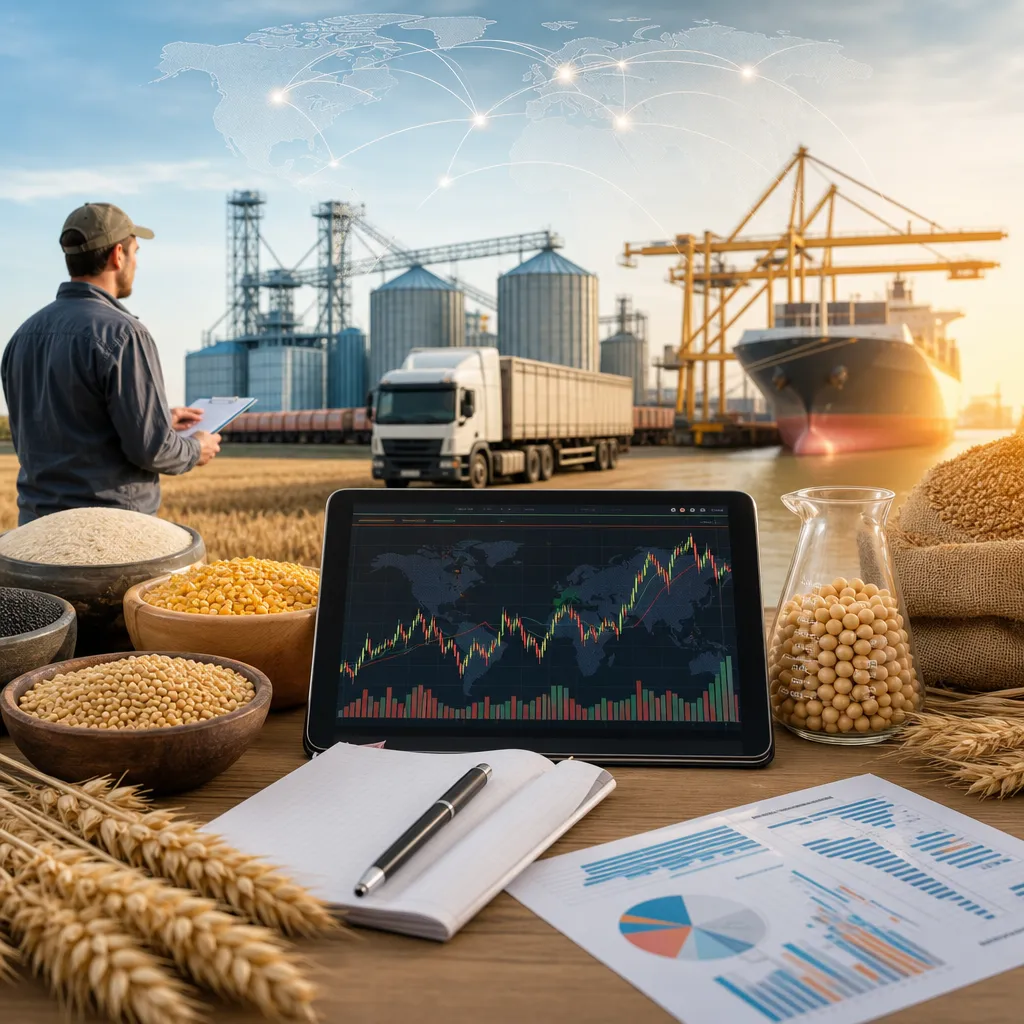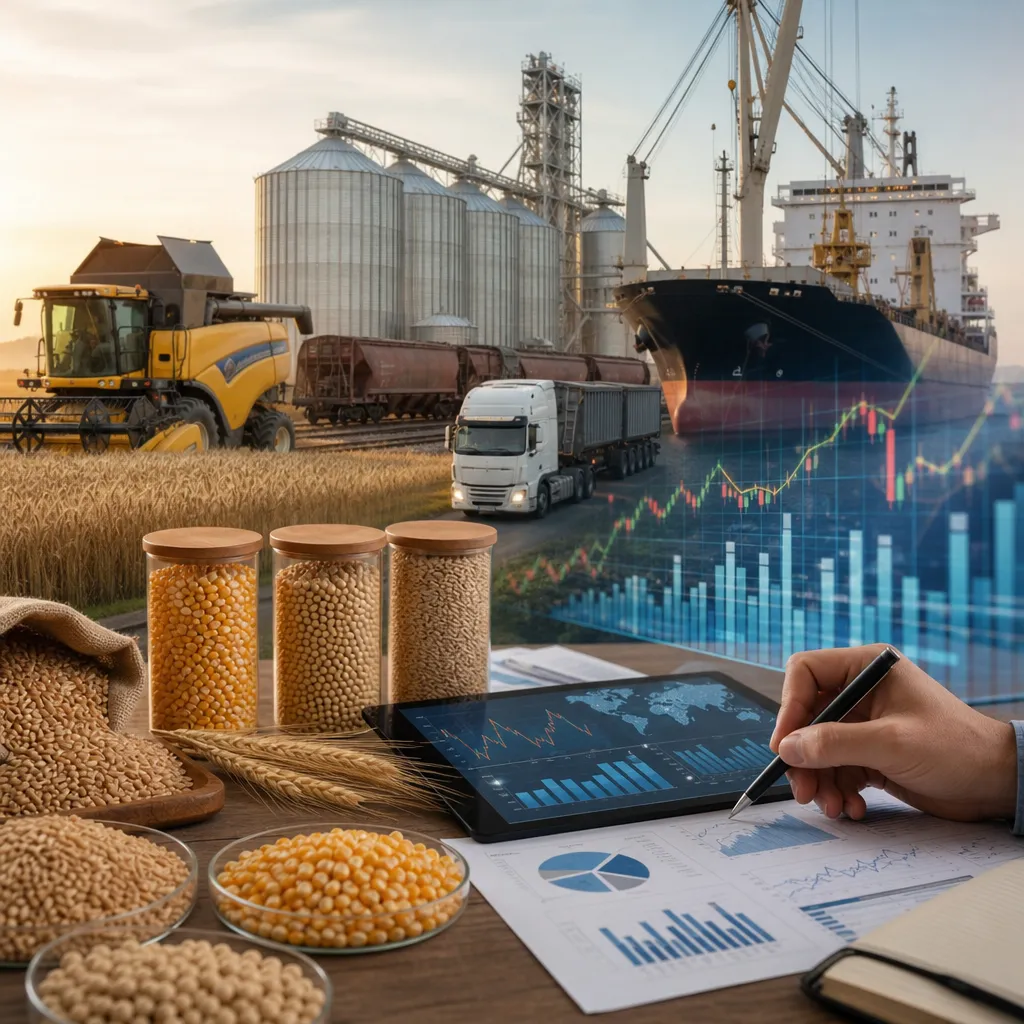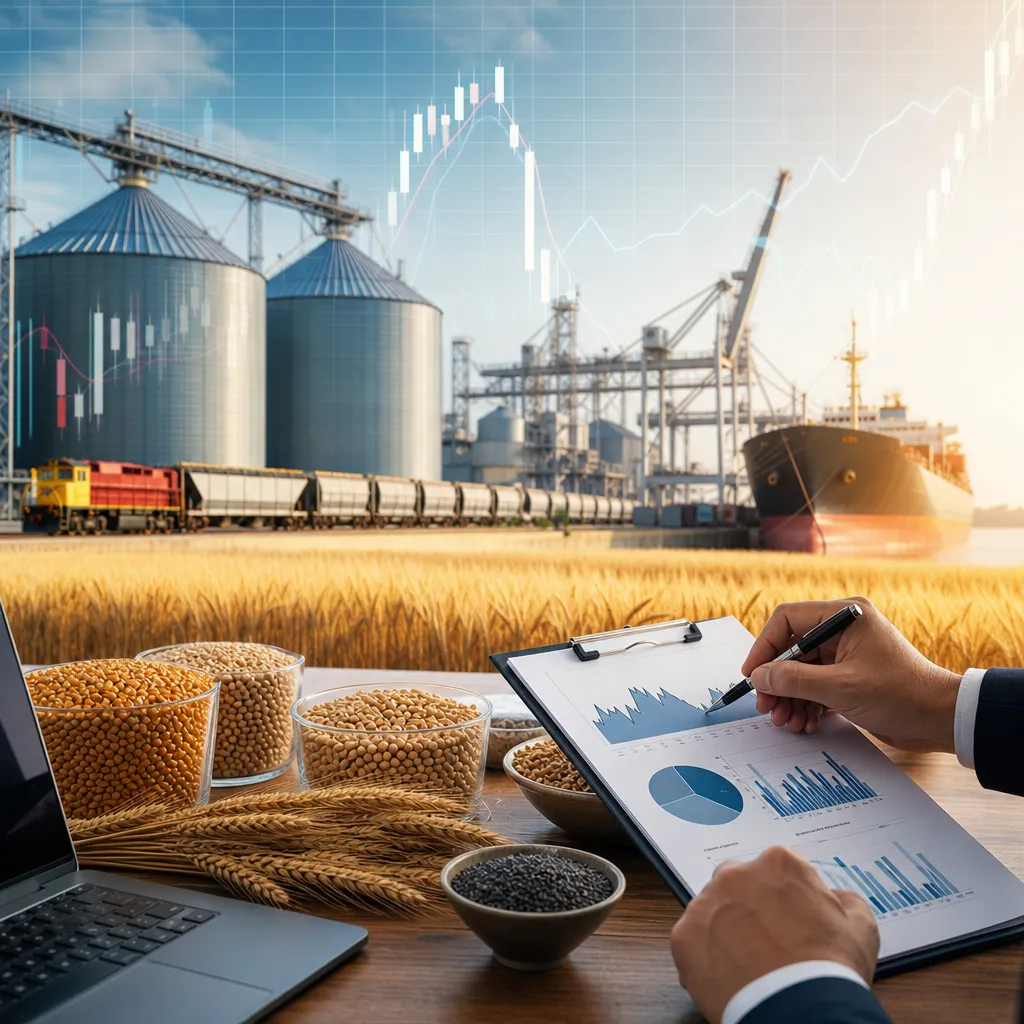
The European Union grain market is not a single exchange or one uniform cash market. It is a large, interconnected trading area covering major wheat, maize, barley, rapeseed, and feed grain flows across member states, with pricing influenced by both local supply chains and international benchmarks. In practice, grain in the EU is traded through country-level physical markets, export terminals, processors, feed mills, cooperatives, merchants, and futures exchanges such as Euronext. For anyone trying to understand EU grain trading, the key is to separate physical grain movement from financial price discovery and risk management.
Geographically, the market operates across the EU, with especially important grain-producing and trading centers in countries such as France, Germany, Romania, Poland, Spain, Italy, and the Baltic states. Major relevance depends on the crop: France is central for milling wheat exports and Euronext wheat pricing, while Spain and Italy are often important demand-side markets for feed grains and imports. The Black Sea, Atlantic, Mediterranean, Rhine corridor, Danube system, and Baltic routes all matter, but their importance varies by crop and year.
Grain in the EU is usually priced in euros per metric tonne in commercial trade. However, local farm-gate prices, inland delivered prices, and export values can differ sharply from headline futures prices because quality, freight, storage, currency, and buyer competition all matter. A practical trading guide therefore starts with location, benchmark, basis, contract terms, and logistics.
What the EU grain market includes
The EU grain market covers both physical grain trade and derivatives trading. Physical trade means actual wheat, maize, barley, durum, or oilseeds being bought, sold, stored, moved, processed, exported, or imported. Derivatives trading means futures and options used to manage price risk or take market exposure without necessarily handling grain.
The most commercially important EU grain and oilseed products often include:
- Common wheat, especially milling wheat and feed wheat
- Maize, mainly for feed, starch, and industrial use
- Barley, including feed barley and malting barley
- Durum wheat, particularly relevant in southern Europe
- Rapeseed, closely connected to vegetable oil, meal, and biofuel markets
The EU is both a major producer and a major consumer. Some member states are structural exporters of wheat or barley in normal crop years, while others are regular importers of maize or milling-quality grain. This means the market cannot be read from one country alone.
| Market layer | Where it operates | Main purpose | Typical users |
|---|---|---|---|
| Farm-gate and local cash market | Country and regional grain-buying networks across the EU | Physical grain sales and purchases | Farmers, cooperatives, local merchants, feed mills |
| Inland delivered market | Destination points such as mills, crushers, feed plants, warehouses | Supply to processors and end users | Processors, livestock feed buyers, logistics operators |
| Port and export market | Export terminals and import discharge locations | International trade and vessel loading | Exporters, importers, multinational merchants, vessel charterers |
| Futures and options market | Primarily Euronext, with global influence from other exchanges | Price discovery and hedging | Commercial firms, brokers, funds, hedgers |
Where EU grain trading happens in practice
Physical grain trading in the EU is decentralized. Farmers usually do not sell grain “to the EU market” directly. They sell to a local cooperative, a merchant, an elevator-style collector, a feed mill, a flour mill, a maltster, a crusher, or an exporter. Those buyers then resell, blend, transport, store, process, or hedge the grain depending on demand.
Some of the most important trading locations are not just countries but origination zones and delivery corridors. Inland crop-surplus regions feed grain into rail, truck, barge, and port systems. Export values at major ports can influence inland bids, but inland prices are reduced by transport, handling, and quality adjustments.
For wheat, France is especially important because French wheat is deeply tied to export markets and to Euronext milling wheat futures. Germany and the Baltic states are also relevant in exports in many seasons. Romania and Bulgaria matter through Black Sea-linked flows. Spain, Italy, the Netherlands, Belgium, and parts of Germany are major consumption centers for feed, milling, or processing demand.
EU grain trading also interacts constantly with non-EU origins and destinations. Import competition and export opportunities can shift local values quickly, especially for maize, feed wheat, and oilseeds.
How prices are formed
EU grain prices are formed through a combination of benchmark futures, basis, quality, and logistics. The most common mistake is to treat a futures quote as if it were the exact local cash value. It is not.
A practical way to read price formation is:
- Futures price: the exchange-traded benchmark, often Euronext for EU wheat and rapeseed risk management
- Basis: the difference between the local cash price and the reference futures price
- Cash bid: the actual price offered by a local buyer at farm-gate, ex-warehouse, or delivered point
- Delivered price: price including transport to a specific destination such as a mill or feed plant
- FOB price: free on board at export port, used in export trade
- CIF price: cost, insurance, and freight to the import destination, used on the buying side of seaborne trade
Several factors move EU grain values even when futures are unchanged:
- protein and other quality specifications
- regional supply tightness or harvest pressure
- distance to port or processor
- truck, rail, barge, or vessel freight costs
- storage availability and carrying costs
- competition between exporters, mills, feed compounders, and crushers
- euro exchange rate against the US dollar and other currencies
- weather and crop condition changes inside the EU and in competing origins
| Price type | What it means | Where used | Why it differs from other prices |
|---|---|---|---|
| Futures | Exchange benchmark for a standardized contract | Hedging and market reference | Does not include local freight, exact quality, or buyer-specific terms |
| Farm-gate cash | Price paid at or near the farm | Farmer sales | Reduced by handling, logistics, and local market conditions |
| Delivered inland | Price delivered to a processor or consumer | Mills, feed plants, crushers | Includes destination value and transport to that site |
| FOB export | Price at port loaded onto vessel | Export trade | Reflects port demand, vessel line-up, and export competitiveness |
| CIF import | Landed import value including freight and insurance | Import buying | Reflects shipping market and destination demand |
The role of Euronext and other benchmarks
Euronext is the most relevant exchange benchmark for much of EU grain pricing, especially for milling wheat and rapeseed. Commercial participants use it to hedge price risk, compare cash bids, and structure contracts. It is not the whole market, but it is a central reference point.
Futures contracts are standardized. They trade electronically through brokers and clearing systems. A trader does not need to handle physical grain to trade futures, and many participants never intend to make or take delivery. The main function for commercial users is risk management: a seller of physical wheat may sell futures to protect against falling prices, while a processor may buy futures to reduce the risk of rising input costs.
Other global benchmarks can matter too. Chicago futures often influence international sentiment, especially in maize and wheat, because the global grain market is interconnected. But EU physical pricing is usually not a simple translation of CBOT into euros. Currency, quality, and regional trade flows create separate pricing behavior.
How physical grain is bought and sold in the EU
Physical grain trading in the EU is contract-driven. Grain is usually sold under terms covering quantity, quality, delivery period, delivery point, moisture, protein or other specifications, and payment conditions. The exact channels vary by country, but the common structure is similar.
Typical physical market participants include:
- farmers and producer groups
- cooperatives
- local and international grain merchants
- mills and feed compounders
- maltsters and crushers
- exporters and importers
- warehouse and terminal operators
Common deal structures include spot sales after harvest, forward contracts before harvest, storage-based sales later in the season, and delivered contracts to processors or port positions. Some contracts are fixed price. Others are indexed against a benchmark plus or minus basis. Quality clauses are critical because EU grain markets often have meaningful spreads between feed and milling quality.
Counterparty risk matters. Before trading physically, market participants normally assess contract enforceability, payment timing, quality dispute procedures, and logistics responsibility. For exporters and larger domestic users, execution risk at port or destination can matter as much as price.
How futures and options are used for hedging
Futures and options are not the same as buying or selling actual grain. They are financial instruments used to manage exposure.
A typical hedge works like this:
- A farmer, cooperative, or merchant expects to own physical grain that will be sold later.
- They sell futures to reduce downside price risk.
- Later, they buy back the futures when the physical grain is sold.
- The final result depends on both futures movement and basis movement.
This last point is essential. Even a good futures hedge does not eliminate basis risk. If local transport costs change, export demand weakens, quality disappoints, or a nearby processor bids aggressively, the cash market can move differently from the futures market.
To access EU grain futures, users normally need a broker or futures-enabled trading platform. This involves margin requirements, marked-to-market gains and losses, and leverage risk. That makes futures useful for risk management, but potentially dangerous for anyone treating them as simple cash grain substitutes.
Options can provide asymmetric protection, but they also involve premiums and strategy complexity. Commercial grain firms often combine physical contracts, storage, and derivatives rather than relying on one tool.
Where to check EU grain prices and market information
There is no single website that gives every true local EU cash price everywhere. Readers should use several layers of information.
For exchange-traded reference prices, the most relevant source is Euronext. That is where market participants check benchmark futures information for contracts such as milling wheat and rapeseed.
For EU-wide supply, demand, trade, and policy context, the European Commission provides agricultural market information and outlook material. For statistical trade and production context, Eurostat is important. For global balance-sheet context affecting EU markets, many traders also monitor USDA reports.
For actual physical pricing, readers normally check:
- local cooperative or merchant bid sheets
- processor purchase indications
- port market reports where available
- broker commentary and commercial market circulars
- national agriculture ministries or market observatories where relevant
Local bids may differ from benchmark futures because they reflect quality, geography, and timing. A port export bid is not the same as a farm bid inland. A delivered mill price is not the same as an FOB export value. Always check the quoted basis, location, crop year, and specification.
| Source type | What you can check | Best use |
|---|---|---|
| Euronext | Benchmark futures and contract information | Reference price and hedging context |
| European Commission | EU market outlook, policy context, agricultural monitoring | Market structure and trend analysis |
| Eurostat | Trade and production statistics | Background supply-demand analysis |
| USDA | Global grain balance-sheet and trade information | International benchmark context |
| Local buyers and market reports | Actual cash indications by location and quality | Physical selling or buying decisions |
Exports, imports, and logistics in the EU grain trade
The EU can be both a major exporter and a major importer depending on the commodity and the season. Wheat exports are structurally important in some states, while maize imports can also be significant when domestic production is insufficient or feed demand is strong.
Export competitiveness depends on inland origination cost, terminal elevation, port logistics, vessel freight, and currency. A stronger euro can make EU exports less competitive in dollar-denominated world trade. A weaker euro can support export pricing if local supplies are available.
For import-dependent regions, especially in livestock-heavy or deficit areas, landed CIF values influence domestic pricing. For surplus inland regions, the export channel often sets the ceiling for value after logistics costs are deducted.
Reliable logistics matter as much as crop size. River levels, rail capacity, trucking availability, port congestion, and storage can all affect basis and local cash prices. This is why two regions in the EU can trade at very different values even when the same futures benchmark is rising or falling.
What usually drives the market outlook
Forecasting EU grain prices requires scenario thinking rather than certainty. The main drivers usually include weather, crop condition, yields, acreage shifts, quality outcomes, trade policy, currency, and competition from other exporting origins.
Useful market scenarios include:
- Bullish scenario: adverse weather, quality loss, strong export demand, low stocks, weak euro, or logistics disruption
- Bearish scenario: large harvest, comfortable stocks, weak demand, aggressive competition from other origins, or stronger euro
- Mixed scenario: large total crop but poor milling quality, or adequate supply but regional logistics bottlenecks
Rapeseed markets may also be influenced by vegetable oils, energy prices, and biofuel policy. Maize can respond strongly to feed demand and global competition. Wheat often reacts to both food-grade and feed-grade considerations, with quality spreads widening sharply in some seasons.
FAQ
What is the main benchmark for EU grain pricing?
Euronext futures are the main benchmark for much of EU milling wheat and rapeseed risk management. However, actual physical prices depend on local basis, quality, and freight.
Are EU grain prices quoted in euros or dollars?
Most domestic and regional EU grain trade is quoted in euros per metric tonne. International trade may also be discussed in US dollars, especially in export competition and freight context.
Where can I check current EU grain prices online?
For benchmark futures, check Euronext. For physical prices, check local merchants, cooperatives, processors, and regional market reports. For broader market context, use the European Commission, Eurostat, and USDA.
Why is my local cash bid different from the futures market?
Your local cash bid includes basis. Basis reflects transport, local supply-demand, storage, buyer competition, and quality. Futures are only the benchmark component of pricing.
How is grain usually sold physically in the EU?
Usually through cooperatives, merchants, processors, mills, feed companies, or exporters under contracts specifying quality, quantity, delivery terms, and payment conditions.
Can I trade EU grain futures without owning grain?
Yes. Futures are financial instruments accessed through a broker. But they involve margin, leverage, and risk, so they are not the same as holding physical grain.
What matters more in export markets: futures or FOB values?
For execution of export business, FOB values matter more because they represent the tradable port value. Futures still matter because they help structure hedging and benchmark risk.
Which factors move EU grain markets the most?
Weather, yield and quality, export demand, imports, currency, logistics, policy, and competition from other origins are the main moving parts.
Sources
- Euronext
- European Commission
- Eurostat