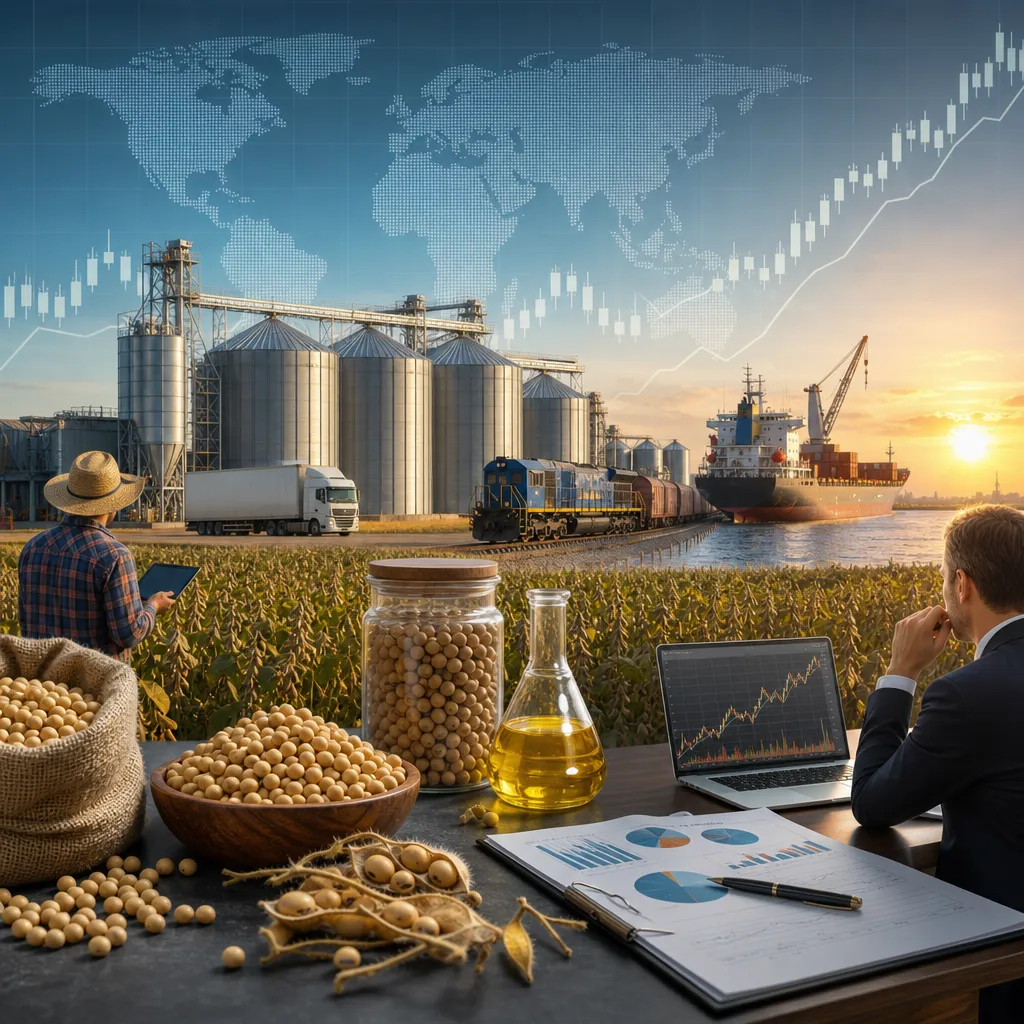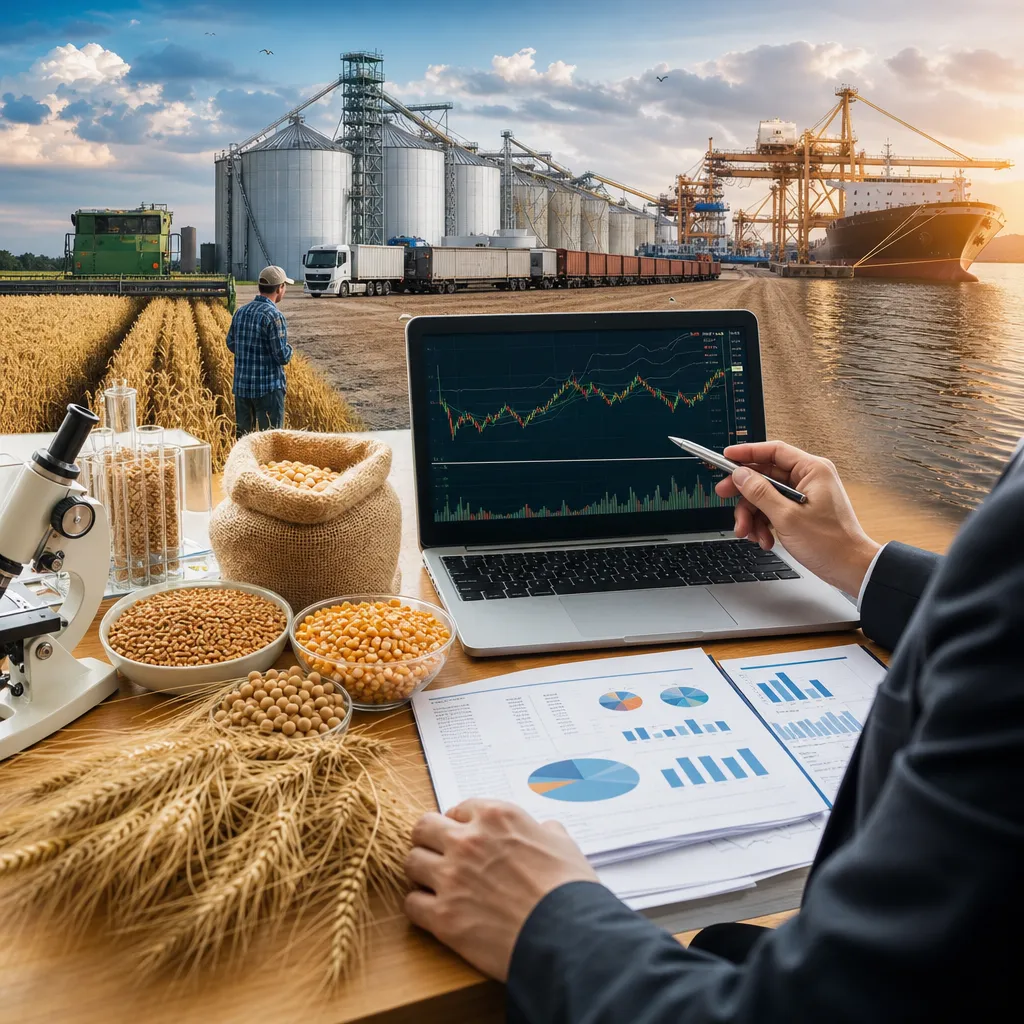
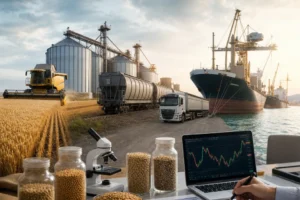
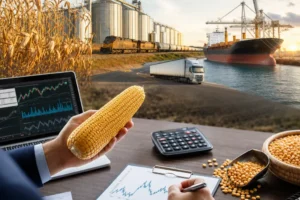
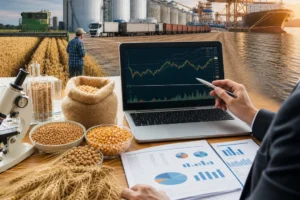
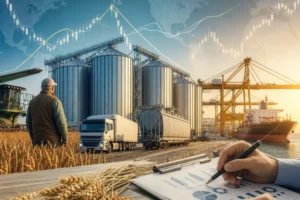
The EU grain futures market is centered on Europe’s benchmark agricultural derivatives venue, Euronext, especially its milling wheat, corn, and rapeseed contracts. Although physical grain is grown, bought, and consumed across many EU member states, futures trading is mainly used as a pricing, hedging, and risk-management tool rather than a direct substitute for local cash trade. In practice, the market connects French, German, Romanian, Polish, Baltic, Iberian, and other European grain flows to broader global price signals. Understanding this market means separating exchange-traded futures from real-world farm, elevator, processor, and export prices.
Geographically, the EU grain futures market serves the European Union’s grain economy, with Euronext contracts widely followed across Western, Central, and parts of Eastern Europe. Prices are usually discussed in euro per metric tonne, while physical trade may also reference delivered, FOB, or CIF values depending on destination and logistics. The most watched benchmark is typically Euronext milling wheat, often still informally called MATIF wheat, because it has long been the main European wheat futures reference.
For farmers, merchants, mills, feed compounders, exporters, and importers, the key practical point is this: a futures quote is not the same as a local farm-gate bid. The local cash market adds basis, quality adjustments, transport, handling, storage, timing, and buyer competition. That is why two regions inside the EU can trade at materially different physical prices even when they reference the same futures benchmark.
What the EU grain futures market means
The EU grain futures market is the organized market where participants trade standardized contracts linked to major agricultural commodities important to Europe. It is most relevant for wheat, corn, and rapeseed, and in some market discussions also for feed grains and oilseed products through related benchmarks.
Its core functions are straightforward:
- Price discovery: creating a transparent benchmark that reacts quickly to weather, crop prospects, policy, currency moves, export demand, and international competition.
- Hedging: allowing commercial users to reduce price risk before grain is physically bought, sold, processed, exported, or imported.
- Liquidity for trade: helping merchants and processors structure forward purchases and sales.
- Market signaling: giving producers and buyers a public reference for negotiations in the cash market.
Within Europe, the benchmark role is strongest for wheat. EU wheat values are often discussed relative to Black Sea competition, global corn substitution in feed rations, and oilseed market influences when rapeseed is involved. Because the EU is both a major producer and a major trader, futures are influenced by both domestic crop conditions and world trade flows.
Where the market operates
The exchange-traded center of the EU grain futures market is Euronext. Historically, many market participants still refer to these contracts as “MATIF,” but the benchmark venue is Euronext. The contracts are financially accessible through authorized brokers and trading platforms, while the underlying physical market operates across the EU’s grain-producing and consuming regions.
The physical side is much broader than the exchange itself. Grain is actually marketed through:
- farm sales to cooperatives or merchants,
- country elevators and collection points,
- mills and feed manufacturers,
- crushers in the oilseed sector,
- domestic traders,
- export terminals and port merchants,
- import buyers and end users.
France is especially important because French wheat has long been central to the European export and futures pricing structure. Germany, Romania, Poland, and other member states are also highly relevant in physical trade. Port values in northwest Europe, the Baltic region, the Danube region, and the Mediterranean-facing trade corridors can all influence how inland cash markets connect to the futures benchmark.
| Market element | Where it operates | Why it matters |
|---|---|---|
| Futures benchmark | Euronext | Reference price for hedging and market direction |
| Farm and elevator cash market | Across EU member states | Where grain is physically sold and delivered |
| Export market | EU ports and trading houses | Links EU prices to international buyers and freight economics |
| Import and end-user market | Feed, milling, crushing, and food sectors | Creates domestic demand and local premiums or discounts |
How prices are formed in the EU grain market
EU grain pricing starts with a benchmark, but the final paid price depends on where the grain is, what quality it has, and who needs it. The futures market reflects a standardized contract. The cash market reflects a real cargo, in a real place, at a real time, with freight and quality conditions attached.
The main layers of price formation are:
- Futures price: the exchange-traded benchmark for a specific contract month.
- Basis: the difference between the local cash price and the relevant futures price.
- Quality premium or discount: protein, test weight, moisture, falling number, contamination, and other specifications can shift value.
- Location: grain close to a mill, crusher, livestock zone, or export terminal may command a different price from a surplus inland area.
- Logistics: truck, rail, barge, and port capacity affect local bids.
- Currency: EU trade is euro-based, but global grain competition often interacts with dollar-denominated world markets.
- Supply and demand: crop size, farmer selling pace, export programs, feed demand, and import needs all matter.
In practice, a local buyer in Germany, France, Romania, or Spain may quote a cash bid as “Euronext futures plus/minus basis.” That basis can change even if futures do not. For example, strong local mill demand, harvest pressure, river logistics disruption, or port congestion can all move basis independently.
| Price type | What it means | Typical use |
|---|---|---|
| Futures price | Exchange benchmark for a standardized contract month | Hedging, forward pricing, market comparison |
| Local cash bid | Price offered by a local buyer for physical grain | Farmer and merchant selling decisions |
| Delivered price | Price to a named destination such as a mill or feed plant | End-user procurement |
| FOB price | Value loaded for export at port | Export trade and international tenders |
| CIF price | Cost including freight and insurance to destination | Import purchasing |
Main commodities and benchmarks
The most important exchange-linked grain contracts for the EU market are generally milling wheat, corn, and rapeseed on Euronext. Of these, milling wheat is the flagship benchmark for much of the European grain trade.
These benchmarks matter because they sit at the intersection of several market realities:
- Europe is a major wheat producer and exporter in some seasons.
- European corn values are affected by domestic production, feed demand, and imports.
- Rapeseed pricing reflects both EU oilseed fundamentals and broader vegetable oil and energy market influences.
Internationally, the EU market is often compared with Chicago grain futures for directional context, but the contracts are not interchangeable. The EU benchmark reflects European specifications, euro pricing, and regional trade conditions. A buyer or seller inside the EU usually needs the European benchmark first, then monitors global markets for spread relationships and competitiveness.
How grain is actually bought, sold, exported, imported, or hedged
Physical grain trade
Physical grain in the EU is typically sold through commercial channels rather than on the exchange. Farmers often deliver to cooperatives, local merchants, collection points, mills, or feed manufacturers. Export-grade grain may move from inland storage to port terminals via truck, rail, or barge where geography allows.
Common physical arrangements include:
- spot cash sales after harvest,
- forward contracts for later delivery,
- minimum-price or formula-based contracts where offered,
- storage with later pricing,
- delivered contracts to processors or feed users,
- export sales structured by merchants for port shipment.
Every physical transaction depends on contract terms such as quality specification, delivery window, payment timing, rejection rights, and dispute resolution. For commercial participants, counterparty quality is important, especially in volatile markets.
Futures and options use
Futures and options are different from physical ownership. A merchant may hedge wheat bought from farmers by selling Euronext wheat futures. A mill may hedge future raw material needs by buying futures or using options through a broker. A trader can participate financially without ever taking physical delivery.
Key features of futures use include:
- access through a regulated broker or clearing member,
- margin requirements, meaning only part of contract value is posted initially,
- daily gains and losses,
- expiry months that may not match the exact local physical timing,
- basis risk, because the hedge benchmark and actual cash market can diverge.
This distinction is crucial: monitoring futures online does not mean buying grain online. Futures provide price exposure; physical grain trade remains a commercial supply-chain activity.
Where to check EU grain prices and market information online
If a reader wants the current or recent EU grain futures price, the first place to check is Euronext for official contract information and market data availability. Depending on access level, many brokers, market terminals, and financial data services also display delayed or live futures quotes.
For broader market context and physical trade indicators, useful institutional sources include:
- European Commission market information and agricultural outlook material,
- Eurostat for trade and production context,
- USDA reports for global supply-demand comparisons and EU balance-sheet discussion,
- national agriculture ministries or statistics offices within member states,
- cooperatives, merchants, and processors that publish local bids or indicative market commentary.
Readers should be careful when looking for a “live EU grain price.” A futures quote on Euronext is a benchmark for a defined contract month, not a universal cash value across Europe. A local cash bid from a cooperative in France or a feed mill in Spain can differ because of freight, timing, quality, and local basis.
What drives trends and forecasts in the EU grain futures market
Any forecast for the EU grain futures market has to be framed as a set of scenarios rather than a certainty. The market is highly sensitive to weather and to the EU’s position in world trade.
The main drivers are:
- Weather and yields: drought, excess rain, heat, winterkill, and harvest disruptions can sharply affect supply.
- Acreage and crop condition: planted area and crop development shape expectations before harvest.
- Export competitiveness: the EU competes with other major suppliers in wheat and some other products.
- Import demand: corn and feed grain balances can shift with livestock economics and domestic output.
- Currency movements: euro strength or weakness can influence export attractiveness.
- Energy and fertilizer costs: these affect production economics and biofuel-related demand, especially for oilseeds.
- Policy and trade rules: regulations, sustainability rules, and trade measures can change market behavior.
- Logistics: inland transport conditions and port execution influence basis and export pace.
A bullish scenario would typically involve tighter-than-expected production, strong export demand, or firm feed and processing demand. A bearish scenario could develop if harvests are large, export competition intensifies, or import needs ease. In all cases, local cash prices may move differently from futures if basis changes at the same time.
Relationship between the EU futures market and local cash markets
The EU does not have one single physical grain price. It has many local markets connected by a shared benchmark structure. A milling wheat bid in northern France, a feed wheat bid in Germany, a corn bid in Spain, and an export-parity wheat value in Romania may all reference the broader European market, but they will not be identical.
That is because local cash prices reflect:
- distance to consumption or export points,
- quality demand from mills, feeders, or crushers,
- regional surplus or deficit conditions,
- crop timing and harvest pressure,
- storage availability,
- transport costs and bottlenecks,
- buyer competition.
For producers and commercial grain users, this means the best practical method is usually to watch both the benchmark futures market and the local bid sheet. The futures market gives direction. The local cash market determines what can actually be earned or paid for physical grain.
Practical questions market participants should ask
Is Euronext wheat the same as my local cash wheat price?
No. Euronext wheat is a benchmark futures contract. Your local cash price depends on basis, quality, location, transport, timing, and buyer demand.
In what currency and unit are EU grain futures usually discussed?
They are typically discussed in euro per metric tonne. Physical prices in the EU are also commonly expressed in euro per tonne, although delivered or export terms may vary by contract.
Where can I check current EU grain futures prices?
The most relevant official source is Euronext. Delayed or live prices may also be available through brokers, trading platforms, and professional market data services. Local cash bids are usually checked through cooperatives, merchants, processors, or regional market reports.
Can a farmer or company use futures without delivering grain to the exchange?
Yes. Most commercial hedgers use futures or options to manage price risk and then settle their physical business separately through normal grain trade channels.
Why do EU grain prices react to global markets?
Because the EU is integrated into world grain and oilseed trade. Export competition, import needs, global feed substitution, and currency movements all influence European values.
What is basis in the EU grain market?
Basis is the difference between a local cash price and the relevant futures benchmark. It reflects local supply-demand conditions, quality, and logistics.
How are export prices different from inland prices?
Export prices are often quoted on an FOB basis at port, while inland prices may be ex-farm, elevator, or delivered to a domestic user. The difference largely reflects transport, handling, and loading economics, along with local market conditions.
Sources
- Euronext
- European Commission
- USDA Foreign Agricultural Service