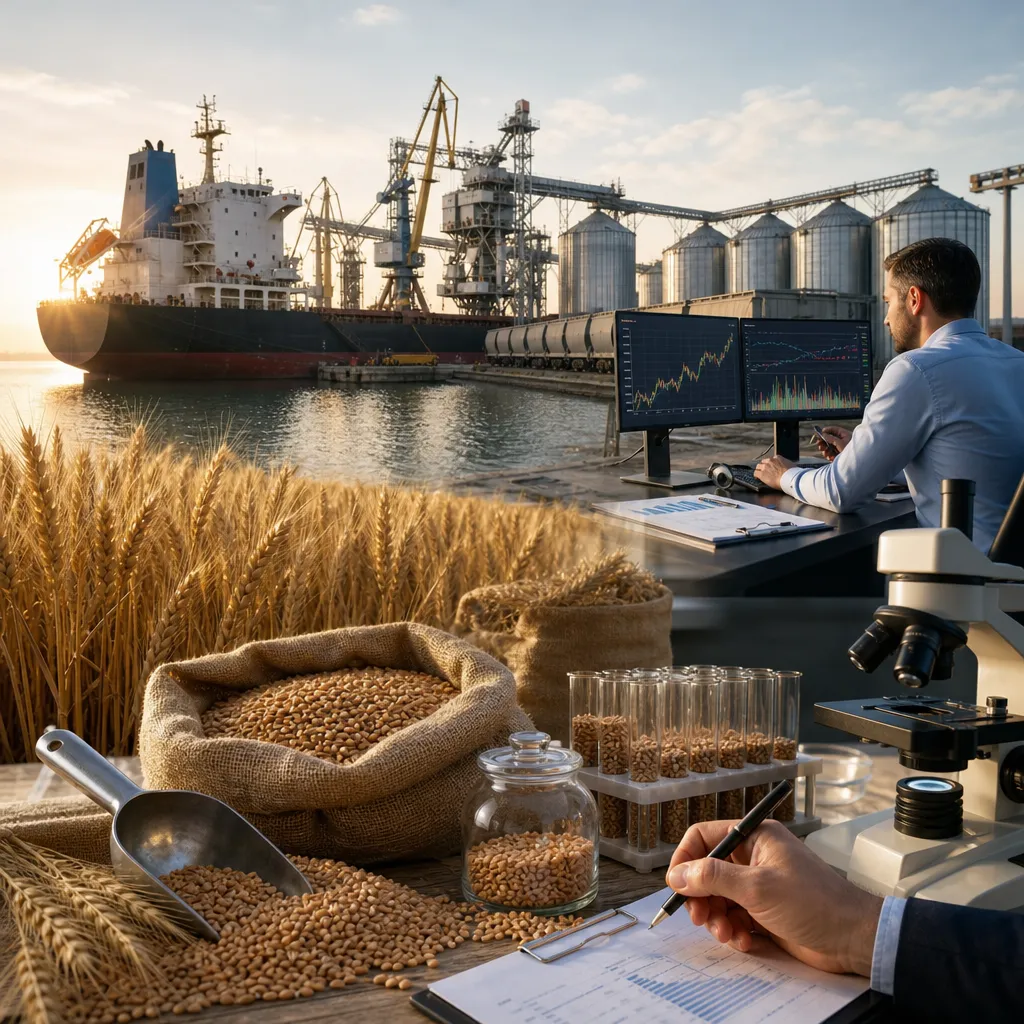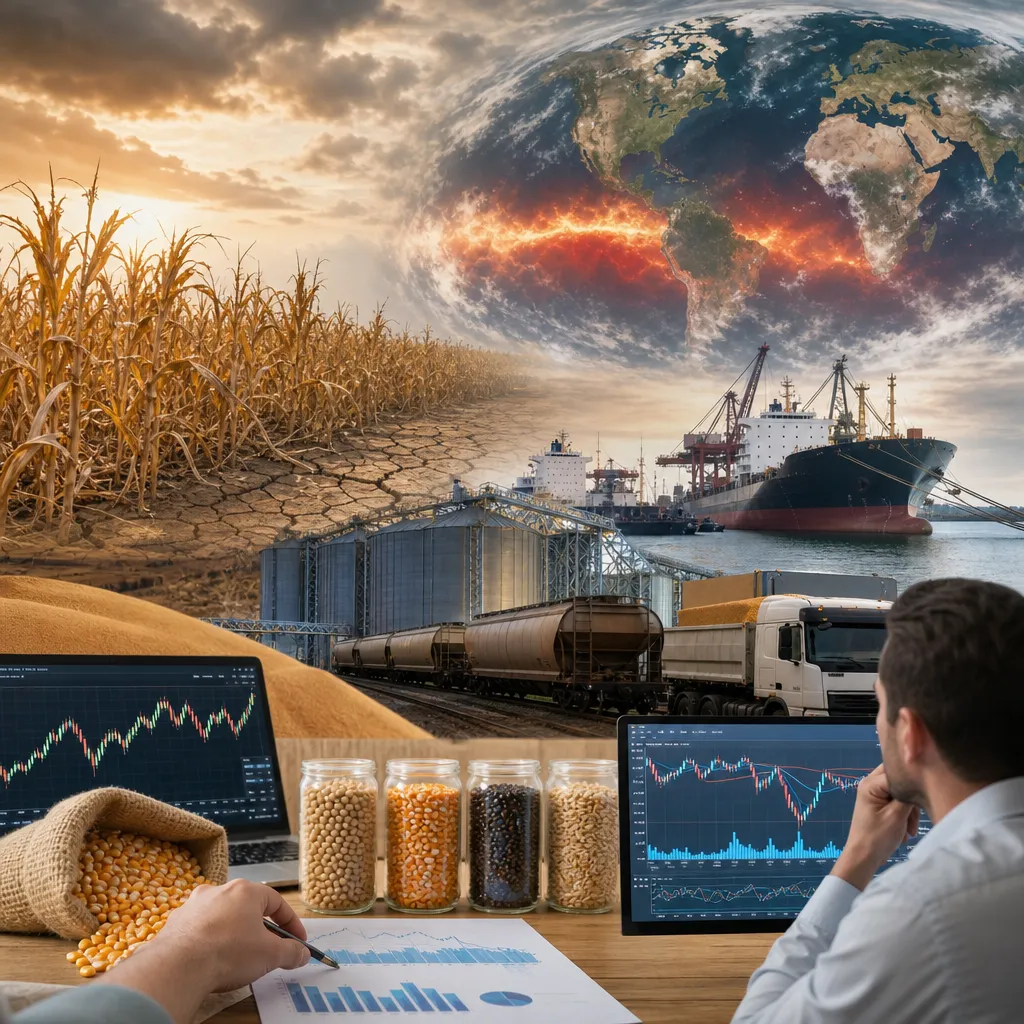


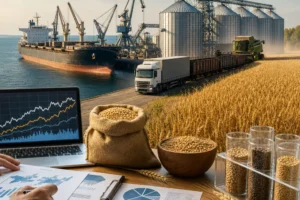

La Niña can move grain prices, but it does not do so in a simple or automatic way. In practice, it changes weather probabilities across important crop regions, and grain markets then reprice yield risk, export capacity, quality, and logistics. The strongest price effects usually appear first in exchange-traded futures such as corn, soybeans, and wheat, and then filter into local cash bids offered by elevators, cooperatives, merchants, mills, and exporters. To use La Niña information well, readers need to connect weather signals with crop calendars, basis, freight, government reports, and the difference between financial markets and physical grain trade.
For farmers, merchandisers, processors, and traders, the practical question is not just whether La Niña is bullish or bearish, but where it affects production and how that changes tradable prices. A dry spell in southern Brazil or Argentina can influence soybean meal, corn exports, and ocean freight; excess rain in another region may matter more for quality than for yield. The market responds through futures exchanges, local cash negotiations, and official crop reporting systems, not through a single global “grain price.”
What La Niña is and why grain markets care
La Niña is the cool phase of the El Niño-Southern Oscillation, a recurring Pacific Ocean and atmosphere pattern that shifts rainfall, temperature, and storm tracks around the world. Grain markets care because crop yields, harvest timing, disease pressure, and export logistics are highly weather sensitive. Wheat, corn, soybeans, rice, sorghum, canola, barley, and sunflower seed all react differently depending on region and season.
La Niña does not guarantee one outcome. It changes odds. For example, one producing zone may face greater drought risk while another may get more favorable moisture. This is why professionals watch La Niña together with planting progress, soil moisture, crop condition ratings, satellite indicators, river levels, port lineups, and export inspections.
In the market, this means weather risk is priced as a probability distribution, not as certainty. Futures can rally before damage is confirmed, fall if rains arrive, or remain firm because of logistics even when yields improve.
How La Niña affects major grain and oilseed prices
The transmission from La Niña to prices usually follows a sequence: weather risk changes expected production; production changes stocks and exportable surplus; and those changes affect futures, basis, spreads, and cash bids. The impact also depends on whether world inventories are comfortable or already tight.
| Crop or market | Typical La Niña concern | How price impact often appears |
|---|---|---|
| Corn | South American dryness, U.S. weather variability, feed demand shifts | Futures volatility, export competition changes, local basis adjustment near feed users and ports |
| Soybeans | Brazil and Argentina yield risk, especially during reproductive stages | CBOT soybean and meal futures react quickly; crushers and exporters may alter bids |
| Wheat | Regional drought or harvest quality issues in key exporters | Protein and milling quality premiums can matter as much as headline futures |
| Rice | Monsoon and irrigation stress in some producing areas | Domestic policy and export controls can dominate weather-driven price moves |
| Canola/rapeseed/sunflower seed | Moisture and heat stress, oilseed substitution effects | Seed prices can move with vegetable oil markets as well as local production outlooks |
Timing matters. A weather threat during planting can reduce acreage or delay emergence. The same weather event later in the season may hit yield potential, grain fill, or harvest quality. In wheat, quality damage can create a divergence between feed wheat and milling wheat values. In soybeans, concern may shift from bean tonnage to soybean meal availability if Argentina’s crush sector is affected.
Where grain prices are actually quoted
Readers often see grain price headlines based on futures markets, but those are not the same as physical prices at a farm gate, elevator, or export terminal. Exchange futures are standardized contracts traded on regulated venues. For global benchmark grain pricing, the most widely watched contracts are on CME Group, including Chicago Board of Trade futures for corn, soybeans, soybean meal, soybean oil, and wheat.
These futures are quoted online through exchange websites, broker platforms, financial data terminals, charting software, and market-data services. A futures quote identifies the contract month, unit, and currency. It is a financial benchmark and can be used for hedging or speculation.
Local cash prices are different. Farmers and physical buyers usually check bids from nearby grain elevators, cooperatives, merchants, feed mills, ethanol plants, crushers, flour mills, or exporters. Those bids reflect the relevant futures month plus or minus basis, which is the local adjustment for freight, storage demand, handling capacity, quality, and regional supply and demand.
So if La Niña threatens exportable supplies in one country, futures may rise immediately. But a local cash bid elsewhere may rise less, rise more, or even stay weak if storage is full, transport is disrupted, or buyers are not active.
Futures market versus physical grain market
Understanding this distinction is essential when using La Niña as a market signal. A futures trader can respond in seconds through a broker account. A physical grain seller must consider quality specs, delivery point, weigh-in rules, freight, drying, and payment terms.
| Market type | Where it exists | What price means | Who uses it |
|---|---|---|---|
| Futures | Regulated exchanges such as CME Group, accessed through futures brokers and trading platforms | Standardized benchmark for a contract month, not a local farm-gate payment | Hedgers, merchants, processors, funds, proprietary traders, analysts |
| Options on futures | Exchange-traded through futures brokers | Right, not obligation, to buy or sell futures at a strike price | Farmers, commercial hedgers, traders managing upside or downside risk |
| Cash grain | Elevators, cooperatives, merchants, processors, exporters, direct contracts | Actual bid or negotiated sale for physical grain at a named location and quality | Farmers, livestock feeders, mills, crushers, feed companies, exporters |
| OTC physical or basis contracts | Private bilateral agreements with merchants or processors | Customized terms for delivery window, basis, quality, quantity, and payment | Commercial grain participants |
In a La Niña year, it is common for futures to react first and basis to adjust later as local participants discover whether grain will be short, quality will vary, or logistics will tighten.
How farmers, buyers, and traders use La Niña information in practice
Farmers use La Niña mainly for marketing timing, hedging decisions, crop mix discussions, and storage planning. If weather risk appears elevated during a crucial growth period, some may protect price floors with futures hedges or put options rather than making large unpriced sales. Others may lock in basis when local demand is strong but leave futures open if they expect a weather-driven rally.
Processors and feed buyers use La Niña to plan coverage. A crusher, mill, or feed manufacturer may increase nearby purchases if production or transport risks threaten availability. Exporters watch port congestion, barge flow, river depth, and vessel lineups, because weather effects can move from field conditions into logistics costs.
Traders generally combine weather views with official reports and position data. Watching La Niña alone is not enough. They monitor crop condition reports, export sales, commitments of traders, and spread structure between nearby and deferred futures months.
For anyone trading futures or options, access is typically through a regulated futures broker. That requires a brokerage account suitable for derivatives, margin funding for futures, and a clear understanding of contract size, tick value, first notice day, and expiration. This is financial trading. It is separate from arranging truckloads, railcars, barges, or vessel cargoes of physical grain.
Where to check La Niña-related grain market information
The most reliable workflow combines weather agencies, official agriculture reports, exchange data, and local cash channels.
- Weather and climate outlooks: National meteorological agencies and climate centers explain whether La Niña conditions are present and what regional weather risks may increase. They provide the climate context, not a grain price forecast.
- USDA reports: USDA publishes WASDE, Crop Progress, Export Sales, Grain Transportation information, and other reports that help convert weather concerns into supply, demand, and logistics implications.
- Exchange market data: CME Group provides contract specifications and market information for grain futures and options. Traders use this to track benchmark prices, spreads, and options activity.
- CFTC positioning data: Commitments of Traders shows how commercial hedgers and speculative funds are positioned in U.S. futures markets.
- Local bids: Farmers and physical buyers normally obtain these from elevator websites, cooperative bid sheets, merchant apps, processor bid boards, phone quotes, or local agricultural market reporting systems where available.
Commercial data platforms and farm marketing software can help aggregate futures, basis, and weather information, but readers should distinguish between data tools and actual buying or selling counterparties. A charting platform may show corn futures instantly; it does not mean grain can be delivered there.
How La Niña changes hedging and risk management
La Niña tends to increase weather-related volatility, and volatility changes the cost and behavior of hedging tools. A producer who sells futures to lock in a price floor faces margin calls if the market rises, even when higher futures may be good news for unsold grain. An option buyer pays an upfront premium instead of posting variation margin in the same way, but that premium can become expensive when weather uncertainty is high.
Basis risk remains important. Even if a hedge works on the futures side, a local cash bid can still disappoint if storage is congested, quality discounts widen, or freight costs rise. Conversely, in a regional shortage, basis can strengthen sharply and boost the local cash price more than the futures move alone.
Common practical tools include:
- Forward cash contracts with an elevator, cooperative, processor, or merchant
- Hedge-to-arrive arrangements where permitted by the buyer
- Short futures hedges for expected production
- Put options to establish a minimum futures value while keeping upside open
- Storage combined with deferred sales if carry and basis justify waiting
None of these removes production risk. Selling too much ahead of harvest in a La Niña year can create under-delivery risk if yields fail. Buyers face the opposite risk if they delay coverage during a tightening supply situation.
Physical grain trade during La Niña: storage, quality, and logistics
Weather-driven price changes are only part of the business. In physical grain markets, La Niña can alter grain quality, harvest pace, and transport reliability. A dry stress event may reduce test weight or kernel size; excessive moisture can affect disease, sprouting, and drying needs. These factors matter because physical contracts often specify grade, moisture, protein, oil content, foreign material, falling number, or other quality metrics depending on the crop and destination.
Transactions usually occur through one of several channels: sale to a local elevator or cooperative; direct contract with a processor such as a crusher, ethanol plant, feed mill, or flour mill; sale to a merchant for export movement; or use of a broker in some commercial markets. The contract should identify quantity, delivery window, delivery point, pricing formula, quality standards, discounts, and payment timing.
Storage decisions become more sensitive in volatile weather years. On-farm bins offer flexibility but require aeration, moisture management, and monitoring for spoilage. Commercial storage at elevators or warehouses can improve market access and logistics, but users must understand handling charges, shrink, drying charges if applicable, and release timing. These terms vary by provider and region and should be confirmed before delivery.
Key limitations when linking La Niña to prices
La Niña helps explain risk, not guaranteed direction. Grain prices can fall during La Niña if acreage expands, yields improve outside the troubled region, exports slow, currencies move against exporters, or macroeconomic conditions weaken demand. Energy markets also matter, especially for corn and vegetable oils linked to ethanol and biodiesel.
Another limitation is region mismatch. A global news story about La Niña may focus on one country while a reader’s local market is driven by another crop, another currency, or another freight route. A corn grower should not assume that a jump in CBOT futures will translate directly into a higher nearby elevator bid for wet grain with high drying costs.
The practical lesson is to use La Niña as one layer in a broader market process: climate outlook, crop stage, official reports, futures reaction, local basis behavior, and physical contracting terms.
Does La Niña always make grain prices rise?
No. It can increase weather risk and volatility, but the final price direction depends on where production is affected, how large world stocks are, whether other regions offset losses, and how demand responds. Futures may rally on fear and later fall if crop damage is less severe than expected.
Where can I check grain prices affected by La Niña?
For benchmark futures, check regulated exchange market data such as CME Group or data provided through futures brokers and market-data vendors. For actual local selling prices, check bids from elevators, cooperatives, processors, merchants, or local agricultural market reporting systems. The local cash bid is the usable physical price, not the futures quote alone.
Can I trade La Niña through grain futures?
You can trade grain futures or options if you have access through a regulated futures broker, but you are trading standardized financial contracts, not buying truckloads of grain. This involves leverage, margin, and significant risk. Physical grain buying and selling is done separately through commercial grain counterparties.
Why might my local cash price move less than futures?
Because basis can offset the futures move. Local supply, elevator space, freight, rail or barge availability, processor demand, and grain quality all affect basis. In some cases, futures rally while basis weakens.
Which reports are most useful during a La Niña grain market?
USDA WASDE, USDA Crop Progress, USDA Export Sales, transportation-related USDA publications, exchange contract information from CME Group, and CFTC Commitments of Traders are among the most useful. They help translate weather concern into supply, demand, and positioning.
How do physical grain sellers use La Niña without speculating?
They often use it to time incremental sales, review crop insurance and production risk, consider basis contracts or forward contracts, and decide whether futures or options hedges make sense. The goal is risk control, not prediction with certainty.
Does La Niña matter for grain quality as well as yield?
Yes. It can affect moisture, disease pressure, test weight, and harvest conditions. In wheat especially, quality changes can create different price outcomes for milling grain and feed grain even if headline futures move only modestly.
Sources
- USDA World Agricultural Supply and Demand Estimates
- CME Group agricultural futures and options contract information
- U.S. Commodity Futures Trading Commission Commitments of Traders