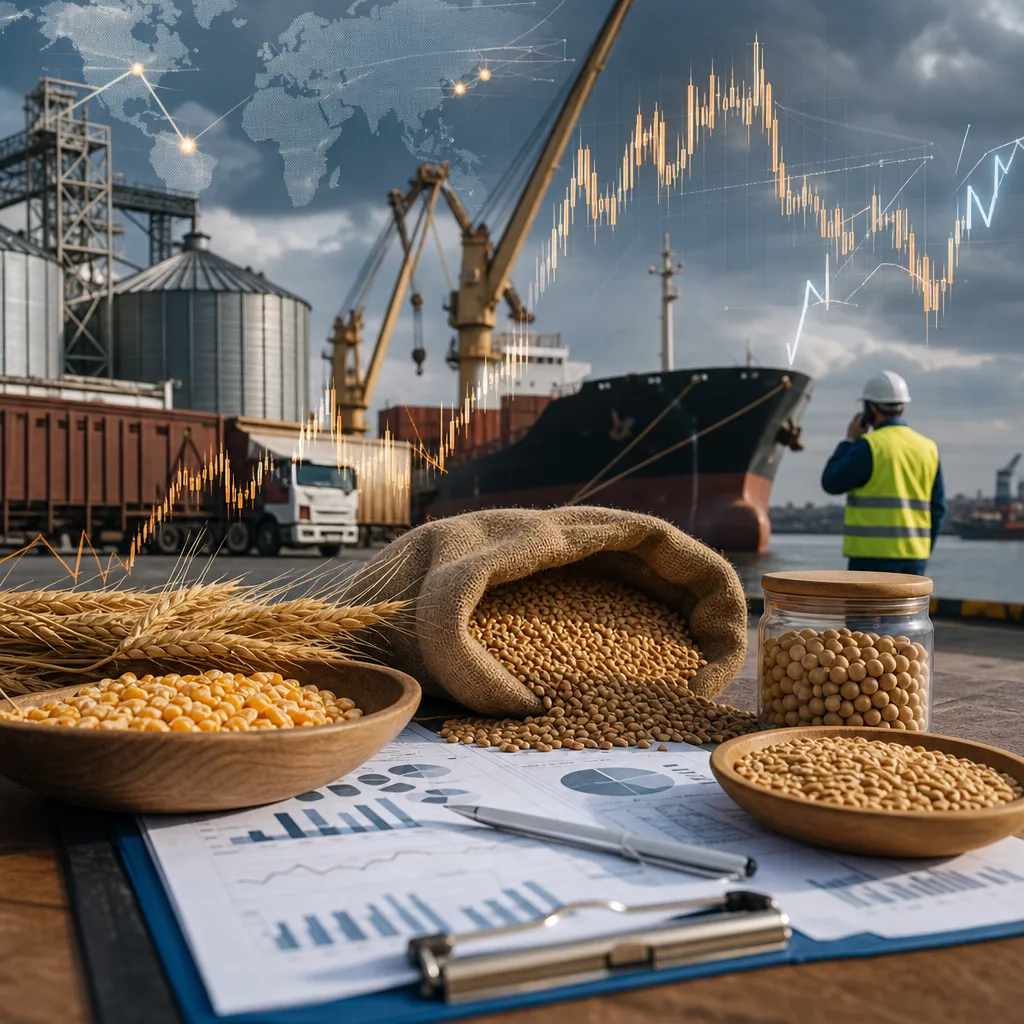
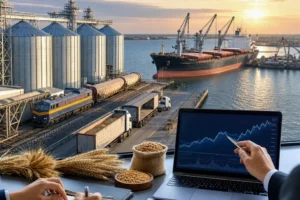




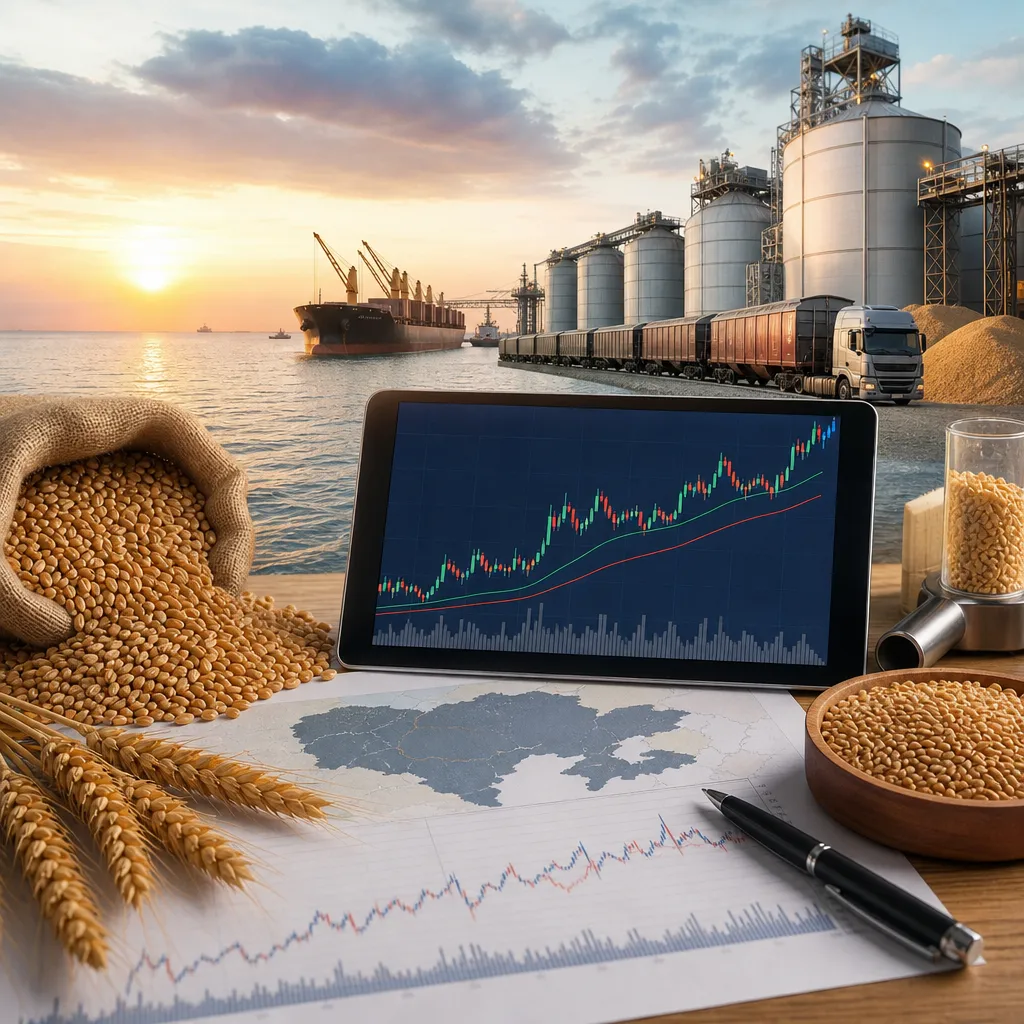
The Black Sea wheat market refers mainly to export and physical grain trade centered on the coastal exporting zones of Russia, Ukraine, and Romania, with Bulgaria also relevant in regional trade. In practice, “Black Sea wheat price trends” usually means changes in export prices, port bids, inland cash values, and the relationship between local wheat markets and global benchmarks such as Chicago and Euronext wheat futures. It is not a single exchange-traded market with one official spot price. Instead, it is a network of farm, elevator, rail, river, terminal, and export transactions that feed one of the world’s most important wheat-supplying regions.
For readers tracking prices, the first step is to identify which Black Sea market is being discussed: Russian FOB export offers, Romanian port values, Ukrainian delivered port bids, or inland farm-gate prices. These can move together, but they are not identical. Currency, logistics, quality, policy risk, and export flow can make local cash prices differ sharply from futures or from neighboring countries.
What the Black Sea wheat market means
The Black Sea wheat market is a regional export market rather than one centralized venue. It matters because the region is a major supplier of milling and feed wheat into North Africa, the Middle East, and parts of Asia. When traders discuss Black Sea wheat trends, they are usually referring to physical export wheat offered from ports on or connected to the Black Sea.
The main countries to understand are:
- Russia — the dominant regional wheat exporter in many seasons, with export pricing often quoted as FOB at Black Sea ports.
- Ukraine — a major wheat producer and exporter, though trade flows can be heavily shaped by war-related logistics and policy constraints.
- Romania — an important European Union wheat exporter with Black Sea access, and a key reference for EU-origin wheat flowing through Constanța.
- Bulgaria — smaller than the three above, but still relevant as a regional exporter.
Wheat in this market is usually discussed in metric tons or metric tonnes. Export prices are commonly quoted in U.S. dollars per metric ton for FOB trade, while domestic cash prices may be quoted in local currencies per tonne. Romanian wheat prices may also be closely watched relative to Euronext wheat futures, while Russian and Ukrainian export values are often assessed against global tender demand and broader world wheat competition.
Where the market operates
The market operates across several layers. Grain is produced inland, moved by truck, rail, barge, or combinations of these, assembled at elevators or export terminals, then sold into export channels. The “Black Sea price” often seen in market commentary is usually an export market indication, not the price a farmer receives at the farm gate.
Important market locations include:
- Inland production areas where farmers sell to local merchants, elevators, mills, or exporters.
- River and rail hubs where grain is aggregated and prepared for longer-distance movement.
- Port markets where exporters bid for grain delivered to terminal.
- FOB export markets where trading houses sell wheat onto vessels for overseas buyers.
- Import tenders in destination markets, which indirectly help set Black Sea export competitiveness.
Romania’s role is strongly linked to the port of Constanța and the wider EU market structure. Russia’s market is organized around its own exporting port system on the Black Sea and nearby shipping routes. Ukraine’s market has depended not only on ports but also, at times, on overland and river export channels because logistics conditions can change materially.
| Market layer | Where it operates | How wheat is priced | Typical users |
|---|---|---|---|
| Farm-gate cash market | Production regions inland | Local currency per tonne, discounted for transport and quality | Farmers, local buyers, cooperatives |
| Delivered inland market | Mills, feed plants, inland elevators | Delivered price including transport to buyer | Processors, merchants, feed users |
| Port bid market | Black Sea export terminals | Delivered port or terminal bid, often tied to export demand | Exporters, merchants, logistics firms |
| FOB export market | Port loading basis | U.S. dollars per metric ton FOB | Global trading houses, importers, state buyers |
How Black Sea wheat prices are formed
Black Sea wheat prices are formed by the interaction of global wheat benchmarks and very local physical conditions. A headline export price often starts with what importers are willing to pay, then works backward through freight, port costs, handling, margins, and inland transport to produce a port bid and then a farm-level price.
The key price concepts are:
- Futures price — a benchmark from an exchange such as CME wheat futures or Euronext milling wheat futures. This is a financial reference, not a local cash bid.
- Cash bid — what a local buyer offers for physical wheat at a named location and quality.
- Delivered price — the value paid with transport to a specified buyer or port included.
- FOB price — free on board; the seller loads wheat onto a vessel at the export port.
- CIF price — cost, insurance, and freight to the destination; more relevant to the importer than to the inland farmer.
- Basis — the difference between the local cash price and the benchmark futures or export reference.
In Black Sea wheat, basis can move because of local supply pressure during harvest, lineups at export terminals, railcar availability, inspection requirements, quality spreads, and competition among exporters. Protein content, test weight, moisture, and other specifications matter greatly. Milling wheat and feed wheat can trade at very different values even in the same region.
Currency is also important. A wheat exporter may price grain in U.S. dollars for export business, while a farmer faces local-currency input costs and receives a domestic-currency bid. This means exchange-rate movements can raise or lower local farm returns even if the dollar-denominated export market is stable.
Main drivers behind Black Sea wheat price trends
Price trends in the region are shaped by a mix of agricultural, logistical, macroeconomic, and political forces. Because Black Sea wheat is so export-oriented, local prices are often highly sensitive to changes in world demand.
| Driver | Typical effect on prices | Why it matters in the Black Sea |
|---|---|---|
| Weather and yields | Can strengthen or weaken export offers and inland bids | The region is a major supplier, so crop stress quickly affects trade expectations |
| Harvest pace | Fast harvest can pressure nearby cash prices | Large volumes enter the market at once and strain storage and transport |
| Export demand and tenders | Aggressive importer demand can lift FOB and port bids | The region sells heavily into international tenders |
| Freight and logistics | Higher internal transport costs can weaken farm-gate values | Distance to port and corridor reliability are crucial |
| Currency changes | Affect local-currency returns and export competitiveness | Black Sea wheat is globally traded but domestically paid for |
| Government policy | Can reshape export pace and price relationships | Export taxes, quotas, inspections, and wartime restrictions matter |
| Competition from other exporters | Can cap rallies or force discounting | U.S., EU, Canada, Australia, and Argentina all compete for import demand |
How to check Black Sea wheat prices online
There is no single official screen for all Black Sea wheat prices, so readers usually need several sources. For futures benchmarks, exchange data is straightforward. For physical export and cash market information, market reporting agencies, government reports, and trade publications are more useful.
Practical places to check include:
- CME Group — for U.S. wheat futures benchmarks used globally in risk management.
- Euronext — for European milling wheat futures, especially relevant for Romania and the broader EU wheat market.
- USDA — for world wheat balance sheets, export competition, and country-level supply and demand context.
- European Commission — for EU grain market information, useful when following Romanian and Bulgarian trade conditions.
- Local merchants, cooperatives, and elevators — for actual physical bids in a specific region or delivery point.
- Export market reports and brokers — for FOB indications, tender results, and destination-market comparisons.
When checking prices, always note:
- The commodity specification — milling or feed wheat, protein if stated.
- The location — inland, delivered port, or FOB.
- The currency — usually local currency for domestic trade, U.S. dollars for export trade.
- The unit — usually metric ton.
- The timing — nearby spot, prompt shipment, or forward delivery.
A futures chart may show the direction of global wheat values, but it does not show the truck bid at a Romanian elevator, the delivered port value in Ukraine, or the FOB offer from a Russian exporter. Those require location-specific market information.
Physical buying, selling, export, and import in the Black Sea wheat trade
Most wheat in the region is bought and sold physically through merchants, cooperatives, processors, mills, feed manufacturers, and exporters. The process normally begins with a contract specifying quality, quantity, delivery period, and payment terms.
For physical grain trade, the usual steps are:
- Farmer or originator offers wheat to a local buyer or exporter.
- Buyer applies a quality specification and delivery location.
- Price is set as a flat cash number or as a formula tied to a benchmark.
- Grain moves by truck, rail, or barge to storage, processor, or port.
- At export level, an exporter sells wheat FOB to an overseas buyer or into a tender.
Payment risk, quality claims, rejection clauses, and logistics execution all matter. In highly export-driven markets, a strong port bid can pull grain away from domestic processors. In weaker export periods, mill or feed demand may become the main support for inland prices.
For imports, Black Sea wheat is often purchased by overseas millers, state import agencies, or private grain buyers. Many importing countries buy through tenders where different origins compete. A successful Black Sea bid depends not only on price but also on freight, timing, reliability, and quality confidence.
Hedging and futures: what traders can do online versus in the physical market
It is important to separate physical ownership from financial hedging. A farmer or merchant may watch futures online every day without ever delivering against that futures contract. Futures and options are risk-management tools; the physical wheat still changes hands through local commercial channels.
Futures and options typically work like this:
- A trader opens an account with a regulated broker.
- The trader posts margin and gains price exposure through standardized contracts.
- A hedger uses futures to reduce price risk on wheat they own or plan to buy or sell.
- A speculator uses the same contracts to trade price direction without handling physical wheat.
For Black Sea market participants, the most relevant benchmarks are often CME wheat contracts and Euronext milling wheat futures. These are not perfect matches for every Black Sea origin, so basis risk remains. A Romanian exporter may hedge against Euronext more naturally than a Russian inland merchant, but neither hedge eliminates differences in freight, quality, port congestion, or local policy shifts.
Someone buying physical wheat in the Black Sea region normally does so through a merchant, originator, processor, or exporter. Someone getting price exposure online normally does so through a futures broker. Those are related markets, but they are not the same transaction.
Trend analysis and practical forecast framework
Forecasting Black Sea wheat prices should be done as a scenario exercise, not as a certainty. Because the region is exposed to weather, geopolitics, logistics, and tender-driven export demand, price outlooks can change quickly.
A practical framework is:
- Bullish scenario — crop stress, lower exportable surplus, stronger importer demand, disrupted logistics elsewhere, or supportive currency moves can tighten export offers and lift port bids.
- Neutral scenario — adequate harvest, normal exports, balanced tender activity, and stable benchmark futures often keep prices range-bound.
- Bearish scenario — large crops, aggressive selling at harvest, weak import demand, or strong competition from other exporters can pressure both FOB and inland cash markets.
Readers should monitor not just world wheat futures, but also harvest progress, quality results, export policy announcements, and destination-market tender outcomes. In the Black Sea, the direction of prices often depends on whether export channels are open, competitive, and logistically efficient.
Practical reading of Black Sea wheat price trends
If you are following this market professionally, always ask four questions before drawing a conclusion from any quote. First, what origin is it? Second, is it inland, delivered port, or FOB? Third, what quality does it represent? Fourth, is it a prompt price or a forward shipment indication?
That discipline helps avoid one of the most common mistakes: treating a benchmark futures move or an export headline as if it were the same thing as the local wheat price available to a grower. Black Sea wheat trends are best understood as a chain of connected markets, from the farm to the vessel, each with its own pricing logic.
What is the main benchmark for Black Sea wheat prices?
There is no single official Black Sea benchmark. Traders often use FOB export indications from the region and compare them with CME and Euronext wheat futures, tender results, and country-specific port bids.
Where can I check Black Sea wheat prices online?
Use CME Group and Euronext for futures benchmarks, USDA for global wheat context, the European Commission for EU grain information, and local merchants or market reports for actual physical bids and export indications.
Why are Black Sea wheat prices often quoted in U.S. dollars?
Export wheat is commonly traded internationally in U.S. dollars per metric ton, especially FOB cargo business. Domestic transactions may still be negotiated or settled in local currency.
Are Black Sea wheat prices the same as farm-gate prices?
No. Farm-gate prices are usually lower than export quotes because they reflect transport, storage, handling, local demand, quality discounts, and buyer margins.
How is Romanian wheat different from Russian or Ukrainian wheat in pricing?
Romanian wheat is closely connected to the EU market and Euronext benchmark structure, while Russian and Ukrainian wheat are more often discussed in export-origin terms tied to FOB trade, logistics, and policy conditions specific to those countries.
Can I trade Black Sea wheat through a futures exchange?
You can trade wheat futures or options through a broker on major exchanges, but that gives financial exposure, not physical ownership of Black Sea wheat. Physical trade happens through commercial contracts with merchants, exporters, processors, or buyers.
What usually moves Black Sea wheat prices the most?
Weather, harvest size, protein quality, export demand, freight and port logistics, currency changes, and government policy are usually the most important drivers.
Sources
- USDA Foreign Agricultural Service
- Euronext
- European Commission