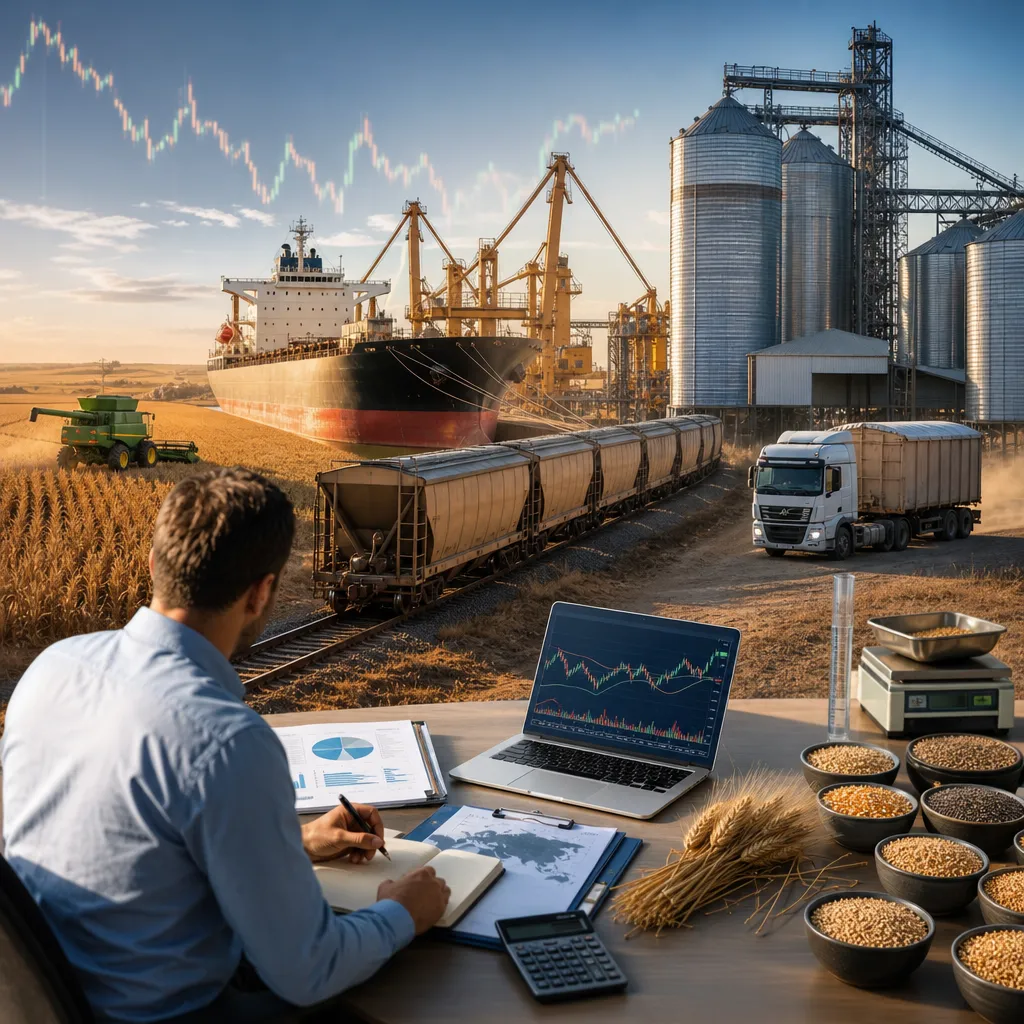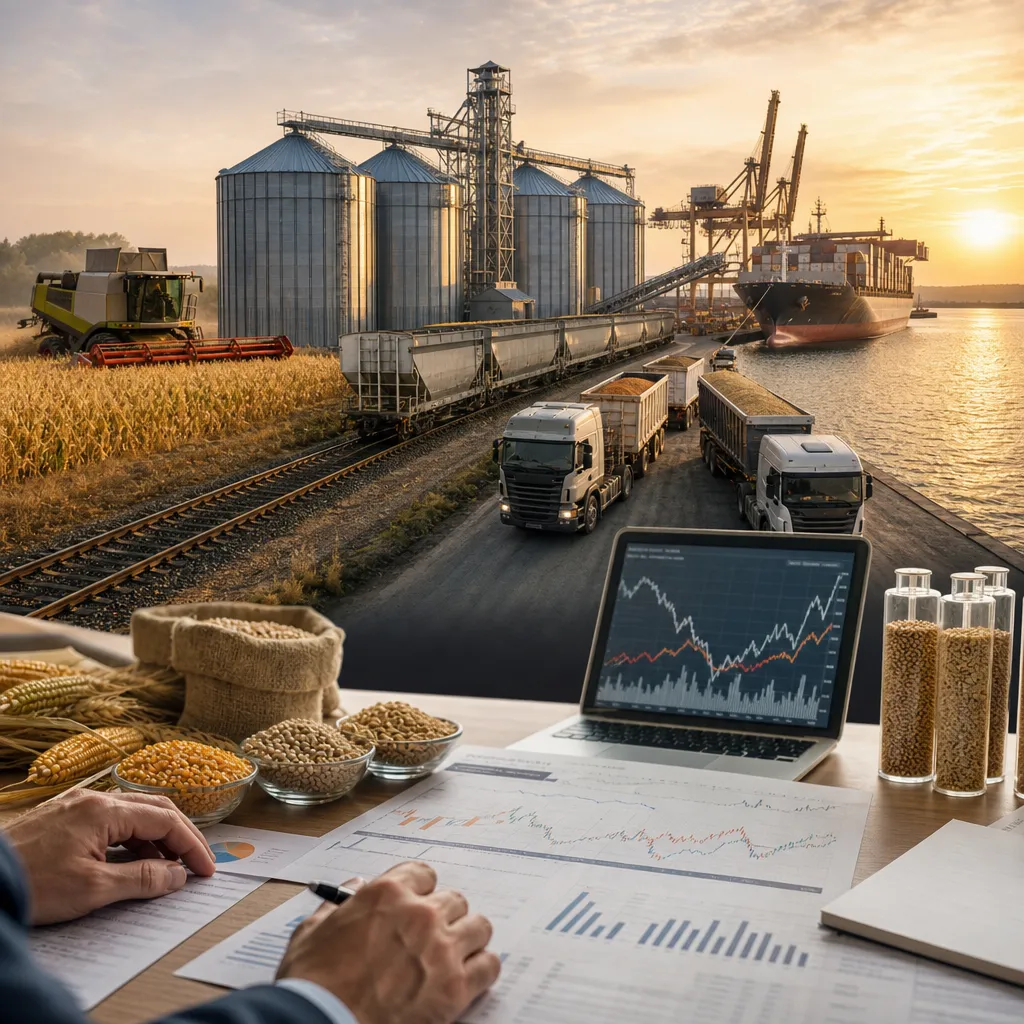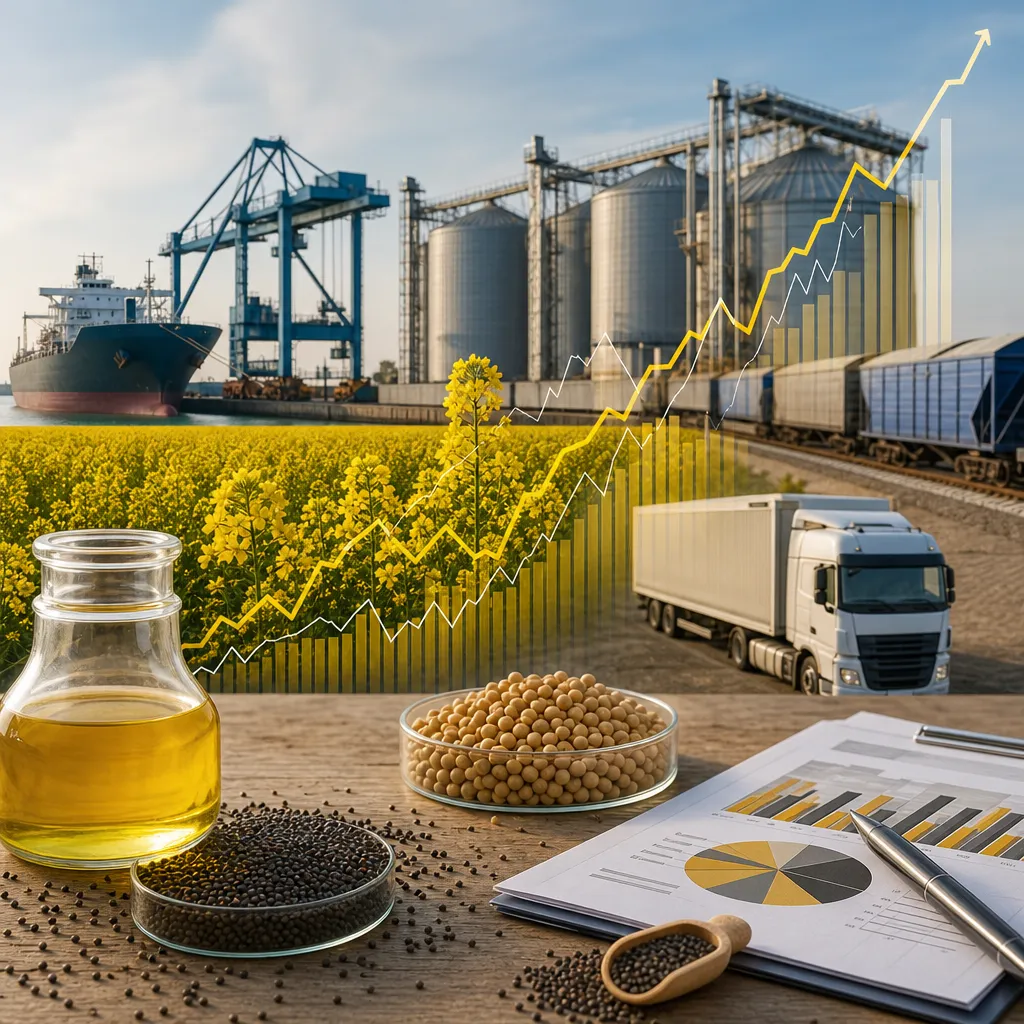



The EU rapeseed market is a regional oilseed market centered on the European Union, with prices, trade flows, and hedging activity linked most closely to Euronext rapeseed futures. In practice, the market operates across major producing countries such as France, Germany, Poland, Romania, and the Czech Republic, while crushing demand, biodiesel policy, and imports from non-EU origins also shape pricing. Physical rapeseed is usually traded in euro per metric tonne, but the price a farmer, crusher, merchant, or exporter sees depends on location, quality, delivery terms, and timing. Anyone following this market needs to understand both the exchange benchmark and the local cash market, because they are related but not identical.
Rapeseed in the EU is both an agricultural crop and an industrial feedstock. It is crushed into rapeseed oil and meal, with oil especially relevant to food use and biofuels, while meal competes in the feed market. That means EU rapeseed prices respond not only to harvest size and export flows, but also to vegetable oil markets, energy prices, and biodiesel economics.
This guide explains where the EU rapeseed market operates, how prices are formed, where to check prices online, and how physical and financial trading actually works in Europe.
What the EU rapeseed market is
The EU rapeseed market refers to the interconnected market for rapeseed production, processing, domestic trade, imports, exports, and price risk management within the European Union. It is not a single local cash market in one city. Instead, it is a network of farm-gate, inland, crusher, and port markets connected by transport, trade, and futures pricing.
Rapeseed is one of the EU’s main oilseeds. It is grown widely in northern and central Europe and processed by crushers into oil and meal. The EU is also an importer, because domestic production does not always fully cover crushing demand. Imported rapeseed and competing oilseeds can therefore influence internal prices.
The most relevant benchmark for European rapeseed pricing is the Euronext rapeseed futures market. Traders often still refer to it informally as MATIF rapeseed. This benchmark matters because it gives the region a transparent reference price for forward trading and hedging, but physical deals are still negotiated separately.
Where the market operates in Europe
The largest practical rapeseed markets in the EU are located where the crop is grown, crushed, or exported and imported. France is especially important because it is a major producer and a central reference point for Euronext pricing. Germany is another key producer and crusher market. Poland, Romania, and the Czech Republic are also significant in the physical trade, while Benelux and some coastal areas matter for trade logistics and processing.
Physical rapeseed may change hands in several locations:
- At farm level through cooperatives, merchants, or collectors.
- At inland silos and crushers on ex-farm, delivered, or stored basis.
- At river and rail-connected terminals.
- At export or import ports, where FOB or CIF pricing may become relevant.
Most EU physical prices are discussed in euro per metric tonne. However, trade flows can also be affected by non-euro countries inside the EU and by external suppliers whose costs are linked to other currencies. Because rapeseed competes in an international oilseed complex, currency moves between the euro and other major currencies can affect import parity and export competitiveness.
| Market layer | Where it operates | Main users | Typical pricing logic |
|---|---|---|---|
| Farm and local collection | Producing regions across the EU | Farmers, cooperatives, merchants | Local cash bid, often influenced by futures plus or minus basis |
| Crusher market | Industrial processing areas | Crushers, merchants, farmer sellers | Delivered plant price based on processing demand and logistics |
| Port/export-import market | Coastal and trade hub locations | Exporters, importers, international traders | FOB, CIF, or delivered terminal values |
| Futures market | Euronext exchange access via brokers | Hedgers, funds, trade houses, processors | Standardized futures contracts used as benchmark and hedge |
How EU rapeseed prices are formed
The most important point in this market is that there is no single “EU rapeseed price” that every seller receives. Price formation starts with a benchmark and then adjusts for local realities.
The benchmark is often the nearby or a relevant forward Euronext rapeseed futures contract. From there, physical market participants apply a basis, which is the difference between the futures price and the local cash price. The basis can be positive or negative depending on location, quality, demand, and logistics.
Several price types are common:
- Futures price: the exchange-traded benchmark for a standard contract month.
- Local cash bid: the price offered by a local buyer, cooperative, or merchant, often for farm pickup or delivered intake.
- Delivered price: a price to a crusher, warehouse, or terminal including transport to that point.
- FOB price: a port export value based on loading the commodity on board a vessel.
- CIF price: an import value that includes cost, insurance, and freight to the destination port.
Key factors behind price formation include:
- EU and member-state crop size and quality.
- Crushing margins and demand for rapeseed oil and meal.
- Biodiesel demand and policy environment.
- Competing vegetable oil prices, especially soy, palm, and sunflower oil markets.
- Import availability from non-EU origins.
- Transport costs by truck, rail, barge, and vessel.
- Storage availability and harvest selling pressure.
- Currency effects, especially when imports become more or less competitive.
A local buyer in inland Germany or Poland may therefore post a bid that differs noticeably from the Euronext futures screen. That difference does not mean the market is mispriced; it reflects basis and logistics.
The role of Euronext rapeseed futures
Euronext is the main exchange benchmark for EU rapeseed. It provides standardized futures contracts used by merchants, crushers, exporters, and financial participants to manage or take price exposure. The contract is not the same thing as a physical truckload at a local silo, but it is the reference point for much of the region’s commercial pricing.
Futures are mainly used for two purposes:
- Hedging: A physical participant uses futures to reduce price risk. For example, a crusher buying seed in the cash market may hedge by selling products or managing seed exposure through futures. A merchant buying from farmers may sell futures against inventory.
- Speculation: A financial trader takes a view on price direction without handling the physical crop.
Exchange trading requires access through a broker or trading platform connected to the exchange. Participants need a trading account and must manage margin requirements. Because futures are leveraged instruments, gains and losses are marked to market.
For most farmers and many small commercial firms, futures are not the place where physical rapeseed is “sold” in the everyday sense. The physical crop is usually sold to a real buyer in the cash market. Futures are used to hedge or benchmark that sale.
| Feature | Physical rapeseed trade | Futures/options trade |
|---|---|---|
| What is traded | Actual rapeseed with quality and delivery terms | Standardized financial contract linked to rapeseed price |
| Where it happens | Farm, cooperative, merchant, crusher, terminal, port | Exchange access through broker or trading platform |
| Main purpose | Transfer ownership of grain | Manage price risk or take market exposure |
| Price structure | Cash bid, delivered price, FOB, CIF, basis | Quoted futures price by contract month |
| Key risks | Quality, logistics, counterparty, storage | Margin calls, volatility, basis risk, expiry management |
How physical rapeseed is actually bought and sold
In the EU, physical rapeseed trade usually starts with bilateral contracts rather than exchange delivery. Farmers commonly sell to cooperatives, country elevators, traders, or crushers. The contract may be spot, forward, fixed price, or linked to a futures reference.
Typical deal elements include:
- Quantity.
- Delivery period.
- Delivery point and Incoterm or local delivery condition.
- Quality specifications such as moisture, impurities, and oil content where relevant.
- Price formula, either fixed or futures-based.
- Payment terms.
A crusher may buy directly from growers or through merchants. A merchant may buy from inland sellers, assemble volume, and resell to a crusher or port terminal. Exporters may buy at port or move seed from the interior to export position if arbitrage supports it. Importers and processors compare domestic replacement cost with imported alternatives.
Counterparty risk matters. Commercial firms typically assess the financial reliability of trading partners, especially on deferred shipment or large-volume contracts. Storage and transport also matter because rapeseed quality can deteriorate if handled badly.
Online tools are used heavily for market monitoring and communication, but most real physical flows still depend on contracts, logistics scheduling, quality control, and settlement in the offline commercial chain.
How imports, exports, and logistics affect the market
The EU rapeseed market is strongly influenced by cross-border movement. Even when the EU produces a large crop, regional deficits and surpluses still create active internal trade. In years of tighter supply, imports become especially important for crushers.
Port and terminal pricing matters because imported seed can cap inland prices if delivered replacement cost is competitive. Conversely, strong crusher demand inland can pull seed away from export channels. This relationship often shows up in basis moves more than in futures alone.
Practical logistics routes may include truck movement from farm to collection point, rail to industrial users, barge movement on navigable inland waterways where available, and vessel movement through major EU ports. The exact route influences the net price because transport costs are deducted from what the buyer can pay at origin.
For traders, the key concept is parity:
- Import parity: the price level at which imported rapeseed can compete with domestic supply.
- Export parity: the price level at which domestic rapeseed can be sold competitively into external markets.
These parity calculations are commercial tools, not public benchmark prices. They depend on freight, insurance, handling, quality, and timing.
Where to check EU rapeseed prices and market information online
If you need the current benchmark price, the first place to check is Euronext for rapeseed futures. That gives the exchange reference, by contract month, in euro per tonne. It does not automatically tell you the exact local cash price in a French, German, Polish, or Romanian interior market.
For physical and policy-related market information, useful sources include:
- Euronext: benchmark rapeseed futures and market data for exchange-traded pricing.
- European Commission: market overviews, agricultural policy context, and trade-related information relevant to oilseeds and biofuels.
- Eurostat: trade statistics and broader agricultural data for EU member states.
- USDA Foreign Agricultural Service: oilseed balance analysis, trade context, and country reports that often cover the EU oilseed complex.
- Local cooperatives, merchants, and crushers: practical cash bids and contract offers in producing regions.
Readers should distinguish carefully between sources:
- Exchange prices show the futures benchmark.
- Government and statistical sources help explain supply, demand, and trade flows.
- Commercial buyers provide the most relevant local cash bid for actual delivery.
If local cash prices are not publicly posted, that is normal. In many EU regions, the real tradable price is discovered through buyer offers, negotiations, or delivery-specific contracts rather than a constantly visible public screen.
Main price drivers and practical market scenarios
EU rapeseed prices can move sharply when multiple drivers line up. The most important drivers are usually crop size, crushing demand, biodiesel economics, competing oilseed markets, and import availability.
Some practical scenarios are worth watching:
| Scenario | What to watch | Likely market implication |
|---|---|---|
| Tight EU crop | Weather damage, poor yields, quality issues | Stronger crusher competition, firmer basis, more import dependence |
| Large domestic harvest | Good planting, mild season, high yields | Harvest pressure may weaken cash basis unless crushers absorb supply well |
| Strong biodiesel demand | Policy support, vegetable oil strength, favorable energy markets | Rapeseed oil value may support crushing demand and seed prices |
| Cheaper competing imports | Improved import economics, weaker euro-denominated domestic replacement values | Domestic prices may face pressure, especially near import channels |
| Logistics disruption | Port bottlenecks, low river levels, rail issues, truck shortages | Wider regional basis differences and local price distortions |
Forecasting this market should always be done in scenarios rather than certainties. A bullish futures market does not guarantee a strong farm-gate price everywhere, and a weak exchange market does not rule out a strong local crusher bid in a short-supply zone.
Practical trading guide for merchants, farmers, and speculators
Physical market users
For a farmer or merchant trading real rapeseed, the process is usually:
- Monitor Euronext futures for the benchmark direction.
- Collect bids from cooperatives, crushers, and merchants.
- Compare basis, delivery terms, drying or quality adjustments, and payment terms.
- Choose between spot sale, forward sale, storage, or a formula contract.
- Confirm logistics and matching quality specifications.
The best practical price is not always the highest nominal bid. Delivered distance, deductions, waiting time, and payment reliability all matter.
Futures and options users
For someone hedging or speculating through Euronext-connected brokerage access, the process is different:
- Open an account with a broker that provides access to Euronext agricultural contracts.
- Understand contract month selection and expiry timing.
- Know that margin is required and losses may need to be funded quickly.
- Use futures for directional exposure or hedge offset, not as a substitute for handling physical grain.
- Manage basis risk, because a hedge can protect benchmark price movement but not every local cash difference.
Options may also be used by some participants to manage risk with more flexible downside or upside structures, but they still require understanding of time value, volatility, and expiry.
FAQ
What is the main benchmark for EU rapeseed prices?
The main benchmark is Euronext rapeseed futures, quoted in euro per tonne. It is the region’s central exchange reference, but it is not the same as a local cash bid.
Where can I check current EU rapeseed prices online?
Check Euronext for the futures benchmark. For physical market context, use European Commission and Eurostat information, and for actual local tradable prices contact cooperatives, crushers, or merchants in the specific region.
Why is my local rapeseed bid different from the futures price?
Because the local bid includes basis. Basis reflects transport, storage, local supply and demand, buyer competition, delivery terms, and quality differences.
Is Euronext futures the same as a farm-gate rapeseed price?
No. Futures are a standardized exchange-traded benchmark. Farm-gate prices are physical cash bids at a specific location and may be above or below futures depending on basis.
How is rapeseed usually sold in the EU physical market?
Usually through contracts with cooperatives, merchants, crushers, or exporters. Deals can be spot or forward and may use fixed prices or formulas linked to futures.
Does the EU rapeseed market depend only on European production?
No. It also depends on imports, vegetable oil markets, biodiesel demand, and broader oilseed competition from soybeans and sunflower seed products.
In what currency and unit is EU rapeseed usually priced?
Most benchmark and physical prices are discussed in euro per metric tonne, although cross-border trade economics can also be affected by other currencies through imports and exports.
Can a trader use futures without taking delivery of physical rapeseed?
Yes. Many financial and commercial traders use futures only for price exposure or hedging and close or roll positions before delivery. That is different from buying and moving actual grain.
Sources
- Euronext
- European Commission
- USDA Foreign Agricultural Service