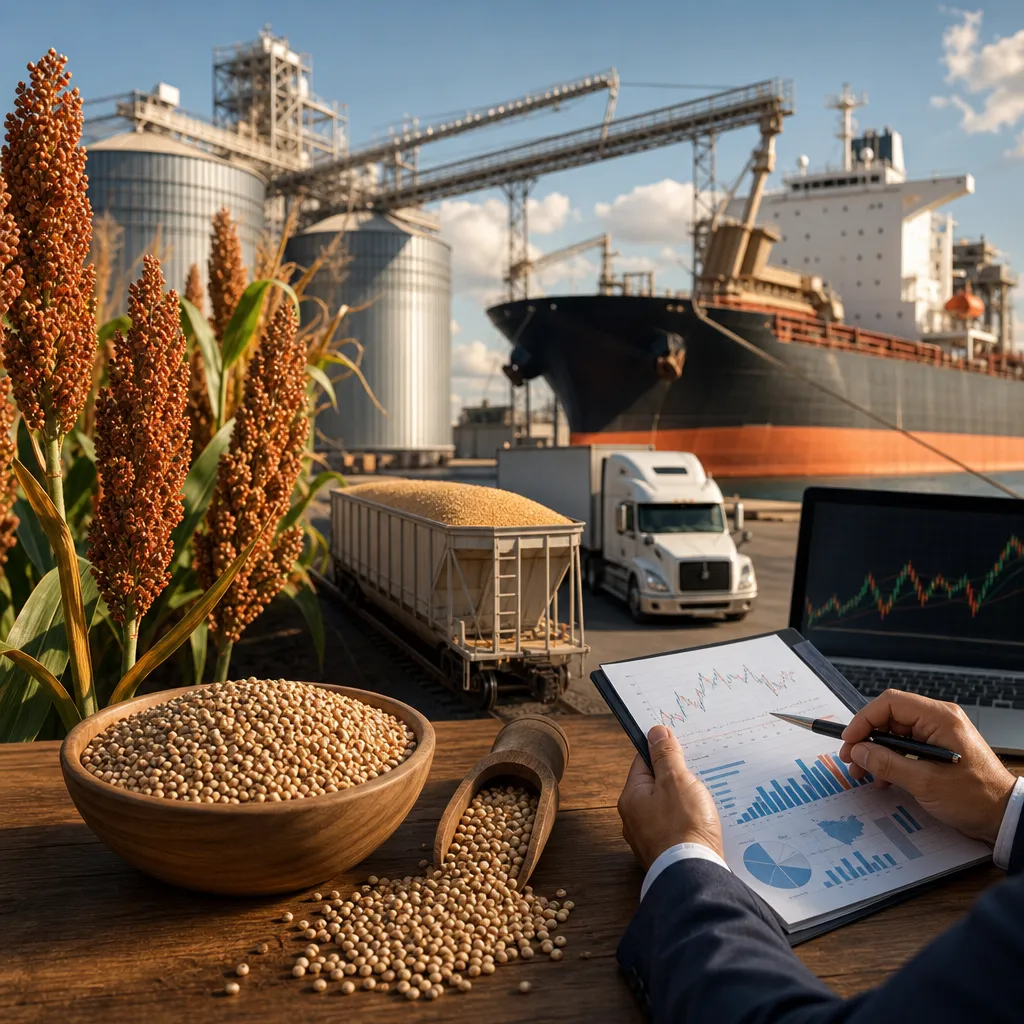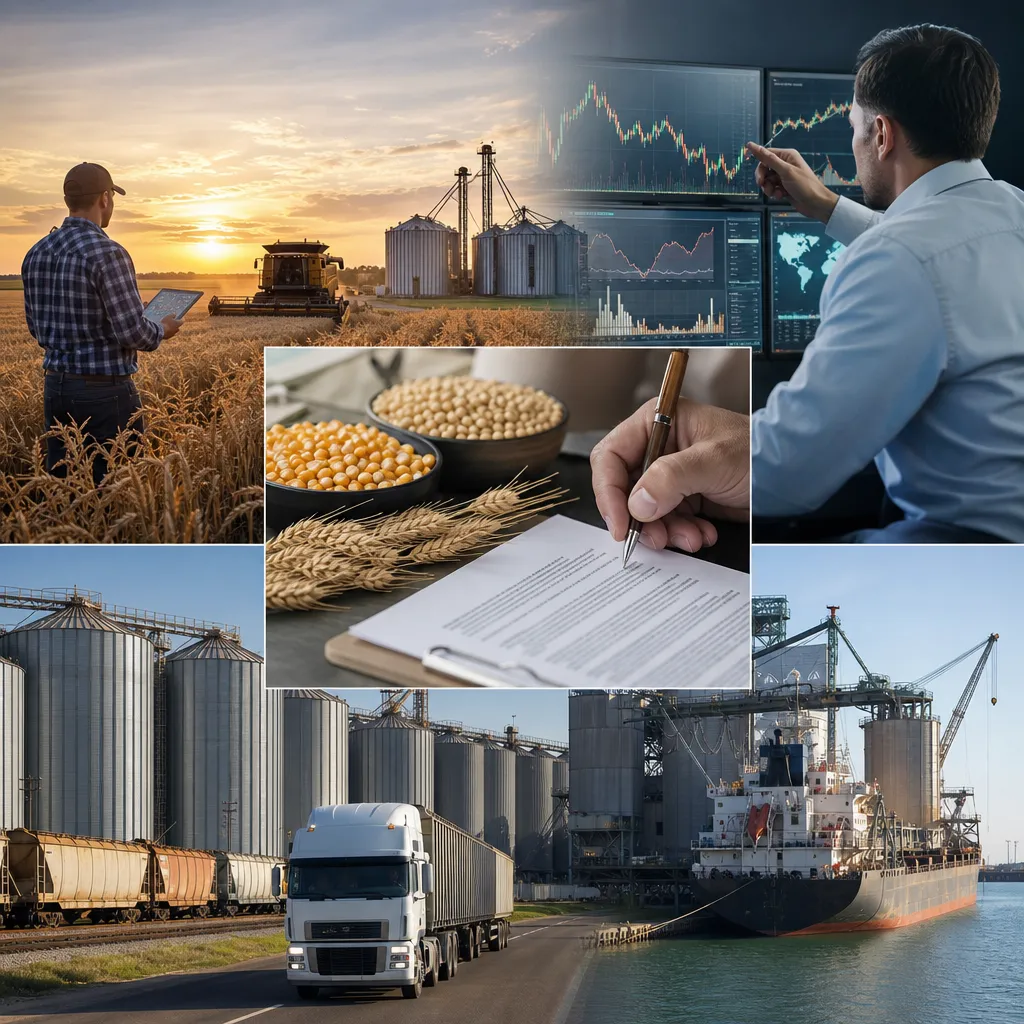




Buyers hedge grain prices to reduce the risk that wheat, corn, soybeans, rice, barley, canola, or other grain becomes more expensive before they actually need it. In practice, that usually means separating the physical purchase from the price risk: the buyer may secure price exposure on a futures exchange or with options while continuing to source the actual grain from elevators, cooperatives, merchants, processors, or import channels. The most common tools are exchange-traded futures, options on futures, forward contracts with suppliers, and inventory or storage strategies. A good hedge does not eliminate all risk, but it can make input costs more predictable and protect margins.
Grain buyers who hedge include flour mills, feed mills, ethanol plants, crushers, maltsters, livestock producers, food manufacturers, exporters, and importers. Some are large enough to trade directly through a futures broker; others rely on merchants, cooperatives, banks, or over-the-counter contracts. The key is understanding that the futures market manages benchmark price risk, while the physical grain market still depends on local basis, freight, quality, timing, and delivery point.
What hedging means for a grain buyer
A buyer hedges when it expects to need grain in the future and wants to reduce exposure to rising prices. For example, a feed mill may know it will need corn every month for the next six months. If corn prices rise sharply after the buyer commits to selling feed, its margin can be squeezed. By hedging, the buyer tries to lock in an acceptable input cost range.
There are several ways to do this:
- Buying futures to gain protection against rising benchmark prices.
- Buying call options to set a ceiling while keeping some benefit if prices fall.
- Negotiating forward physical contracts with elevators, cooperatives, merchants, or processors.
- Holding inventory in owned or leased storage to reduce near-term procurement risk.
- Using basis contracts or minimum-price structures where offered by commercial counterparties.
The exact method depends on the buyer’s size, credit strength, storage capacity, accounting rules, and exposure to local basis.
Futures prices versus local cash grain prices
One of the most important practical points is that a futures quote is not the same as the price a buyer pays for real grain at a plant, elevator, rail terminal, or port. Futures are standardized exchange contracts. Physical grain is priced in a local market with local logistics and quality terms.
For major internationally traded crops, benchmark futures are commonly referenced through exchanges such as CME Group. A corn buyer, for example, may hedge using corn futures, while the physical purchase could still occur from a nearby elevator, a cooperative, or a merchant at a cash price quoted as:
Cash price = futures reference + or – basis
Basis reflects local supply and demand, freight, handling, quality premiums or discounts, storage economics, and delivery location. A buyer can hedge the futures part and still face basis risk if local cash markets move differently from the exchange benchmark.
| Market element | What it represents | Where buyers check it | Main risk |
|---|---|---|---|
| Futures price | Exchange-traded benchmark for a standard contract month | Exchange data, broker platforms, market data vendors | Benchmark may not match local cash market exactly |
| Cash bid or offer | Actual local purchase or sale price for physical grain | Elevators, cooperatives, merchants, processors, brokers | Can change with basis, freight, and quality |
| Basis | Difference between local cash price and futures reference | Commercial grain bids, merchant quotes, basis sheets | Basis can strengthen or weaken unexpectedly |
| Delivered cost | Final cost including freight and contract terms | Supplier quotations, logistics providers, internal procurement systems | Hidden logistics or quality costs |
How buyers use futures to hedge
When a buyer expects to need grain later, the classic hedge is to buy futures now and buy the physical grain later. If the market rises, the buyer may pay more in the cash market but could gain on the futures position. That futures gain can offset part of the higher physical purchase cost.
Here is the practical flow:
- The buyer estimates quantity, timing, and grain type needed.
- It chooses the closest matching futures contract month and exchange benchmark.
- It opens or uses an account with a regulated futures broker, often called a futures commission merchant or introducing broker depending on market structure.
- It buys futures contracts in roughly the quantity needed.
- Later, it purchases physical grain from its normal supply channel: elevator, cooperative, merchant, processor, importer, or exporter.
- It closes the futures hedge when the physical price exposure is fixed or when the grain is purchased.
Futures trading normally takes place electronically through exchange-connected broker platforms, not through the same channels used to arrange a truckload, railcar, barge, or vessel of grain. The brokerage account is for financial hedging; the physical grain contract is still a separate commercial transaction.
Buyers must also manage margin. Futures are leveraged instruments, so the buyer posts margin and may have to add more cash if prices move against the position before the hedge works through to the physical side. This cash-flow requirement is one reason some commercial buyers prefer options or supplier contracts instead.
How buyers use options instead of, or with, futures
Options on grain futures can be useful when a buyer wants protection against rising prices but does not want unlimited margin exposure. The most common buyer hedge is a call option. A call gives the right, but not the obligation, to benefit from a rise in futures above a strike price.
Why buyers use calls:
- They create a price ceiling in exchange for an upfront premium.
- Loss is generally limited to the premium paid if the option expires unused.
- They allow the buyer to benefit if cash and futures prices fall, because the buyer can still purchase physical grain at lower market levels.
Options are usually accessed through the same type of futures broker used for futures trading. They are exchange-traded instruments, distinct from physical grain contracts. Large commercial firms may also use OTC structures through banks or commodity merchants, but OTC arrangements add counterparty and documentation issues and are generally less accessible to smaller participants.
The trade-off is cost: the premium can be substantial when volatility is high or when the market is nervous about weather, exports, or policy changes.
How hedging works in the physical grain market
Many buyers do not hedge only with exchange instruments. They also use physical contracts directly with grain suppliers. These suppliers may include country elevators, farmer cooperatives, grain merchants, processors, exporters, or importers depending on the region and crop.
Common physical approaches include:
- Forward cash contracts for future delivery at an agreed price.
- Basis contracts where basis is fixed now and futures are set later, or the reverse.
- Formula pricing tied to an exchange month plus a negotiated basis.
- Inventory agreements using warehouse or commercial storage.
In practice, a mill or feed company may receive bids from several local or regional suppliers. The buyer compares not just headline price, but also:
- delivery period,
- origin and logistics route,
- grade and quality specifications,
- protein, moisture, test weight, oil content, or foreign material where relevant,
- freight terms,
- inspection and weighing,
- payment timing,
- counterparty reliability.
For export or import business, the contract may also depend on port loading terms, vessel windows, customs procedures, and Incoterms. A buyer can be perfectly hedged on futures and still suffer commercial problems if the seller fails on quality or shipment timing.
| Hedging method | How it works | Where it is used | Main limitation |
|---|---|---|---|
| Long futures | Buyer purchases futures to offset risk of rising prices | Regulated futures exchange via broker | Margin calls and basis risk |
| Call options | Buyer pays premium for upside price protection | Options on futures through broker | Premium cost |
| Forward physical contract | Buyer and supplier fix future delivery terms | Elevators, cooperatives, merchants, processors | Counterparty and delivery-performance risk |
| Inventory/storage hedge | Buyer purchases grain earlier and stores it | On-site bins, warehouses, commercial storage | Storage cost, shrink, spoilage, financing |
Where buyers get prices, bids, and market data
Buyers usually monitor two streams of information at the same time: exchange benchmarks and physical cash market intelligence.
Exchange and derivatives data
For futures and options, the core reference is the relevant exchange. CME Group is a major source for grain futures contract specifications, trading months, settlement information, and delayed or licensed price data. Commercial users may access that data through broker platforms or market-data vendors.
Local cash bids and physical offers
Cash grain prices are usually obtained from local elevators, cooperatives, grain merchants, feed mills, processors, exporters, importers, or specialist cash brokers. In some regions, agricultural market reporting services or government market news systems publish indicative local prices. These quotes can differ sharply by location and quality.
Official reports used in hedging decisions
Buyers track public reports because hedging decisions depend on supply, demand, and volatility. Common sources include:
- USDA WASDE for global and U.S. supply-demand balance sheets.
- USDA Crop Progress for planting, crop condition, and harvest pace.
- USDA Grain Transportation Report for logistics context in the U.S. system.
- USDA Export Sales for demand signals.
- CFTC Commitments of Traders for futures and options positioning.
- FAO for broad global food and agricultural market context.
These reports are used for market interpretation, not as a substitute for local procurement pricing.
Storage, logistics, and basis risk in a buyer hedge
A grain buyer’s real price is shaped by logistics just as much as by futures. If a buyer is far from production areas, rail freight, barge availability, trucking capacity, port congestion, or import timing can matter more than the daily exchange move.
That is why many buyers hedge only part of their needs with futures and manage the rest through storage and procurement planning. Practical choices include:
- buying nearby grain and storing it in owned bins or commercial warehouses,
- spreading purchases across multiple origins,
- using several suppliers instead of relying on one merchant,
- locking freight early when seasonal bottlenecks are likely,
- monitoring basis separately from futures.
Storage helps if it reduces emergency buying during tight nearby markets, but it comes with financing cost, inventory risk, quality loss, and operational controls. Buyers of wheat, rice, barley, oats, or canola also need to monitor crop-specific quality issues such as moisture, dockage, protein, oil content, or milling characteristics.
Common mistakes buyers make when hedging grain
- Confusing futures with the local cash price. A futures hedge does not lock freight, basis, or grade spreads.
- Using the wrong contract month. The hedge should match procurement timing as closely as practical.
- Ignoring margin liquidity. A good hedge can still create short-term cash pressure.
- Over-hedging volume. If actual grain needs are lower than expected, the hedge can become speculative.
- Ignoring quality mismatch. Exchange contracts are standardized; physical needs may not be.
- Relying on one supplier or one logistics route. Price protection is not the same as supply security.
- Not documenting the hedge objective. Internal controls matter, especially for processors and larger commercial firms.
How a buyer can set up a practical hedging process
An effective grain hedging process is usually simple, disciplined, and linked to physical needs.
- Define exposure. Estimate crop, quantity, timing, and quality needed.
- Choose hedge instrument. Futures for direct price protection, calls for a ceiling, or supplier contracts for integrated pricing and delivery.
- Select the market channel. Use a regulated futures broker for exchange hedges; use elevators, cooperatives, merchants, processors, or importers for physical contracts.
- Track basis and freight separately. Build procurement decisions around delivered cost, not just board price.
- Use public market reports. Monitor USDA, CFTC, exchange data, and relevant local market reporting.
- Review counterparty and storage capacity. Hedging price without securing performance can leave major gaps.
- Measure outcomes. Compare hedged cost versus unhedged cost over time to improve the process.
For smaller firms that do not trade futures directly, a commercial grain merchant or cooperative may offer contracts that embed some hedge management. That can be practical, but the buyer should still understand how basis, delivery terms, and embedded costs are set.
Where can a grain buyer check prices before hedging?
Benchmark futures prices are typically checked on exchange-related data feeds, broker platforms, or licensed market-data services. Local cash prices are usually checked directly with elevators, cooperatives, merchants, processors, or brokers in the physical grain trade. A buyer should compare both because the final delivered cost depends on more than the exchange quote.
Do buyers have to take delivery of grain through the futures exchange?
No. Most commercial hedgers use futures to manage price risk and close the position before delivery. The physical grain is usually bought separately through normal commercial channels such as elevators, cooperatives, merchants, or import contracts.
What is the difference between hedging with futures and signing a forward cash contract?
Futures hedge benchmark price risk on an exchange and leave the physical purchase to be arranged separately. A forward cash contract combines pricing and physical delivery terms with a supplier. Futures offer flexibility, but forward contracts can simplify execution if the buyer trusts the counterparty and accepts the contract terms.
Why does basis matter so much to a buyer?
Basis is the link between the exchange market and the local physical market. Even if a futures hedge works well, a buyer can still pay more than expected if local basis strengthens because of tight supply, freight problems, or strong nearby demand.
Where do smaller buyers usually hedge if they do not have a futures trading desk?
Many smaller buyers work through commercial grain suppliers, cooperatives, merchandising firms, or brokers that help structure forward contracts or basis-based contracts. Some also use a futures broker, but they need appropriate risk controls and margin capacity.
What reports matter most when deciding whether to hedge grain purchases?
Widely followed reports include USDA WASDE, USDA Crop Progress, USDA Export Sales, and CFTC Commitments of Traders. These help buyers understand supply, demand, crop condition, and speculative positioning, but they do not replace local cash market intelligence.
Can storage be a hedge?
Yes, in a practical sense. Buying grain earlier and storing it can protect against nearby supply shortages and spot price spikes. However, storage adds financing, shrink, quality, insurance, and operational risk, so it is not a free hedge.
Sources
- CME Group
- USDA Foreign Agricultural Service and USDA World Agricultural Outlook Board
- U.S. Commodity Futures Trading Commission