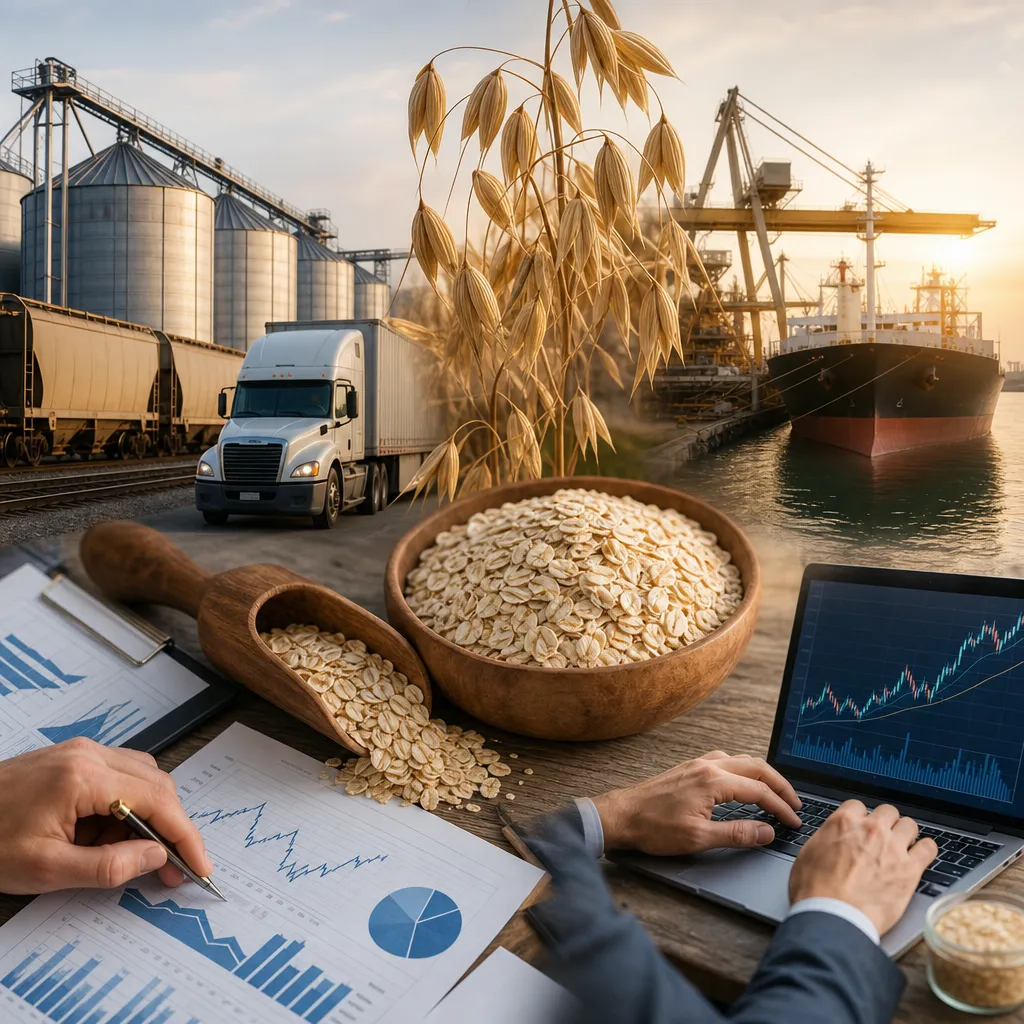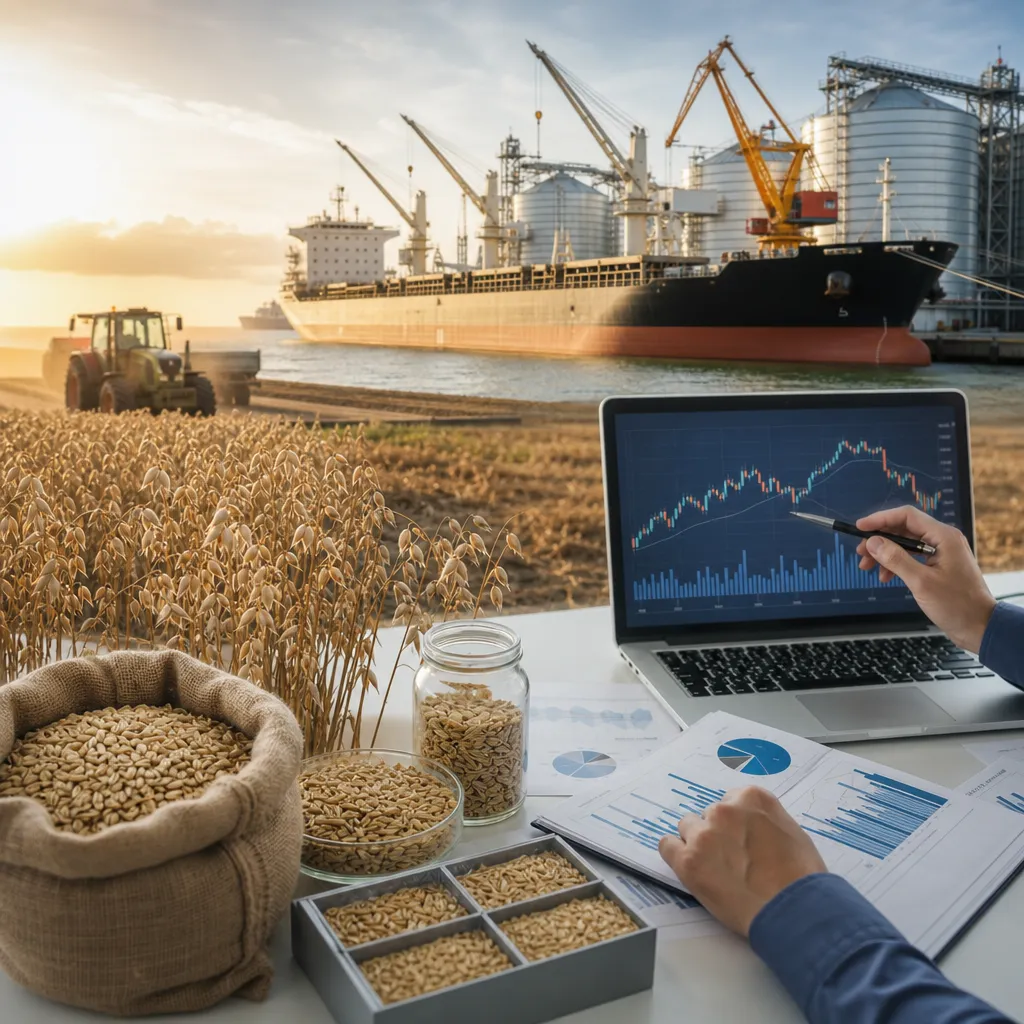

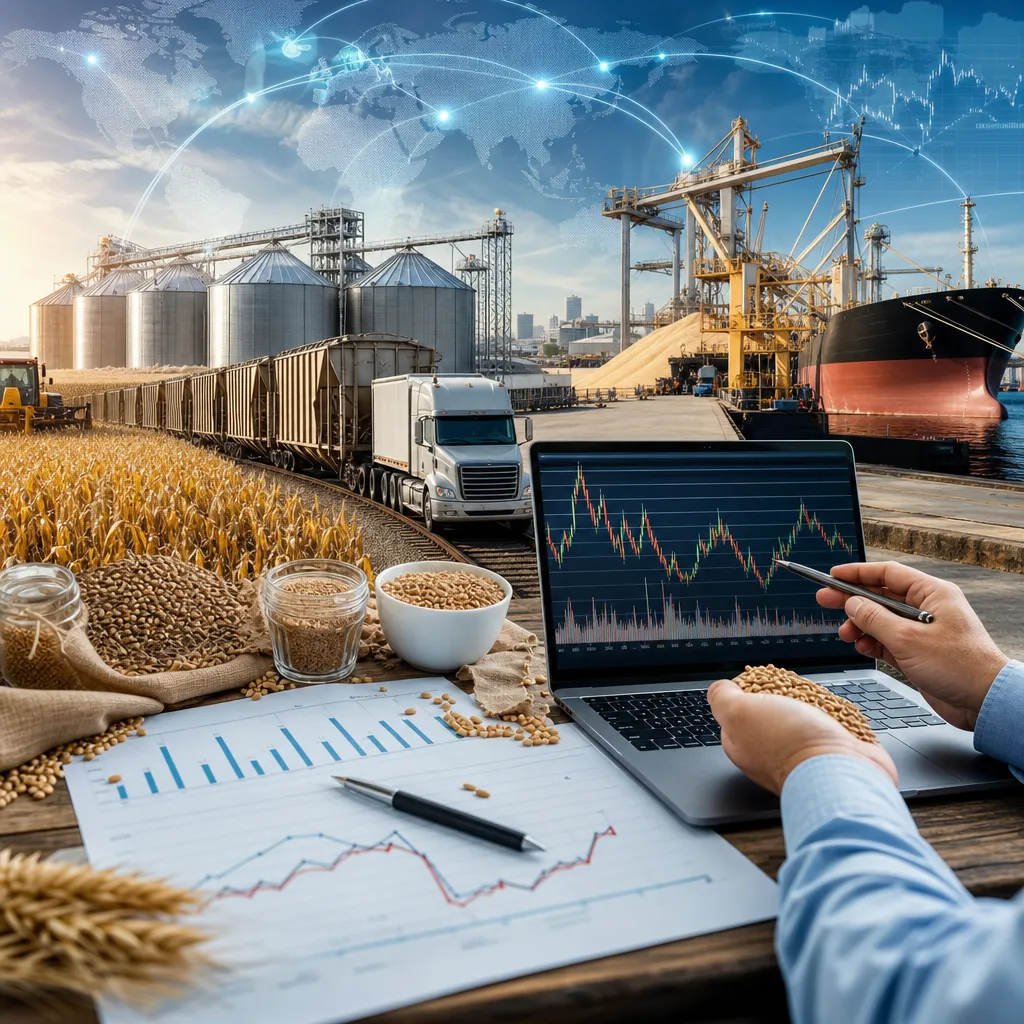
Grain futures basis is the difference between the local cash price for grain and the relevant futures price. In practice, basis connects the exchange market to the physical market: a futures contract may be priced in Chicago, but a farmer sells corn, wheat, or soybeans at a local elevator, processor, feed mill, river terminal, or port. Basis is one of the most important tools in grain merchandising and hedging because it reflects freight, storage, local supply and demand, quality, and delivery conditions that futures alone do not capture. If you want to understand what a local bid really means, how to hedge grain correctly, or where to compare cash and futures values, basis is the number to watch.
Basis is usually expressed as either a positive or negative amount against a specific futures contract month. For example, a buyer may quote a bid as “20 under December corn” or “10 over November soybeans.” “Under” means the cash price is below futures; “over” means it is above futures. The actual local cash price is calculated by adding the basis to the futures price, using the correct sign.
The key point is that basis is not an exchange-traded instrument by itself in most day-to-day farm marketing. It exists in the physical grain market, even though it is measured against an exchange futures contract. Farmers, grain merchandisers, processors, and traders use it to separate two different risks: the futures market level and the local cash market relationship.
What grain futures basis means
Basis can be written in a simple formula:
Basis = Cash price – Futures price
If local cash corn is lower than the futures contract, basis is negative. If local cash wheat is higher than futures, basis is positive. The futures contract used should match the crop and the nearby commercial time period as closely as possible. In the United States, this often means CME Group corn, soybean, soybean meal, soybean oil, Chicago wheat, Kansas City wheat, or Minneapolis wheat contracts, depending on the grain and region.
Basis matters because a futures price is a centralized benchmark, while the cash price is local and physical. A country elevator in an inland deficit or surplus area may post a very different basis from a river terminal, an ethanol plant, a flour mill, or an export elevator. Two buyers in the same county may also quote different basis values because their freight position, space, drying capacity, quality needs, and sales commitments differ.
| Term | Meaning | Where it exists |
|---|---|---|
| Futures price | Exchange-traded benchmark for a standardized contract | Regulated futures exchange such as CME Group |
| Cash price | Actual local buying or selling price for physical grain | Elevators, cooperatives, processors, mills, feed companies, exporters |
| Basis | Difference between local cash and futures | Physical grain market, quoted against futures |
| Hedge | Futures position used to offset price risk in grain ownership or future production | Broker account on a regulated futures exchange, tied to a physical grain position |
How basis works in real grain trading
When a grain buyer posts a bid, that bid often includes a basis component tied to a futures month. For example, an elevator may bid for harvest delivery using December corn futures, while a soybean processor may bid against the November soybean contract. If a farmer likes the futures price but not the basis, or the basis but not the futures price, some buyers may offer contracts that allow one part to be fixed before the other.
This is why basis is central to merchandising. The grain trade often breaks a cash bid into two components:
- Futures value: the exchange benchmark price.
- Basis value: the local premium or discount reflecting physical conditions.
Suppose a feed mill needs corn urgently and local farmer selling is slow. The mill may raise its basis to attract bushels even if futures do not move much. On the other hand, if harvest pressure fills local storage and truck lines are long, basis may weaken sharply despite steady futures.
Basis can also vary by delivery point. Grain at an inland elevator may have a weaker basis than grain delivered to a river terminal, export house, crushing plant, maltster, or flour mill. The difference often reflects freight and handling cost, but it may also reflect a buyer’s immediate need for a specific grade or quality.
What drives basis
Basis is a local market signal. While futures react strongly to national and global factors such as weather, crop reports, exports, or macroeconomic sentiment, basis responds more directly to conditions on the ground.
| Basis driver | Typical effect | Why it matters |
|---|---|---|
| Local supply | Large nearby supply often weakens basis | Harvest pressure or heavy farmer selling can fill space quickly |
| Processor or feed demand | Strong demand often strengthens basis | Plants may bid up to secure physical grain |
| Freight and logistics | Higher transport cost can weaken origin basis or change destination spreads | Truck, rail, barge, and port constraints alter local value |
| Storage availability | Tight space can weaken basis at harvest | Elevators discount grain when handling capacity is stressed |
| Quality and grade | Better quality may earn stronger basis; damaged grain may be discounted | Protein, moisture, test weight, foreign matter, and mycotoxins affect value |
| Export demand | Strong export pull can strengthen terminal and port basis | Exporters compete for loadable grain at specific locations |
Seasonality is also important. Basis often weakens during harvest, when grain movement is heavy and elevators protect space. It can strengthen later if storage holders are reluctant sellers and end users need nearby supplies. That pattern is not guaranteed, but it is common enough that many producers track historical basis at each delivery point.
Where basis is quoted and how to check it
Basis is usually found in local cash bid systems rather than on a pure futures price screen. A farmer or grain buyer normally checks basis in one or more of these places:
- Country elevators and cooperatives: Many post daily bids online or through mobile apps.
- Processors: Soybean crushers, ethanol plants, flour mills, feed mills, and maltsters often post direct-ship bids.
- Merchants and exporters: River terminals, shuttle loaders, and export houses may quote basis for larger commercial volumes.
- Cash grain brokers: In some regions, brokers circulate bids or arrange basis contracts between buyers and sellers.
- Farm management and grain marketing software: These tools may aggregate bids from participating buyers and help compare basis by location and delivery window.
- Government or extension market reporting: In some countries, official reports publish regional cash prices, though not always buyer-specific basis.
To check basis correctly, you need four pieces of information:
- The crop and quality specification.
- The local cash bid and delivery period.
- The futures exchange and contract month being used.
- The unit of measure and currency.
For U.S. grain futures, CME Group is the main exchange benchmark source. It provides contract specifications and futures market data. For cash-side context, USDA Agricultural Marketing Service publishes a wide range of grain market reports, while local bids come directly from elevators, processors, and merchants.
Do not assume one region’s basis applies elsewhere. Basis is highly location-specific. A strong basis in an export corridor or processor-dense area may not help a farm located far from that demand center if freight absorbs the difference.
Basis and hedging: how producers and commercial firms use it
Basis is essential to hedging because a hedge normally offsets futures price risk, not every local cash market change. A farmer who sells futures to hedge expected production is still exposed to basis risk. If basis weakens before the grain is sold, the final cash result may disappoint even if the futures hedge works as intended.
Commercial firms use the same logic in reverse. Elevators may buy grain from farmers, sell futures against that ownership, and later lift the hedge when the grain is sold to a processor or exporter. Their gross margin often depends heavily on managing basis, freight, storage, and quality spreads rather than predicting flat futures direction.
Common contract structures in the physical market may include:
- Cash contract: futures and basis are fixed together.
- Basis contract: basis is fixed now, futures are set later.
- Hedge-to-arrive contract: futures are fixed now, basis is set later.
- Minimum price or option-based structures: may include an options component and additional cost or complexity.
These contracts are normally offered by elevators, cooperatives, or processors in the physical grain trade, not through a standard retail brokerage screen. The exact terms depend on the buyer, location, crop, and jurisdiction. Before using them, producers should check delivery period, pricing deadline, roll provisions, fees if any, quality clauses, and what happens if production falls short.
Basis risk, costs, and limitations
Basis is often more stable than futures, but it is not fixed unless you contract it. That is why basis risk matters. Even a well-designed hedge can produce unexpected results if local demand disappears, transportation breaks down, quality changes, or harvest pressure becomes more severe than expected.
Main risks and limitations include:
- Location risk: basis at one elevator may differ materially from another nearby buyer.
- Timing risk: a strong basis today may not be available at the intended delivery window.
- Quality risk: posted basis may apply only to standard grade; discounts can materially reduce the final price.
- Freight risk: moving grain to chase better basis may not pay once trucking or rail cost is included.
- Counterparty risk: physical contracts depend on the buyer’s contractual reliability and payment performance.
- Margin risk: if you hedge with futures through a broker, futures gains and losses are marked to market, requiring margin funds.
For futures hedging, trading occurs through a regulated futures broker and exchange account, not through a local elevator bid board. That is a financial market activity. Selling physical grain to an elevator or processor is a separate commercial transaction. The two can be coordinated, but they are not the same thing.
How to use basis in practical grain marketing
A practical basis workflow starts with local information, not just a national futures chart.
- Collect bids from multiple buyers. Compare elevator, cooperative, processor, and terminal bids for the same delivery period.
- Match the correct futures month. Basis is meaningful only if the bid references the right contract month.
- Track historical patterns. Many farms keep a basis file by location and month to identify seasonal opportunities.
- Include trucking and drying. A better posted basis may be offset by longer haul distance or stronger moisture penalties.
- Separate futures and basis decisions. If your market offers basis or hedge-to-arrive contracts, decide whether that flexibility fits your risk tolerance.
- Monitor reports and logistics. USDA reports, export pace, barge conditions, rail service, processor margins, and local weather can all shift basis.
For analysts and traders, basis is also a signal about real physical market tightness. Futures may move on macro news, but a strengthening nearby basis often indicates that end users want actual grain now. Weak basis may signal burdensome local supply, poor demand, or logistical congestion.
Where basis is used across the grain chain
Basis is not only for farmers. It is embedded throughout the grain supply chain.
| Participant | How basis is used | Typical market setting |
|---|---|---|
| Farmer | Evaluates local bids and marketing timing | Elevator, cooperative, processor, direct contract |
| Elevator or merchant | Manages origin buying margin against hedged inventory | Country origination, storage, resales to terminals or processors |
| Processor | Bids up or down to secure plant supply | Ethanol plant, crush plant, mill, feed manufacturer |
| Exporter | Reflects port demand, vessel schedules, and freight economics | River terminal, rail terminal, export port |
| Futures hedger | Separates futures risk from local cash risk | Broker account plus physical grain position |
Common misunderstandings about grain basis
One common mistake is to treat futures as the farmgate price. They are not the same. The futures quote is a standardized contract value on an exchange; the farmgate or local elevator bid is a physical bid adjusted by basis, quality, and often service charges.
Another mistake is to compare basis numbers without checking the delivery period. A basis for spot delivery cannot be compared directly with a deferred new-crop basis without considering storage, carrying costs, and seasonal demand.
A third mistake is to ignore contract details. A basis quote may look attractive, but if the delivery location is inconvenient, moisture limits are tight, or payment terms are less favorable, the net result may be worse than a simpler local sale.
Where can I find grain basis quotes?
Most grain basis quotes are found through local elevators, cooperatives, processors, merchants, and terminal operators. Many publish bids online or through mobile apps. Futures exchanges provide the benchmark futures price, but basis itself usually comes from the physical buyer.
Is basis traded on an exchange?
Not in the same way as standard grain futures. Basis is primarily a physical market relationship between local cash grain and futures. In practice, it is negotiated or posted by physical buyers and sellers, even though it is measured against exchange futures.
How do I calculate the local cash grain price from basis?
Add the basis to the relevant futures price, using the proper sign. If basis is quoted as “under,” subtract it from futures. If it is quoted as “over,” add it. Always confirm the futures month, unit, and delivery window.
Why does basis differ between two nearby elevators?
Each buyer may have different freight exposure, storage space, rail or barge access, processor demand, export commitments, or quality needs. Even small local logistics differences can change basis.
Can I hedge basis risk with futures?
Futures mainly hedge futures price risk, not all basis movements. Basis risk remains unless you lock it through a cash-side contract such as a basis contract or another buyer-specific arrangement. That is why local market knowledge is essential.
What reports help explain basis changes?
Useful sources include USDA Agricultural Marketing Service cash market reports, USDA WASDE for overall supply and demand, USDA Export Sales for export pull, and CME Group contract information for the relevant futures benchmark. Local logistics and buyer bids are equally important.
Does a strong basis always mean I should sell grain?
Not necessarily. A strong basis may reflect good local demand, but the total opportunity depends on futures value, storage cost, trucking, quality condition, and your risk plan. Many sellers evaluate flat cash price, not basis in isolation.
Is basis important outside the United States?
Yes. Even where local trade is referenced more to port values, merchant bids, or import parity and export parity calculations, the same concept applies: local physical prices differ from broader benchmark prices because of freight, quality, handling, and regional supply-demand conditions.
Sources
- CME Group
- USDA Agricultural Marketing Service
- USDA World Agricultural Supply and Demand Estimates