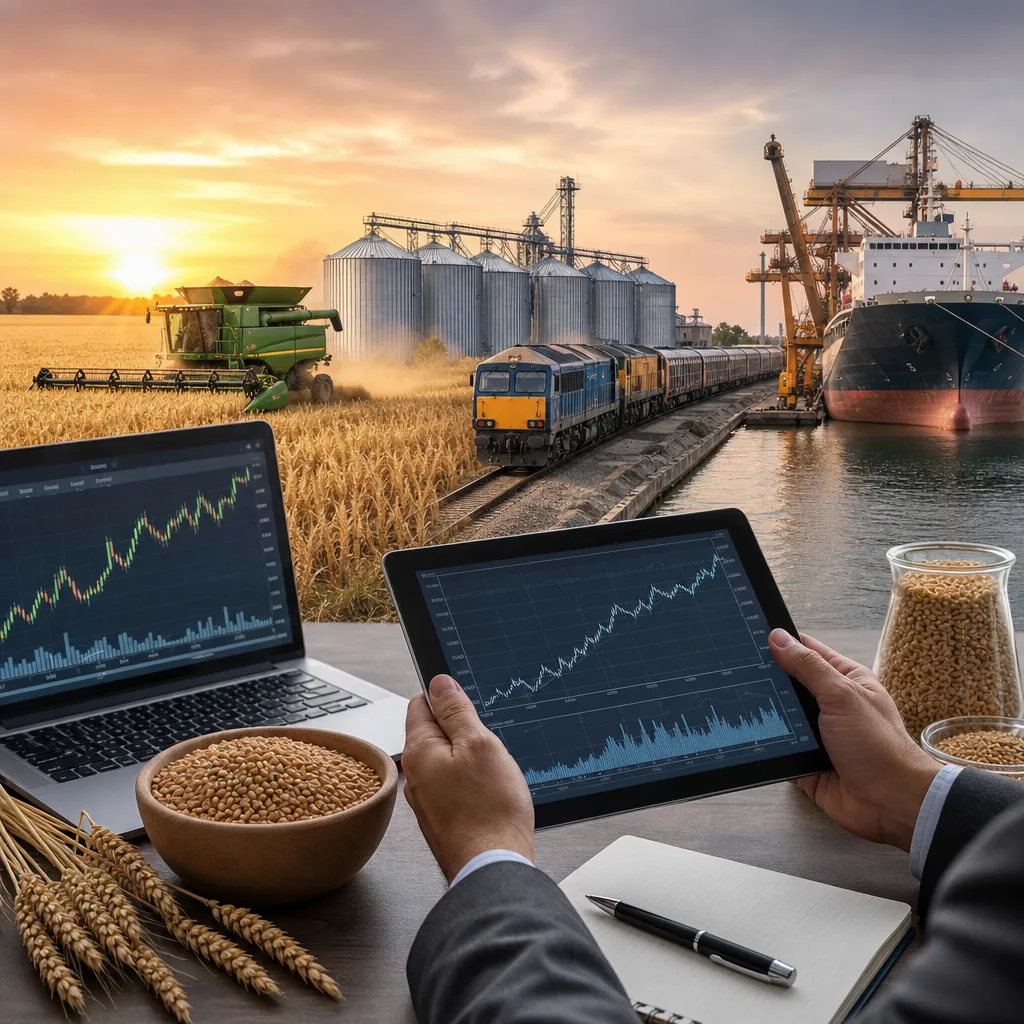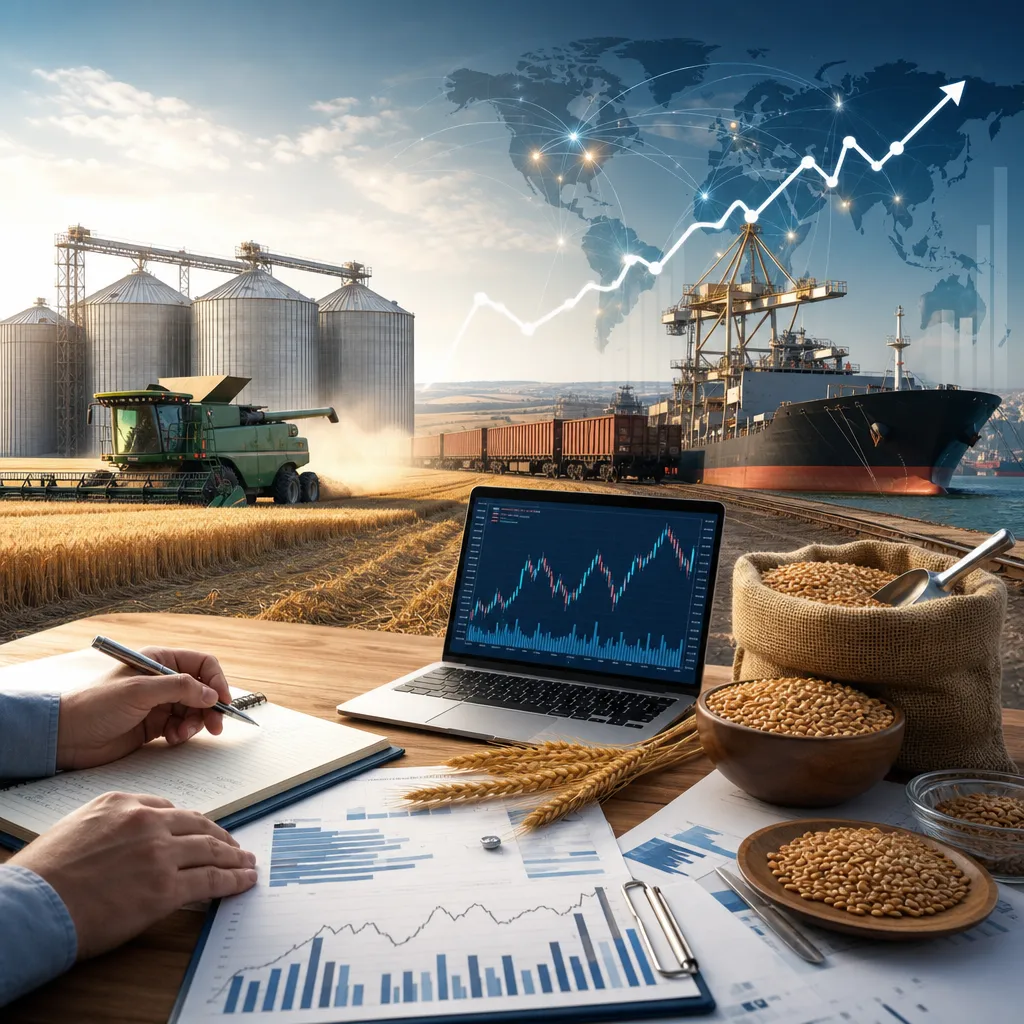

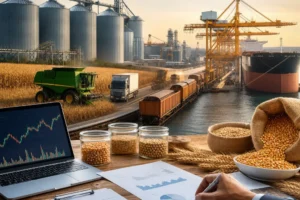
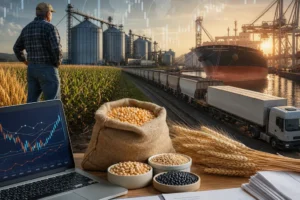
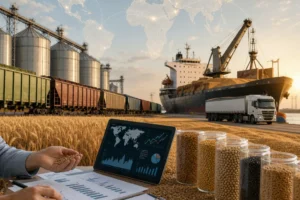
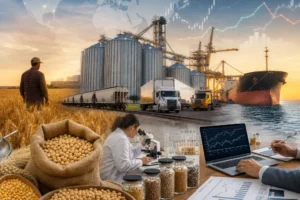
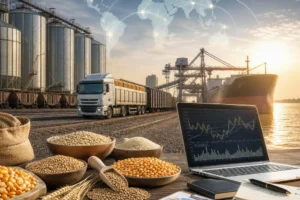
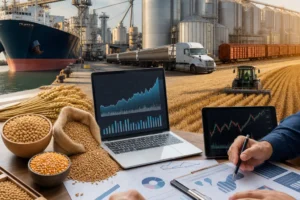

Global grain trade is the system that moves wheat, corn, soybeans, rice, barley, sorghum, canola, and other grains and oilseeds from producing regions to feed mills, food processors, biofuel plants, exporters, and importing countries. It operates through two connected but different markets: the physical cash market, where actual grain is bought, sold, stored, loaded, and delivered, and the futures market, where standardized contracts are traded for pricing, hedging, and speculation. To understand how global grain trade works in practice, a reader needs to know where prices are discovered, who the main participants are, how contracts are negotiated, and where reliable data can be checked. The most useful sources are usually official crop and trade reports, regulated futures exchanges, local cash bid channels, and commercial logistics and merchandising networks.
What global grain trade is and how it works
At its core, global grain trade matches surplus production with deficit demand. A country with a large wheat harvest may export to countries with insufficient domestic supply. Soybeans may move from inland farms to crushing plants or export terminals. Corn may be sold locally for feed or ethanol, or shipped internationally if prices and freight make exports competitive.
The chain usually begins with a farmer or grain owner. Grain is then handled by one or more intermediaries such as a local elevator, agricultural cooperative, grain merchant, processor, or exporter. From there it may move by truck, rail, barge, or vessel to a domestic user or to a port for export.
Prices are formed at several levels:
- Exchange futures price: a benchmark price traded on a regulated exchange.
- Basis: the local adjustment to the futures price, reflecting freight, storage, local demand, quality, and logistics.
- Cash price: the actual bid or offer for physical grain at a specific place and time.
This distinction matters. A futures quote is not automatically the price a farmer receives or a buyer pays in the physical market. The local cash price depends on delivery point, quality, moisture, timing, and freight.
Who participates in global grain trade
The market includes commercial firms, farmers, processors, financial traders, and public institutions. Their roles are different, and knowing who does what helps explain how grain moves and how prices are managed.
| Participant | Main role | How they typically operate |
|---|---|---|
| Farmers and farm businesses | Produce and sell grain | Sell to elevators, cooperatives, processors, merchants, or through direct contracts |
| Elevators and cooperatives | Originate, store, blend, and market grain | Post local cash bids, receive grain, apply quality discounts or premiums, and arrange resale |
| Processors and mills | Buy grain for food, feed, crush, malt, or biofuel use | Contract directly with suppliers or buy through merchants and brokers |
| Exporters and grain merchants | Assemble grain for international shipment | Source inland grain, hedge price risk, book terminal capacity, and manage vessel logistics |
| Futures traders and hedgers | Manage price risk or speculate on price moves | Trade exchange-listed contracts through regulated brokers |
| Government agencies and reporting services | Publish market data and oversight information | Issue crop, trade, stocks, and market reports used by all participants |
Where grain prices are quoted and how to check them
Grain prices exist in several forms, and each serves a different purpose.
Futures prices are usually checked on exchange websites, broker platforms, and market-data terminals. For many globally referenced contracts, the Chicago Board of Trade, part of CME Group, is the central benchmark for corn, soybeans, soybean products, and some wheat contracts. Other exchanges may matter for regional trade depending on the crop and location.
Local cash bids are normally checked through grain elevators, cooperatives, merchants, processors, feed mills, or local market reporting systems. In many producing regions, elevators publish bids online or through mobile apps, email lists, or phone systems. Processors may post direct-delivery bids if they are actively sourcing grain. Some countries also publish official or semi-official cash market reports through agriculture ministries or market information agencies.
Export and port values are often less visible to the public because they can depend on negotiated cargo terms, vessel timing, quality, and destination. Traders and exporters usually monitor offers, freight markets, port lineups, and customs or shipment data. Public information may be available through government export reports, port authorities, agricultural ministries, or commercial freight and commodity services.
When checking a price, always confirm:
- the crop and contract month,
- the unit of measure,
- the currency,
- the delivery location,
- whether it is futures, cash, bid, offer, or an average report,
- whether quality assumptions are standard or specific.
Physical grain trade: how grain is actually bought and sold
Physical grain trading is a commercial transaction for actual product. It may happen at the farm gate, an inland elevator, a processor, a warehouse, a rail loading point, or an export terminal. Internationally, it may involve a merchant selling a cargo to an overseas buyer under agreed shipment terms.
A basic transaction flow often looks like this:
- A seller obtains a bid from an elevator, cooperative, processor, or merchant.
- The parties agree on quantity, delivery period, quality, price formula, and payment terms.
- The grain is delivered or collected, then weighed, sampled, and graded.
- Adjustments are applied for moisture, test weight, foreign material, protein, oil content, damage, or other contract specifications.
- The buyer issues settlement according to the contract and local practice.
In export trade, the process is more complex. Merchants accumulate grain from inland origins, move it to a port terminal, perform blending or quality management where allowed, book freight, and load a vessel. Contracts may reference Incoterms, shipment windows, inspection certificates, and destination quality requirements. Payment terms, documentary conditions, and counterparty risk become more important as distances increase.
Where can someone physically buy or sell grain?
- Farmers selling grain: usually to local elevators, cooperatives, mills, crushers, feed companies, ethanol plants, maltsters, or grain merchants.
- Domestic buyers sourcing grain: through direct procurement teams, grain brokers, merchants, warehouses, and spot or forward contracts.
- Importers and exporters: through grain trading houses, international merchants, brokers, and port terminal networks.
Before agreeing a physical trade, practical points to check include delivery location, freight responsibility, acceptable quality range, shrink or drying terms, storage charges, insurance, and payment timing. These details often matter more than the headline benchmark price.
Futures and options in grain markets
Futures and options are financial tools linked to grain prices, but they are not the same as buying a truckload of corn or a vessel of wheat. They are standardized exchange-traded contracts used for hedging and speculation.
A futures contract represents a standardized quantity and quality of a commodity for a specified delivery month. It trades on a regulated exchange through a futures broker. Market participants must maintain margin, and gains and losses are marked to market. Because of leverage, futures can produce large losses as well as gains.
A grain option gives the buyer the right, but not the obligation, to buy or sell a futures contract at a stated strike price before or at expiry, depending on contract rules. Options are often used to protect against adverse price moves while leaving some upside open.
Commercial grain firms use futures to offset price risk embedded in physical ownership or purchase commitments. For example, an elevator buying corn from farmers may sell corn futures to reduce exposure if cash values fall before the grain is resold. A processor may buy futures to protect input costs. An exporter may hedge a cargo position while managing basis and freight separately.
| Market type | What is traded | Where it usually happens | Main risks |
|---|---|---|---|
| Cash market | Actual grain | Elevators, cooperatives, processors, merchants, warehouses, port terminals | Quality disputes, freight, storage costs, counterparty risk, basis changes |
| Futures market | Standardized exchange contracts | Regulated commodity exchanges through licensed brokers | Leverage, margin calls, volatility, basis mismatch with local cash market |
| Options market | Rights on futures contracts | Regulated exchanges through futures brokers | Premium cost, time decay, volatility risk, complex pricing |
| OTC physical contract | Privately negotiated grain sale or purchase | Directly between commercial parties or via brokers | Contract performance, legal terms, quality and delivery disputes |
Main drivers of global grain trade
Global grain markets move when supply, demand, logistics, and policy change. The same crop can be cheap in one inland region and expensive at an import terminal because freight, quality, and timing differ.
The most important drivers usually include:
- Weather: drought, excessive rain, frost, heat stress, and harvest conditions affect yield and quality.
- Acreage and yield: planted area and realized output determine available supply.
- Stocks and stocks-to-use: tight inventories tend to amplify price sensitivity.
- Export demand: buying by importing countries can tighten nearby supplies.
- Feed, food, and biofuel demand: livestock, milling, crushing, and renewable fuel sectors all compete for grain.
- Currency movements: exchange rates affect export competitiveness.
- Freight and logistics: vessel costs, rail service, barge conditions, trucking availability, and port congestion matter.
- Government policy: tariffs, export restrictions, quotas, sanitary rules, and subsidy changes can quickly reshape trade flows.
- Energy and input costs: fuel, fertilizer, and drying costs influence production economics and commercial margins.
No single indicator is enough. A bullish crop report can be offset by weak export demand or falling energy values. Likewise, a large crop may still produce firm local cash prices if transport is disrupted or local processors need coverage.
Reports, data sources, and analysis tools
Reliable market analysis starts with official and exchange-based data, then adds local commercial intelligence. For global grain trade, the most widely used public sources are government crop and trade reports, futures exchange data, and position reporting.
Useful sources typically include:
- USDA WASDE: broad global supply-and-demand estimates by crop and country.
- USDA Crop Progress: weekly field condition and planting or harvest pace, especially relevant for U.S. crops.
- USDA Export Sales: shows U.S. export commitments and shipments.
- CME Group market data: futures and options contract information, trading hours, and settlement-related reference information.
- CFTC Commitments of Traders: weekly breakdown of futures and options positioning by trader category.
- FAO: international food and agricultural market context, especially for broader global balance and trade themes.
- National agriculture ministries and statistical agencies: country-specific crop estimates, stocks, and trade flows.
- Customs and trade databases: import and export volumes by origin, destination, and sometimes product category.
Commercial users often add subscription tools for basis tracking, freight, satellite weather, shipment lineups, historical charts, and farm management workflows. These tools differ by region and provider. Some are designed for futures traders, others for merchandisers, and others for farmers managing inventory and contracts. The key is to match the tool to the job: exchange data for benchmark pricing, local bid systems for cash marketing, and logistics tools for execution.
Storage, logistics, and grain quality in trade decisions
Grain trade is not only about price; it is also about condition and movement. Storage and logistics determine whether a grain owner can wait for a better market, meet a delivery window, or access a stronger destination bid.
Storage may occur on-farm, at a commercial elevator, in a warehouse, or at a port terminal. On-farm storage gives more timing flexibility, but it requires aeration, monitoring, and quality control. Commercial storage may reduce handling burden but adds service charges and can create scheduling constraints during busy periods.
Quality matters because grain is traded to specification. Typical quality factors include moisture, protein, test weight, damaged kernels, foreign material, oil content, falling number, and mycotoxin limits where relevant. A high futures board price does not guarantee a strong realized cash price if delivered grain falls outside contract specs.
Logistics can shift local basis quickly. Rail delays, low river levels, port congestion, or truck shortages may weaken bids at origin even if export values are firm. Conversely, strong processor demand in a deficit region may improve local cash bids despite soft futures.
Practical approach for farmers, buyers, and traders
For a farmer or commercial buyer, the most practical way to engage with global grain trade is to separate three decisions: price risk, physical movement, and quality or storage management.
A farmer selling grain usually needs to compare local bids from elevators, cooperatives, and processors; understand whether the bid is spot, forward, or basis-only; and evaluate freight and quality adjustments. A processor or feed mill typically needs to compare nearby procurement with broader import or merchant offers and decide whether futures hedging is needed.
A futures trader or hedger needs a regulated brokerage account, knowledge of contract specifications, and a risk plan for margin exposure. This is different from opening a commercial account with an elevator or merchant to deliver actual grain.
Common mistakes include comparing futures quotes with local bids without adjusting for basis, storing grain without accounting for quality deterioration and carrying cost, and entering contracts without clearly understanding grade terms, delivery point, or payment timing.
Where can I check global grain prices?
Check futures benchmarks on exchange websites and broker platforms, especially regulated exchanges such as CME Group for major grain contracts. For actual sellable or purchasable prices, check local elevator bids, cooperative postings, processor bids, merchant quotes, or official cash market reports where available. Always confirm location, unit, contract month, and quality assumptions.
What is the difference between a futures price and a cash grain price?
A futures price is a standardized exchange-traded benchmark. A cash price is the real price for physical grain delivered at a specific place under specific quality conditions. The difference is largely explained by basis, freight, storage, local demand, and contract terms.
Where does physical international grain trading take place?
It usually takes place through grain merchants, exporters, processors, brokers, and importing companies rather than on a retail-style public marketplace. Transactions are negotiated commercially and executed through inland collection points, warehouses, rail or barge systems, and export terminals.
How do farmers usually sell grain?
Most farmers sell to local elevators, cooperatives, processors, feed mills, or merchants through spot sales, forward contracts, basis contracts, or storage-related marketing arrangements. The practical process normally involves getting bids, selecting a delivery window, delivering or scheduling pickup, and accepting settlement after grading and weighing.
Where can I trade grain futures or options?
Grain futures and options are normally traded on regulated commodity exchanges through a licensed futures broker. This requires a brokerage account and understanding of margin, contract size, expiry, and risk. It is not the same as buying physical grain for delivery.
Which reports matter most for grain market analysis?
Widely used reports include USDA WASDE, USDA Crop Progress, USDA Export Sales, CFTC Commitments of Traders, and exchange contract data from CME Group. Depending on the region, national agriculture ministries and official statistical agencies are also essential for local production and trade insight.
Why can local grain bids move differently from global benchmark prices?
Because local bids reflect nearby supply and demand, transport conditions, storage availability, processor demand, export capacity, and quality. A port market, an inland surplus area, and a feed-deficit region can all show different cash values even when watching the same futures contract.
What should be checked before signing a physical grain contract?
Check the delivery point, quantity, delivery period, quality specifications, moisture rules, discounts or premiums, freight responsibility, payment timing, and counterparty reliability. For export business, inspection, documentation, and shipment terms are also critical.
Sources
- USDA Foreign Agricultural Service and World Agricultural Supply and Demand Estimates
- CME Group agricultural futures and options contract information
- U.S. Commodity Futures Trading Commission Commitments of Traders