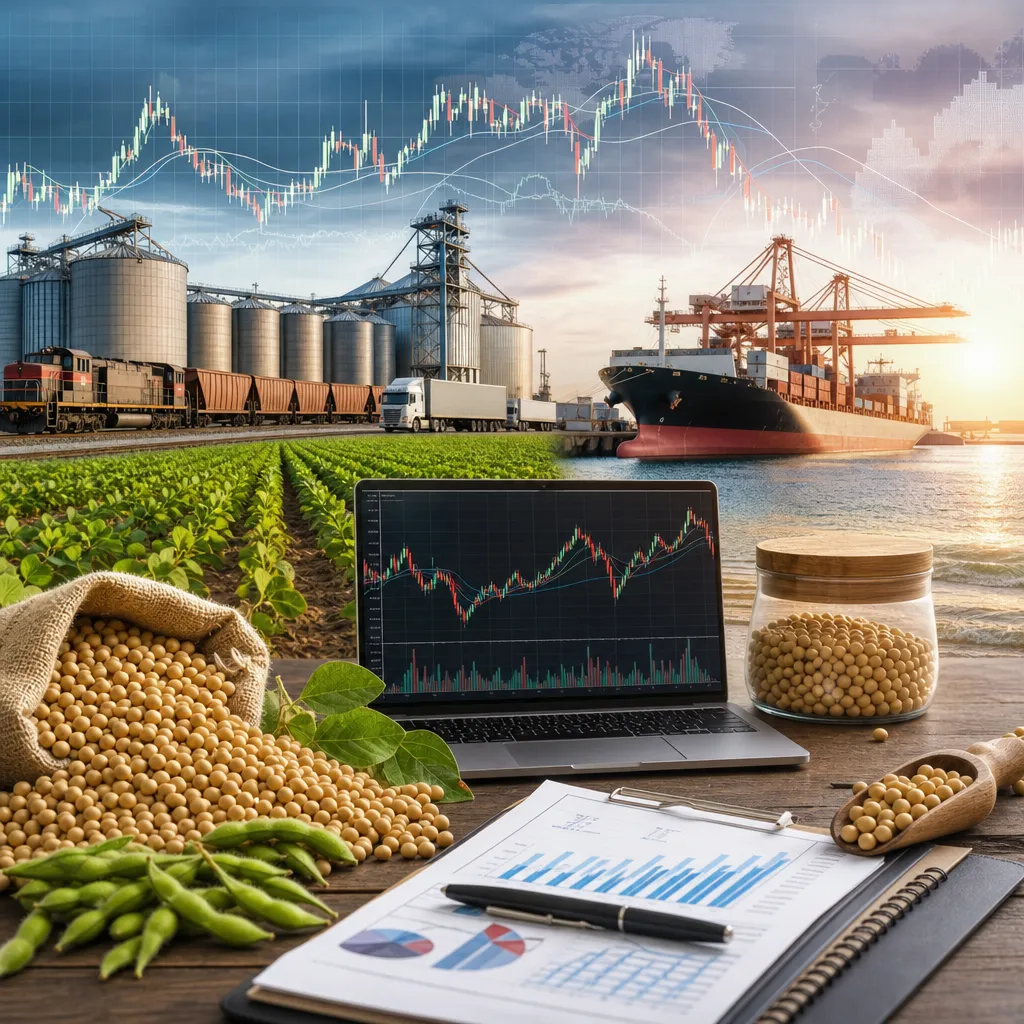
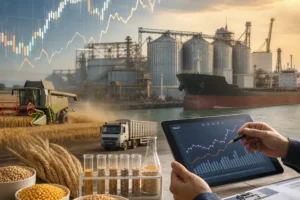
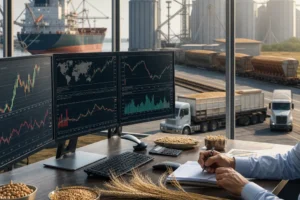

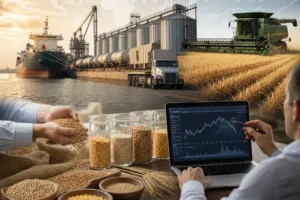
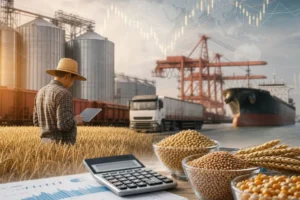
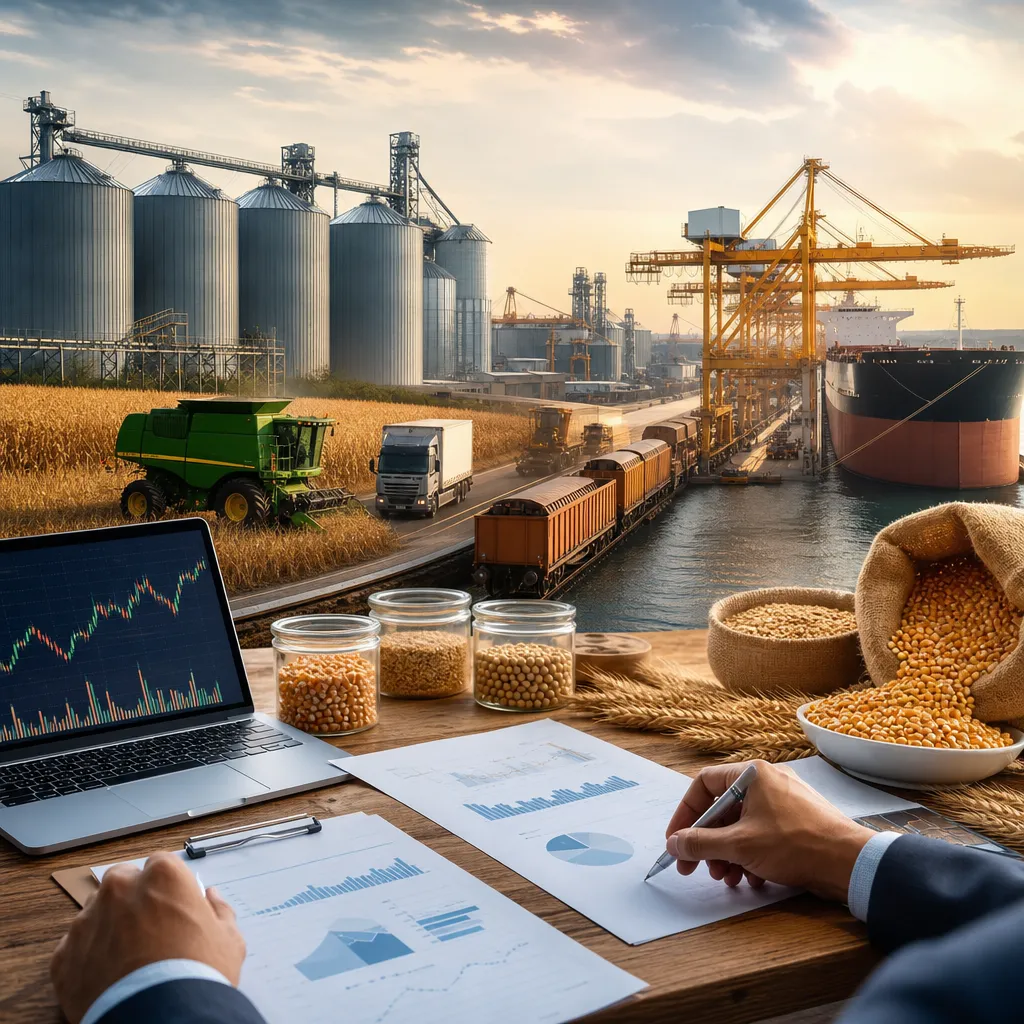
Global grain supply is the flow of wheat, corn, soybeans, rice, barley, oats, rye, sorghum, canola, rapeseed, and sunflower seed from farms to domestic users and export markets. In practice, it is shaped by acreage, yields, weather, stocks, transport capacity, government policy, and the ability of buyers and sellers to discover prices and move physical grain. Readers usually need to understand two markets at once: the financial market, where futures and options are traded on exchanges, and the physical market, where grain is bought, sold, stored, inspected, and transported through elevators, cooperatives, merchants, processors, exporters, and ports. The key to using global grain supply information is knowing where price signals come from, where crop and trade data is published, and how local cash conditions can differ from global benchmarks.
What global grain supply means in practice
Global grain supply is not a single warehouse or one market price. It is a worldwide network of production regions, storage systems, transport corridors, inspection regimes, traders, processors, and end users. Wheat from the Black Sea, corn from the United States or Brazil, soybeans from Brazil or the U.S., rice from Asia, and canola from Canada all feed into regional and global balance sheets.
Supply matters because grain markets are highly interconnected. A drought in one major exporter can tighten availability elsewhere. A port disruption, rail bottleneck, export restriction, or currency move can change who is competitive in world trade even if the harvest itself is unchanged. That is why market participants monitor both farm-level conditions and international logistics.
For farmers, elevators, millers, feed manufacturers, crushers, exporters, and commodity traders, global supply is usually assessed through a combination of production estimates, ending stocks, export pace, and basis levels. For analysts, it is also a question of quality: protein in wheat, test weight, moisture, oil content, damage, and contamination can all determine whether grain is suitable for milling, feed, crushing, or shipment.
Where grain prices come from and how to check them
There is no single “global grain price” that everyone pays. Prices are usually observed in two main forms: exchange futures prices and local cash prices.
Futures prices are quoted on regulated exchanges such as CME Group for key agricultural contracts. These are standardized contracts used for price discovery, risk management, and speculation. They are quoted online through exchange data vendors, broker platforms, financial terminals, and market news services. A futures quote reflects a specific contract month, unit, and delivery specification. It does not automatically equal the price a farmer receives or a buyer pays locally.
Local cash prices are the bids or offers available in the physical market. Farmers and commercial grain sellers usually check these through local grain elevators, cooperatives, merchants, processors, crushers, mills, ethanol plants, feed companies, or export terminals. These buyers publish bids directly, provide them by phone or email, or negotiate them through contracts. In many countries, official market reporting systems or agricultural ministries also collect and publish spot price information.
The difference between futures and the local cash market is often described through basis. Basis is the local cash price minus the relevant futures price. It reflects freight, storage, regional supply-demand, quality, and local competition among buyers. A strong basis may signal tight nearby supply or active demand from processors or exporters. A weak basis often points to burdensome stocks, harvest pressure, or expensive transport.
| Market type | What it shows | Where readers usually check it | Main limitation |
|---|---|---|---|
| Futures market | Standardized exchange price for a contract month | Exchange data, broker platforms, market data services | Not the same as a local cash bid |
| Local cash market | Actual bid or offer at a delivery point | Elevators, cooperatives, merchants, processors, official reports | Varies by location, quality, freight, and timing |
| Export market | FOB or other shipment-based values at ports | Exporters, trade houses, shipping and market reporting services | Includes logistics and contract terms not visible in futures |
| Import market | Landed value into destination market | Import tenders, buyers, trade data, customs statistics | Affected by tariffs, currency, freight, and quality rules |
How physical grain moves through the supply chain
Physical grain trade is built around movement, quality, and contract performance. On the farm, grain may be stored temporarily or delivered at harvest to a local elevator, cooperative, merchant, or processor. From there, it can be cleaned, blended, dried, stored, milled, crushed, fed, or transferred onward by truck, rail, barge, or vessel.
A typical physical transaction includes the seller, the buyer, the delivery point, the quantity, the quality specification, the pricing method, and the payment terms. Grain can be sold spot, under a forward contract, on a basis contract, or through other arrangements depending on the local market. In export trade, contracts also define shipment terms, loading window, inspection standards, tolerances, and risk transfer using trade terms that may reference Incoterms.
The main physical market participants include:
- Farmers, who produce and market grain.
- Grain elevators and cooperatives, which collect, store, dry, blend, and resell grain.
- Merchants and trading houses, which originate grain and manage logistics and export flows.
- Processors, such as flour mills, feed mills, ethanol plants, oilseed crushers, and maltsters.
- Exporters and importers, who arrange port handling, documentation, shipping, and destination sales.
- Warehouses and inspection providers, which handle custody, quality verification, and storage.
Where this trading takes place depends on the country and crop. In many regions, routine farm sales are made directly to nearby elevators or processors rather than through exchanges. Large commercial cargoes are often negotiated over the counter between merchants, exporters, and industrial buyers.
How futures and options fit into global grain supply
Futures and options help market participants manage price risk, but they do not replace the physical trade. A wheat, corn, soybean, or other grain futures contract is a standardized exchange-traded instrument. It is accessed through a regulated futures broker and traded on an exchange platform. Participants must normally have an approved brokerage account and post margin, because futures are leveraged instruments.
Hedgers use futures to offset price exposure in the physical market. A farmer with grain to sell may hedge by selling futures. A processor needing future supplies may hedge by buying futures. Merchants with inventory or export commitments use futures and options to manage exposure between purchase and sale. Options can provide price protection with defined premium cost, though they also involve time decay and strategy-specific risks.
The critical point is that hedging leaves basis risk. If futures move as expected but local cash prices do not, the hedge may not perfectly offset the physical exposure. Delivery risk, grade differences, and timing mismatches can also matter. Speculators use the same instruments without owning physical grain, but that is a financial activity, not grain merchandising.
| Feature | Futures and options | Physical grain market |
|---|---|---|
| Where it happens | Regulated exchange through a broker | Elevators, cooperatives, merchants, processors, exporters |
| What is traded | Standardized financial contracts | Actual grain with specific location and quality |
| Main purpose | Price discovery, hedging, speculation | Supply, usage, storage, processing, export |
| Key risk | Leverage, margin calls, expiry, volatility | Quality, freight, storage loss, counterparty, logistics |
| Price relevance | Benchmark for broader market sentiment | Actual transaction price paid or received |
The main drivers of global grain supply
Supply begins with planted area and harvested yields, but market outcomes depend on much more than crop size. Weather is the most visible driver. Drought, heat, frost, excessive rain, or poor harvest conditions can reduce yield or quality. Weather also affects logistics by slowing planting, harvest, road access, river navigation, or port operations.
Stocks are equally important. A large crop does not always create tightness if carryover stocks are already ample. Conversely, modest production shortfalls can cause strong price reactions when beginning stocks are low. Traders often watch stocks-to-use as a general measure of market cushion.
Demand-side factors also reshape supply availability. Corn demand can be influenced by feed sectors and biofuels. Soybeans depend heavily on export demand and crushing margins. Wheat balances may shift between food and feed use depending on grade and price relationships. Rice markets can react strongly to policy changes because trade volumes are smaller relative to global consumption than for some other grains.
Currency moves matter because grain is traded internationally. A weaker exporter currency can improve competitiveness even without a bumper crop. Energy and fertilizer costs influence acreage and farm economics. Freight matters at every step: truck, rail, barge, and ocean vessel availability can all widen or narrow the gap between inland and export values.
Where to find reliable grain supply data and how it is used
The most widely used public sources for global grain fundamentals are government and exchange publications. For world balance sheets, the USDA World Agricultural Supply and Demand Estimates, commonly called WASDE, is a core reference for wheat, corn, soybeans, and other major crops. Analysts use it to compare production, use, stocks, and trade by country and globally.
For in-season U.S. crop conditions and harvest progress, USDA Crop Progress reports are closely watched. USDA Export Sales reports help readers track the pace of export commitments. CFTC Commitments of Traders reports are used to see how different types of futures market participants are positioned, although that is market structure information rather than physical supply itself.
CME Group provides contract specifications and exchange-traded price references. This is essential for anyone comparing cash prices to futures or building hedging strategies. FAO is useful for broader global food and agricultural context, especially for international policy and supply themes beyond one country.
Readers looking for import and export flow detail also use national customs and statistical agencies, agricultural ministries, and port or inspection data where available. Commercial data vendors may provide satellite analytics, vessel tracking, weather models, basis maps, and real-time price aggregation, but those are not substitutes for understanding what each dataset actually measures.
How grain is stored, graded, and delivered
Storage is a major part of global supply because grain is seasonal while demand is continuous. Grain may be stored on-farm, in commercial elevators, flat storage, silos, warehouses, or port terminals. Storage creates marketing flexibility, but only if quality is protected and carrying costs are understood.
What matters in storage is moisture, temperature, aeration, pest control, shrink, handling loss, and insurance. Poor storage can reduce value through spoilage, insects, mold, or grade deterioration. For oilseeds, oil quality and heating risk can be particularly important. Commercial storage also requires attention to fees, load-out terms, ownership records, and lien or title issues depending on the jurisdiction.
Grade and inspection standards determine whether grain meets a buyer’s needs. Wheat may be priced differently based on protein and falling number. Corn may face discounts for moisture, foreign material, or damage. Soybeans can be affected by moisture and quality defects. Export cargoes often require formal inspection and certification at loading or destination. That makes supply a quality-adjusted concept, not just a tonnage number.
How buyers, sellers, and analysts use global grain supply information
Farmers use supply information to time sales, evaluate storage decisions, compare local bids, and decide whether hedging is appropriate. Their practical workflow commonly includes tracking local elevator bids, watching futures for benchmark direction, and monitoring crop reports and basis changes around harvest and shipment periods.
Processors and feed buyers use supply information to plan coverage. They may buy nearby cash grain, secure forward supplies from merchants, or hedge input risk with futures or options. Exporters and trading houses pay close attention to origin competitiveness, freight spreads, vessel lineups, and quality profiles. Analysts compare official balance sheets, weather developments, and trade flows to test whether prices reflect the likely supply scenario.
For a buyer or seller, the useful question is rarely “What is the world grain price?” It is usually: what is the relevant benchmark, what is the local basis, what quality is required, where is delivery, and who is the counterparty?
Where can I check grain prices today?
Check exchange futures through CME Group market data or a broker platform, and check local cash bids through nearby elevators, cooperatives, processors, merchants, or official agricultural market reporting services. Use both, because futures are a benchmark while cash bids reflect local basis, freight, and quality.
Is a futures price the same as the price paid for physical grain?
No. A futures price is a standardized exchange price for a contract month. A physical grain price is a negotiated or posted cash value at a specific location and quality. The difference is basis, which can change independently of futures.
Where do farmers usually sell grain?
Most farmers sell to local grain elevators, cooperatives, processors, feed mills, crushers, ethanol plants, or merchants. In some cases they contract directly with export channels or industrial users, but local delivery points remain the most common route.
How do companies trade grain internationally?
International grain trade usually happens through merchants, exporters, importers, and processors in over-the-counter physical contracts. These contracts define origin, quality, shipment period, quantity, delivery terms, inspection, and payment. Futures may be used separately to hedge price risk.
What reports are most important for global grain supply?
USDA WASDE is a major global balance-sheet report. USDA Crop Progress and Export Sales are important for monitoring U.S. conditions and demand pace. CFTC Commitments of Traders helps interpret futures positioning, while FAO adds global food and market context.
Can I buy physical grain through a futures broker?
Usually no, not in the same practical sense as commercial grain procurement. A futures broker provides access to exchange-traded contracts. Buying actual truckloads, railcars, or vessel cargoes of grain normally requires dealing with merchants, elevators, processors, exporters, or physical brokers.
What are the main risks in grain storage?
The key risks are spoilage, pests, moisture problems, heating, shrink, quality loss, insurance gaps, and storage costs. Commercial storage also adds contractual and counterparty considerations. Good monitoring and clear ownership records are essential.
Why can a region have enough global supply but still high local grain prices?
Because local prices depend on freight, currency, port access, basis, quality needs, seasonal pipeline stocks, and buyer competition. A comfortable world balance does not guarantee cheap grain in a deficit region with costly logistics or import constraints.
Sources
- USDA World Agricultural Supply and Demand Estimates
- CME Group agricultural contract specifications and market information
- FAO food and agricultural market information