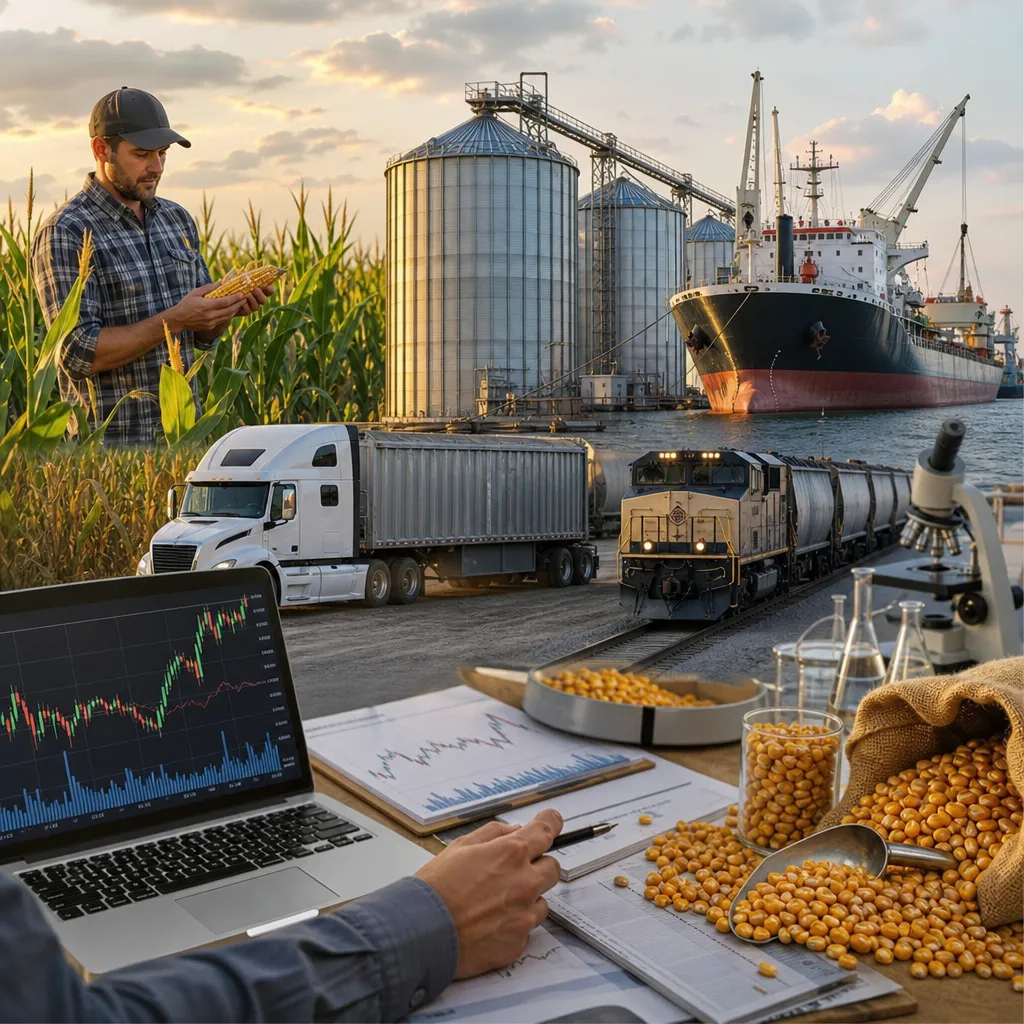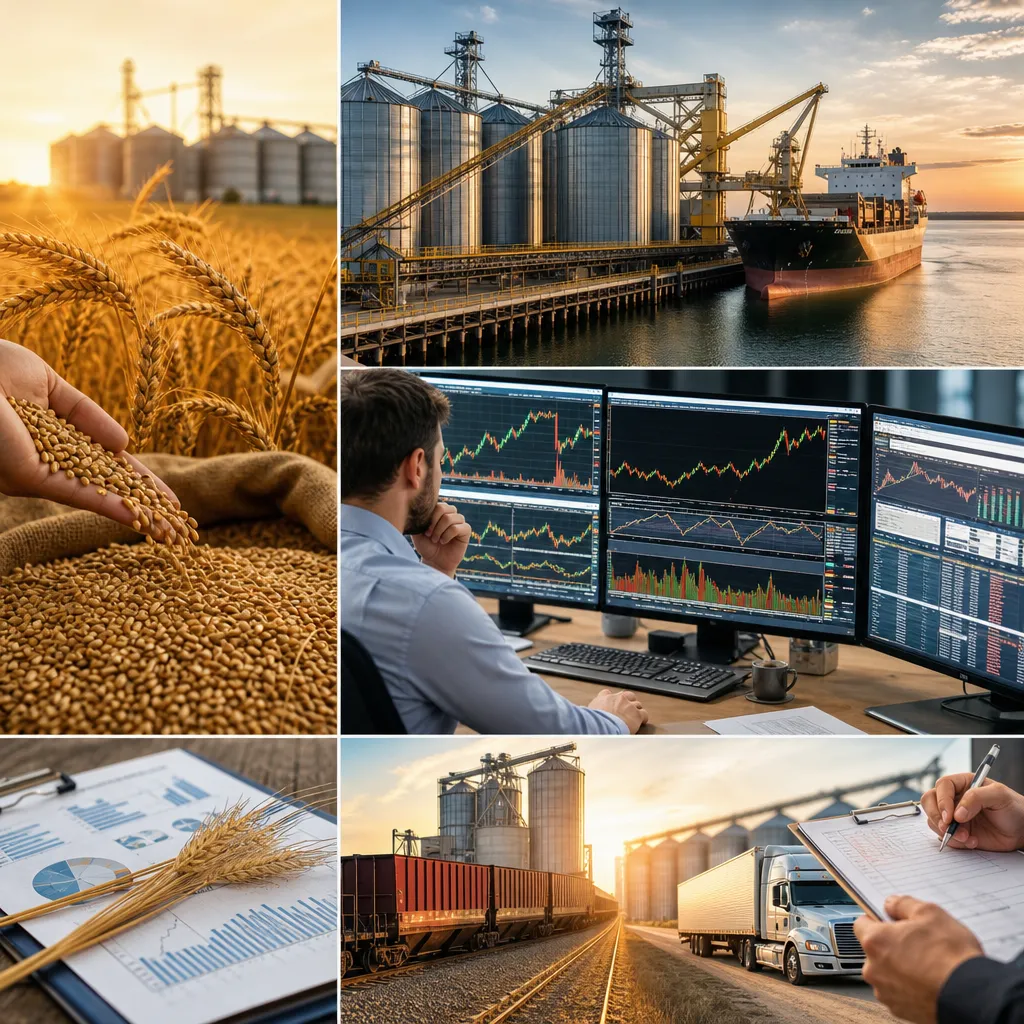





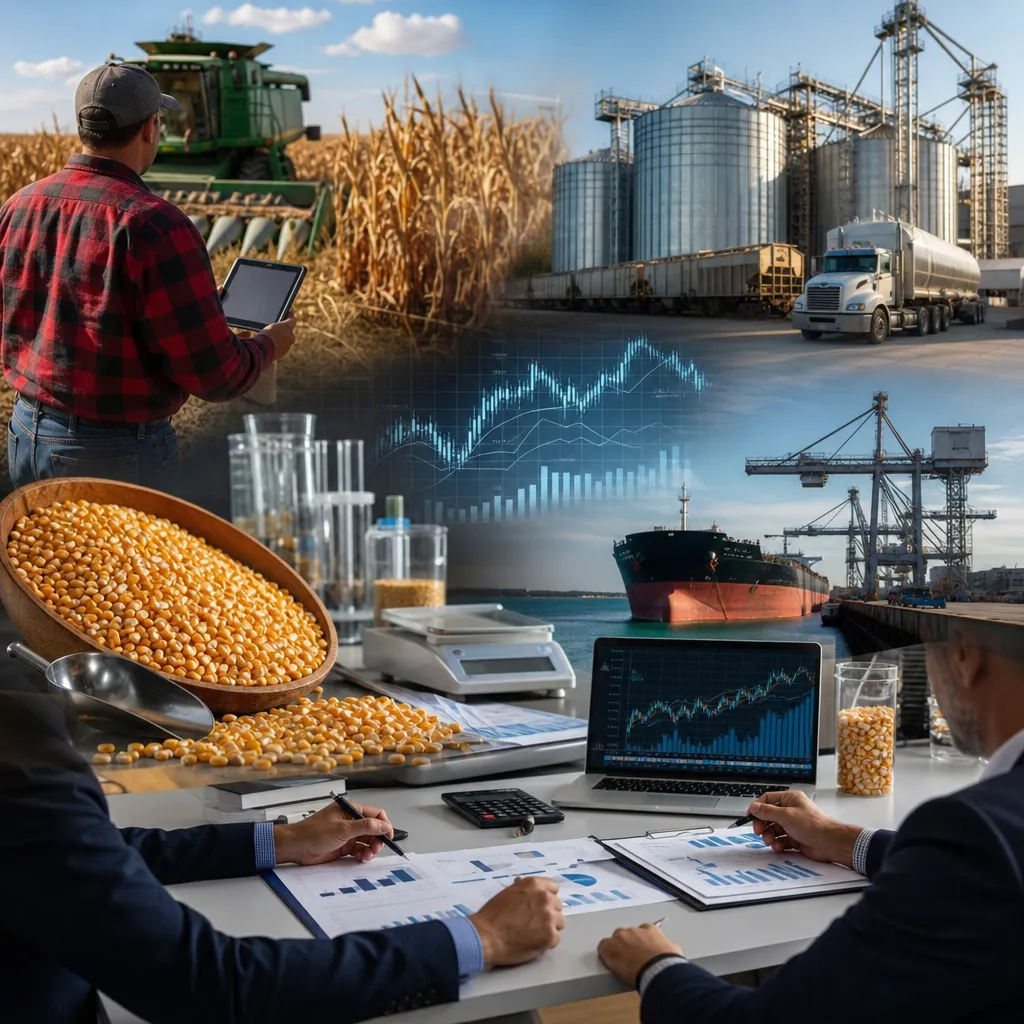
The United States corn market is one of the world’s most important grain markets, and it operates at both a local physical level and a global financial level. Corn is grown across much of the U.S., priced through a combination of futures and local cash bids, and traded domestically for feed, ethanol, food, and industrial use as well as for export. For anyone trying to understand U.S. corn trading, the key is to separate CBOT corn futures from the cash market that farmers, elevators, processors, and exporters use every day. The market is highly transparent by global standards, but the exact price a producer or buyer receives still depends heavily on location, quality, timing, and logistics.
What the U.S. corn market is
U.S. corn trading refers to the buying, selling, hedging, and pricing of corn produced and consumed in the United States. The U.S. is a major producer, user, and exporter of corn, so domestic corn prices are closely watched worldwide.
The benchmark financial market is the Chicago Board of Trade (CBOT), now part of CME Group, where corn futures and options are traded. The benchmark physical market, however, is not one single national cash market. Instead, it is a network of local elevator bids, processor bids, feed mill bids, rail and barge markets, and export bids at Gulf and Pacific Northwest export channels.
In practice, corn may be priced in different ways depending on where it is traded:
- Futures: typically quoted in U.S. cents per bushel on CBOT.
- Cash bids: usually quoted in U.S. dollars or cents per bushel at local delivery points.
- Export prices: often discussed as FOB values in U.S. dollars per metric ton or per bushel equivalent, depending on the trade context.
- Delivered prices: prices to a feed mill, ethanol plant, or processor after freight is included.
Where the market operates in the United States
The core production region is the U.S. Corn Belt, including states such as Iowa, Illinois, Nebraska, Minnesota, Indiana, and others in the Midwest. But trading is not limited to those states. Corn is bought and sold across the country wherever there are elevators, feed users, ethanol plants, rail origins, river terminals, and export facilities.
Geographically, the market works through several layers:
- Farm and local elevator market: farmers deliver corn to country elevators, cooperatives, or processors.
- Interior commercial market: grain merchants move corn by truck, rail, or barge to deficit regions or export channels.
- River market: the Mississippi River system is crucial for moving corn south toward export terminals.
- Export market: Gulf export terminals are major shipment points, with the Pacific Northwest also relevant for some destinations.
- Exchange market: futures and options trade electronically through CME Group access points.
This means a cash corn price in Iowa can differ materially from a cash price in Georgia or at the U.S. Gulf, even when all participants are using the same CBOT futures benchmark.
How U.S. corn prices are formed
U.S. corn pricing starts with the benchmark futures market, but final physical prices are shaped by basis. Basis is the difference between the local cash price and the relevant CBOT futures contract.
A simplified pricing relationship is:
Cash price = Futures price + Basis
That basis may be positive or negative depending on local circumstances. It reflects factors such as:
- distance to end users or export channels,
- local supply after harvest,
- storage availability,
- truck, rail, or barge freight,
- buyer competition among elevators, ethanol plants, and feed mills,
- quality factors such as moisture, damage, test weight, or aflatoxin risk where relevant,
- seasonal pressure during harvest versus tighter nearby supply later in the marketing year.
For export trade, additional price concepts matter. An exporter may buy corn inland on a cash basis, move it to a terminal, and sell it as FOB cargo. An importer may buy on a CIF basis that includes freight and insurance to destination. These are not the same as a farm bid or futures quote.
| Price type | Where quoted | What it means |
|---|---|---|
| CBOT futures | CME Group market data, brokers, trading platforms | Benchmark futures price for standardized corn contracts traded financially |
| Local cash bid | Elevators, cooperatives, ethanol plants, processors | Actual bid at a local delivery point, usually futures plus or minus basis |
| Delivered bid | Feed mills, industrial users, processors | Price for corn delivered to the buyer’s facility, including transport effect |
| Export bid / FOB | Export market reports, merchant indications | Price at the export terminal for loading onto a vessel |
| CIF import price | Destination import market | Delivered import price including freight and insurance to the buyer’s destination |
How physical corn is actually bought and sold
The U.S. physical market is relationship-driven and location-specific. Farmers normally do not sell corn on an exchange. They usually sell to a local elevator, cooperative, ethanol plant, feed manufacturer, processor, or merchant.
Common physical transaction methods include:
- Spot cash sale: corn is sold for nearby delivery at the buyer’s current cash bid.
- Forward cash contract: the seller locks a cash price for future delivery.
- Hedge-to-arrive contract: futures are fixed now, while basis is set later.
- Basis contract: basis is fixed now, while futures are set later.
- Storage and later sale: the seller stores grain and waits for a better cash bid or basis improvement.
Before delivery, buyers usually define acceptance terms such as moisture, test weight, foreign material, damage, and delivery window. Payment timing, scale weights, shrink, discounts, and title transfer all matter in practice. Counterparty quality matters too: commercial participants generally verify who they are trading with and under what contract conditions.
Large merchants and processors may also buy by rail or barge, and exporters assemble grain from many inland origins before shipment. So the market is physically fragmented even though price discovery is centralized through futures.
How futures and options are used
U.S. corn futures and options are primarily used for hedging and price discovery, although they are also used by speculators and spread traders. The exchange market is not the same as owning physical grain.
A farmer, elevator, feed manufacturer, or exporter may use CBOT corn futures to reduce price risk. For example:
- a farmer may sell futures to hedge expected production,
- an elevator may hedge inventory it has purchased,
- an ethanol plant or feed user may buy futures to hedge forward needs,
- an exporter may hedge cargo exposure while assembling grain.
Options can be used to create downside protection or to limit risk while preserving some upside. But both futures and options require a brokerage account, and futures involve margin and daily mark-to-market. This means they carry financial risk even when used for hedging.
Most participants who trade futures do so through a futures commission merchant or broker offering CME market access. Many users close or roll positions before expiry rather than making or taking delivery. Physical corn ownership and financial exposure are related, but they are not identical.
| Market channel | Where it takes place | Typical users | Main purpose |
|---|---|---|---|
| Local cash market | Elevators, co-ops, processors, feed mills | Farmers, local buyers, commercial grain firms | Physical sale and delivery of grain |
| Rail/barge trade | Interior logistics and river system | Merchants, exporters, large feed and industrial users | Move corn between regions and to export channels |
| Export market | Gulf and other export positions | Exporters, international buyers, trading houses | Assemble and ship corn overseas |
| Futures and options | CBOT via CME Group access | Hedgers, brokers, funds, traders | Price discovery, hedging, speculation |
Where to check U.S. corn prices and market information online
If you want the current U.S. corn market, it is essential to know which price you are checking. There is no single “live U.S. corn price” that perfectly represents every farm, state, or export terminal.
For practical monitoring, readers usually check:
- CME Group for CBOT corn futures and options data, contract months, and exchange market information.
- USDA Agricultural Marketing Service (AMS) for cash grain reports, transportation indicators, and some regional market reporting.
- USDA Foreign Agricultural Service (FAS) for export sales and broader trade information.
- USDA World Agricultural Supply and Demand Estimates (WASDE) for market balance-sheet context.
- Local elevators, cooperatives, ethanol plants, and processors for actual spot and forward bids in a specific area.
- Broker and trading platforms for futures market access and quote screens.
Local cash bids often appear on elevator or cooperative bid sheets and may change during the day. Those bids can differ sharply from futures because they include basis, which reflects freight, handling, storage, and local supply-demand conditions. A Gulf export bid can be stronger than an inland country bid even when the futures market is unchanged.
Main drivers of U.S. corn prices
U.S. corn prices move on both domestic and international factors. The most important drivers are usually a combination of crop size, demand, and logistics.
Key price drivers include:
- Weather: planting conditions, summer heat, rainfall, drought, and harvest weather strongly affect yield expectations.
- Acreage and crop condition: changes in planted area and crop ratings can shift market expectations.
- Stocks: old-crop inventories affect how tight or comfortable nearby supply feels.
- Ethanol demand: corn use for fuel is a major domestic demand component.
- Feed demand: livestock and poultry sectors influence domestic consumption.
- Exports: competitiveness against Brazil, Argentina, and other origins matters.
- River and rail logistics: low river levels, freight disruptions, or rail issues can distort basis and regional pricing.
- Currency: because export trade is dollar-based, the strength of the U.S. dollar affects competitiveness.
- Energy and input costs: these can influence production decisions and processing margins.
Forecasting should therefore be approached as a set of scenarios rather than a certainty. A large crop does not automatically mean weak local prices if basis strengthens due to strong processor demand. Likewise, a futures rally may not fully reach a farm-gate price if local basis weakens during harvest pressure.
How exports connect to the domestic cash market
The U.S. is an important corn exporter, and export demand helps link inland cash markets to global grain values. When export demand is strong, Gulf or Pacific Northwest demand can support interior basis through merchant buying and transportation demand.
Export trade typically works through several steps:
- Grain is purchased inland from elevators, farms, or commercial holders.
- It is shipped by barge, rail, or truck to terminal positions.
- Exporters blend, store, stage, and load cargoes that meet contract specifications.
- International buyers purchase under terms such as FOB or CIF.
Importers outside the U.S. are usually not buying a CBOT futures contract as their physical corn supply. They are buying physical cargoes priced off export values, often with the CBOT benchmark used as a price reference inside merchant risk management systems.
Practical risks and trading considerations
Anyone involved in U.S. corn trading should separate price risk, basis risk, quality risk, and counterparty risk.
- Price risk: futures can move quickly on weather, USDA reports, and macro sentiment.
- Basis risk: even a well-hedged futures position may not perfectly match local cash movement.
- Quality risk: physical discounts can materially reduce net sale value.
- Logistics risk: freight bottlenecks can distort local bids.
- Counterparty risk: payment terms and contract performance matter in physical trade.
- Leverage risk: futures trading can magnify both gains and losses through margining.
For most producers and commercial users, successful corn trading is less about predicting every price move and more about matching the right tool to the right exposure: cash contracts for movement, storage decisions for timing, and futures or options for risk management.
Frequently asked questions
Where is the main benchmark for U.S. corn trading?
The main benchmark is CBOT corn futures, traded through CME Group. This is the core U.S. futures market used for pricing, hedging, and market reference.
Is the CBOT corn futures price the same as a local cash corn price?
No. A local cash price includes basis, which reflects location, freight, storage, buyer demand, and local supply conditions. Futures are only the benchmark component.
Where can I check U.S. corn cash bids?
The most practical sources are local elevators, cooperatives, ethanol plants, processors, and some USDA market reports. Cash bids are specific to delivery location and can change through the day.
How is U.S. corn usually priced?
It is often priced in U.S. cents or dollars per bushel in domestic trade. Export discussions may also use U.S. dollars per metric ton depending on the market and trade terms.
How do farmers usually sell corn in the United States?
Most farmers sell physically to elevators, cooperatives, processors, ethanol plants, or feed buyers using spot, forward, basis, or hedge-to-arrive contracts. They normally do not use the exchange as their direct physical buyer.
How do traders access U.S. corn futures?
Access usually comes through a broker or futures commission merchant offering CME market connectivity. Traders need an approved account and must understand margin, leverage, and contract expiry.
Why do export markets matter for inland U.S. corn prices?
Export demand influences terminal values and transportation demand, which can strengthen or weaken interior basis. Strong export demand can support inland cash bidding, especially in regions well connected to export routes.
What are the biggest factors to watch in the U.S. corn market?
Weather, acreage, yield expectations, stocks, ethanol demand, feed demand, export competitiveness, river and rail logistics, and USDA reports are usually the most important variables.
Sources
- CME Group
- USDA Agricultural Marketing Service
- USDA World Agricultural Outlook Board