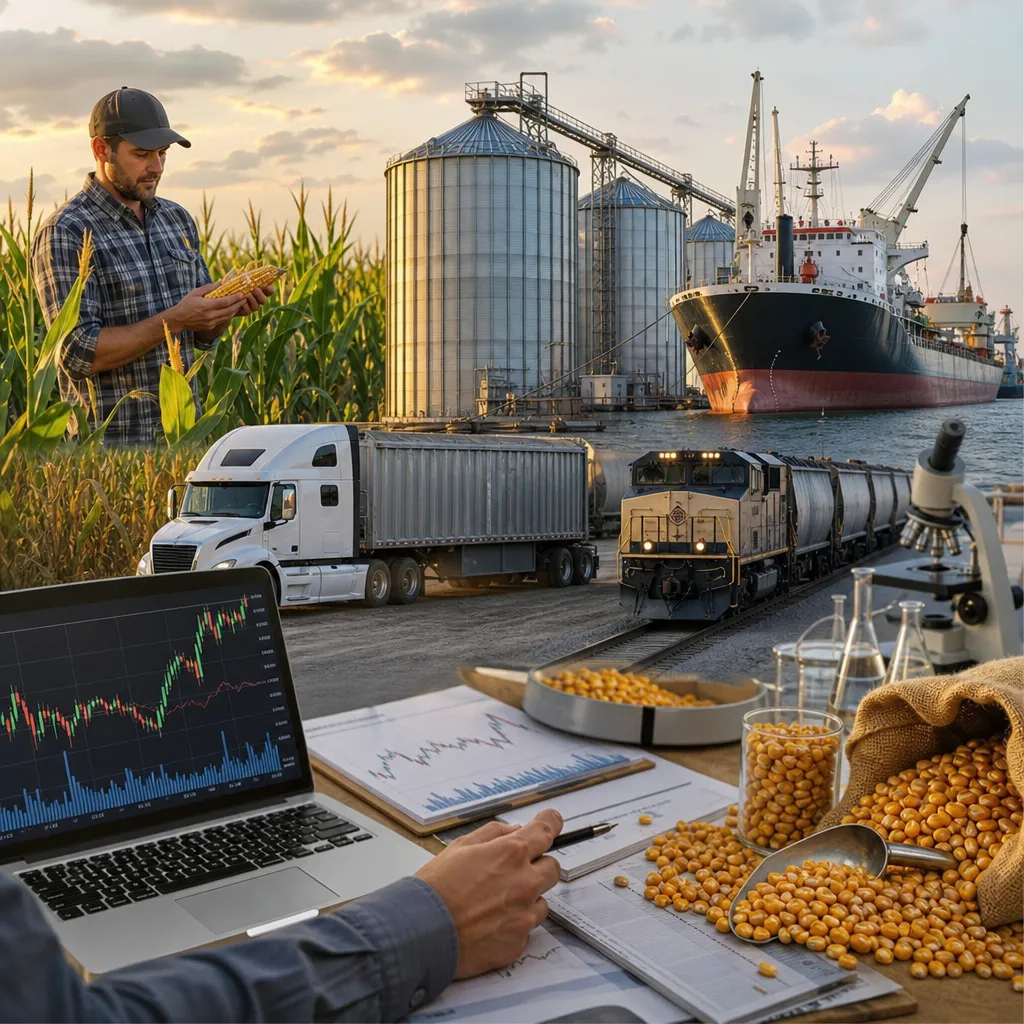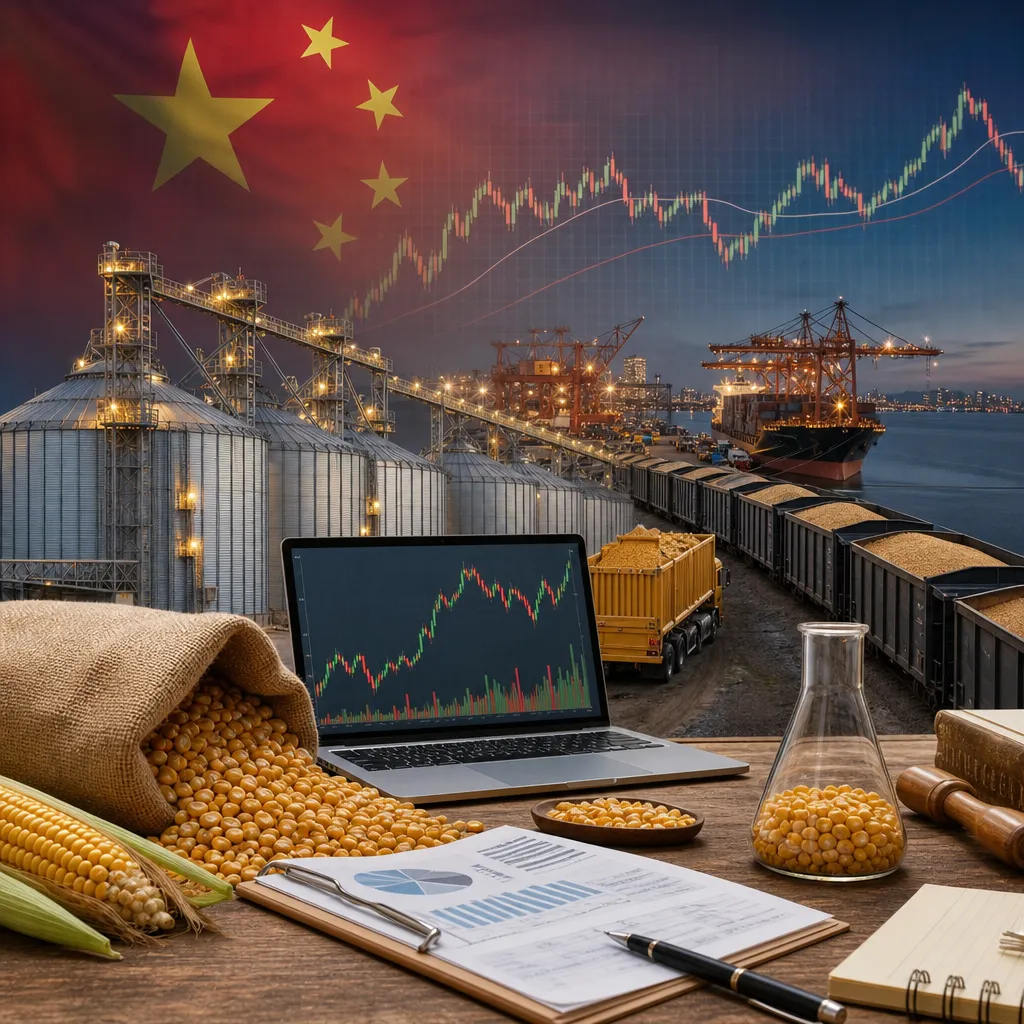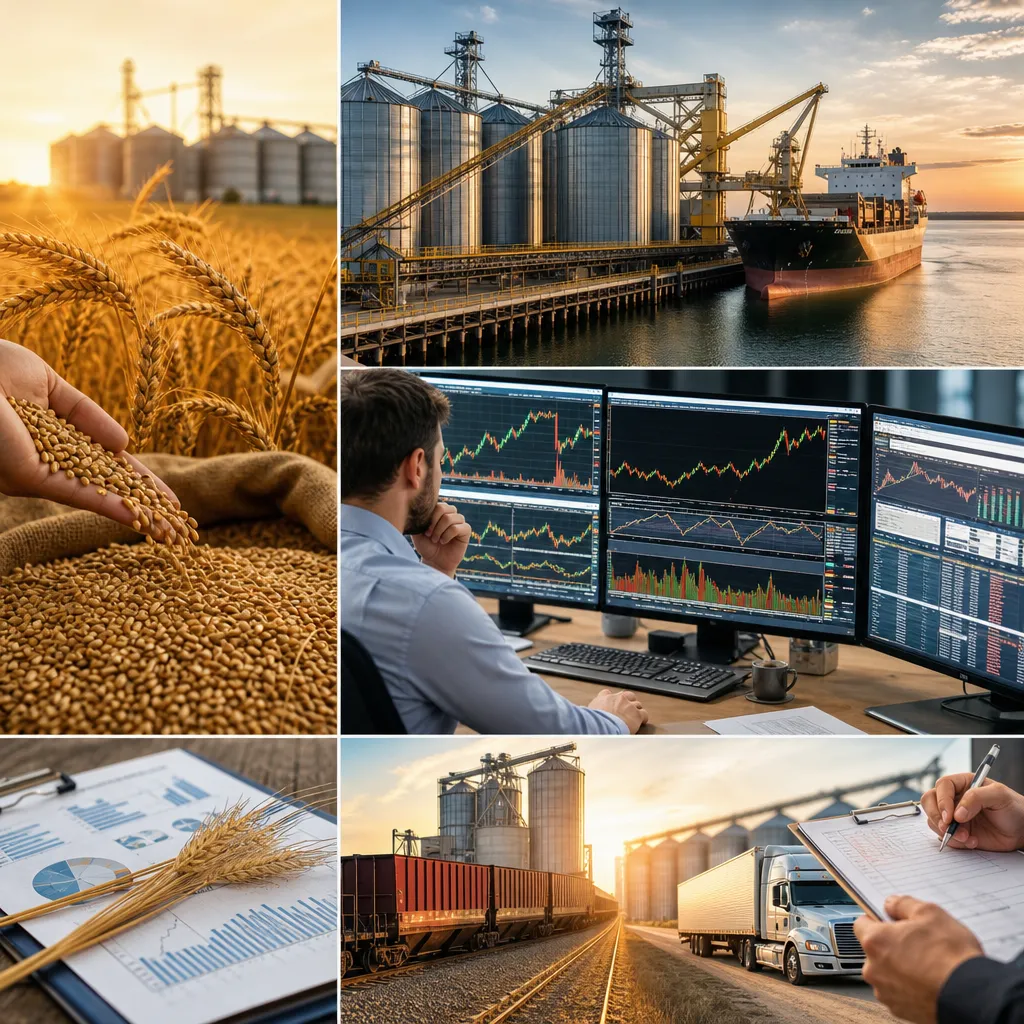



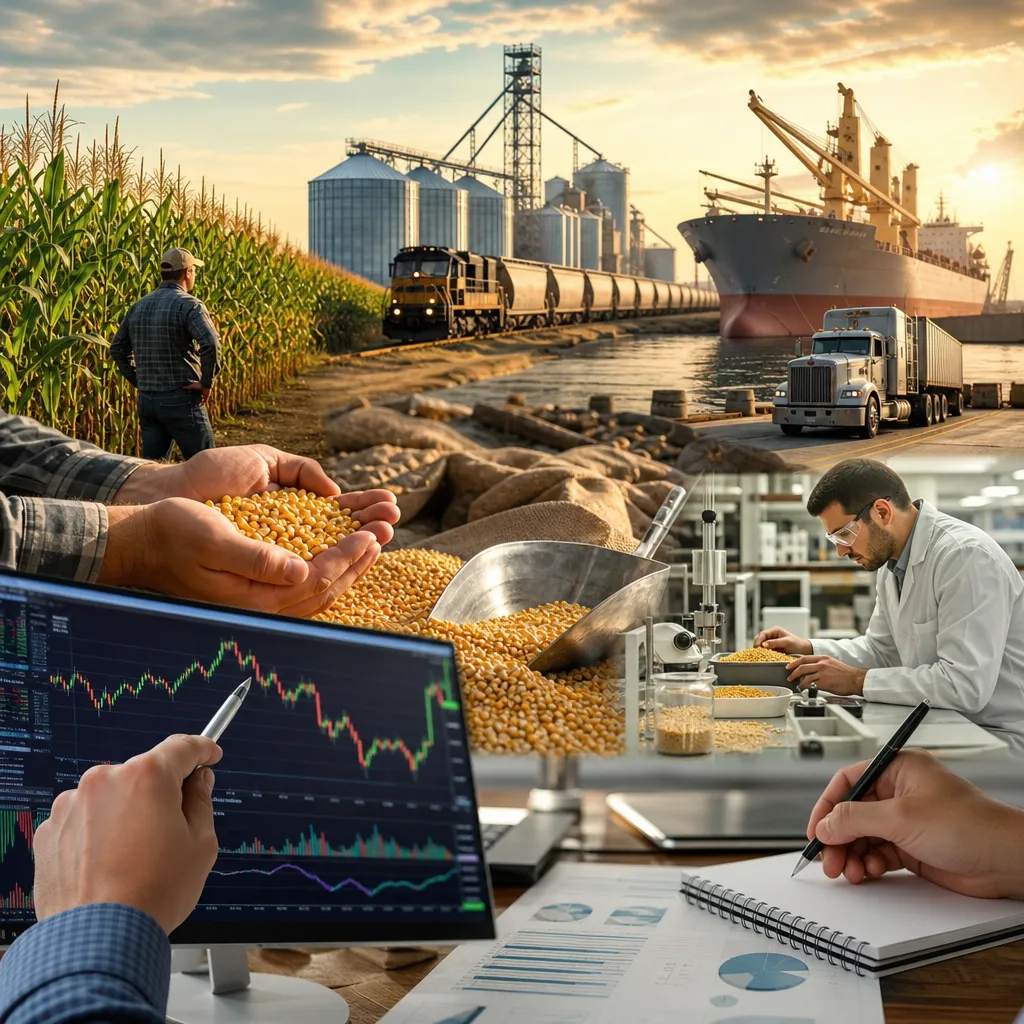
The US corn futures market is the main benchmark for corn pricing not only in the United States, but across much of the global grain trade. In practice, when traders, farmers, feed manufacturers, ethanol plants, exporters, and importers talk about “corn prices,” they are often referring first to US corn futures and then adjusting that benchmark for local conditions. The core market operates through exchange-traded futures and options, while the physical grain trade happens separately through elevators, processors, rail destinations, river terminals, and export channels. Understanding the difference between futures and cash corn is essential for reading prices correctly and managing risk.
What the US corn futures market is
The US corn futures market is the organized exchange market where standardized corn futures and options contracts are traded. The main benchmark is the corn contract listed by CME Group through the Chicago Board of Trade, commonly called CBOT corn.
This market is based in the United States and quoted in US cents per bushel. It serves as the central reference for pricing US corn in many domestic and export channels. While physical corn moves through farms, country elevators, processing plants, rail networks, barges, and export terminals, futures provide a transparent benchmark for price discovery and risk transfer.
Participants include:
- Farmers hedging expected production
- Elevators and cooperatives managing grain inventories and forward purchases
- Ethanol plants, feed mills, and livestock producers managing input costs
- Exporters and merchandisers covering flat-price risk
- Commodity funds and other financial traders providing liquidity or taking directional views
Where the market operates and why Chicago matters
The benchmark US corn futures market operates on CME Group’s exchange infrastructure, rooted historically in Chicago. Chicago became the center of US grain futures because of its long-standing role as a commercial grain hub connecting Midwest production with transport and consumption markets.
Today, corn futures are accessed electronically through brokerage accounts and trading platforms, even though the market’s commercial meaning remains closely tied to the US Corn Belt. The physical corn economy behind the futures market is concentrated in major producing states such as Iowa, Illinois, Nebraska, Minnesota, Indiana, and surrounding regions. Corn then moves to domestic users and export channels by truck, rail, and barge, especially through the Mississippi River system and the US Gulf export corridor.
The futures benchmark is national in influence, but local cash pricing remains regional. Corn in central Iowa, an ethanol plant in Nebraska, a feed mill in North Carolina, and an export elevator on the Gulf may all reference the same futures market while trading at different cash prices.
How US corn prices are formed
The most important distinction is between futures price and cash price. Futures are the exchange-traded benchmark. Cash prices are what a real buyer is willing to pay for physical corn at a specific place and time.
Local cash corn prices usually reflect:
- The relevant CBOT corn futures contract
- Basis, which is the local difference between cash and futures
- Location and transport cost
- Quality specifications and moisture
- Storage conditions and nearby supply
- Buyer competition among elevators, processors, feeders, or exporters
- Seasonal factors such as harvest pressure or tight old-crop supplies
In grain merchandising, a buyer may quote corn as a futures month plus or minus a basis. For example, a bid might be expressed relative to a nearby or deferred CBOT contract, then converted into a flat cash bid. That is why two locations can post different bids even when the futures market is unchanged.
| Price type | Where it is quoted | What it means |
|---|---|---|
| CBOT corn futures | CME Group market data and broker platforms | Exchange benchmark for standardized corn contracts in US cents per bushel |
| Local cash bid | Elevators, cooperatives, processors, feed mills | Actual bid for physical corn at a named location, usually tied to futures plus or minus basis |
| Delivered price | Processor or end-user purchase contracts | Price including transport to the buyer’s facility |
| Export bid | Merchants and export market reporting | Price for grain assembled for export channels, often linked to terminal demand and freight economics |
| FOB export price | Export trade and market reports | Price of corn loaded free on board at the export point, excluding ocean freight |
| CIF import price | Import market assessments and buyer tenders | Price including cost, insurance, and freight to the destination country |
How physical corn is actually bought and sold in the United States
Physical corn is not usually bought by clicking the futures screen and taking grain home. Most US corn is marketed through a chain of commercial counterparties.
Common physical channels include:
- Farmers selling spot or forward to local elevators or cooperatives
- Sales directly to ethanol plants, feed mills, or livestock operations where available
- Merchants buying corn inland and shipping by rail or barge to larger demand centers
- Exporters assembling grain at river or terminal locations for shipment abroad
Contracts may be cash contracts, basis contracts, hedge-to-arrive contracts, or other merchant-specific arrangements. The important commercial details are the delivery location, timing, moisture and quality rules, discounts, title transfer, and payment terms.
A farmer may watch CBOT corn futures online every day but still make the physical sale locally. The final farm-gate result depends on the local bid, not only on the exchange quote. In the same way, a feed mill or ethanol plant may buy physical corn in the cash market while separately using futures or options to manage price risk.
How hedging works in the US corn futures market
Hedging means using futures or options to reduce price risk connected to a physical grain position. It is different from speculation.
Examples of hedging include:
- A farmer selling futures against expected harvest production to protect against a price decline
- An elevator buying cash corn from farmers and selling futures to reduce inventory risk
- An ethanol plant buying futures or call options to help manage rising corn input costs
- An exporter using futures to manage flat-price exposure while sourcing physical grain for a vessel program
Hedging does not remove all risk. Basis can still change, quality can vary, freight can shift, and local demand can strengthen or weaken independently of futures. That is why basis risk is a central concept in grain merchandising.
Speculators, by contrast, may trade corn futures without owning physical corn. They provide liquidity and can influence short-term price movement, but they do not replace the underlying commercial supply-and-demand forces.
| Market activity | Where it happens | Main purpose |
|---|---|---|
| Selling physical corn | Elevators, cooperatives, processors, merchants, exporters | Transfer ownership of real grain |
| Trading corn futures | CME Group through a broker or trading platform | Manage price risk or take financial market exposure |
| Trading corn options | CME Group through a broker or trading platform | Create price floors or ceilings with defined option premium cost |
| Export corn transactions | Merchants, exporters, importers, terminal markets | Move grain from US origin to overseas destination under commercial shipping terms |
How the US corn futures market connects to exports and world trade
The United States is one of the world’s major corn producers and exporters, so US corn futures carry global significance. Importers in many countries monitor CBOT values as a reference point when evaluating US origin corn against alternatives from other exporters.
Export pricing commonly works through an inland supply chain. Corn is purchased in producing areas, moved to river or rail markets, accumulated at export terminals, and then offered in FOB terms. The overseas buyer may compare the FOB price plus ocean freight with competing origins. That means global buyers do not look only at futures. They also assess basis, logistics, vessel freight, origin availability, and quality.
Within the US, export demand can strongly affect interior basis. When Gulf export demand is strong, river and rail bids may improve upstream. When domestic users are more aggressive than exporters, inland demand can tighten basis away from the coast. This is why local cash markets can behave differently from the futures board on any given day.
What usually moves US corn futures and cash prices
The biggest drivers of the market are supply, demand, and expectations. Because corn is a weather-sensitive crop grown on a large scale across the Midwest, the market reacts quickly to changes in crop outlook and end-user demand.
Key price drivers include:
- US planted area and harvest area expectations
- Weather during planting, pollination, grain fill, and harvest
- USDA crop condition reports and production estimates
- Domestic feed demand
- Ethanol production margins and policy environment
- Export demand and competition from other origins
- Ending stocks expectations
- River conditions, rail performance, and logistics disruptions
- US dollar strength, which affects export competitiveness
- Energy prices and broader commodity investor sentiment
Forecasting should be handled as a scenario exercise rather than a certainty. A bullish scenario may involve weather stress, tighter stocks, strong export demand, or improved ethanol demand. A bearish scenario may involve large acreage, favorable weather, good yields, slower exports, or weaker feed and fuel demand. The market often moves well before harvest because futures price expectations, not only confirmed outcomes.
Where to check US corn futures and related market information online
For the futures benchmark itself, the most direct institutional source is CME Group, which publishes contract information and market-related data for CBOT corn. Many brokers and market data platforms also show delayed or real-time corn futures quotes, depending on the service level.
For official US crop, demand, and trade information, the most widely used public source is the US Department of Agriculture. In particular, market participants rely on USDA reports for crop progress, acreage, stocks, production, feed use, ethanol-related demand indicators, and export sales.
For oversight of positions and trader categories in futures markets, the Commodity Futures Trading Commission publishes Commitment of Traders data. This can help readers understand broad positioning by commercial and non-commercial participants, though it should not be treated as a simple forecasting tool.
To check physical cash prices, readers normally need to use local market channels rather than the futures exchange. Practical sources include:
- Country elevator and cooperative bid sheets
- Ethanol plant or feed mill posted bids
- Merchant and processor bid pages where available
- Regional grain market reports and extension services
- USDA market news and related reporting where applicable
When checking prices, always note the market type, location, contract month or delivery period, currency, and unit. A CBOT futures quote in cents per bushel is not the same as a local cash bid, delivered processor bid, or export offer.
Practical guide for participants
For physical grain sellers
Start with local buyers, not just the board price. Compare bids from elevators, cooperatives, processors, and other legitimate purchasers in your area. Review moisture rules, test-weight standards, discounts, storage charges, delivery windows, and payment terms. If using forward contracts or basis contracts, understand exactly which futures month is referenced and when pricing must be completed.
For physical grain buyers
Build a procurement plan that separates flat-price exposure from basis and logistics. A feed mill or processor often needs both reliable supply and predictable input costs. That may require a combination of spot buying, forward purchasing, and exchange hedging. Counterparty reliability and transportation performance matter as much as direction on futures.
For futures and options traders
Access normally occurs through a regulated broker offering CME products. Futures involve margin, daily mark-to-market, and leverage. Options involve premium cost and different risk profiles. Traders who are not involved in the physical grain business should remember that a profitable futures position does not mean they have sourced or marketed real corn. Exchange trading gives financial exposure, not automatic ownership of physical grain flows.
Frequently asked questions
What is the main benchmark for US corn prices?
The main benchmark is CBOT corn futures listed by CME Group. It is quoted in US cents per bushel and used widely as the starting point for both domestic and export pricing.
Is the futures price the same as the cash price paid to a farmer?
No. A farmer’s cash price usually equals the relevant futures value adjusted by local basis. Basis reflects location, transport, local supply and demand, buyer competition, and quality factors.
Where can I check US corn futures prices online?
The most relevant institutional source is CME Group. Many brokers and market data services also display corn futures quotes, though access to real-time data may depend on the platform.
Where can I check actual physical corn bids?
Physical bids are usually checked through local elevators, cooperatives, processors, ethanol plants, feed mills, merchants, and USDA market reporting where available. These bids are location-specific and can differ significantly from futures.
How is US corn exported?
Corn is bought inland from producing areas, assembled through commercial grain channels, moved by truck, rail, or barge, and shipped through export terminals. Export prices are often evaluated in FOB terms and then compared internationally after adding freight to destination.
Who uses corn futures the most?
Commercial users include farmers, elevators, processors, feed manufacturers, ethanol producers, and exporters. Financial traders and funds also participate, mainly for trading and liquidity rather than physical handling.
Can someone trade corn futures without buying real corn?
Yes. Most futures market participants close or roll their positions before delivery. Futures are widely used for hedging or speculation without taking physical delivery.
What most strongly moves the US corn market?
Weather, acreage, yields, stocks, export demand, feed demand, ethanol economics, logistics, and USDA reports are among the most important drivers. Currency moves and broader commodity sentiment can also matter.
Sources
- CME Group
- US Department of Agriculture
- Commodity Futures Trading Commission