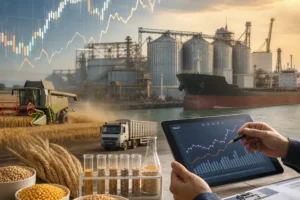
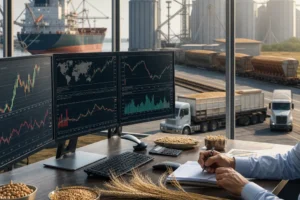

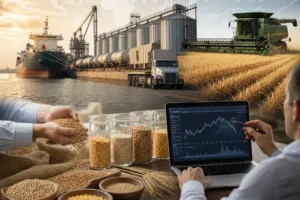
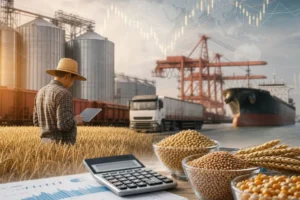

The top grain importing countries are not static winners and losers; they change with population growth, feed demand, weather, currency moves, and government policy. In practice, the biggest importers are usually large-consuming countries or regions that cannot fully meet domestic demand for wheat, corn, soybeans, rice, or barley from local production. For most readers, the useful question is not only which countries import the most grain, but where to verify that information, how those imports are priced, and how the physical trade actually moves from exporter to buyer. The answer sits across official trade data, grain merchant networks, futures exchanges, port logistics, and government crop reports.
At a high level, China is a major importer of soybeans and often a significant buyer of corn, barley, and wheat depending on policy and crop conditions. The European Union is a large grain and oilseed importer in some crops and a major exporter in others, so it must be treated crop by crop. Egypt, Indonesia, Japan, Mexico, South Korea, Turkey, and several Middle East and North Africa countries are consistently important grain importers, especially for wheat, corn, feed grains, and sometimes rice.
What “top grain importing countries” really means
There is no single ranking that covers all grain markets equally well. A country may be a top importer of wheat but not corn, or a top importer of soybeans while exporting other crops. Grain trade is best understood by crop and end use.
In practical market work, analysts normally separate imports into:
- Food grains, especially wheat and rice
- Feed grains, especially corn, barley, sorghum, and oats
- Oilseeds often traded alongside grain analysis, especially soybeans, canola, and rapeseed
For example, a flour-importing country focuses heavily on wheat quality, protein, and milling specifications. A livestock-intensive importer may care more about corn, barley, sorghum, and freight cost into feed mills. A vegetable-oil and meal buyer may watch soybean imports more closely than wheat.
| Crop | Typical major importers | Main demand driver | Key market issue |
|---|---|---|---|
| Wheat | Egypt, Indonesia, Turkey, Algeria, China, Japan, several MENA countries | Food use, flour milling, strategic stocks | Protein quality, freight, government buying |
| Corn | China, Mexico, Japan, South Korea, EU in deficit years | Feed demand, industrial use | Feed margins, crop shortfalls, policy |
| Soybeans | China, EU, Mexico, Egypt, Southeast Asian processors | Crushing for meal and oil | Crush margins, animal feed demand, trade policy |
| Barley/Sorghum | China, Saudi Arabia, Japan | Feed and specific industrial use | Substitution versus corn, quality specs |
| Rice | Philippines, Nigeria, some Middle East and African markets | Staple food demand | Government controls, origin preference, food security |
Which countries matter most by crop
China is central to the global soybean market and often dominates seaborne oilseed demand. It can also become a major importer of corn, barley, sorghum, and wheat when domestic production, policy, or feed economics shift. For global traders, China’s buying pace can affect basis levels at export origin, vessel lineups, and futures spreads.
The European Union is a complicated but essential import market. It may import corn, soybeans, soybean meal, rapeseed, and sometimes wheat or barley depending on the crop year. Because it is both a producer and a trader, its position changes with weather, planted area, quality, and internal feed demand.
Egypt is one of the most watched wheat importers because of its large bread consumption and state-linked procurement role. Tender activity from large public buyers can shape trade flows and near-term export competition among origins.
Indonesia is a major wheat importer because local wheat production is limited while flour demand is significant. It is an important market for exporters of milling wheat and feed wheat.
Japan and South Korea are key importers of corn, wheat, and feed ingredients. These are highly structured markets with strict quality standards and a strong role for established importers, feed manufacturers, and trading houses.
Mexico is a major corn importer, especially linked to livestock feed and industrial demand, while also participating actively in North American grain trade logistics.
Turkey, Algeria, Saudi Arabia, and several countries in North Africa and the Middle East are important buyers of wheat and feed grains, often influenced by food security policy, currency pressure, and import tenders.
How grain imports work in the physical market
Physical grain imports do not happen on a chart. They happen through contracts between exporters, merchants, state agencies, processors, mills, feed companies, and importers. The basic transaction is usually negotiated privately, even when benchmarked to public futures or reference prices.
A typical import flow looks like this:
- A buyer such as a flour mill, feed mill, crusher, or state procurement agency identifies needed volume and quality.
- The buyer requests offers from grain merchants, exporters, or trading houses.
- The seller quotes origin, quality, shipment window, price basis, freight assumptions, and Incoterms.
- The parties agree quality terms, delivery port, inspection method, payment terms, and discharge conditions.
- The cargo is loaded at origin, inspected, financed, shipped, and discharged at destination.
- The importer arranges inland logistics to mills, feed plants, crushers, or warehouses.
In the physical market, the important details are often not the futures price alone but basis, freight, quality, and timing. Basis is the difference between the local cash offer and the benchmark futures price or export reference. A country may appear to be buying cheap grain on paper, but freight congestion, poor quality, or adverse currency movements can make imports expensive in practice.
Common participants include:
- International grain merchants and exporters
- State grain buying agencies or tender authorities
- Private mills, feed manufacturers, and crushers
- Port terminal operators and inspection companies
- Banks providing trade finance and letters of credit
- Warehouses and inland logistics firms
Where to check which countries are importing grain
Reliable import analysis starts with official data, not headlines alone. Readers usually need three layers of information: trade volumes, crop fundamentals, and market pricing.
USDA is one of the most widely used global sources. Its World Agricultural Supply and Demand Estimates, Production reports, and PSD database help users compare country imports, exports, production, and ending stocks by crop. Traders use USDA to frame the global balance sheet, even when they also rely on local intelligence.
FAO provides global food and agricultural trade context and is useful for broad structural analysis, especially for countries where food security and staple grain dependence matter.
National customs and statistical offices are often the most detailed source for actual imports, though reporting timing and classifications vary. In the EU, Eurostat is commonly used. In many countries, agriculture ministries, customs authorities, or central statistical agencies publish monthly or quarterly import data.
Export inspection and sales reports can also matter. For example, USDA Export Sales and related reporting help market participants track U.S. export commitments and destinations. This is useful when watching large buyers such as China, Mexico, or Japan.
| Source type | What it shows | Who uses it | Main limitation |
|---|---|---|---|
| USDA WASDE and PSD | Country import estimates, production, stocks, trade balance | Analysts, traders, processors, farmers | Estimates can change over time |
| National customs/statistics | Reported import volumes by period and product code | Physical traders, policy analysts, economists | Reporting lag and classification differences |
| FAO | Global food and agricultural market context | Researchers, policy users, international trade observers | Less useful for day-to-day trading decisions |
| Exchange market data | Futures prices and spreads for benchmark contracts | Hedgers, brokers, traders | Not the same as delivered import price |
How imports are priced: futures, cash, basis, and freight
Imported grain is usually priced from a combination of benchmark futures, export cash values, ocean freight, and destination costs. For wheat, corn, and soybeans, globally watched futures references often come from CME Group. In Europe, grain benchmarks may also be tracked through Euronext for regional pricing context. But these exchange prices are not the same as the landed import cost.
To understand what an importing country actually pays, buyers typically look at:
- Futures reference price for the crop and delivery month
- Cash premium or discount at export origin
- Ocean freight from loading port to destination port
- Insurance, finance, and handling
- Import duty or tax where applicable
- Currency exchange rate versus the contract currency
- Port discharge and inland freight to the final user
For example, a feed buyer in Asia may reference CME corn futures but will actually purchase a physical cargo from a merchant at a negotiated premium or discount, plus freight to the destination port. The local feed mill then compares that landed cost with domestic alternatives or substitute feed ingredients such as barley, wheat, cassava, or sorghum.
This distinction matters for farmers and traders as well. A globally quoted futures rally does not guarantee that an importer will buy more if freight rises sharply or local currency weakens. Likewise, an importing country may remain active even when futures are firm if domestic supply is tighter than world supply.
Where grain trade happens online versus in the real world
Grain imports are supported by both online market infrastructure and physical handling systems, but they are not the same market.
Online and exchange-based activity includes futures trading, options trading, price discovery, market data, shipping updates, and report distribution. This is where hedgers and speculators watch benchmark prices and risk.
Physical grain trade happens through negotiated contracts, tenders, merchant offers, vessel bookings, inspections, and warehouse transfers. This is where actual cargo ownership changes hands for delivery.
If a reader wants to trade grain financially, that normally requires a regulated futures broker and a brokerage account that provides access to contracts on an exchange such as CME Group. The user trades a futures or options contract, not a shipload of grain. Margin is required, positions are marked to market, and the contract can gain or lose value quickly.
If a reader wants to buy or sell physical grain, that usually happens through grain merchants, elevators, cooperatives, exporters, importers, mills, crushers, feed companies, or tender systems. The buyer must care about quantity, grade, moisture, test weight, protein where relevant, delivery point, freight, and payment security.
What drives the biggest grain importers
The top importing countries are usually driven by one or more structural constraints:
- Population exceeds domestic production capacity
- Livestock and poultry sectors need imported feed
- Limited land or water restricts grain self-sufficiency
- Processors need specific grain quality not available locally
- Government food-security policy supports reserve building
Short-term import changes are often driven by more cyclical factors:
- Weather damage in the domestic crop
- Shifts in exchange rates
- Trade restrictions or tariff changes
- Freight volatility and port disruption
- Substitution between wheat, corn, barley, and sorghum in feed rations
- Changes in crush margins for soybeans
That is why import rankings must be read as a moving picture, not a fixed league table. A drought, a disease issue in livestock, or a policy shift can change buying behavior within a single season.
How farmers, traders, and buyers use importer information
Farmers use importer demand as a background signal, not a direct local bid. If a major importer is buying aggressively, export basis at origin may strengthen, which can eventually support country elevator bids. But local cash prices still depend on storage, freight, basis, and regional supply.
Exporters and merchants monitor which countries are active buyers, what qualities they need, and which origins are competitive. They also watch tender results, port congestion, and freight spreads.
Importers and processors compare origins, substitute crops, and timing. They may hedge benchmark price risk with futures while separately negotiating basis and freight with suppliers.
Analysts combine customs data, crop reports, vessel tracking, and futures curves to estimate near-term buying interest and longer-term dependency.
For readers trying to analyze the market, the most practical workflow is:
- Check USDA global balance sheets and country import estimates.
- Confirm with national customs or statistical publications where available.
- Watch benchmark futures on the relevant exchange.
- Compare export-origin cash values and destination basis indications from merchants or market reporting services.
- Track freight, currency, and tender activity before drawing conclusions.
Common risks and limitations when reading grain import data
Import data is useful, but it is rarely perfect in real time. The main limitations are timing, revisions, and crop definitions.
A few practical cautions:
- Monthly customs data may lag the real market. A country can be actively buying before official imports appear.
- Different sources use different crop-year calendars. This matters a lot in wheat and corn.
- Some datasets combine products differently. For example, grain, meal, or oilseed categories may not align across sources.
- Political announcements are not the same as executed trade. Always separate tender results, booked sales, shipped volumes, and customs-cleared imports.
- Exchange prices are benchmarks, not delivered import values. Landed cost can move very differently from futures.
Which country imports the most grain overall?
There is no single universal answer across all grains. China is usually the dominant soybean importer and often one of the largest importers of other feed grains. Wheat and rice import leadership varies by crop and year, so the best approach is to check crop-specific trade data from USDA and national statistics.
Where can I verify grain import data by country?
Start with USDA PSD and WASDE for international comparisons. Then use national customs offices, statistical agencies, or Eurostat for reported imports. FAO is useful for broader context, especially for food-security analysis.
Where are grain import prices quoted?
Benchmark grain prices are commonly watched on futures exchanges such as CME Group, and in some regional markets on Euronext. But import buyers usually pay a negotiated physical price based on futures or export cash references plus basis, freight, insurance, currency effects, and destination costs.
Can I trade grain imports through a brokerage account?
You can trade grain futures and options through a regulated futures broker, but that is financial exposure to benchmark prices, not a physical import cargo. Physical import transactions normally require dealing with merchants, exporters, processors, or tender systems, along with logistics and trade finance arrangements.
Why do local grain prices differ from global import benchmarks?
Local prices reflect basis, transport, storage, grade, moisture, protein, regional supply, taxes or duties, and currency. A global futures move may influence local prices, but it never translates one-for-one into the actual cash price at a farm, elevator, mill, or destination port.
Who usually buys imported grain in practice?
The main buyers are flour mills, feed mills, soybean crushers, maltsters, food manufacturers, state procurement agencies, and large trading houses acting for end users. They typically buy through merchants, tenders, or negotiated contracts rather than through a retail-style online checkout process.
What is the difference between import demand and booked sales?
Import demand is the economic need or buying interest. Booked sales are cargoes or contracts that have actually been agreed. Shipped and customs-cleared volumes come later. In volatile markets, these stages can differ significantly.
Sources
- USDA Foreign Agricultural Service, Production, Supply and Distribution
- USDA World Agricultural Supply and Demand Estimates
- FAO Food Outlook