

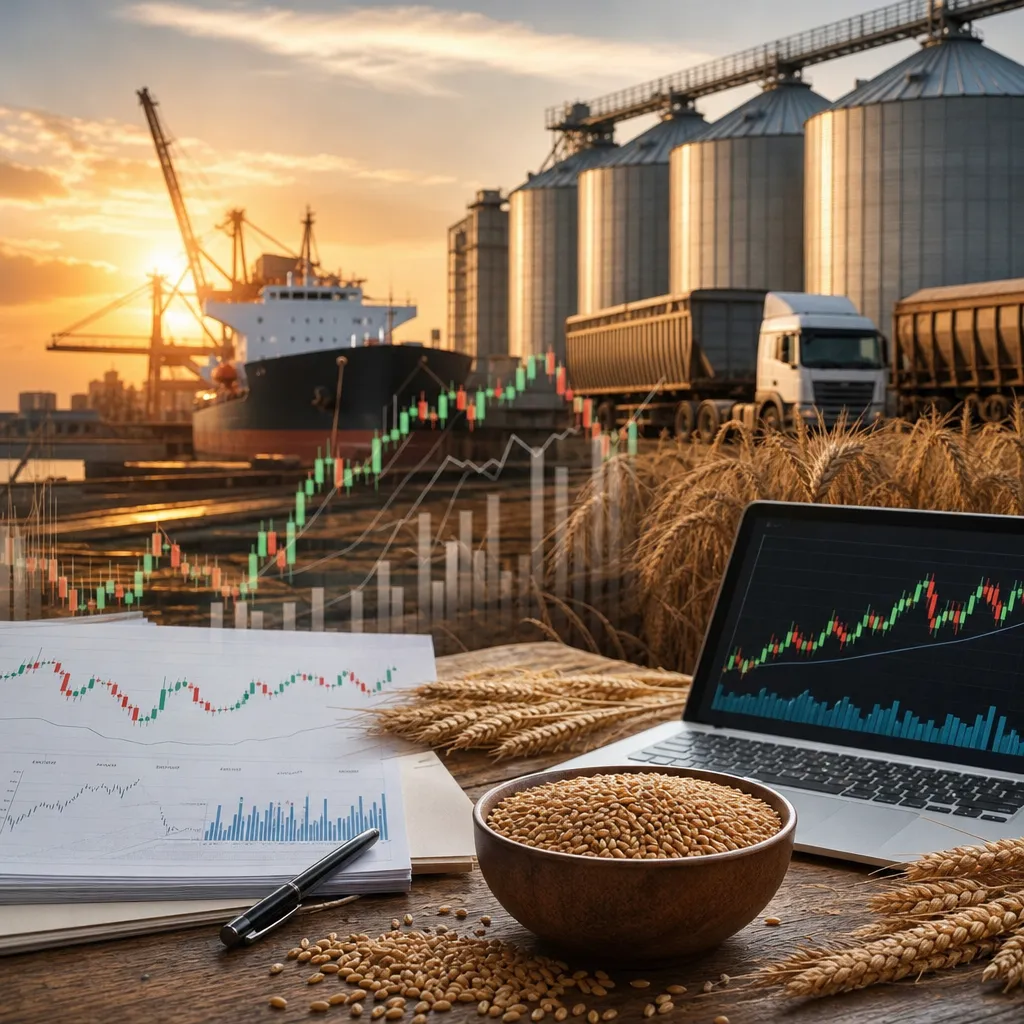
Wheat futures prices are exchange-traded benchmark prices for standardized wheat contracts, not the exact cash price a farmer, miller, or exporter pays in a local market. They are most useful as a reference for price discovery, hedging, and risk management, while real-world physical wheat transactions are usually negotiated as a futures price plus or minus a local basis. If you need a current wheat futures price, the practical place to check is the relevant exchange market data for the specific contract month; if you need the price for actual wheat in your area, you normally check local elevator bids, cooperative bids, merchant bids, or processor offers. Understanding the difference between those two markets is the key to using wheat prices correctly.
What wheat futures prices are
Wheat futures are standardized contracts traded on regulated commodity exchanges. Each contract represents a defined quantity and quality standard, with specific delivery rules, delivery locations, and expiration months. The price quoted on the screen is the market’s current valuation of that contract, in the contract’s own unit and currency.
In practice, there is not just one global wheat futures price. Different wheat contracts exist for different classes and regions. The best-known benchmarks are listed by CME Group, including Chicago Soft Red Winter wheat, Kansas City Hard Red Winter wheat, and Minneapolis Hard Red Spring wheat. Other exchanges may list wheat contracts relevant to their own regions and trade flows.
Because wheat quality differs by protein, test weight, moisture, damage, and end use, the futures quote is only a benchmark. A flour mill may need a stronger wheat than the exchange specification. A feed buyer may be willing to accept lower quality. That is why physical wheat is often priced from a futures reference plus inspection-based adjustments and freight.
Where wheat futures prices are quoted and how to check them
The primary place to check wheat futures prices is the exchange that lists the contract. For major U.S. wheat benchmarks, CME Group is the core source. Market data vendors, broker platforms, financial terminals, charting services, and agricultural websites may also display the same market, sometimes with delay if the user does not subscribe to real-time data.
When checking a price, you should always identify four things:
- Exchange and contract: for example, Chicago wheat or Kansas City wheat.
- Delivery month: such as March, May, July, September, or December.
- Unit: futures are quoted in the contract’s exchange unit, not always in the same unit used in the local physical trade.
- Currency: often U.S. dollars for major U.S. wheat benchmarks.
If you are a farmer or physical buyer, checking futures alone is not enough. You would normally compare that benchmark with local bids from:
- grain elevators,
- agricultural cooperatives,
- country merchants,
- mills,
- feed manufacturers,
- exporters at port locations.
Many of these firms post daily cash bids online or through mobile apps, text services, or local offices. In some countries, official agricultural market reporting systems also publish representative cash prices. Those prices reflect local supply, freight, handling capacity, storage conditions, and quality premiums or discounts.
| Price type | Where to find it | What it represents | Who uses it |
|---|---|---|---|
| Futures price | Commodity exchange data, broker platform, market-data service | Standardized exchange-traded contract value | Traders, hedgers, analysts, merchants |
| Local cash bid | Elevator, cooperative, mill, merchant, processor | Actual nearby buying price at a specific location and quality | Farmers, local buyers, truckers |
| Export or port price | Exporter bid, broker, tender market, trade reporting service | Physical price for shipment at export point | Exporters, importers, merchants |
| Published market assessment | Government market report or commercial reporting agency | Observed or assessed cash market indication | Analysts, risk managers, policy users |
How wheat futures prices work in practice
A wheat futures contract trades electronically on a regulated exchange. Buyers and sellers meet in the market through clearing members and brokers. The exchange standardizes the contract, while the clearing system becomes the central counterparty, reducing direct credit risk between trading participants.
To trade futures, a person or company normally needs a futures brokerage account. This is different from calling a grain elevator to sell physical wheat. The broker provides market access, account reporting, and margin functionality. Futures are leveraged instruments, so the trader posts margin rather than the full contract value. Daily gains and losses are settled through mark-to-market.
This structure makes futures efficient for hedging and speculation, but also risky. A producer who sells wheat futures to hedge a crop can face margin calls if futures prices rise, even when the physical wheat position improves in value. A speculative long or short trader can lose money quickly if the market moves against the position.
Most futures contracts are offset before delivery. That means traders close the position by buying back or selling out before the contract enters the delivery process. Physical wheat businesses may use the futures market for price protection while handling the physical grain separately through elevators, warehouses, rail terminals, or export channels.
Futures prices versus local cash wheat prices
The most common mistake is to assume that a quoted wheat futures price is the same as the farmgate or elevator price. It is not. The difference between the local cash price and the futures price is called the basis.
Basis reflects local conditions, including:
- distance to market,
- truck, rail, or barge freight,
- elevator handling costs,
- storage pressure at harvest,
- protein and other quality traits,
- regional supply and demand,
- export capacity,
- currency effects in import or export markets.
For example, if harvest is large and local storage is tight, basis may weaken even if futures stay firm. If a mill urgently needs nearby wheat with a certain protein level, basis may strengthen sharply while futures barely move. This is why physical grain sellers usually watch both the futures board and the local basis.
| Market feature | Futures market | Physical wheat market |
|---|---|---|
| Where it trades | Regulated exchange through a futures broker | Elevators, cooperatives, merchants, mills, exporters, brokers |
| What is traded | Standardized contract | Actual grain with specific quality and delivery terms |
| Main price driver | Global and regional expectations, fund flows, hedging activity | Local basis, freight, quality, immediate demand |
| Settlement | Daily margining through clearing | Payment under cash contract terms after delivery or pickup |
| Delivery | Defined by exchange rules, often avoided by offsetting | Normal commercial delivery by truck, rail, barge, or vessel |
Who uses wheat futures prices and why
Farmers use wheat futures prices as a benchmark when deciding whether to forward sell, hedge, store grain, or wait. A producer may sell cash wheat at harvest, store and sell later, or use a hedge to reduce price risk while retaining physical ownership.
Elevators and cooperatives use futures to manage the price risk created when they buy wheat from farmers and later resell it to mills, feed customers, or exporters. They may hedge inventory or basis positions while earning handling and merchandising margins.
Millers and processors follow futures as an input-cost benchmark. A flour mill may buy physical wheat from an elevator or merchant and hedge part of its future wheat needs using futures or options.
Exporters and merchants use futures together with freight, quality spreads, and origin premiums to price sales into international trade. Port values are influenced by vessel demand, origin competition, and government tenders, but futures remain a common pricing reference.
Speculators and funds trade wheat futures for price exposure without any need to handle physical grain. Their activity can affect short-term volatility and liquidity, but they are not the same as commercial grain users.
How hedging with wheat futures and options is normally done
Hedging means using a futures or options position to reduce the risk of adverse price moves in the physical grain business. It does not remove all risk, because basis can still change, and quality or logistics problems can still occur.
Common practical examples include:
- Farmer hedge: a farmer expecting to harvest wheat may sell futures to protect against a futures price decline before cash sale.
- Elevator hedge: an elevator that buys wheat from farmers may sell futures while holding inventory, then lift the hedge when the physical wheat is sold.
- Mill hedge: a processor expecting to buy wheat later may buy futures or call options to reduce exposure to rising wheat prices.
Options are also used. A put option can provide downside price protection for a seller while keeping some upside potential if the market rises. A call option can help a buyer limit upside cost risk. Unlike outright futures, options involve a premium cost, which should be compared with the amount of risk protection sought.
These transactions are normally executed through a futures broker, not through a local grain elevator unless the elevator offers a structured pricing contract tied to exchange markets. Some cash contracts offered by elevators or cooperatives may embed futures and option elements, but the legal agreement is still a physical grain contract with that company, not direct exchange membership by the farmer.
What moves wheat futures prices
Wheat futures prices respond to both agricultural fundamentals and broader financial conditions. The market constantly reprices expectations as new information arrives.
Important drivers include:
- Weather: drought, freeze, excessive rain, heat during grain fill, and harvest delays can change yield and quality expectations.
- Acreage and production: planted area, abandonment, and yield prospects in major exporters matter.
- Stocks and stocks-to-use: the tighter the balance sheet, the more sensitive price can be to supply shocks.
- Export demand: major import tenders, destination demand, and origin competitiveness influence export pace.
- Competing origins: Black Sea, North America, Europe, Australia, and Argentina can shift trade flows.
- Currency moves: exchange rates change export competitiveness.
- Corn and feed relationships: wheat can compete with corn and other grains in feed rations.
- Freight and logistics: river levels, rail service, port congestion, and ocean shipping costs affect basis and trade flows.
- Government policy: export controls, tariffs, phytosanitary rules, and procurement programs can reshape trade.
Short-term futures moves can also be influenced by fund positioning and technical trading, especially around major reports, weather scares, or contract expiration periods.
Where to get reliable wheat market data and reports
For public market information, the most useful sources are official exchange and government reports. These are the standard tools used by professionals to separate rumor from documented market information.
CME Group provides contract specifications, futures and options market information, and settlement-related market data for its wheat contracts. This is the correct place to verify what a contract actually represents.
USDA is essential for fundamentals. The most-used publications include the World Agricultural Supply and Demand Estimates for global and U.S. balance sheets, Crop Progress for weekly crop condition and planting or harvest updates, and Export Sales for U.S. export commitments and shipments.
CFTC publishes Commitments of Traders, which show how different categories of market participants are positioned in futures and options markets. That does not predict price by itself, but it helps analysts understand whether managed money or commercial hedgers are heavily long or short.
Outside the United States, readers may also rely on national agriculture ministries, statistical agencies, customs trade databases, and official exchange publications relevant to their region. In the physical market, merchants often combine these public sources with private cash intelligence from elevators, ports, rail terminals, and customers.
| Source type | Publisher | Main use |
|---|---|---|
| Contract specifications and futures market reference | CME Group | Verify contract month, unit, delivery rules, and benchmark market |
| Supply and demand balance sheets | USDA WASDE | Track production, use, stocks, and trade expectations |
| Weekly crop and export reports | USDA | Monitor crop condition, planting, harvest, and export demand |
| Market positioning data | CFTC | Assess speculative and commercial positions |
How physical wheat is actually bought and sold
Most real wheat trade does not happen by clicking on a futures quote. Physical wheat is sold through commercial channels. Farmers often deliver to a country elevator or cooperative. Larger lots may move to rail terminals, flour mills, feed mills, or export houses. International cargoes are usually negotiated by merchants or exporters under detailed quality, weight, freight, and payment terms.
A practical physical transaction usually involves these steps:
- The seller requests a bid from an elevator, cooperative, merchant, or processor.
- The buyer quotes a cash price or a basis against a futures month.
- Quality terms are specified, including grade, moisture, protein, and discount schedule if applicable.
- Delivery point and timing are agreed, such as on-farm pickup, elevator delivery, mill delivery, or port delivery.
- Freight responsibility is defined.
- The grain is weighed, sampled, and graded.
- Payment is made according to the contract terms after acceptance.
In export trade, additional terms may include inspection certificates, phytosanitary documents, vessel laycan, and Incoterms. In domestic trade, storage and drying charges, delayed pricing terms, and title transfer conditions may be more important. Counterparty risk matters in both cases, so commercial reputation and contract clarity are important.
Common risks, costs, and limitations
Wheat futures prices are powerful tools, but they have limits. Futures can protect against broad benchmark price changes, but not against every real-world problem in grain marketing.
- Basis risk: the cash-futures relationship can change unexpectedly.
- Margin risk: hedgers and traders may face cash calls in volatile markets.
- Quality risk: low protein, high moisture, sprout damage, or poor test weight can reduce cash value regardless of futures.
- Storage risk: holding wheat for later sale adds storage loss, finance cost, and spoilage risk.
- Logistics risk: weak rail service, export congestion, or local elevator space shortages can widen basis.
- Contract risk: delivery windows, discount schedules, and payment terms must be understood before signing.
That is why good grain marketing usually combines futures awareness, local basis monitoring, quality management, and clear commercial contracts.
Where can I check live wheat futures prices?
The most reliable reference is the exchange listing the contract, such as CME Group for major U.S. wheat futures. Broker platforms and market-data services may also show prices, but you should verify whether the feed is real-time or delayed and check the exact contract month.
Where do farmers usually check the wheat price they can actually receive?
Farmers normally check local elevator bids, cooperative bids, merchant bids, or processor bids. Those are cash market prices for a specific place, time, and quality, and they can differ materially from the futures quote because of basis.
Can I buy physical wheat through a futures exchange?
Normally, no. Most users should treat futures as a financial and hedging market, not as a simple marketplace for buying truckloads of grain. Physical wheat is usually bought through merchants, elevators, mills, feed companies, cooperatives, or exporters under a cash contract.
What is the difference between Chicago, Kansas City, and Minneapolis wheat futures?
They are different benchmark contracts tied to different wheat classes and market uses. Because the underlying wheat quality and regional market structure differ, the prices can diverge significantly depending on protein demand, crop conditions, and export competitiveness.
Do I need a broker to trade wheat futures?
Yes, in normal practice you need access through a regulated futures broker or clearing member. This is separate from opening an account with a grain elevator to sell physical wheat.
How are wheat futures used for hedging?
A seller of physical wheat may sell futures to reduce downside price risk before a cash sale. A buyer such as a mill may buy futures or calls to protect against rising prices. The hedge manages benchmark price risk, but basis and quality risk remain.
Which reports matter most for wheat futures prices?
The most widely followed public reports are USDA WASDE, USDA Crop Progress, USDA Export Sales, and CFTC Commitments of Traders. Exchange contract specifications also matter so the user understands exactly which wheat benchmark is being analyzed.
Why can my local wheat bid fall even if futures are steady?
This usually happens because basis weakens. Causes can include harvest pressure, poor local storage availability, freight problems, quality discounts, weak nearby demand, or heavy farmer selling in your region.
Sources
- CME Group
- USDA World Agricultural Supply and Demand Estimates
- U.S. Commodity Futures Trading Commission