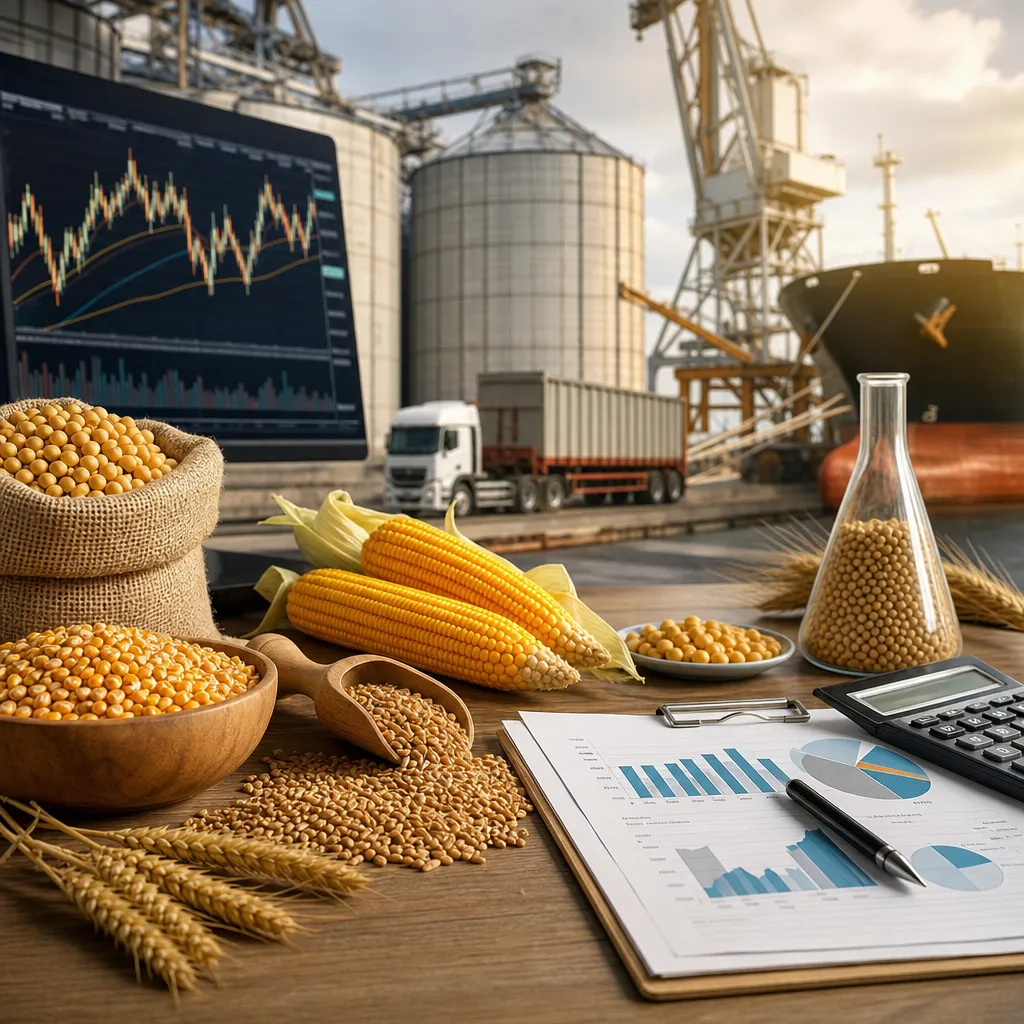


Inflation affects grain prices mainly by changing production costs, currency values, freight expenses, interest rates, and investment flows into commodity markets. In practice, that means wheat, corn, soybeans, rice, barley, and oilseeds can rise even when harvests are normal, or stay weak if demand falls despite broad inflation elsewhere. The key point is that grain prices do not move with inflation in a simple one-to-one way: inflation changes the cost structure and financial environment around grain, while actual prices still depend on supply, demand, weather, trade, and stocks. To understand what inflation is doing to grain, readers need to watch both exchange futures prices and local physical cash bids.
For farmers, buyers, processors, and traders, inflation matters in two places at once. It changes the economics of growing, storing, shipping, and financing grain in the physical market, and it also influences futures and options markets where grain risk is hedged or speculated on. Those two markets are connected, but they are not the same, and the difference is essential when reading any “grain prices are up because of inflation” headline.
What inflation changes in grain markets
Inflation is a broad rise in the general price level, but grain reacts through specific channels. A grain market usually feels inflation through input costs first, then through logistics and working capital, and only later through end-user demand and price discovery.
For crop producers, higher inflation often means more expensive fertilizer, seed, crop chemicals, fuel, machinery parts, drying, labor, and land rents. For merchants and processors, it can mean higher warehouse costs, electricity, insurance, handling, and transport. For importers and exporters, inflation can affect marine freight, inland trucking, rail, port charges, and credit conditions.
If the cost of producing corn or wheat rises sharply, sellers may hold out for higher prices to preserve margins. But they only get those higher prices if buyers need the grain and available supplies are tight enough. Inflation raises pressure; it does not guarantee a price outcome.
| Inflation channel | How it affects grain | Who feels it most |
|---|---|---|
| Farm inputs | Raises cost of fertilizer, fuel, chemicals, seed, equipment use | Farmers and crop producers |
| Storage and handling | Increases warehouse, drying, power, labor, and insurance costs | Elevators, cooperatives, merchants, farmers with on-farm storage |
| Freight and logistics | Raises truck, rail, barge, and port costs, widening delivered prices | Exporters, mills, feed buyers, importers |
| Interest rates and credit | Makes inventory financing and margin funding more expensive | Farmers, traders, processors, hedge users |
| Currency changes | Can alter export competitiveness and local-currency grain prices | Exporters, importers, domestic buyers in open markets |
Why inflation does not equal higher grain prices every time
Grain is a real asset, but it is still an agricultural commodity with its own cycle. If inflation is high while global wheat production is abundant and export competition is strong, wheat prices can weaken. If inflation is moderate but drought cuts corn yields, corn prices can rise sharply. Supply and demand continue to dominate the direction of the market.
The most important physical variables are acreage, yield, harvested production, carry-in stocks, stocks-to-use, domestic feed use, crush or milling demand, ethanol or biofuel demand where relevant, and export pace. Weather can override inflation in the short run. A major drought, flood, heatwave, or frost event can tighten available supply faster than macroeconomic forces can loosen it.
Demand can also weaken during inflation. If consumers and livestock producers face higher costs across the economy, feed demand may soften, poultry or hog margins may narrow, and some grain-consuming sectors may reduce purchases. In export markets, higher food inflation can lead governments to intervene through tariffs, quotas, subsidies, or reserve releases, changing trade flows unexpectedly.
Futures prices versus local cash grain prices
One of the most common mistakes is assuming that a futures quote is the same as the price paid at a local elevator or port. It is not. Grain pricing in the real world combines a futures reference with a local basis, plus quality, freight, and handling adjustments.
In the United States, benchmark grain futures are commonly traded on CME Group exchanges. Market participants follow contracts such as Chicago wheat, Kansas wheat, corn, soybeans, soybean meal, and soybean oil. Similar benchmark futures may exist in other jurisdictions on regional exchanges. These futures are standardized contracts used for price discovery and risk transfer.
The physical cash market works differently. Farmers may sell to local grain elevators, cooperatives, feed mills, ethanol plants, crushers, flour mills, exporters, or grain merchants. The buyer posts or negotiates a cash bid at a specific delivery point. That bid reflects the futures market if relevant, but also basis, local supply, transport congestion, demand from nearby users, moisture and damage limits, grade, and payment terms.
Inflation can affect both components. Higher transport and storage costs may weaken local basis even if futures prices rise. In other cases, strong nearby demand and expensive logistics can strengthen basis despite flat futures.
| Market type | What price means | Where people check it | Main limitation |
|---|---|---|---|
| Futures market | Standardized exchange price for a contract month | Exchange data, broker platforms, market data vendors | Not the same as a local farmgate or elevator price |
| Local cash bid | Actual physical bid at a named location and quality specification | Elevator bid sheets, cooperative apps, merchant quotes, direct buyer communication | Can change quickly by location, freight, and quality |
| Export or port market | Delivered value at terminal or loading point | Merchants, exporters, port bids, trade reporting services | May not reflect inland farm prices after transport deductions |
How inflation moves through production, storage, and logistics
Inflation often reaches grain prices through the cost of carrying grain. If interest rates rise to fight inflation, holding grain in storage becomes more expensive. That matters to farmers with bins, elevators financing inventory, and merchants carrying stocks between harvest and shipment.
The cost of carry includes interest, storage, shrink, handling losses, insurance, and quality risk. If those costs rise, sellers need a stronger future price or basis improvement to justify holding grain. Otherwise they may sell sooner. This can alter seasonal patterns, especially in years when market spreads do not pay enough to store grain.
Physical logistics also matter. A higher diesel price can raise truck freight. Rail congestion or barge disruptions can widen the gap between inland prices and export values. When inflation increases costs in the supply chain, the delivered cost to a mill, crusher, feed plant, or importer can rise even if the exchange futures board is relatively stable.
In practice, readers can see this in local bids. A futures chart on a financial platform may show a firm corn market, while nearby elevator bids remain disappointing because freight is expensive, storage is full, or basis is weak after harvest pressure. That is why local grain marketing decisions need both board prices and local bid information.
Currency, exports, and import dependence
Inflation and currency markets are closely linked in globally traded grains. Countries that export wheat, corn, soybeans, barley, canola, rapeseed, or sunflower products compete internationally, usually against dollar-denominated benchmarks. If a local currency weakens, exporters may become more competitive abroad and farmers may see higher local-currency prices even if world benchmark prices are unchanged.
For importing countries, domestic food and feed inflation can be amplified by currency depreciation. A weaker local currency makes imported grain more expensive, particularly when ocean freight and insurance costs are also elevated. Governments, millers, and feed manufacturers often watch both international grain benchmarks and exchange rates together.
Where can this be checked? Export and import participants normally follow customs and trade statistics, port lineups where available, government trade updates, and benchmark futures or cash export values. USDA reports are widely used for U.S. and global grain balance sheets, while FAO provides broad international food market context. Commercial trade data services may offer more detailed shipment and vessel information, but physical traders still rely heavily on direct merchant networks and freight markets.
How futures, options, and hedging fit into an inflationary market
Inflation can push more participants toward futures and options because price risk becomes larger and faster. A farmer may hedge expected production, a feed mill may hedge ingredient costs, a crusher may protect margins, and a grain merchant may offset physical ownership risk.
Futures are traded on regulated exchanges through a licensed futures broker or clearing intermediary, depending on the jurisdiction. A trader needs an account, must post margin, and must manage mark-to-market gains and losses. This is financial trading, even if the person is also involved in physical grain. Buying one futures contract does not mean grain is arriving at your farm or warehouse unless you deliberately enter and complete a delivery process under exchange rules.
Options give the right, but not the obligation, to buy or sell a futures contract at a strike price before or at expiry, depending on contract rules. They are often used to define risk more clearly than a naked futures position, though they involve premium cost and time-value decay.
Inflation can raise hedging costs indirectly. Higher volatility may increase option premiums. Higher interest rates may tighten liquidity. Basis risk remains: a hedge can offset part of the futures move, but it will not perfectly protect a local cash price if basis changes because of freight, quality, or local oversupply.
For physical grain businesses, some risk is managed off-exchange through forward contracts, basis contracts, minimum price contracts, or OTC arrangements offered by merchants or buyers. These must be checked carefully for delivery terms, quality specs, cancellation rules, and counterparty strength.
Where to check grain prices and inflation-related market signals
To understand whether inflation is affecting grain prices, readers should not rely on a single chart. They need a combination of exchange data, local cash information, and official crop and trade reports.
For futures prices and contract specifications, exchange websites such as CME Group are a core reference for listed grain contracts. Many brokers and market data vendors distribute delayed or real-time price feeds, depending on the service level. These platforms are used by hedgers, speculators, analysts, and commercial grain firms.
For local physical prices, farmers and commercial buyers usually check elevator bid sheets, cooperative websites or apps, direct merchant quotes, processor bids, or regional market reporting services. In some countries, government or semi-official agricultural market reporting systems publish indicative cash prices by region and commodity. These are more useful for physical decisions than a generic futures screen alone.
For inflation-sensitive fundamentals, the most practical official reports include:
- USDA WASDE for global and U.S. supply-demand balance sheets.
- USDA Crop Progress for planting, crop condition, and harvest status in season.
- USDA Grain Stocks for inventory signals.
- USDA Export Sales for U.S. export demand pace.
- CFTC Commitments of Traders for futures market positioning by participant category.
- FAO market information for international food commodity context.
Analysts often combine these with energy prices, freight indicators, currency moves, and local basis data to judge whether inflation is truly lifting grain or whether another force is doing the work.
Practical implications for farmers, merchandisers, and buyers
For farmers, inflation raises the break-even cost of production. That makes margin management more important than simply waiting for a higher headline price. A strong grain price can still be unattractive if fertilizer, fuel, interest, and rent have risen faster. In practice, many producers compare new-crop bids with estimated cost of production, storage plans, and hedge opportunities rather than focusing only on old benchmark averages.
For elevators, cooperatives, and merchants, inflation can compress margins through higher operating costs and inventory financing. Basis management, storage turnover, and freight execution become more critical. Physical grain handlers also need to manage quality carefully because spoilage, shrink, and conditioning costs become more expensive when money itself costs more.
For mills, feed companies, crushers, and importers, inflation can require earlier coverage, more active hedging, or changes in procurement timing. Some buyers extend coverage when they fear replacement costs will rise. Others shorten coverage if high interest rates make inventory costly. The right decision depends on demand visibility, storage capacity, and access to credit.
Common mistakes when linking inflation to grain prices
The first mistake is confusing general inflation with a guaranteed bull market in grain. Grain can decline during inflation if harvests are large or export demand is weak.
The second is using only futures prices. Physical grain is sold and bought at a delivery point, with quality and freight differences. A futures rally does not automatically improve every local cash bid.
The third is ignoring interest rates. Inflation often leads central banks to tighten policy, which raises the cost of storage, borrowing, and margining. That can pressure carrying strategies and commercial inventory decisions.
The fourth is forgetting substitution. If corn becomes expensive, feed users may adjust rations toward wheat, barley, sorghum, or other ingredients where feasible. That changes relative pricing across grains.
The fifth is overlooking government action. Export restrictions, tariff changes, reserve releases, subsidies, and biofuel policy shifts can all amplify or offset inflation effects.
Where can I check grain prices if I want to see inflation effects in real time?
Use exchange data for benchmark futures and local buyer bids for the physical market. Futures can be checked through exchange websites, broker platforms, or market data services. Local cash prices are normally checked through elevator bid sheets, cooperative apps, merchant quotes, processor bids, or regional agricultural market reporting services. Compare both, because inflation may affect basis and logistics differently from futures.
Does inflation always make wheat, corn, and soybeans more expensive?
No. Inflation increases costs and can support commodity prices, but grain still depends on crop size, stocks, exports, feed use, and weather. A large harvest or weak demand can offset inflationary pressure.
Where does grain trading actually take place?
Financial grain trading takes place on regulated futures exchanges through brokers, and sometimes through OTC contracts between commercial counterparties. Physical grain trading takes place through elevators, cooperatives, merchants, processors, exporters, mills, feed companies, and direct contracts between buyers and sellers. These are connected markets, but they are not the same transaction.
What is the difference between a futures price and a cash grain bid?
A futures price is a standardized exchange quote for a contract month. A cash bid is a real physical offer at a specific location, quality standard, and delivery period. The cash bid reflects futures plus or minus basis, and may also reflect freight, storage pressure, and quality adjustments.
How does inflation affect grain storage decisions?
It usually raises the cost of carrying grain through higher interest rates, energy costs, labor, insurance, and handling expenses. If market carry and expected basis improvement do not cover those costs, storing grain may become less attractive.
Which reports are most useful for tracking inflation-related grain market moves?
USDA WASDE, Crop Progress, Grain Stocks, and Export Sales are core reports for supply and demand. CFTC Commitments of Traders helps show futures positioning. FAO publications help with international food commodity trends. These should be paired with local basis and freight information.
Can I hedge inflation risk in grain by trading futures?
You can hedge grain price risk, not inflation perfectly. Futures and options can help protect against adverse price moves in benchmark markets, but they do not remove basis risk, quality risk, or local freight and logistics risk. Hedging requires a broker account, margin management, and a clear understanding of contract specifications and expiry.
Why might local grain prices stay weak even when inflation is high?
Because local prices can be pressured by harvest movement, full storage, weak basis, expensive transport, poor export demand, or quality discounts. Inflation is only one factor in a much larger physical pricing system.
Sources
- USDA World Agricultural Supply and Demand Estimates
- CME Group agricultural futures contract specifications and market data
- CFTC Commitments of Traders