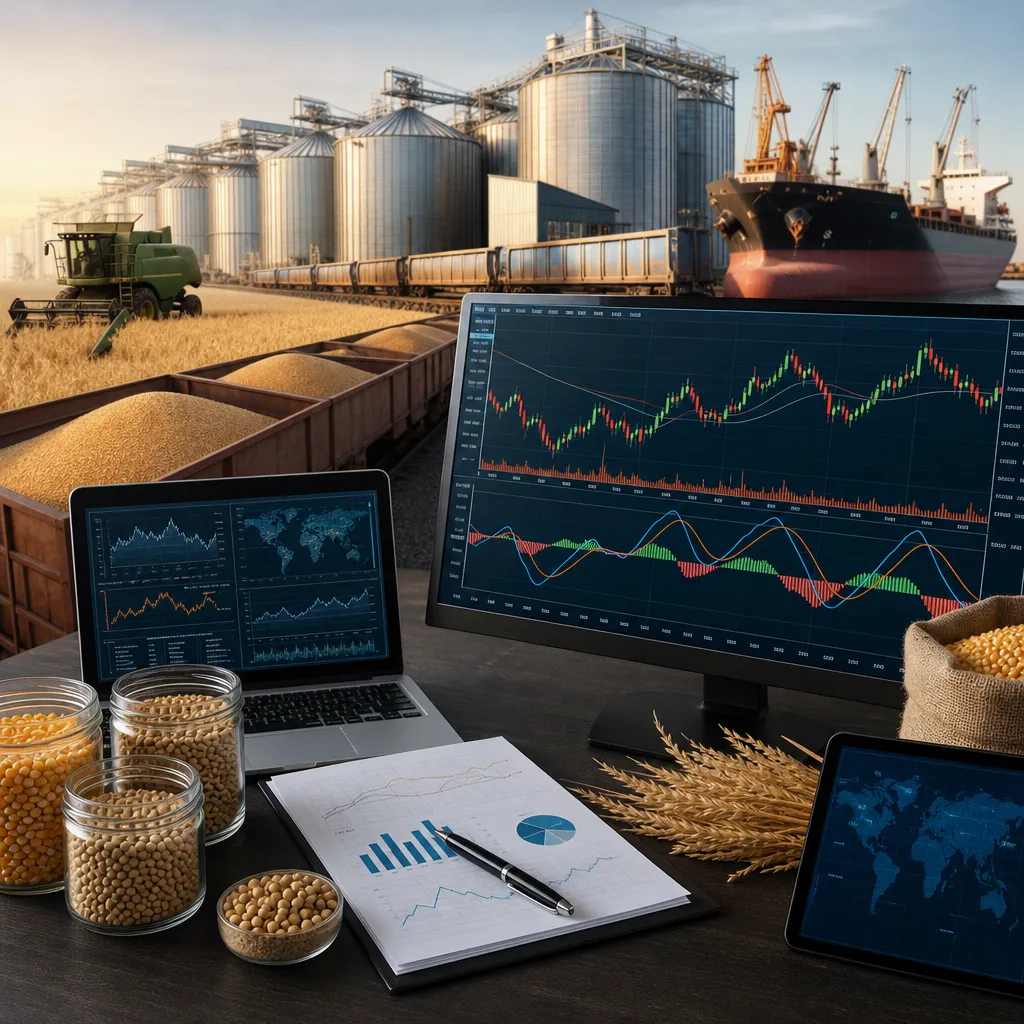



The EU corn futures market is centered on Europe’s grain pricing system rather than on a single farm region. In practice, the main listed benchmark for corn in the European Union is the Euronext corn futures contract, commonly associated with the former MATIF market and priced in euros per metric tonne. That futures market sits alongside a large physical cash trade across France, Central Europe, Spain, Italy, Benelux, Germany, and EU import ports, where actual maize is bought, sold, moved, and consumed. To understand the market well, it is essential to separate the exchange-traded futures price from local cash prices, import values, and delivered feed mill or processor prices.
In the EU, corn is usually referred to as maize in trade and policy documents, although market participants often use both terms. The commodity is important for feed, starch, ethanol, and food uses, and the EU can be both a producer and a significant importer depending on crop size, weather, and feed demand. Because the market is highly integrated with Black Sea, global feed grain, and currency developments, EU corn prices are shaped by both regional fundamentals and international benchmarks.
What the EU corn futures market means
The EU corn futures market refers primarily to exchange-traded maize futures listed on Euronext, the main agricultural derivatives venue for the European grain trade. These contracts are used to manage price risk, discover forward values, and create a transparent benchmark for nearby and future delivery periods.
It is important not to confuse this benchmark with all physical corn trade in the EU. Most actual grain changes hands through private contracts between farmers, cooperatives, merchants, feed manufacturers, starch processors, ethanol users, importers, and exporters. Futures provide a reference price and a hedging tool, but physical maize is still traded through commercial channels with quality, location, timing, and logistics terms attached.
In practical terms, a French merchant, a Spanish feed buyer, or an importer landing maize into an EU port may all watch the same futures market online, yet each will trade physical grain at a different cash price because delivery point, freight, quality, and local competition differ.
Where the market operates
The exchange benchmark operates through Euronext, which serves as the key regulated marketplace for listed grain derivatives used across much of the EU. Historically, many grain traders still refer to this benchmark as MATIF corn. The contract is euro-denominated, which makes it especially relevant for the euro area and for any company pricing grain exposure in euros.
The physical market operates across a much wider geography. Corn is produced in several EU member states, with France being especially important in the western EU market, while Central and Southeastern Europe also matter to regional supply. Large consuming areas include Spain, the Benelux feed sector, Italy, Germany, and other livestock-intensive regions. The import side is also important: EU buyers may source maize from other member states or from non-EU origins when economics, quality, and logistics allow.
Ports matter because imported corn competes directly with domestic supply in deficit regions. Inland logistics matter because a feed mill or processor buys delivered grain, not just a screen price. As a result, the same futures move can produce different local price reactions in an inland French surplus zone, a Spanish deficit market, or an import-dependent port area.
| Market layer | Where it operates | Typical currency/unit | Main purpose |
|---|---|---|---|
| Euronext corn futures | Exchange-traded EU benchmark market | Euro per metric tonne | Price discovery and hedging |
| Local cash market | Farm, silo, cooperative, merchant, processor level across EU regions | Usually euro per metric tonne | Physical buying and selling |
| Import/export market | EU ports and cross-border trade flows | Often euro per tonne, with FOB/CIF concepts relevant | Sourcing and destination pricing |
| Delivered consumer market | Feed mills, starch plants, ethanol plants, livestock regions | Euro per tonne delivered | End-user procurement |
How EU corn prices are formed
EU corn prices are formed through an interaction between futures, basis, physical supply and demand, and logistics. The listed futures price gives a benchmark for a standardized future delivery period. The local cash market then adds or subtracts a basis, which reflects all the non-futures factors that matter in the real world.
That basis may include local crop size, regional shortages or surpluses, transport cost, port economics, storage availability, quality characteristics, drying, mycotoxin concerns, buyer competition, and the timing of harvest or import arrivals. Currency also matters: because the EU benchmark is in euros while international grain often trades against dollar-linked export values, the euro exchange rate can strongly affect import competitiveness and domestic price direction.
Several price concepts appear in the EU trade:
- Futures price: the exchange-traded benchmark for a specific contract month.
- Cash bid: the price offered by a local buyer for physical maize at a certain location and specification.
- Delivered price: the price including transport to a feed mill, processor, or warehouse.
- FOB price: free on board at export loading point; relevant when comparing global origin values.
- CIF price: cost, insurance, and freight to the destination port; important for import comparisons.
- Basis: the difference between the local cash value and the futures benchmark.
A rise in Euronext futures does not automatically mean farm-gate maize has risen by the same amount. If transport is congested, if local supply is abundant, or if imported grain becomes cheaper, basis can weaken. Likewise, if a feed region is short of maize, local bids can outperform futures.
The role of the EU in production, consumption, and trade
The EU is a major consumer of corn and a meaningful producer, but it is not a closed market. Corn competes inside the feed ration with wheat, barley, and other feed ingredients. In years when the EU crop is strong, domestic availability can weigh on local basis in surplus regions. In years of production stress, heavy feed demand can pull in imports and tighten local physical prices.
Spain is especially important on the demand side because of its livestock and feed sector, while France is a key pricing and crop reference point in western Europe. Italy, the Netherlands, Belgium, Germany, and parts of Central Europe are also relevant depending on crop conditions and user demand. The EU’s import role strengthens when internal production is reduced by drought, heat, disease pressure, or harvest quality issues.
This means the EU corn market is influenced not only by internal weather and harvest progress, but also by Black Sea supply, global freight conditions, and competition from other feed grains. The market is therefore both local and international at the same time.
How grain is actually bought and sold in the EU physical market
Physical maize trade in the EU usually takes place through merchants, cooperatives, grain handlers, feed compounders, processors, and importers. Farmers rarely “sell on the exchange” as a substitute for physical movement. Instead, they sell real grain to a local buyer under a contract that defines quality, quantity, delivery period, place, and payment terms.
Common physical sales structures include spot sales at harvest, forward contracts for future delivery, storage-based sales after harvest, and delivered contracts to a named consumer. In some regions, farmers sell through cooperatives; in others, private merchants are more prominent. Larger commercial participants may also negotiate cross-border shipments between member states or source imported maize through ports.
For buyers, procurement decisions often depend on delivered economics rather than just the headline futures level. A feed mill compares local wheat, local maize, imported maize, and sometimes alternative feed ingredients. If imported corn lands cheaper than inland domestic supply, import demand can cap local prices. If port arrivals are tight or inland movement is difficult, local users may bid up nearby supplies.
| Price type | What it means | Who uses it most | Why it may differ from futures |
|---|---|---|---|
| Exchange futures | Standardized listed contract value | Traders, hedgers, brokers, analysts | No local transport or quality adjustment |
| Farm-gate or silo cash bid | Buyer’s physical offer at origin | Farmers, cooperatives, local merchants | Includes basis, local competition, harvest pressure |
| Delivered consumer price | Price to final user with freight included | Feed mills, starch plants, ethanol users | Reflects destination freight and urgency |
| Import parity/CIF value | Estimated landed cost from external origin | Importers, large feed buyers, merchants | Driven by world origin values, freight, and currency |
How futures and options are used for hedging
Futures and options are financial tools, not the same as physical grain ownership. A merchant that buys maize from farmers may sell Euronext corn futures to protect against a drop in benchmark prices before the grain is resold. A feed user may buy futures or options to manage upside price risk on future procurement.
Access normally occurs through a broker or trading platform that offers Euronext products. Users need to understand margin, mark-to-market exposure, contract month selection, and the possibility that local basis behaves differently from the futures price. That last point is critical: a perfect hedge is rare in grain because a physical position carries location and quality risk that futures do not fully capture.
Speculators also participate, but their role is different from that of commercial hedgers. Speculators seek price exposure and liquidity; they usually do not intend to handle real maize. Commercial firms use the exchange mainly to reduce pricing risk connected to physical inventories, purchases, or sales.
Anyone using futures must separate two risks:
- Benchmark price risk: managed with futures or options.
- Basis risk: the local cash-versus-futures difference that remains after hedging.
Where to check EU corn futures and market information online
If you need the current or recent EU corn futures price, the most relevant starting point is Euronext, which publishes contract information and market data for its agricultural futures. Data vendors, brokerage platforms, and professional market terminals also display live or delayed quotes depending on access level.
For broader market context rather than just the screen price, several institutional sources are useful:
- Euronext: benchmark corn futures information and contract-month pricing.
- European Commission: market monitoring, trade, and policy context for cereals in the EU.
- USDA Foreign Agricultural Service: country and regional grain outlooks, including EU production, consumption, and import trends.
For local cash indications, readers should check regional cooperatives, grain merchants, processors, or feed buyers in the relevant member state. Those local bids may not be public everywhere, and where they are published they may reflect specific quality, moisture, delivery window, and location assumptions. That is why the online futures quote should never be treated as the exact farm-gate or delivered physical value.
Main factors that drive the market
Several forces routinely move the EU corn futures and physical market:
- EU weather: drought, heat, and late-season stress can sharply affect yield prospects.
- Harvest progress and quality: drying needs, moisture, and quality issues influence basis and storage decisions.
- Feed demand: livestock margins and feed substitution against wheat or barley matter.
- Import competitiveness: the relative cost of non-EU maize into EU destinations can reshape inland prices.
- Euro exchange rate: a weaker euro can make imports more expensive and support local prices.
- Energy and processing demand: ethanol and industrial use can affect regional consumption.
- Logistics: river levels, port throughput, trucking availability, and rail constraints can alter basis.
- Policy and trade rules: import access, sanitary rules, and broader trade conditions can influence flows.
Looking ahead, forecasts should be treated as scenarios rather than certainties. A larger EU crop, easier import flows, and soft feed demand would tend to pressure basis and reduce import dependence. A weather-reduced crop, firm livestock demand, and tighter import economics would tend to support both futures and local cash markets, especially in deficit regions.
Practical guide for farmers, merchants, and traders
For physical market participants, the key questions are location, quality, timing, and counterparty. A farmer or cooperative should compare bids from more than one buyer, confirm moisture and quality deductions, understand delivery terms, and separate the visible benchmark from the effective net price after transport and charges. A buyer should compare inland supply with import parity and substitute feed grains.
For futures users, the process is different. The trade happens through a brokerage account, requires margin, and creates financial exposure rather than physical grain ownership. Before hedging, users should identify which physical exposure they are covering, which contract month is closest to their pricing period, and how much basis risk remains.
A useful rule is this: physical trade solves supply and movement; futures solve benchmark price exposure. Neither one replaces the other.
What is the main benchmark for EU corn futures?
The main EU benchmark is the Euronext corn futures contract, widely referred to in trade as the MATIF corn market. It is quoted in euros per metric tonne.
Is the futures price the same as the price a farmer receives?
No. A farmer receives a local cash price, which reflects futures plus or minus basis, as well as quality, moisture, transport, storage, timing, and buyer competition.
Where can I check current EU corn futures prices?
The most relevant official source is Euronext. Brokerage platforms and data vendors may also show live or delayed prices depending on the service level.
How is corn physically traded in the EU?
Mostly through cooperatives, merchants, processors, feed companies, importers, and exporters using private commercial contracts. Terms usually specify quality, quantity, delivery point, delivery period, and payment conditions.
Why do EU corn prices react to global markets?
Because the EU is connected to international trade. Imported maize, competing feed grains, global freight, and currency moves all influence what EU buyers are willing to pay.
Can a trader buy EU corn futures without taking delivery of grain?
Yes. Most futures users close or roll their position financially before delivery. Futures provide price exposure and hedging capability without requiring physical grain handling.
What unit and currency are most common in the EU corn market?
The standard convention is euro per metric tonne. Physical contracts in the EU are also commonly discussed in tonnes rather than bushels.
What matters more for a local cash price: futures or basis?
Both matter. Futures set the benchmark direction, but basis often determines the actual local result. In tight or logistically difficult markets, basis can be as important as the futures move itself.
Sources
- Euronext
- European Commission
- USDA Foreign Agricultural Service