
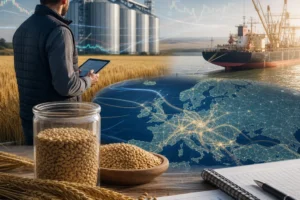





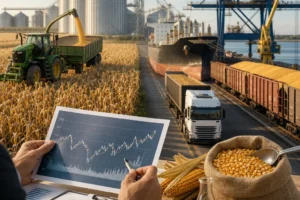

The EU barley market is the barley economy of the European Union: a large, diverse physical grain market linked to global feed, malting, and export trade. It operates across major producing countries such as France, Germany, Spain, Denmark, Poland, and several Central and Eastern European member states, with prices commonly discussed in euros per metric tonne. For market participants, the key point is that there is no single “EU barley price” in the same way there is a single exchange settlement price for a futures contract; instead, prices are formed through a mix of local cash bids, export demand, quality premiums, logistics, and international benchmarks. Anyone following the market should distinguish clearly between exchange-based wheat futures often used as a benchmark, and the actual physical barley prices paid by merchants, feed mills, maltsters, or exporters in specific EU locations.
Barley matters in the EU because the region is both a major producer and an important participant in world trade. EU barley flows into three broad channels: feed use in livestock sectors, malting use for beer and other beverages, and exports to third countries. The balance between those uses changes by season, by quality, and by country, which is why local market conditions can diverge sharply even within the same harvest year. A strong export program can lift prices in port-oriented regions, while weak malting quality or soft livestock demand can pressure inland feed barley cash values.
For readers looking for “current” EU barley prices, the practical approach is to check recent physical market indications from merchants, ports, and official market reporting, and to compare them with relevant futures markets and international tenders. There is no universal live cash screen covering every EU barley transaction. Local prices may move with broader grain markets, but they are ultimately negotiated in specific places, for specific quality specifications, delivery periods, and incoterms.
What the EU barley market includes
The EU barley market covers both physical grain and the financial benchmarks used to manage price risk. Physical trade includes farm-gate purchases, elevator or cooperative bids, delivered prices to feed mills or maltings, truck or rail movement to inland consumers, and export sales through ports. Financially, barley does not have the same central futures benchmark in Europe that milling wheat has on Euronext, so participants often watch related grain futures, especially European wheat futures, as a broader cereal market reference rather than as a direct barley price.
Within the EU, barley is not one uniform commodity. The market usually distinguishes at least between:
- Feed barley, used in animal rations and often traded at a discount to premium malting barley.
- Malting barley, which must meet stricter quality criteria such as variety, germination, moisture, protein, and screening standards.
- Winter and spring barley, which can differ in agronomic profile, end use, and regional importance.
This quality split is essential. A season with high barley output does not automatically mean abundant malting supply. If weather damages quality, more grain may be priced as feed barley, while maltsters compete for a smaller pool of suitable lots.
Where the market operates
The EU barley market operates across inland crop regions and export corridors. France is often central because of its large grain surplus and export infrastructure. Germany is important for both production and domestic use. Spain is a major feed consumer and in some years a substantial importer because of livestock demand. Denmark and parts of Central Europe also play meaningful roles in both malting and feed segments.
Trade happens in several layers:
- Farm and local collection level, where producers sell to cooperatives, merchants, or collectors.
- Domestic industrial level, where feed manufacturers, livestock integrators, and maltsters buy grain.
- Export terminal level, where merchants assemble cargoes for destinations outside the EU.
- Intra-EU trade, where barley moves between member states according to feed deficits, malting demand, and freight economics.
Prices in export-oriented areas can reflect seaport demand more directly, while inland prices are more heavily shaped by trucking costs, storage pressure, nearby buyer competition, and local feed demand. In practical terms, a cash bid in an inland Spanish feed market, a French port export bid, and a German malting barley offer may all represent the “EU barley market,” but they are not interchangeable.
| Market segment | Where it operates | Typical users | Usual pricing context |
|---|---|---|---|
| Farm-gate cash market | Producing regions across EU member states | Farmers, cooperatives, merchants | Euros per metric tonne, ex-farm or collected |
| Delivered domestic market | Feed mills, livestock regions, maltings | Processors, traders, industrial buyers | Euros per metric tonne, delivered to plant or warehouse |
| Export market | Major EU shipping ports | Exporters, global trading houses, importers | FOB or vessel-related export pricing in euros or sometimes dollars by trade context |
| Risk-management market | Exchange and broker platforms | Traders, merchants, processors, hedgers, investors | Related grain futures used as benchmarks rather than exact physical barley value |
How EU barley prices are formed
EU barley prices are formed by the interaction of benchmark grain markets, local supply and demand, quality, and logistics. Because barley itself is less standardized on exchange screens than wheat, physical participants rely heavily on negotiated cash prices and on relative values against competing feed grains such as wheat and corn.
The main pricing concepts are:
- Futures price: an exchange-traded benchmark for a standardized contract, often used for wheat or broader grain sentiment rather than as a direct EU barley quote.
- Cash bid: the local price offered by a cooperative, merchant, feed mill, or maltster for physical barley.
- Delivered price: the price including transport to the buyer’s location.
- FOB price: free on board at an export port; relevant for seaborne export trade.
- CIF price: cost, insurance, and freight to the importing destination; more relevant for buyers than for inland EU farmers.
- Basis: the difference between a local cash price and a benchmark futures or reference market.
In practice, a merchant might value feed barley by looking at regional feed wheat values, corn competition, export demand, and freight to port or processor. Malting barley can trade at a premium to feed barley, but only when buyers are confident the lot meets contract specifications. If quality fails, the price can drop back to feed value quickly.
Currency also matters. The EU internal market is euro-based, but export competition is global. When the euro weakens against the US dollar, EU barley can become more competitive in international tenders, all else equal. When the euro strengthens, export values may come under pressure unless global prices also rise.
Benchmarks and the role of futures
The most relevant exchange benchmark for the wider EU grain complex is usually Euronext, especially its milling wheat futures. That is important not because wheat futures equal barley prices, but because they provide a transparent regional indicator of grain market direction, risk sentiment, and hedge value for merchants with mixed cereal exposure.
Some participants also monitor global grain markets, including Chicago futures, Black Sea export pricing where available through trade reporting, and major importer tenders. However, a farmer or end-user should not treat any futures settlement as the exact price for physical EU barley. The gap between the two is basis, and basis reflects real-world factors such as:
- distance from buyer or port,
- transport mode and cost,
- protein or malting specification,
- harvest pressure and storage availability,
- competition among local buyers,
- domestic feed demand,
- nearby export loading demand.
Hedging with futures is therefore an indirect tool for many barley participants. A merchant may hedge grain exposure using correlated wheat futures, accepting that basis risk remains. A farmer may watch futures online to time selling decisions, but the physical sale itself normally occurs through a local buyer under a cash contract.
| Price type | What it means | Why it matters in EU barley |
|---|---|---|
| Futures benchmark | Exchange-traded standardized grain contract | Shows broader cereal market direction and supports hedging |
| Local cash bid | Price offered for physical barley at a specified location | Determines what farmers or holders can actually sell for |
| Delivered price | Cash price including transport to buyer | Relevant for mills, maltsters, and livestock buyers |
| FOB export value | Price at port loaded onto vessel | Critical for export competitiveness and port-linked inland pricing |
| Basis | Difference between local cash and benchmark market | Explains why local barley can rise or fall differently from futures |
How barley is actually bought and sold in the EU
The physical barley market is mostly a contract and relationship business. Farmers generally sell to cooperatives, private merchants, feed manufacturers, maltsters, or exporters. Deals may be done as spot sales, harvest movement contracts, storage deals, minimum-price structures offered by merchants, or forward contracts for later delivery.
Key practical terms normally include:
- quantity,
- quality specification,
- delivery window,
- delivery point,
- moisture and impurity rules,
- variety requirements for malting contracts,
- payment timing,
- claims and rejection clauses.
For malting barley, contract discipline is especially important. A lot that misses germination or protein standards may be downgraded to feed use, which changes the payable price. That is why growers should understand whether the contract is fixed price, premium-based, variety-specific, or quality subject to final approval.
Export trade is usually handled by grain houses and exporters with access to origination networks, storage, and port logistics. They buy inland, assemble cargoes, handle quality compliance, and sell to overseas buyers on FOB or other trade terms. Importers and large feed users may also buy directly from international merchants.
How import, export, and logistics shape the market
The EU can be both a barley exporter and an intra-regional balancing market. Surplus countries and port zones are sensitive to export demand from destinations in North Africa, the Middle East, and other feed-importing regions. Deficit areas inside the EU, especially where livestock production is concentrated, may draw barley from other member states or from overseas competitors if pricing allows.
Logistics matter because barley is relatively bulky and freight-sensitive. Inland prices can be heavily discounted versus port values if truck, rail, or storage bottlenecks emerge. Conversely, when port demand is weak, export regions may see basis soften even if futures are stable.
Key logistical influences include:
- distance to port or processor,
- availability of trucks, barges, or railcars,
- harvest congestion,
- terminal line-up and vessel demand,
- inter-EU movement costs,
- competition from corn and wheat in feed formulas.
Because the EU is integrated but not frictionless, local barley prices often reflect micro-regional freight economics as much as global grain headlines.
Market outlook: what to watch
The outlook for the EU barley market should be framed in scenarios, not certainties. Much depends on weather during planting, winter survival where relevant, spring moisture, summer heat, harvest conditions, and post-harvest quality. A large crop with good quality can pressure feed barley values unless exports or livestock demand absorb supply. A tighter crop, or a crop with reduced quality, can widen the spread between feed and malting values.
The most important outlook drivers are:
- Production risk: acreage, weather, and yield potential across main producing countries.
- Quality outcomes: especially for malting suitability and test weight.
- Feed demand: livestock profitability and substitution with wheat or corn.
- Export competitiveness: relative pricing against other major exporters and the euro exchange rate.
- Stocks and carry-in: old-crop availability can cushion or tighten the market.
- Energy and input costs: these affect drying, storage, transport, and farmer selling behavior.
- Policy and trade conditions: sanitary rules, trade flows, and any disruptions in competing origins.
A practical reading of the market is this: if export demand strengthens while feed grain supplies tighten, barley values can gain support even without a dedicated barley futures market. If feed demand weakens and export sales slow, local bids can soften quickly, particularly in surplus inland areas.
Where to check EU barley prices and market information online
Readers seeking reliable market information should use a mix of official and commercial sources. Because no single source captures every EU physical transaction in real time, cross-checking is essential.
Useful places to monitor include:
- European Commission market information for cereal market reporting, trade context, and policy-related updates.
- Euronext for benchmark grain futures that influence broader cereal sentiment in Europe.
- Eurostat for production, trade, and structural agricultural data at EU and member-state level.
- USDA, especially global grain balance sheets and international production/trade context.
- National agriculture ministries or statistical agencies in major producing member states.
- Cooperatives, merchants, maltsters, and feed compounders for actual local bids and contract offers.
- Specialist grain market reporting services and brokers for cash indications, spreads, and export market color.
When checking prices, confirm all of the following: whether the quote is feed or malting barley, whether it is ex-farm, delivered, or FOB, what the quality basis is, which location it refers to, what currency it uses, and what delivery period it covers. Without those details, two quotes may look comparable while actually describing different markets.
Physical trading versus futures and options
Physical grain trading in the EU barley market means ownership and movement of real grain. It takes place through merchants, cooperatives, processors, and exporters. The buyer cares about quality, logistics, delivery, and payment performance. Counterparty risk, contract wording, and claims procedures matter.
Futures and options trading takes place through exchange-connected brokers and trading platforms. This provides financial exposure to grain price movements, usually through related cereal contracts rather than a universal EU barley futures benchmark. It requires a brokerage account, margin for futures, and an understanding of leverage and expiry. It does not automatically mean taking delivery of physical barley.
For hedgers, the main issue is basis risk. A processor or merchant can hedge part of the general grain price risk with futures, but the local barley cash value may still move differently because of quality, freight, and regional demand. That is why hedging and physical procurement should be managed together, not as separate worlds.
FAQ
Is there one official EU barley price?
No. The EU barley market is a network of local and export markets. Prices differ by country, region, quality, buyer, and delivery term.
What currency and unit are usually used?
EU barley is commonly discussed in euros per metric tonne. Export trade can also be compared with international values influenced by US dollar pricing, but EU domestic trade is usually euro-based.
What benchmark should I watch if I follow EU barley?
Euronext grain futures, especially milling wheat, are widely watched as a regional cereal benchmark. They are useful for market direction, but they are not the same as a specific barley cash price.
Where can farmers or buyers check actual barley bids?
The most practical places are local cooperatives, merchants, feed mills, maltsters, and exporters. Official EU and national reports help with context, but the tradable cash bid is usually obtained from a real buyer in a specific location.
Why can local barley prices move differently from futures?
Because local cash prices include basis. Basis reflects quality, freight, buyer competition, storage pressure, port demand, and local supply-demand conditions.
How is malting barley different from feed barley in pricing?
Malting barley can earn a premium, but only if it meets strict quality and variety specifications. If it fails those standards, it may be priced back to feed value.
Can barley be hedged online?
Yes, grain market participants can use broker platforms to hedge related cereal price risk with futures or options where appropriate. But this is a financial hedge, not a physical barley sale, and basis risk remains.
Is the EU mainly an exporter or importer of barley?
It can be both, depending on the member state and the season. Some countries are regular exporters, while feed-deficit regions may import or buy from other EU origins.
Sources
- European Commission
- Euronext
- USDA Foreign Agricultural Service