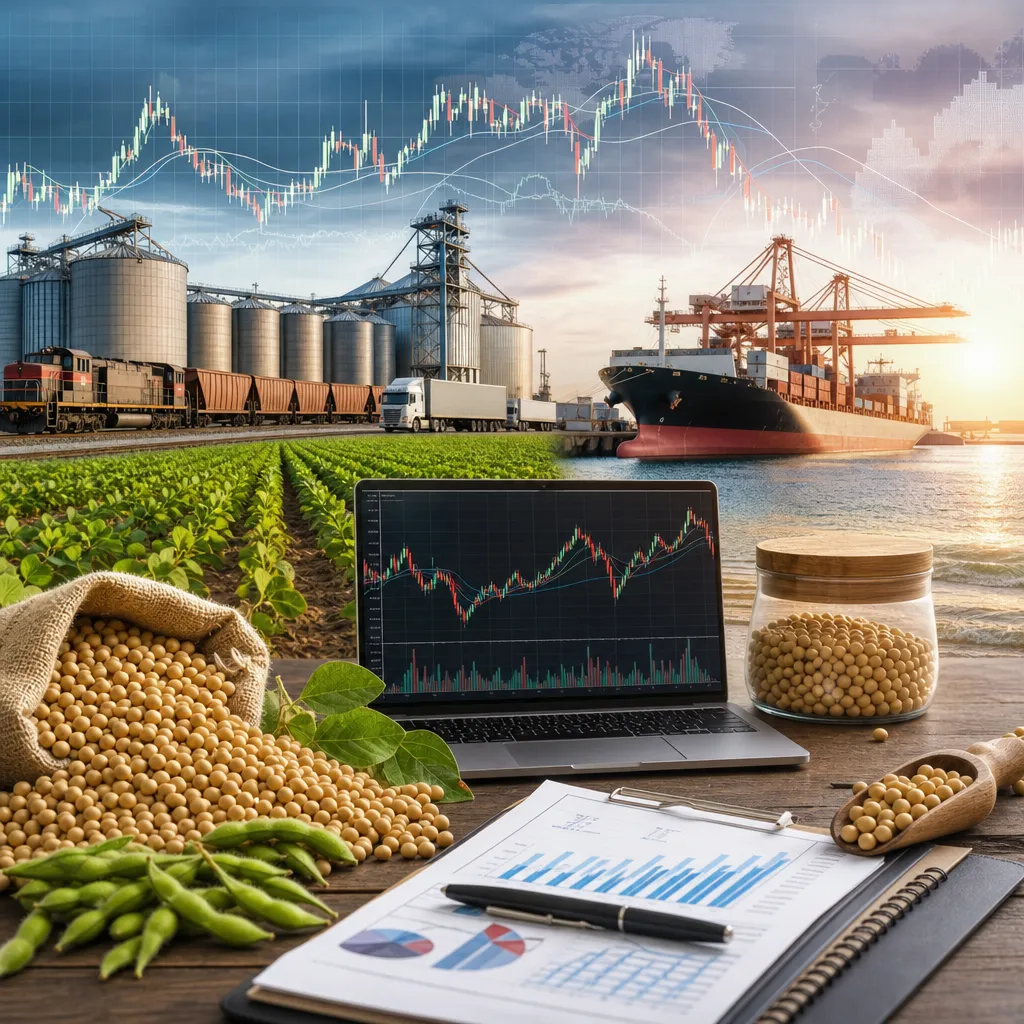



Brazil soybean prices today usually refers to the value of soybeans in Brazil’s physical market and, in some contexts, to soybean futures used as a benchmark for hedging. Brazil is one of the world’s largest soybean producers and exporters, so its prices matter not only in farm regions such as Mato Grosso, Paraná, and Rio Grande do Sul, but also at export ports including Santos, Paranaguá, and the northern arc corridors. In practice, there is no single nationwide “Brazil soybean price” at one exact value, because local cash bids vary by region, buyer, freight, quality, currency, and export demand. Readers looking for today’s price should check both international benchmarks and local Brazilian cash indications rather than relying on one headline quote.
In Brazil, soybeans are physically traded mainly in Brazilian reais, often quoted per 60-kilogram bag in domestic markets or per metric ton in export and industrial trade. Internationally, the main benchmark is Chicago soybean futures traded at CME Group, while export business is commonly discussed against FOB port premiums and dollar-denominated shipment values. This means the price a farmer sees inland can move differently from Chicago on any given day. Exchange rates, logistics, and basis often matter as much as the futures market itself.
What “Brazil soybean prices today” means
The phrase can refer to several different prices, and understanding the distinction is essential.
- Local cash price: what a cooperative, merchant, crusher, or exporter is willing to pay in a specific Brazilian location.
- Port price: the value for soybeans delivered to or bid at an export hub, often influenced by vessel demand and FOB export economics.
- Futures benchmark: soybean futures traded in Chicago, widely used for price discovery and hedging.
- Export price: a shipment-related value, usually in U.S. dollars per metric ton, for cargo sold into international trade.
Because Brazil is geographically large, a soybean bid in Mato Grosso can differ sharply from one in Paraná or at Paranaguá port. A producer far from port may face much higher inland freight, while a buyer near a crushing plant may pay based on domestic processing demand rather than export parity alone.
Where the Brazilian soybean market operates
Brazil’s soybean market is nationwide, but several regions dominate production and trade. Center-West states, especially Mato Grosso, are core producing areas. Southern states such as Paraná and Rio Grande do Sul are also major soybean regions with strong links to domestic processors and export channels. Goiás, Mato Grosso do Sul, Bahia, and parts of the Matopiba region also matter in national supply.
On the logistics side, soybeans move by truck, rail, and barge toward crushing plants and export terminals. The best-known export gateways include Santos and Paranaguá, while northern arc routes have become increasingly important for some origins because they can shorten the path to export markets.
This geographic spread is why Brazilian soybean prices are always local first. The same global soybean market can produce different farm-gate results depending on distance to buyer, storage availability, and transport conditions.
| Market area | Role in soybean trade | Typical price relevance |
|---|---|---|
| Interior producing regions | Farm sales, cooperative trade, merchant origination | Cash bid in BRL, often per 60-kg bag, adjusted for freight and local demand |
| Crusher locations | Domestic soybean processing into meal and oil | Prices reflect local processing margins, meal/oil demand, and nearby supply |
| Export ports | FOB export trade and vessel loading | Prices reflect export parity, premiums, logistics, and buyer urgency |
| Chicago futures market | Global benchmark for soybean price discovery and hedging | Not the same as a Brazilian farm-gate price |
How Brazil soybean prices are formed
Brazilian soybean prices are typically built from an international benchmark plus or minus a local adjustment. The benchmark is often Chicago soybean futures. Then the local market adds basis, which reflects the difference between the benchmark and the actual price in a specific place.
Several factors influence that basis:
- Location: inland areas farther from port usually trade at a wider discount to export-parity values.
- Freight: trucking, barge, or rail costs can materially change net bids.
- Exchange rate: because export soybeans are linked to dollar trade, the BRL/USD rate strongly affects local prices in reais.
- Quality: moisture, foreign material, damaged beans, and protein or oil characteristics can affect commercial value.
- Buyer competition: exporters, crushers, cooperatives, and merchants may bid differently depending on demand.
- Storage and harvest pressure: prices can weaken when large volumes come to market at harvest, especially if logistics are congested.
A useful way to think about Brazilian soybean pricing is that futures provide direction, while basis determines the local reality. Two days with the same Chicago price can still produce different cash bids in Brazil if the real weakens, port lines grow, or crushers become more aggressive.
Cash price, futures, basis, and export price: the key differences
Many pricing errors happen when these terms are mixed together. A futures quote is not the same as a cash bid, and an FOB export offer is not the same as a farm price.
| Price type | Where it is quoted | What it means in practice |
|---|---|---|
| Futures price | Exchange benchmark such as CME soybean futures | Financial reference used for price discovery and hedging |
| Cash bid | Local elevator, cooperative, crusher, or merchant | Actual physical purchase offer at a specific place and time |
| Delivered price | Buyer’s plant, warehouse, or terminal | Value including transport to the agreed destination |
| FOB price | Export port market | Value of soybeans loaded for export, before ocean freight |
| Basis | Relationship between local cash market and benchmark futures | Shows location and market-specific premium or discount |
For a Brazilian producer or merchant, the most important number is usually the local cash or delivered price after discounts, freight, and contract terms. For an exporter, FOB economics may matter more. For a trader managing risk, futures and basis must be considered together.
Where to check Brazil soybean prices online
If you want “today’s” Brazilian soybean prices, the safest approach is to check multiple layers of information rather than one source.
- CEPEA/USP: widely followed in Brazil for agricultural price indicators and market commentary, including soybeans.
- CME Group: for Chicago soybean futures, which remain a major international benchmark connected to Brazilian price formation.
- CONAB: Brazil’s National Supply Company publishes crop, supply, and market information relevant to soybean pricing and logistics.
- Local cooperatives, crushers, and grain merchants: often the best source of actual nearby cash bids for farmers and physical traders.
- Broker and market-data platforms: commonly used by commercial participants to monitor futures, currency, and export indications.
- USDA reports: especially for global soybean balance-sheet context, exports, and competing supplier conditions.
When checking prices online, note the differences in unit and market type. A quoted indicator in reais per 60-kilogram bag is not directly the same as a port value in dollars per metric ton. Also check whether the quote refers to spot physical soybeans, a nearby futures contract, or a reference indicator with a publication delay.
How soybeans are actually bought and sold in Brazil
Physical soybean trade in Brazil happens through commercial relationships, contracts, and logistics execution rather than only through screens. Farmers typically sell to cooperatives, local merchants, crushers, or exporters. Sales may be spot, forward, or based on later delivery windows tied to harvest or storage plans.
Common practical steps in a physical soybean transaction include:
- Buyer issues a bid for a certain location, quality standard, and delivery period.
- Seller evaluates the price in BRL, discount schedule, freight responsibility, and payment terms.
- Parties agree on quantity, product specification, delivery point, and timing.
- Soybeans are delivered to a warehouse, crushing unit, or export-linked facility.
- Weight, moisture, impurities, and other quality factors are assessed.
- Final settlement is made according to the contract.
Export trade is more specialized. Merchants and exporters assemble volumes inland, move them to port, and sell cargoes into international markets. These transactions depend on vessel slots, terminal capacity, quality specifications, currency exposure, and customer demand abroad. The inland cash market is therefore strongly tied to export margins, but not perfectly or instantly.
Counterparty quality matters. In physical grain, the seller is not just trading a price; the seller is choosing a buyer, payment structure, and logistical path.
How Brazilian soybean market participants hedge price risk
Hedging is different from physical merchandising. A farmer, exporter, crusher, or merchant may own or expect to buy physical soybeans in Brazil, but use futures or options to reduce price risk. The most internationally relevant soybean futures benchmark is traded at CME Group. Some participants also hedge currency risk separately because soybeans are globally linked to the U.S. dollar while domestic cash transactions are often in reais.
In practice:
- Farmer or merchant: may forward sell physical soybeans and hedge benchmark risk using futures.
- Crusher: may manage soybean input risk while monitoring meal and oil margins.
- Exporter: may hedge futures exposure while managing basis, freight, execution, and currency risk.
- Speculator: may trade soybean futures or options without ever handling physical grain.
Futures trading normally requires a brokerage account and margin. It provides financial exposure, not necessarily ownership of Brazilian soybeans. Basis risk remains important: even if a futures hedge works well, local cash values in Brazil can move differently due to freight, quality, or port conditions.
Main drivers of soybean prices in Brazil today
Brazilian soybean prices are highly sensitive to both domestic and global factors. For day-to-day market direction, participants usually watch the following:
- Chicago soybean futures: the global benchmark for soybean price direction.
- BRL/USD exchange rate: a weaker real can support local soybean prices in domestic currency, while a stronger real can pressure them.
- Brazilian harvest progress: heavy selling during harvest can influence inland basis and logistics.
- Weather: drought or excessive rain in major producing states can affect yield expectations and quality.
- Port logistics: congestion, freight availability, and shipment pace can affect export bids.
- Chinese import demand: as a major destination for soybean trade, shifts in demand can influence Brazilian export values.
- Competing origins: crop conditions and export pace in the United States and Argentina can alter global supply perceptions.
- Domestic crushing demand: meal and oil margins can support buying interest from processors.
Forecasting “today’s” price direction therefore requires scenario thinking rather than certainty. Tight logistics plus a firm export program may strengthen port-linked values. A falling Chicago market or stronger Brazilian real may pressure local cash bids even if farm selling slows.
What to watch next in the Brazilian soybean market
For short-term price monitoring, the most practical indicators are local basis movement, export line-up sentiment, currency direction, and farmer selling pace. In the medium term, the market focuses on crop size, field conditions, storage pressure, and whether crushers or exporters are leading demand.
For global participants, Brazil matters because it is not only a producer but a dominant export origin. As a result, what happens in Brazilian logistics, weather, and farmer selling behavior can shape world soybean trade. But for local pricing, the final number remains highly location-specific.
Where can I check Brazil soybean prices today?
Use a combination of CEPEA/USP for Brazilian market indicators, CME Group for soybean futures, CONAB for domestic market context, and direct bids from local cooperatives, crushers, or merchants for actual nearby physical prices.
Are Chicago soybean futures the same as Brazil cash soybean prices?
No. Chicago futures are a benchmark. Brazilian cash prices include basis, freight, quality adjustments, exchange-rate effects, and local buyer competition.
What currency and unit are commonly used in Brazil?
Domestic soybean prices in Brazil are often quoted in Brazilian reais per 60-kilogram bag, while export trade is commonly discussed in U.S. dollars per metric ton.
Why do soybean prices differ between Mato Grosso and Paranaguá?
They reflect different freight costs, buyer demand, logistics access, storage conditions, and export parity. A port market and an inland farm market are not the same price point.
How are soybeans physically sold in Brazil?
Usually through cooperatives, merchants, crushers, or exporters under spot or forward contracts. The trade includes quantity, quality, delivery location, timing, and payment terms.
How do traders hedge Brazilian soybean exposure?
They usually use futures or options tied to international benchmarks, often together with currency risk management. This hedges price exposure but does not remove basis risk in the local cash market.
What matters more for Brazil soybeans today: futures or the exchange rate?
Both can matter a lot. Chicago futures shape global direction, while the BRL/USD exchange rate can strongly influence the local price received in reais.
Can I buy Brazilian soybeans online like a futures contract?
Not in the same way. Physical soybeans are bought through commercial grain channels and contracts. Futures are financial instruments traded through a broker and do not automatically mean physical delivery in Brazil.
Sources
- CEPEA – Center for Advanced Studies on Applied Economics, University of São Paulo
- CONAB – Companhia Nacional de Abastecimento
- CME Group