






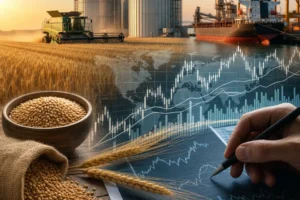

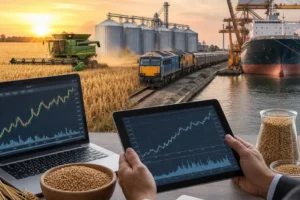

The integration of AI technologies into agricultural commodity trading has triggered a paradigm shift in how markets are monitored. Modern platforms employ advanced algorithms to pinpoint anomalies that elude traditional surveillance. As fluctuations in the grain market become more pronounced due to climate events, geopolitical tensions and evolving consumer patterns, stakeholders turn to predictive analytics for timely insights. By leveraging vast datasets from sensors, satellite imagery and trade records, experts can streamline decision-making across the global supply chain. Behind this revolution lies the convergence of big data and machine learning, enabling unprecedented accuracy in pattern recognition and risk mitigation.
Understanding Grain Market Dynamics
Grain commodities such as wheat, corn and barley are subject to intricate forces that shape their pricing and availability. Seasonal cycles, weather anomalies and policy shifts contribute to pronounced volatility across futures contracts and spot markets. Farmers and traders must account for:
- Global yield forecasts influenced by droughts, floods and temperature extremes
- Export restrictions, tariffs and subsidy programs enacted by major producing nations
- Transportation bottlenecks affecting port capacity and inland logistics
- Shifts in dietary trends and feedstock demands driven by livestock producers
Traditional risk management involves scenario planning and hedging strategies, yet the increasing frequency of extreme events undermines classical econometric models. Market participants require real-time visibility into supply chain disruptions and price anomalies to protect margins and ensure food security. This sets the stage for intelligent solutions powered by data science.
The Emergence of AI in Market Surveillance
Recent advances in computational power and data availability have paved the way for AI-driven monitoring frameworks. By ingesting massive streams—ranging from weather station feeds to transactional logs—these systems can flag irregularities with minimal latency. Key features include:
- Adaptive thresholding that adjusts alert levels based on evolving patterns
- Correlation analysis across disparate data sources such as satellite imagery and port manifests
- Automated anomaly triage to prioritize incidents by potential financial impact
Implementing such solutions demands robust infrastructure. Edge devices at silos and shipping docks continuously transmit metrics on moisture content, temperature and throughput. Meanwhile, cloud-hosted platforms apply ensemble methods that blend supervised and unsupervised learning. The result is a resilient, scalable architecture capable of processing millions of datapoints per hour.
Mechanisms of Anomaly Detection
At the heart of AI-powered surveillance are algorithms that discern subtle deviations from expected behavior. Three primary approaches dominate:
- Time-series analysis models that detect abrupt shifts in price or volume trajectories
- Clustering algorithms that identify outlier transactions in high-dimensional supply chain datasets
- Neural network architectures—such as autoencoders—that reconstruct typical patterns and flag reconstruction errors
By integrating domain knowledge, developers fine-tune these models to reduce false positives. For example, a sudden spike in grain shipments might correlate with harvest seasonality rather than illicit activity. Contextual layers filter out legitimate variations, enabling compliance teams to focus on genuine threats. Continuous feedback loops further refine detection thresholds as market conditions evolve.
Case Studies and Applications
Practical implementations of AI in grain markets already demonstrate measurable benefits. One leading agribusiness firm deployed a solution that monitors cross-border grain flows for signs of price manipulation. Within months, the system identified a pattern of coordinated bids driving prices artificially higher. This early warning allowed regulators to investigate and enforce corrective measures.
- Traceability solutions combine blockchain registers with sensor data to authenticate shipment provenance.
- Quality control algorithms assess sensor readings from storage facilities to predict spoilage risks.
- Market surveillance modules analyze order book dynamics on commodity exchanges to detect spoofing attempts.
These applications underscore the power of AI to transform raw data into actionable intelligence. By prioritizing high-risk events, stakeholders reduce operational losses and foster market integrity.
Challenges and Future Prospects
Despite its promise, AI adoption in grain markets faces obstacles. Data quality remains a critical hurdle—sensor malfunctions and incomplete trade records can compromise model accuracy. Privacy concerns also limit data sharing among competitive entities. Moreover, the black-box nature of some algorithms poses interpretability issues, hindering regulatory acceptance.
Looking ahead, hybrid architectures that merge rule-based engines with deep learning promise greater transparency. Collaborative data platforms, supported by neutral consortia, may unlock richer datasets spanning multiple geographies. Advances in edge computing will further reduce latency, enabling truly real-time anomaly alerts. As these trends converge, the grain sector is poised for an era of heightened resilience and efficiency, driven by continuous innovation in AI-enabled surveillance and traceability.