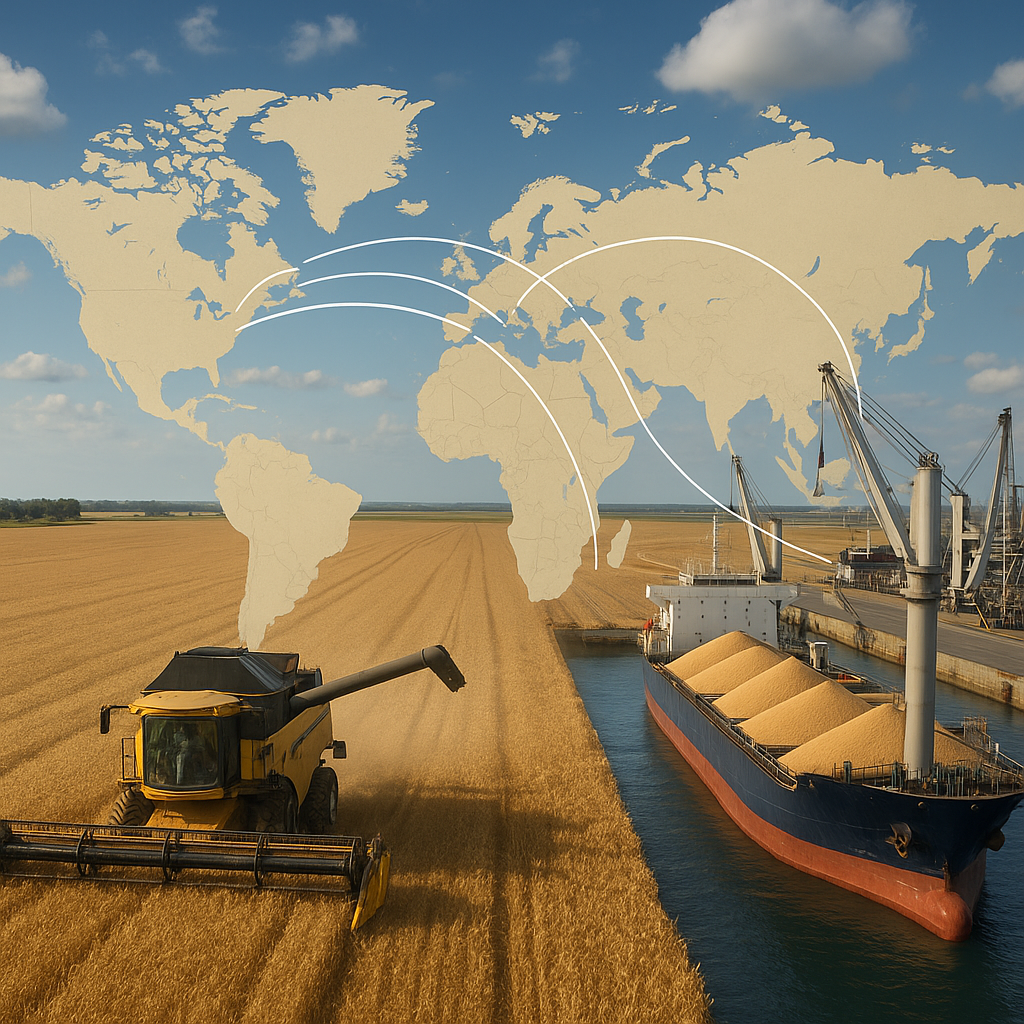
As new maritime corridors and overland corridors emerge across continents, the global grain landscape is undergoing a profound transformation. Changes in navigational channels, port capacities, and cross-border policies are redefining the ways in which wheat, corn, rice, and other staple crops are moved from fields to dinner tables. This article explores the multifaceted impact of these evolving pathways on production, trade, and consumption in the modern world.
The Evolution of Global Trade Routes
Historically, grain shipments followed centuries-old trajectories, linking major producing regions with distant consumers. Today, shifting geopolitical alliances and technological breakthroughs have given rise to newly charted corridors that promise to reshape the balance of supply and demand.
Ancient Paths to Modern Highways
- Silk Road Legacies: Caravans once carried millet and barley along the overland Silk Road. Railway upgrades on these tracks now facilitate rapid bulk transport of grain to emerging markets.
- Maritime Renaissance: Deepening of ports in the Black Sea and Southeast Asia supports larger vessels. Nations invest in dredging and terminal expansions to accommodate ultra-large carriers, reducing per-ton transport costs.
- Pan-Continental Corridors: Transnational rail and road networks stretching from inland farms to coastal hubs create multimodal chains, offering flexibility when one leg is disrupted.
Drivers of Route Realignment
- Infrastructure Investments: New ports, rail terminals, and highways shorten transit times by up to 30%, boosting efficiency in distribution.
- Trade Agreements: Bilateral and multilateral pacts incentivize alternative passages, often granting tariff concessions to goods moving along preferred trade routes.
- Climate Adaptation: As Arctic ice recedes, the Northern Sea Route presents a seasonal shortcut between East Asia and Europe, cutting voyage length by nearly 40%.
Logistics and Infrastructure Innovations
Enhanced pathways alone are not enough. Revolutionary changes in handling, storage, and real-time monitoring underpin the reliable movement of millions of tons of grain each year.
Smart Storage and Handling
- Temperature-Controlled Silos: Precision sensors maintain optimal conditions, reducing post-harvest losses.
- Automated Conveyance Systems: Robotic cranes and belt conveyors speed up loading and unloading at ports, trimming berth times.
- Modular Warehousing: Prefabricated units near transport nodes allow producers to consolidate shipments, streamlining logistics.
Digital Tracking and Transparency
- Blockchain Platforms: Immutable ledgers record each transaction, enhancing trust among exporters, importers, and financial backers.
- IoT Device Networks: Sensors attached to containers track humidity, temperature, and position, optimizing quality control throughout the voyage.
- AI-Driven Forecasting: Machine learning models anticipate bottlenecks and suggest rerouting options, bolstering supply chain resilience.
Economic Implications for Producers and Consumers
The reconfiguration of grain corridors brings both opportunities and risks. Stakeholders from farm cooperatives to retail buyers must navigate price fluctuations, credit access, and policy shifts.
Impact on Exporting Nations
- Compressed Delivery Times: Faster shipments free up working capital and allow farmers to reinvest in high-yield varieties.
- Market Diversification: Access to new ports opens doors to nontraditional buyers, reducing dependency on a single region.
- Capital Investments: Government-backed infrastructure projects stimulate rural economies, but may require higher taxes or public-private partnerships.
Benefits for Importing Regions
- Competitive Pricing: Multiple supply lanes generate price competition, helping consumers secure affordable staples.
- Supply Security: Diversified sourcing mitigates the impact of localized crop failures or trade embargoes.
- Value-Added Processing: Proximity to transit hubs encourages establishment of milling and packaging facilities, creating jobs and enhancing food safety standards.
Environmental and Geopolitical Considerations
While enhanced corridors drive economic growth, they also introduce environmental stresses and geopolitical tensions that must be balanced against broader societal goals.
Sustainability Challenges
- Carbon Footprint: Longer routes or high-frequency sailings can raise emissions. Investments in low-sulfur fuels and wind-assisted propulsion offer partial solutions.
- Habitat Disruption: Port expansions and inland terminals sometimes encroach on wetlands and bird migration paths, necessitating rigorous impact assessments.
- Resource Allocation: Competition for water and land intensifies near transport nodes, compelling stakeholders to adopt precision agriculture and water-saving irrigation.
Geopolitical Tensions
- Transit Rights Disputes: Landlocked nations vie for passage through neighboring territories, occasionally leading to diplomatic standoffs.
- Strategic Chokepoints: Straits and canals assume elevated importance. Disruptions in key passages can trigger global price spikes for markets.
- Supply Chain Nationalism: Some governments prioritize domestic reserves and curb exports during shortages, unsettling international traders and jeopardizing food security in import-dependent regions.
Future Outlook and Technological Integration
Looking ahead, the grain sector is poised to harness emerging innovations that will further refine trade routes and enhance global food system dynamics.
Advanced Propulsion and Vessel Design
- Eco-Friendly Ships: Hybrid engines and hull coatings reduce drag, promising significant fuel savings on long-haul passages.
- Modular Barge Fleets: Interchangeable cargo units travel seamlessly between riverine networks and ocean-going carriers.
- Autonomous Vessels: Unmanned ships equipped with AI navigation cut crew costs and optimize transit speed, especially on perilous or remote stretches.
Integration of Big Data and AI
- Predictive Maintenance: Data-driven analytics foresee equipment failures, minimizing downtime for trucks, trains, and loading machinery.
- Dynamic Pricing Algorithms: Real-time demand signals feed into smart contracts, adjusting freight rates and hedging risks for both sellers and buyers.
- Collaborative Platforms: Digital hubs link grain producers, logistics providers, insurers, and financiers, fostering a transparent ecosystem that rewards innovation and lowers barriers to entry.
As new arteries of commerce solidify, the synergy between infrastructure, policy, and technology will determine how seamlessly wheat, corn, rice, and other staples flow around the world. Stakeholders who embrace adaptability, sustainable practices, and cutting-edge solutions stand to benefit most in this era of unprecedented connectivity and challenge.