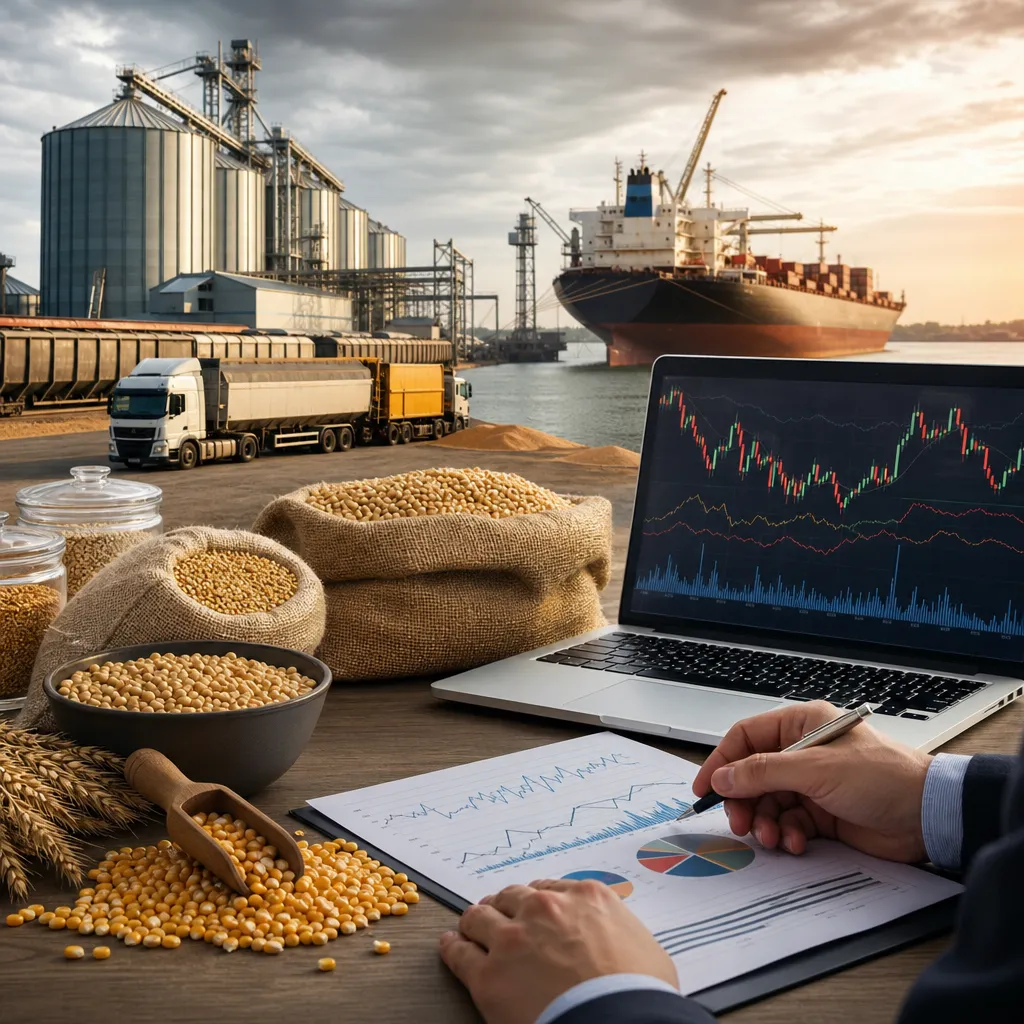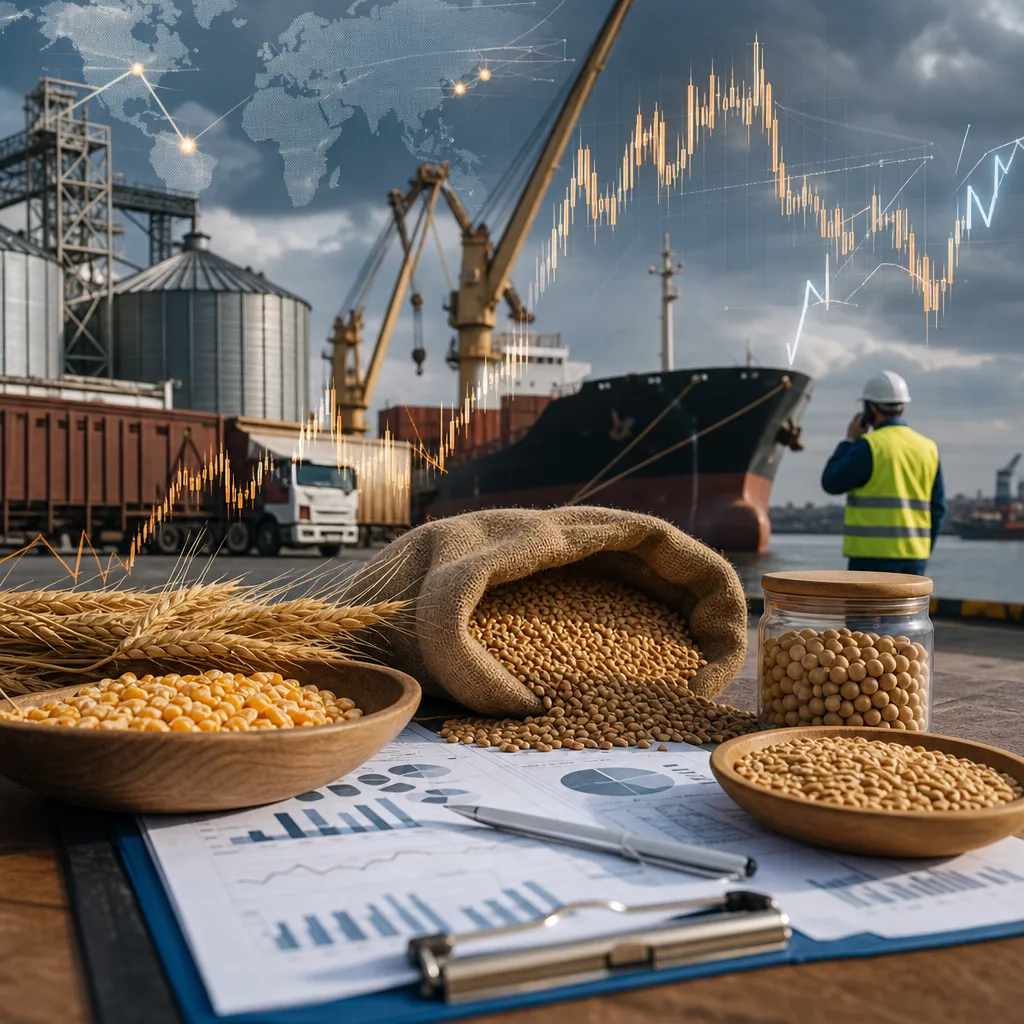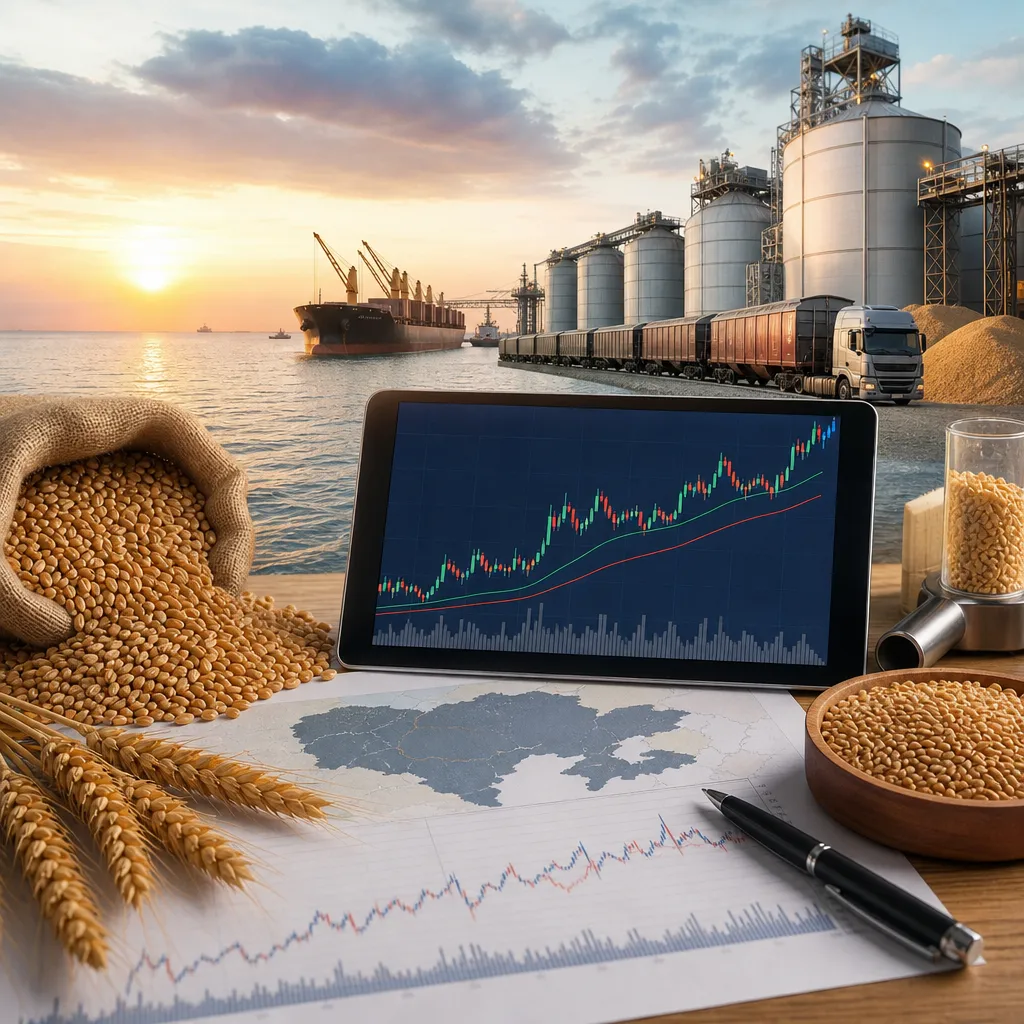
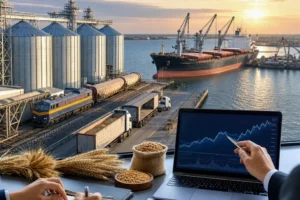





The Black Sea wheat market is not a formal exchange. It is a regional export and physical trading system centered on wheat produced and shipped from the Black Sea basin, especially Russia, Ukraine, and Romania, with Bulgaria and nearby origins also relevant in some trade flows. In global grain trade, “Black Sea wheat” usually means export wheat priced for shipment from Black Sea ports, commonly in U.S. dollars per metric ton on an FOB basis. For traders, millers, importers, and farmers, the key to this market is understanding the link between inland cash grain, port bids, export tenders, freight, quality, and international benchmarks such as Euronext wheat and CBOT wheat.
This market matters because the Black Sea region is one of the world’s most important wheat export zones. Prices discovered there influence import demand across North Africa, the Middle East, and parts of Asia, while weather, policy, logistics, and currency shifts in the region can move global wheat sentiment quickly. Unlike exchange-traded futures, much of Black Sea wheat business is negotiated in the physical trade through merchants, exporters, brokers, import tenders, and port logistics chains.
What the Black Sea wheat market means
In practice, the term Black Sea wheat refers to wheat grown in countries bordering or directly exporting through the Black Sea and nearby connected waterways. The largest and most closely watched origins are:
- Russia, a major wheat exporter with Black Sea loading ports serving world buyers.
- Ukraine, historically a major exporter, with trade shaped by logistics, policy, and security conditions.
- Romania, an important European Union wheat exporter through the Black Sea.
- Bulgaria, also part of the regional export complex.
The market operates as a network of inland procurement, rail or truck movement, storage, terminal handling, vessel loading, and international resale. Wheat may be bought from farmers in local currency, accumulated inland, moved to port, and then sold to export customers in dollars. Because of that chain, the “Black Sea price” can mean different things depending on where in the pipeline the grain is being valued.
Where the market operates and why location matters
Geography is central. The region’s wheat reaches export channels through Black Sea ports and connected logistics corridors. Port values matter because most international trade is priced near the point of export, not at the farm. A buyer in North Africa is usually comparing wheat offers by origin, quality, shipment period, and freight-adjusted landed cost.
Russia and Ukraine are not in the euro area, so domestic grain trade there is usually shaped first by local-currency farm and inland prices, then translated into export parity in U.S. dollars. Romania uses the leu domestically but, as an EU member, is strongly connected to European pricing and Euronext wheat as a benchmark for commercial risk management. Across the region, grain is physically handled in metric tons, and export offers are commonly quoted in USD per metric ton.
Location matters for another reason: not all Black Sea wheat is equal in commercial terms. Protein, test weight, moisture, falling number, and other specification details can vary by origin and crop year. A cargo from one port may trade at a premium or discount to another if quality, reliability, loading speed, or freight economics differ.
| Market area | Typical role | Usual currency/unit | Why it matters |
|---|---|---|---|
| Farm or inland elevator | Primary physical procurement | Local currency per metric ton | Where farmers sell and merchants build origination positions |
| Domestic delivered market | Sales to mills, feed users, or inland buyers | Local currency per metric ton | Competes with export demand for available wheat |
| Port or terminal market | Export accumulation and vessel loading | Local currency or USD per metric ton | Connects inland grain to world prices |
| FOB export market | International trade between exporter and importer | USD per metric ton | Main reference for global buyers comparing origins |
| Importer landed market | CIF or delivered procurement | USD per metric ton | Reflects FOB price plus freight and destination costs |
How Black Sea wheat prices are formed
Black Sea wheat prices are formed through the interaction of global benchmarks and local physical realities. There is no single price that perfectly represents the whole region. Instead, traders constantly translate between benchmarks, basis, quality spreads, logistics costs, and destination demand.
The most important pricing layers are:
- Futures price: a financial benchmark such as CBOT wheat or Euronext wheat.
- Local cash bid: the price offered at farm gate, elevator, or inland warehouse.
- Delivered price: the value paid for grain delivered to a mill, processor, or port.
- FOB price: free on board at the export port, meaning loaded onto the vessel at origin.
- CIF price: cost, insurance, and freight to the destination port.
- Basis: the adjustment between the futures benchmark and the local physical market.
For example, a merchant may watch Euronext or CBOT for directional market sentiment, but an export offer from Romania or Russia will ultimately depend on the local basis, loading slot availability, quality, and freight to the destination. A farmer may see world wheat futures rising online but still receive a weaker local bid if storage is full, transport is congested, buyers are covered, or the local currency strengthens against the dollar.
Key price drivers in the Black Sea wheat market include:
- Weather during planting, dormancy, and harvest
- Yield and quality outcomes
- Government policy, export regulation, or inspection rules
- Currency movements versus the U.S. dollar and euro
- Port congestion and inland transport capacity
- Importer tender activity, especially from major wheat-buying countries
- Competition from other exporters such as the EU, United States, Canada, and Australia
Benchmarks and the role of futures
There is no single global futures contract called “Black Sea wheat” that fully defines every transaction in the region. In practice, traders commonly use outside benchmarks to manage price risk. The most relevant listed markets are usually Euronext milling wheat for Europe-linked trade and CBOT wheat for global price direction and hedging reference.
These exchange contracts are financial tools. They do not automatically represent the exact price of Black Sea export wheat, and they should not be confused with a local farm bid or a specific port purchase price. The connection comes through basis and spreads.
A Romanian exporter, for example, may hedge flat price exposure using Euronext because Romania is integrated into the European grain trade. A firm exposed to broader international wheat risk may also monitor CBOT closely. In all cases, the hedge reduces futures price risk but leaves basis risk, meaning the local cash relationship to the benchmark can still change.
| Price type | Where quoted | What it means | Main users |
|---|---|---|---|
| Futures | Exchange screen | Standardized financial benchmark | Hedgers, funds, commercial traders |
| Cash bid | Elevator, merchant, processor | Spot or nearby physical buying price | Farmers, local merchants, mills |
| Delivered port | Port buyer or exporter market | Price for grain arriving at terminal | Exporters, inland traders |
| FOB export offer | Export market or broker indication | Price loaded at origin port | International buyers and sellers |
| CIF import offer | Destination market or tender | Landed cost at importer port | State buyers, millers, importers |
Where to check Black Sea wheat prices and market information
If you need a current Black Sea wheat price, the first step is to define exactly which market you mean: inland cash, port-delivered, FOB export, or a futures benchmark. These are not interchangeable.
Reliable places to check market information normally include:
- USDA Foreign Agricultural Service and World Agricultural Supply and Demand Estimates for country balance sheets, export context, and international market analysis.
- European Commission market information for EU grain context, especially relevant to Romania and Bulgaria.
- Euronext for listed wheat futures relevant to European trade sentiment and hedging.
- CME Group for CBOT wheat futures and options market information.
- Official statistics and agriculture ministries in the countries concerned for crop progress, production, trade, and policy announcements.
- Large merchants, brokers, and tender results for practical indications of export values, especially when importers issue purchase tenders.
Readers should be careful with headlines such as “Black Sea wheat up $5” unless the source clearly identifies the origin, protein, shipment window, and FOB or CIF basis. A futures chart is useful for trend, but it is not the same thing as the exact local cash value available to a farm or elevator on that day.
How physical wheat is actually bought and sold
Physical Black Sea wheat trading begins with origination. Farmers sell wheat to local buyers such as elevators, merchants, cooperatives where relevant, mills, or exporters. The contract may be spot, forward, or storage-based, and the final value depends on quality specifications, delivery point, and timing.
Typical physical trade steps are:
- Farmer or local holder offers wheat to a buyer.
- Buyer evaluates quantity, quality, and logistics.
- Price is agreed in local currency or linked to an export parity calculation.
- Grain is delivered to inland storage, processor, or port terminal.
- Quality is checked against contract terms.
- Buyer pays according to contract after delivery and documentation.
For export business, merchants accumulate enough wheat to load a shipment and then sell to an overseas customer either directly or through a broker. International sales often refer to standard trade terms such as FOB or CIF. Documentation, sanitary and phytosanitary compliance, vessel scheduling, and letter-of-credit or other payment arrangements are part of the process.
Counterparty risk matters. In practical trading, firms assess not only price but also contract performance, financing, logistics reliability, and whether quality claims can be managed under clear terms. In uncertain logistics environments, execution risk can be as important as market direction.
How hedging and futures access work
Hedging Black Sea wheat exposure usually happens on regulated futures exchanges, not in the port cash market itself. A merchant, miller, exporter, or importer opens an account through a futures broker and uses listed contracts to offset flat price risk. This requires margin, ongoing mark-to-market management, and a clear understanding of contract expiry.
It is essential to separate financial exposure from physical ownership. Buying a wheat futures contract does not mean you have purchased a cargo of Black Sea wheat. Selling futures does not mean you have physically exported grain. The futures position is a risk-management or speculative tool; the physical trade remains a separate commercial transaction.
Common commercial uses include:
- Exporters hedging wheat bought from farmers before reselling overseas
- Millers protecting against rising wheat prices before physical purchase
- Importers managing exposure between tender award and cargo arrival
- Traders expressing a market view without moving physical grain
The main limits of hedging in this market are basis risk, liquidity choice between contracts, and the fact that local Black Sea conditions can diverge sharply from exchange benchmarks.
Import, export, and logistics considerations
The Black Sea wheat market is primarily an export market, though domestic consumption always competes for supply. Countries in the region supply wheat to importers in the Mediterranean, Middle East, and beyond. Export competitiveness depends on the full chain from field to vessel.
The most important practical logistics considerations are:
- Distance from producing region to port
- Rail, truck, river, or combined transport availability
- Terminal capacity and loading schedule
- Storage conditions and blending capability
- Freight conditions into destination markets
- Political or administrative constraints affecting movement
A Black Sea origin can look cheap on an FOB basis yet lose competitiveness after freight or insurance changes. Conversely, a stronger inland crop and smooth logistics can make the region highly competitive even when futures markets elsewhere are firm. That is why traders compare origin-to-destination economics rather than only watching one benchmark board.
What market participants should watch
A practical Black Sea wheat trading routine usually combines crop analysis, benchmark monitoring, and physical market intelligence. The most useful questions are commercial rather than theoretical.
- Is the local crop large or tight?
- Is quality suitable for export milling wheat, or is more grain moving into feed channels?
- Are port bids strengthening relative to inland prices?
- Are import tenders showing demand at current values?
- Is the local currency helping or hurting exporter margins?
- Are government measures likely to alter export pace or trade terms?
- Are Euronext or CBOT moves being confirmed by actual cash trade?
Forecasting should be done in scenarios, not certainties. A bullish scenario may come from weather damage, reduced export availability, or stronger importer demand. A bearish scenario may come from larger harvests, weak tender demand, smoother logistics in competing origins, or currency shifts that improve exporter selling incentives.
Frequently asked questions
What is the main benchmark for Black Sea wheat?
There is no single perfect benchmark. Euronext milling wheat is often important for European-linked trade, especially Romania, while CBOT wheat is widely followed for broader global price direction. Physical Black Sea wheat still trades on its own basis, quality, and FOB terms.
Where can I check current Black Sea wheat prices online?
Start with Euronext and CME Group for futures benchmarks, then compare with official market reports, USDA analysis, European Commission grain information, and commercial broker or tender indications. For actual local buying prices, you usually need merchant, elevator, or exporter cash bids in the relevant country.
Why is a local cash bid different from a futures quote?
Because cash includes basis, quality, location, transport, storage, buyer competition, and currency effects. Futures are a standardized benchmark, not a direct farm-gate or port-delivered price for every origin.
Is Black Sea wheat priced in dollars or local currency?
Export offers are commonly discussed in U.S. dollars per metric ton, especially FOB or CIF. Inland physical procurement is often done in local currency per metric ton, depending on the country.
How is Black Sea wheat physically traded?
Through contracts between farmers, merchants, exporters, mills, feed companies, and overseas buyers. Grain is sampled, graded, transported, stored, and delivered under agreed quality and shipping terms.
Can an individual trader buy Black Sea wheat through a brokerage account?
A brokerage account can provide access to wheat futures and options, not necessarily to a physical cargo. Physical trade usually requires commercial contracts, logistics capability, quality control, financing, and export documentation.
What is more important in this market: futures or port prices?
For actual export business, port and FOB prices are decisive. Futures matter as a hedging and directional tool, but physical execution depends on local supply, quality, and logistics.
What drives Black Sea wheat prices the most?
Weather, crop size, quality, export policy, currency, logistics, and importer tender demand are the main drivers. The market also reacts to competition from other major wheat exporters.
Sources
- USDA Foreign Agricultural Service
- Euronext
- European Commission