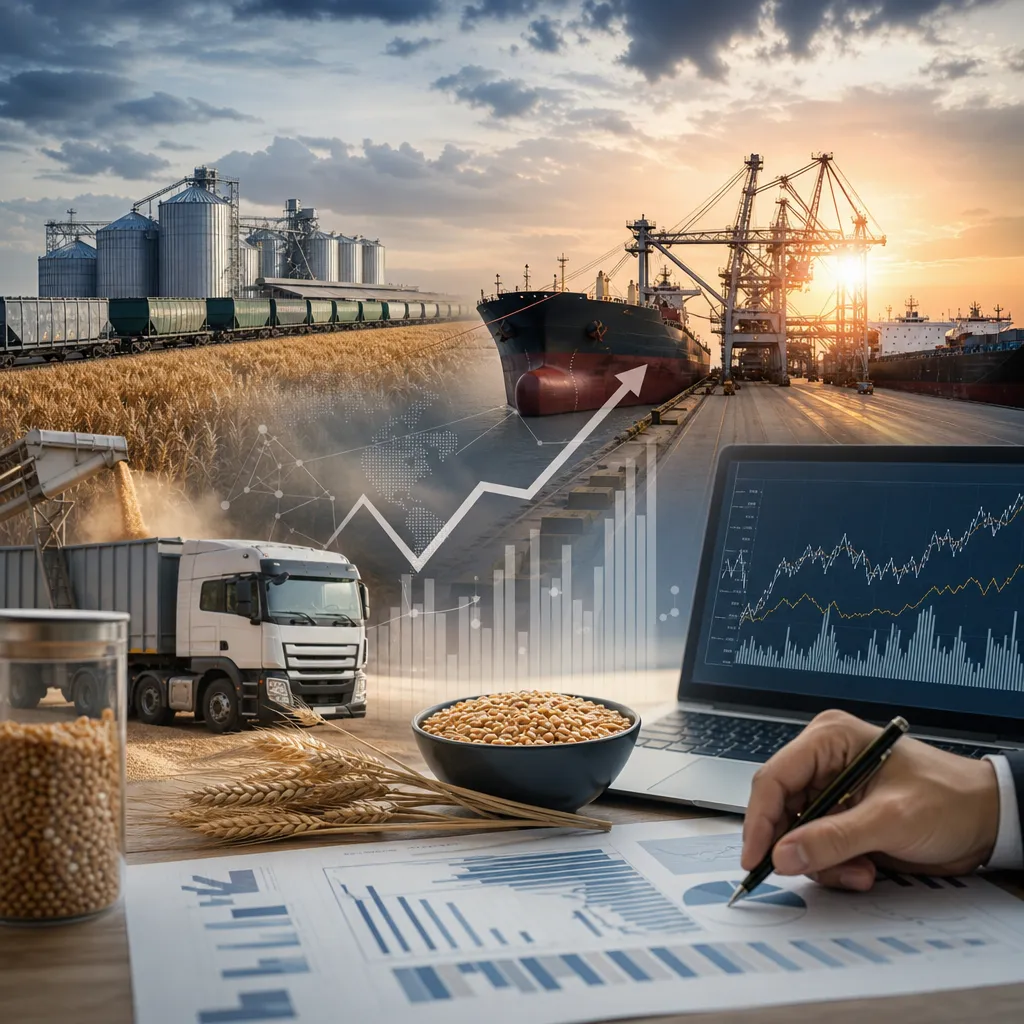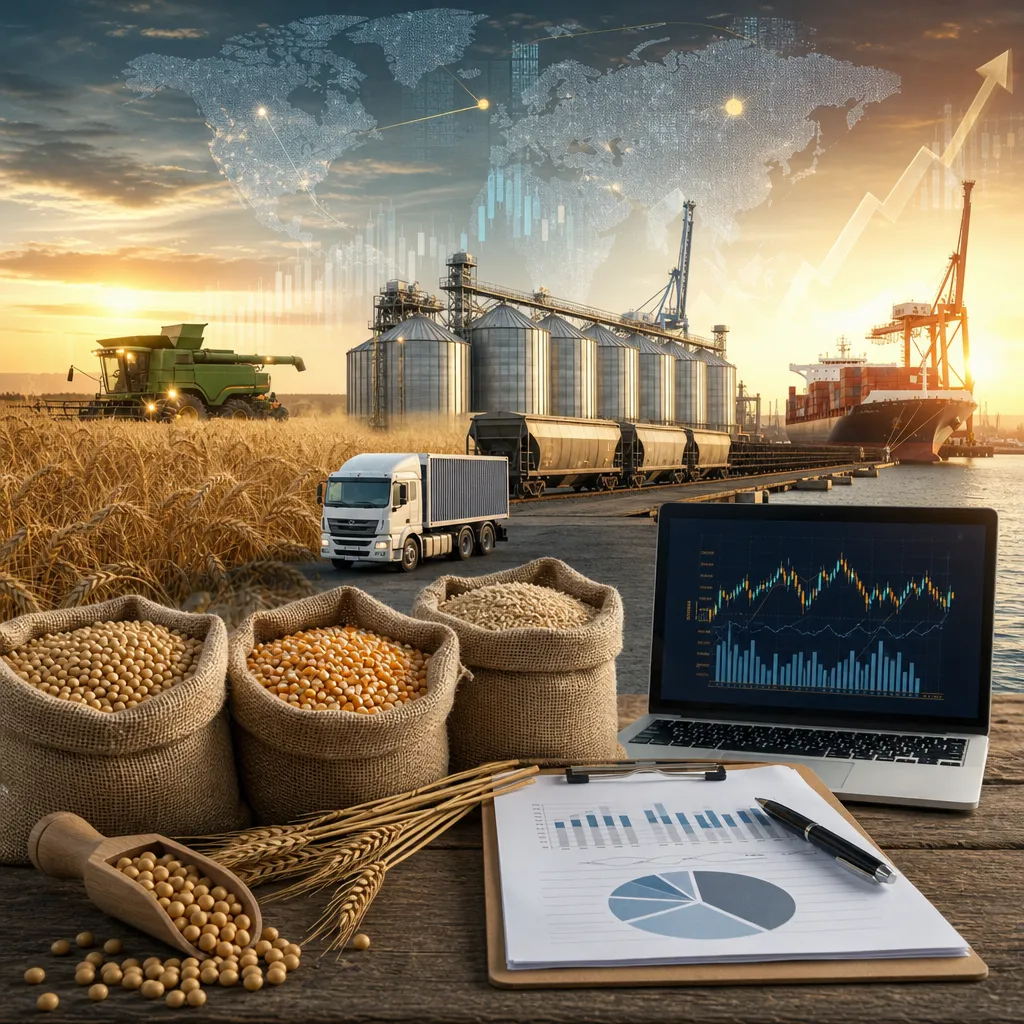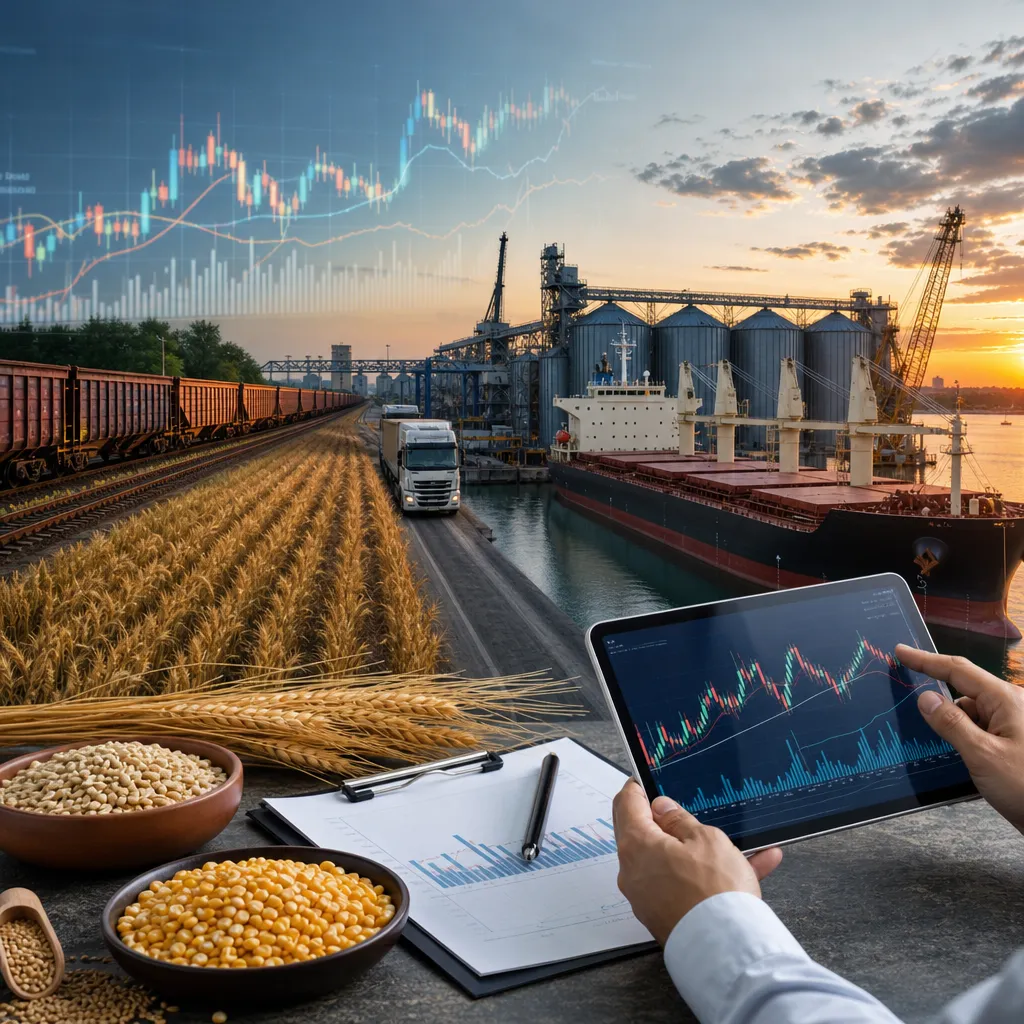
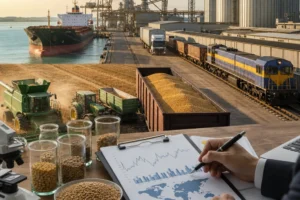
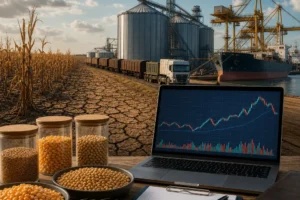
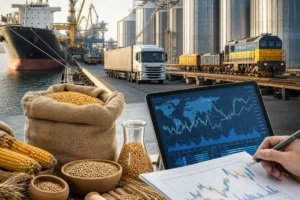
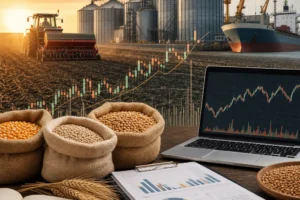
During food crises, grain prices usually rise because buyers compete for limited supply while transport, finance, and policy risks increase at the same time. The practical problem is that there is never just one “grain price”: exchange futures may move instantly on global news, but the physical cash price paid at a local elevator, mill, or port depends on basis, freight, quality, storage space, and government restrictions. For farmers, importers, feed mills, traders, and analysts, the key is to separate benchmark prices from real delivered prices and then follow the reports, logistics signals, and policy changes that actually move grain through the market. In a crisis, knowing where to check prices and how grain is bought, sold, hedged, financed, and delivered matters as much as the headline price itself.
What grain prices mean during a food crisis
A food crisis can be caused by drought, war, export controls, currency collapse, fertilizer shortages, shipping disruption, banking stress, or a sudden jump in demand. Grain prices react because grains are basic inputs for bread, feed, cooking oil, and biofuel, so any threat to supply is quickly reflected in bids and futures markets.
The first distinction to make is between futures prices and cash prices. Futures are standardized contracts traded on regulated exchanges such as CME Group and are used for price discovery and risk management. Cash prices are negotiated or posted in the physical market by grain elevators, cooperatives, merchants, processors, mills, exporters, and feed manufacturers.
During crises, the spread between the two can widen sharply. A wheat futures rally does not guarantee that every farmer or merchant can sell grain at that exact level. Local buyers may discount for poor quality, high freight, congestion, delayed vessels, lack of railcars, or storage shortages. Likewise, in an importing region, cash prices can rise far more than futures if nearby physical supply is scarce.
Where grain prices are quoted and how to check them
Global benchmark prices are usually checked first on exchange and official market-reporting sources. For wheat, corn, soybeans, soybean oil, and soybean meal, many market participants watch futures listed by CME Group. Rice futures may also be tracked on regulated exchanges, but large parts of the rice trade are still assessed through physical offers, tenders, and export quotations. For canola, rapeseed, sunflower seed, barley, sorghum, oats, and rye, pricing may depend more heavily on regional markets, specific crushers or feed buyers, and export channels.
Farmers and physical buyers normally check local cash bids through one or more of the following:
- posted bids from grain elevators and cooperatives, often on their websites or apps,
- grain merchants and processors directly by phone, email, or contract portal,
- government or exchange market reporting services where available,
- brokers specializing in physical grain,
- port bid sheets and exporter indications in export-oriented regions.
In a crisis, reliable local price discovery often becomes harder. Some buyers stop posting firm bids, widen basis, buy only for nearby delivery, or require extra quality verification. That is why users need both online market data and direct confirmation from physical counterparties.
| Price type | Where it is found | What it shows | Main limitation |
|---|---|---|---|
| Exchange futures | Commodity exchange data, broker platforms, market-data services | Standardized benchmark price for a contract month | Not the same as the local physical price |
| Local elevator bid | Elevator or cooperative website, app, or direct contact | Cash price for a location and delivery window | May change quickly or be withdrawn during disruptions |
| Export or port indication | Merchants, port bids, trade desks, tenders | Value near export channels | Strongly affected by freight and vessel availability |
| Tender or import price | Government purchasing agencies, importers, trade notices | Delivered buying interest in importing markets | Not always comparable to inland farm prices |
How a food crisis pushes grain prices higher or lower
The path from disruption to price is usually straightforward but fast-moving. If a drought threatens yields, futures may rally first because traders reprice expected production. Then physical buyers raise bids to secure nearby supply. If the crisis affects shipping or policy rather than production, nearby cash prices may spike even faster than futures because users need grain now.
The main drivers include:
- Weather: drought, heat, floods, frost, and planting delays change expected yield and quality.
- Stocks: low carryover stocks leave less buffer when supply is threatened.
- Exports and imports: major exporters can tighten the world market; major importers can accelerate panic buying.
- Government policy: export bans, quotas, tariffs, import waivers, and food-security stockpiling can move prices abruptly.
- Currency: a weaker importing-country currency raises local grain costs even if world prices are unchanged.
- Energy and fertilizer: higher input costs change planting incentives and transport costs.
- Logistics: barge problems, rail disruptions, truck shortages, port congestion, and insurance costs can sharply lift basis.
- Quality: in crisis years, good milling wheat or low-damaged corn can command a large premium over lower-grade grain.
Prices can also fall during a crisis if destruction of demand becomes severe. For example, livestock liquidation, recession, credit stress, or a sudden collapse in biofuel margins may reduce feed or processing demand. Food crises are therefore not simply “bullish” for all grain at all times; they are often highly volatile and uneven across crops, regions, and quality grades.
How physical grain is bought and sold when markets are stressed
Physical grain moves through commercial channels, not only through screens. A farmer may sell to a local elevator or cooperative; an elevator may resell to a feed mill, exporter, ethanol plant, flour mill, crusher, or merchant; a merchant may arrange rail, barge, truck, or vessel freight; and an importer may buy either directly from an exporter or through an international trading house.
A normal transaction in a stressed market usually requires agreement on:
- crop and quantity,
- grade or quality specifications,
- delivery point,
- delivery period,
- price formula such as flat price or futures plus/minus basis,
- freight responsibility,
- inspection and weights,
- payment terms and counterparty assurances.
Where the transaction occurs depends on scale. Small and medium farm sales often go through a nearby elevator or cooperative. Processor supply contracts may be negotiated directly. Export grain may be sold to a merchant with access to terminal storage and vessel execution. Import tenders are commonly handled by state buyers, large millers, or private importers with banking lines and logistics capacity.
During food crises, practical bottlenecks often matter more than headline prices. Warehouses may fill, rail service may slow, export terminals may prioritize certain cargos, and buyers may tighten quality rules because replacement supply is uncertain. In these conditions, the delivery point and timing can add or subtract much more value than usual.
Futures, options, and hedging during a grain crisis
Futures and options are tools for managing price risk, not a substitute for physical grain procurement. A farmer, miller, crusher, feed company, exporter, or importer typically accesses these tools through a regulated futures broker connected to an exchange. The user opens a brokerage account, posts margin for futures positions, and trades standardized contracts with set months, contract sizes, and delivery rules.
How they work in practice:
- Futures hedge: a seller of physical grain may sell futures to protect against a fall in prices before physical sale; a buyer may buy futures to protect against a rise before physical purchase.
- Options hedge: puts and calls can provide downside or upside protection while limiting risk to the premium paid, though they may be expensive in volatile periods.
- Basis contract or hedge-to-arrive structure: in some markets, elevators or merchants offer contracts that separate futures risk from basis risk.
The major risks are leverage, margin calls, and basis risk. In a crisis, futures markets can move sharply and require additional funds even when the hedge is conceptually sound. A processor with a futures hedge may still face difficulty sourcing physical grain if trucks, railcars, or vessels are unavailable. This is why financial hedging and physical procurement must be managed together.
| Market type | How it works | Who uses it | Main risk in a crisis |
|---|---|---|---|
| Futures | Standardized exchange contract via broker | Farmers, merchants, processors, funds, importers | Margin calls and basis mismatch |
| Options | Right, not obligation, to buy or sell futures at a strike | Hedgers seeking flexible protection | High premium cost in volatile markets |
| Cash grain contract | Physical sale or purchase with delivery terms | Farmers, elevators, mills, exporters, feed companies | Counterparty, quality, and logistics failure |
| OTC trade or tailored agreement | Privately negotiated pricing or delivery arrangement | Merchants, large commercial users | Credit exposure and lower transparency |
Where to find reports, data, and market signals that matter
In a food crisis, good decisions depend on official and exchange-based information rather than rumor. The most widely used public sources include USDA reports, CME Group contract information and market data, and CFTC positioning data.
Key reports and how they are used:
- USDA WASDE: broad balance sheets for major crops, showing production, use, exports, imports, and ending stocks. Analysts use it to assess global supply and demand scenarios.
- USDA Crop Progress: weekly crop condition and planting or harvest pace in the United States. Traders use it heavily during the growing season.
- USDA Grain Stocks and acreage reports: important for recalibrating available supply and planting intentions.
- USDA Export Sales: indicates demand from foreign buyers, especially relevant when importers are covering needs aggressively.
- CFTC Commitments of Traders: shows broad positioning by trader category in futures and options markets. It helps explain market structure but should not be used alone.
- FAO market information and food price material: useful for global food-security context, especially when policy and import dependency matter.
- National agricultural ministries, statistical offices, and customs databases: important for country-specific production, trade, and stock signals.
Commercial users may also subscribe to specialist market-data services, weather analytics, satellite crop tools, vessel tracking, freight intelligence, and basis-monitoring software. These tools help with speed and detail, but they do not replace confirmation from physical market participants.
Storage, logistics, and quality: why local prices can behave differently
During food crises, the most powerful local price driver is often not the board price but the ability to move and store grain safely. A region with sufficient production can still face high consumer prices if roads are damaged, import financing dries up, or mills cannot source consistent quality.
Storage decisions become more complex in volatile markets. Holding grain may allow a seller to wait for stronger bids, but it also adds financing cost, shrink, spoilage risk, and exposure to quality loss. Buyers may prefer immediate delivery despite high prices if coverage is low and replacement supply is uncertain.
Quality matters more when supply is tight. Wheat can separate into milling and feed values; corn discounts may widen for moisture, damage, or mycotoxins; oilseed crushers may adjust bids for oil content or foreign material; rice buyers may become more selective on grain type and milling yield. In practical terms, that means a quoted benchmark price is only the starting point for real trade.
How farmers, buyers, and analysts can respond practically
For farmers, the main task is to compare local cash bids with futures and basis, then decide whether to sell spot, forward contract, store, or hedge. The decision is usually made through the elevator, cooperative, merchant, or broker they already use. Before acting, they should confirm grade standards, delivery windows, storage charges, drying terms, and whether the buyer is offering a flat-price, basis, minimum-price, or other structured contract.
For feed mills, flour mills, crushers, and importers, crisis management starts with coverage planning. They typically secure nearby needs through physical contracts, monitor shipping and inspection risk, and use futures or options only for the price component they can manage financially.
For analysts and traders, the practical workflow is usually:
- check exchange futures for benchmark direction,
- review official balance-sheet and crop reports,
- follow weather and logistics indicators,
- verify local basis or bids with commercial participants,
- separate price risk from execution risk.
Execution risk is what often surprises non-specialists. You may be right about the futures market and still lose money or fail to secure supply because a barge did not move, a port became congested, a quality spec failed, or a buyer changed payment terms.
FAQ
Where can I check grain prices during a food crisis?
Check exchange futures through CME Group market data or a futures broker platform for benchmark prices, then verify local cash bids through grain elevators, cooperatives, merchants, processors, or local market reporting services. Do not assume the futures quote equals the price available in your area.
Why is my local wheat or corn price different from the exchange price?
Local prices include basis, which reflects freight, local supply and demand, storage pressure, quality, and buyer competition. During crises, basis can widen sharply because logistics and nearby availability matter more than usual.
Can I buy physical grain through a futures exchange?
Most users do not buy everyday physical grain by taking exchange delivery. Physical grain is normally sourced through elevators, merchants, cooperatives, processors, exporters, or import contracts. Futures are mainly used for hedging or financial exposure, not routine supply chain purchasing.
Where does grain futures trading take place?
It takes place on regulated commodity exchanges and is accessed through licensed futures brokers and trading platforms. A brokerage account is normally required, and futures trading involves margin and leverage.
What reports are most important when grain prices spike?
USDA WASDE, Crop Progress, Grain Stocks, acreage reports, and Export Sales are core references. CFTC Commitments of Traders helps explain market positioning, while FAO and national agencies add global food-security and country-specific context.
How do food crises affect storage decisions?
They can make storage more valuable if nearby supply is tight, but they also increase risks such as spoilage, financing cost, and sudden policy or logistics changes. The best decision depends on local basis, available storage, grain quality, and cash-flow needs.
What is the biggest mistake when reading grain prices in a crisis?
The biggest mistake is treating one headline price as the whole market. Grain must be viewed through benchmark futures, local basis, quality, delivery location, freight, and counterparty terms all at once.
Sources
- USDA World Agricultural Supply and Demand Estimates
- CME Group agricultural futures and options contract specifications and market data
- CFTC Commitments of Traders