


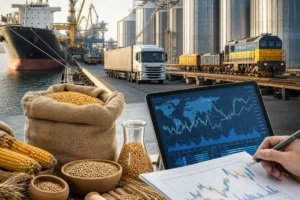
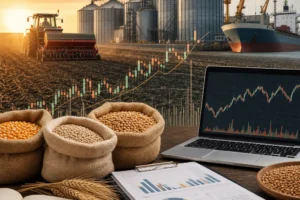


The Black Sea wheat market refers mainly to export-origin wheat from the coastal and near-coastal grain regions of Russia, Ukraine, Romania, and Bulgaria, plus the ports through which that wheat reaches global buyers. It is one of the world’s most influential wheat pricing zones because large exportable surpluses from this region can quickly affect import tenders in North Africa, the Middle East, and parts of Asia. A “Black Sea wheat price forecast” is therefore not a single number, but an outlook for how export prices, inland cash values, and related futures may move as crops, logistics, currencies, and trade flows change. Readers should think in terms of export quotations such as FOB Black Sea, local cash markets in domestic currency, and international benchmark futures that guide risk management rather than replace physical prices.
Geographically, the market operates across several countries and ports, not one exchange. Wheat is usually discussed in metric tonnes, while domestic markets may use local currency per tonne and export trade is commonly negotiated in U.S. dollars per tonne. The most relevant international benchmarks are often Euronext milling wheat futures for Europe and CBOT wheat futures in the United States, together with physical export assessments and tender results from major importers.
What the Black Sea wheat market includes
In practical trade language, “Black Sea wheat” usually means wheat offered for export from the Black Sea basin. The most commercially important origins are:
- Russia, a major global wheat exporter with large production in southern and central grain regions feeding export channels toward Black Sea ports.
- Ukraine, historically a major wheat exporter, with pricing shaped by production, export corridor conditions, and wartime logistics risk.
- Romania, an important European Union wheat producer and exporter, with Black Sea port access linking inland grain to world demand.
- Bulgaria, a smaller but relevant exporter within the same regional export system.
The market matters because many importing countries compare Black Sea offers with wheat from the European Union, the United States, Australia, Argentina, and sometimes the Baltic region. When Black Sea origin is competitively priced, it can set the tone for international tender business. When logistics, policy, or weather disrupt the region, buyers often shift to other origins and global prices can react quickly.
| Market element | What it means | Typical unit/currency |
|---|---|---|
| Inland cash price | Price paid at farm, elevator, warehouse, or domestic buyer location | Usually local currency per metric tonne |
| Delivered domestic price | Price including delivery to mill, feed user, terminal, or inland storage point | Usually local currency per metric tonne |
| Export bid | Bid from an exporter based on origin, quality, freight to port, and shipment slot | Often U.S. dollars per metric tonne |
| FOB Black Sea | Free on board price at a Black Sea loading port, before ocean freight to destination | Usually U.S. dollars per metric tonne |
| Benchmark futures | Exchange-traded contract used for price discovery and hedging, not a direct farm-gate price | Exchange-specific quotation |
Where Black Sea wheat prices are formed
Black Sea wheat prices are formed through a chain from farm to export vessel. Farmers and local traders first negotiate cash prices based on domestic supply, quality, and proximity to buyers. Merchants then compare inland purchase costs with storage, elevation, rail or truck freight, port handling, finance costs, and export demand. The export market ultimately ties those local values to what importers are willing to pay for specific quality and shipment periods.
Quality matters a great deal. In export trade, wheat is not just “wheat.” Protein, test weight, moisture, foreign material, and sometimes falling number can change the price materially. A high-protein milling wheat cargo can command a premium over lower-spec wheat, while feed-grade wheat may trade at a discount.
The regional price structure is also heavily influenced by currency. Domestic grain may be bought in rubles, hryvnia, lei, or lev, but export sales are often discussed in dollars. If the local currency weakens, exporters may be able to pay more in domestic currency while still remaining competitive in dollar terms. If the local currency strengthens, inland prices may come under pressure unless export prices also rise.
How Black Sea wheat links to global benchmarks
There is no single dominant Black Sea wheat futures contract used everywhere in the way CBOT corn is used in the United States. Instead, market participants watch a mix of benchmarks:
- Euronext milling wheat futures, especially for European and nearby export competition.
- CBOT wheat futures, as a global reference watched by funds, importers, and merchants.
- Physical export assessments from price reporting services and market intelligence providers.
- Import tender results, especially from large state buyers, which reveal which origins are most competitive.
This matters because a futures market and a physical market are not the same thing. Futures are standardized financial contracts traded on an exchange. A Black Sea export cargo is a negotiated physical transaction with specific quality, shipment timing, and origin risk. The difference between the benchmark futures value and the local physical price is often called the basis. In the Black Sea context, basis can move sharply when port congestion, policy shifts, harvest pressure, or freight disruptions change local supply-and-demand conditions.
| Price type | Where it is found | How to use it correctly |
|---|---|---|
| Futures price | Exchange screen through broker or market data service | Use as a benchmark for direction and hedging, not as the exact local cash price |
| Cash bid | Local buyer, elevator, cooperative, mill, or merchant quote | Use for actual farm or warehouse sale decisions |
| FOB offer | Export market quotation from trader or broker | Use to assess export competitiveness at port level |
| CIF import price | Destination market or tender result | Use to compare landed values in importing countries |
How to check Black Sea wheat prices online
Because this is a regional physical export market rather than one simple exchange quote, readers should check several kinds of sources.
- Euronext for milling wheat futures used as a European benchmark.
- CME Group for CBOT wheat futures and options.
- USDA, especially global grain balance and trade reports, for supply-demand context and export competition.
- European Commission market information for EU grain trade context, especially relevant to Romania and Bulgaria.
- National ministries, statistics agencies, or official grain market bulletins when available in origin countries.
- Merchants, exporters, local elevators, cooperatives, and domestic processors for actual local cash bids.
- Tender outcomes from large importing agencies, which often reveal competitive origin and tradable export levels.
If someone is looking for a “live Black Sea wheat price,” they should be careful about what they are actually viewing. A futures quote on Euronext or CBOT is not the same as a Russian port FOB offer or a Romanian farm-gate bid. The best practical approach is to combine benchmark futures with local buyer bids and export market commentary. Exporters and brokers often update indications during the trading day, but the physical market may trade less transparently than exchange futures.
How wheat is actually bought and sold in the Black Sea region
Physical grain trade
Physical trade usually starts with a farmer, collector, cooperative, inland trader, or commercial storage operator. Grain may be sold spot at harvest, stored and sold later, or committed under a forward agreement. The buyer can be a flour mill, feed mill, domestic processor, exporter, or international merchant with port capacity.
A physical deal normally specifies:
- commodity and crop year,
- quality parameters,
- quantity,
- delivery location,
- delivery window,
- price or pricing formula,
- payment terms,
- weight and quality certification method.
Export trade adds another layer. Merchants aggregate wheat inland, move it by truck, rail, river, or a combination of modes to export terminals, and then load vessels under FOB terms. Importers may buy directly from trading houses, through tenders, or via intermediaries. The final export value must cover inland origination costs, terminal handling, finance, inspection, and shipping risk.
Futures and options
Hedging normally takes place on an exchange, not in the physical yard or port silo. A trader, mill, or producer with exchange access through a broker may sell futures to hedge downside price risk or buy futures to hedge procurement risk. Options can be used to protect against adverse moves while retaining some upside flexibility.
This does not mean the hedger owns or delivers Black Sea port wheat through that exchange contract. It means they are managing price exposure using a correlated benchmark. Basis risk remains important: the hedge may work imperfectly if local port values move differently from the exchange price.
Main drivers of a Black Sea wheat price forecast
A serious forecast is scenario-based. No one can guarantee where Black Sea wheat will trade, but the main drivers are well known.
- Weather and yield: drought, winterkill, spring moisture, and harvest conditions can quickly alter export availability.
- Acreage and crop condition: autumn planting success and crop survival heavily influence the production outlook.
- Export policy and regulation: taxes, quotas, phytosanitary rules, and licensing can affect competitiveness and origin flows.
- Logistics: port operations, inland transport, insurance conditions, and route reliability strongly affect export pricing.
- Currency movements: changing exchange rates can alter domestic producer selling incentives and export margins.
- Importer demand: tenders from North Africa and the Middle East often help define tradable price levels.
- Competing exporters: harvest pressure in the EU, U.S., Australia, or Argentina can cap Black Sea upside.
- Global stocks and macro sentiment: fund positioning and broad commodity risk appetite can amplify moves.
Practical forecast scenarios
Instead of using one fixed target, it is more useful to frame the Black Sea wheat outlook through scenarios.
| Scenario | Conditions | Likely market implication |
|---|---|---|
| Bearish export-price scenario | Good regional weather, large harvest, smooth logistics, and slow importer urgency | FOB and inland prices may soften, especially during harvest pressure |
| Supportive price scenario | Weather losses, tighter exportable surplus, or stronger global demand | Export offers may rise and importer tenders may become more competitive |
| Volatile basis scenario | Stable futures but changing logistics, port congestion, or policy risk | Local cash and FOB values may diverge from exchange benchmarks |
| Currency-driven adjustment | Significant local currency weakness or strength | Domestic prices can move differently from dollar-denominated export values |
For many market participants, the key forecast question is not simply whether wheat futures go up or down, but whether Black Sea origin gains or loses competitiveness against other exporters. That relative position often decides tender success and therefore near-term export price direction.
How local cash prices differ from export and futures prices
This is one of the most misunderstood parts of grain pricing. A farmer in southern Russia or Romania does not automatically receive the headline FOB Black Sea price. Several deductions and adjustments sit between the farm and the ship. These can include handling, drying if needed, storage, transport to terminal, financing, quality adjustments, and the exporter’s margin for risk.
Likewise, a Euronext or CBOT futures move does not automatically translate one-for-one into a local cash move. If port demand is strong and nearby supplies are tight, local basis may strengthen even if futures are flat. If harvest is large and movement is heavy, local basis can weaken even during a futures rally.
For this reason, producers and commercial buyers should track both:
- Benchmark futures direction for broad market sentiment and hedging opportunities.
- Local and port basis for actual sale timing and physical margin decisions.
What readers should watch in the coming market cycle
The next phase of the Black Sea wheat market will usually be defined by crop development, harvest pace, and export corridor efficiency. Early in the season, weather and acreage dominate. During harvest, selling pressure and logistics capacity become crucial. Later, the focus often shifts to export endurance, remaining stocks, and whether importers continue to favor Black Sea origin over alternative suppliers.
Traders should also watch whether futures benchmarks are being driven by local fundamentals or by outside macro factors such as currency moves, energy markets, or speculative fund positioning. In some periods, Black Sea cash values are the leader; in others, they react to broader risk-off or risk-on sentiment coming from financial markets.
FAQ
What does “Black Sea wheat price” usually refer to?
It usually refers to export-origin wheat values from countries such as Russia, Ukraine, Romania, and Bulgaria, often quoted as FOB port offers in U.S. dollars per metric tonne. It can also refer to inland cash prices in local currency.
Where can I check Black Sea wheat prices online?
For benchmarks, use Euronext and CME Group futures pages. For broader market context, use USDA and European Commission market information. For actual local or export bids, check merchants, exporters, domestic buyers, and recognized physical market reporting services.
Is a futures price the same as the local cash price?
No. A futures price is a standardized exchange-traded benchmark. A local cash price reflects location, quality, transport, buyer demand, storage, currency, and basis.
What is the main benchmark for Black Sea wheat?
There is no single perfect benchmark. Euronext milling wheat and CBOT wheat are widely watched, but physical FOB Black Sea export assessments and importer tender results are often more directly relevant to actual regional trade.
How is Black Sea wheat physically traded?
Farmers and local traders sell to merchants, mills, feed manufacturers, processors, or exporters. Exporters assemble grain inland, move it to port, and sell cargoes under export terms such as FOB, while importers may buy through tenders or direct negotiations.
Can individual traders hedge Black Sea wheat exposure online?
Yes, through a regulated broker offering access to relevant wheat futures or options, if permitted in their jurisdiction. But this is financial risk management, not the same as owning or selling physical grain.
Why do Black Sea wheat prices move so sharply sometimes?
Because the region is a major export supplier and prices react quickly to weather, policy, logistics, currency changes, and large import tenders. Basis can also move abruptly when port demand or inland movement changes.
Which unit is most common in this market?
In export trade, wheat is generally quoted in metric tonnes, often in U.S. dollars per tonne. Domestic cash markets are commonly quoted in local currency per tonne.
Sources
- USDA Foreign Agricultural Service
- Euronext
- European Commission