
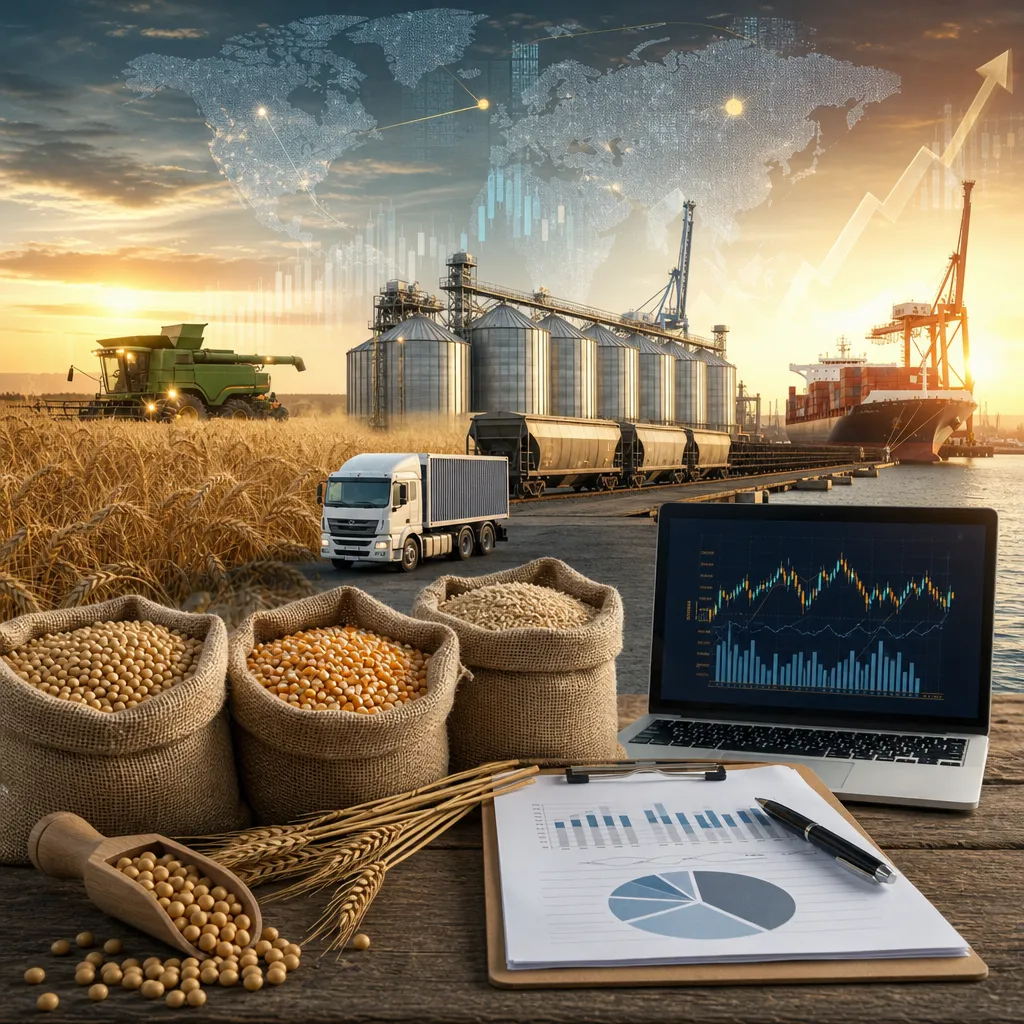
Inflation changes grain prices through several channels at once: the value of money falls, farm input costs rise, freight and energy become more expensive, and buyers often adjust inventories and hedging behavior. In practice, grain does not have one single inflation price. The price a trader sees on a futures screen, the bid at a local elevator, and the delivered value at a mill or export port can all move differently during the same inflationary period.
For farmers, buyers, and analysts, the key is to separate benchmark prices from real transaction prices. Benchmark prices are usually quoted on futures exchanges such as CME Group, while real transaction prices in the physical market are negotiated through elevators, cooperatives, merchants, processors, feed mills, exporters, and importers. During inflation, both matter, but they solve different problems.
If you want to understand grain prices during inflation, you need to track not only grain supply and demand, but also interest rates, currency moves, energy costs, fertilizer, storage cost, freight, and policy. Inflation does not automatically mean higher grain prices forever. It often raises volatility and can widen the gap between exchange values and local cash bids.
How inflation affects grain prices
Inflation affects grain prices through cost pressure, demand shifts, and financial market behavior.
On the farm side, inflation raises the cost of diesel, fertilizer, chemicals, labor, machinery parts, crop drying, and storage. That increases the break-even level many producers need. On the logistics side, barge freight, rail freight, trucking, port handling, and container costs may rise, which changes basis and delivered prices even if futures are unchanged.
On the demand side, high inflation can weaken consumer purchasing power and reduce meat demand, which can lower feed use for corn, barley, sorghum, or wheat in some regions. At the same time, inflation linked to energy markets can support biofuel demand and affect corn, soybean oil, canola, rapeseed, and sunflower seed values.
Financially, inflation can influence interest rates and currency values. Higher interest rates generally increase the cost of holding grain in storage and carrying futures positions. Currency changes matter because grain is heavily traded internationally. A stronger export-country currency can make that origin less competitive, while a weaker currency can support local cash prices in domestic terms.
Where grain prices are quoted during inflation
The first practical step is knowing where prices actually exist. There are three main pricing layers:
- Futures exchange prices: benchmark prices for standardized contracts, commonly used for hedging and price discovery.
- Cash bids: local prices offered by elevators, cooperatives, crushers, ethanol plants, feed mills, flour mills, or merchants.
- Delivered or export values: negotiated prices based on destination, freight, quality, timing, and contract terms.
For major internationally traded grains and oilseeds, futures prices are often checked on exchange websites and broker platforms. CME Group is central for U.S.-referenced grain futures such as corn, wheat and soybeans. In Europe, Euronext is important for certain grain and oilseed benchmarks. These futures are not the same as a farmgate or elevator price.
Local cash prices are normally checked through grain elevators, cooperatives, farm merchandisers, processors, local grain buyers, cash bid apps, or agricultural market reporting systems. In the United States, USDA Agricultural Marketing Service publishes many physical market reports. In other countries, ministries of agriculture, grain boards, exchanges, traders, or regional market information systems may publish spot indications or reference prices.
During inflation, the difference between futures and local cash can become more important because freight, storage, financing, and local shortages can move basis sharply.
| Price type | Where it is found | What it represents | Main limitation |
|---|---|---|---|
| Futures price | Exchange data, broker platform, market-data service | Standardized benchmark for a specific contract month | Not the same as a local cash bid |
| Local cash bid | Elevator, cooperative, processor, merchant, regional reporting service | Actual buying price at a named location and time | Quality, freight, and basis vary by buyer |
| Delivered price | Private contract, merchant quote, processor tender, export sale | Price including movement to a destination | Often not fully transparent in public data |
| Port or export value | Export market reports, merchant indications, customs and trade data | Value at export point for international trade | Can lag real-time inland market changes |
Why inflation can widen the gap between futures and cash grain prices
A farmer may see corn, wheat, soybeans, rice, barley, oats, rye, sorghum, canola, rapeseed, or sunflower seed futures rise during inflation and expect the local bid to rise by the same amount. That often does not happen.
The local cash price is usually described as futures plus or minus basis. Basis reflects local supply and demand, transport, storage cost, quality, handling, and buyer competition. Inflation can move basis in several ways:
- Higher truck, rail, or barge costs can weaken bids in surplus areas far from end users.
- Higher energy and drying costs can reduce the net price for wet or lower-quality grain.
- Stronger processor demand can improve local basis even if futures are flat.
- Higher interest rates can discourage storage and pressure nearby cash bids.
- Disruptions at ports or export terminals can depress inland bids despite strong international prices.
This is why physical grain sellers often monitor both the board price and the basis offered by specific buyers. In inflationary periods, basis risk can become as important as futures risk.
How grain is bought and sold in the physical market during inflation
Physical grain is normally traded through commercial channels, not through a retail trading app. A producer or grain owner typically sells to a local elevator, cooperative, merchant, mill, crusher, ethanol plant, feed company, or exporter. A buyer may purchase directly from farms, through brokers, or through a network of country elevators and warehouses.
A standard physical transaction usually involves:
- Price discovery: the seller checks local bids or requests a quote from buyers.
- Contract choice: spot sale, forward cash contract, basis contract, minimum-price structure, or storage arrangement depending on the buyer and market.
- Quality determination: moisture, test weight, protein, foreign material, damage, oil content, or other crop-specific standards are checked.
- Delivery terms: delivery point, delivery window, freight responsibility, and possible deductions are specified.
- Settlement: payment terms depend on the contract and local practice.
During inflation, grain owners should pay closer attention to shrink, drying charges, storage charges, and freight. Those costs can change quickly and materially affect the net return. Buyers also become more sensitive to quality and logistics because replacement grain becomes more expensive when inflation affects freight and operating costs.
For larger commercial trades, merchants and exporters may use warehouse receipts, inspection certificates, and standard trade terms, sometimes including Incoterms for cross-border or seaborne transactions. Those are common in professional trade, but the exact terms depend on jurisdiction and counterparty.
How futures and options are used when inflation increases volatility
Futures and options are tools for managing price risk, not the same thing as buying a truckload of grain. Futures trading takes place on regulated exchanges through a futures broker. The participant opens a brokerage account, posts margin, and buys or sells standardized contracts for a specific commodity and delivery month.
For grains, a futures contract represents a standardized quantity and quality at a named exchange delivery system. Most market participants close or roll the contract before delivery. Financial trading on a broker platform does not mean grain changes hands physically between a farmer and a local mill.
Inflation often increases volatility, which affects margin requirements and option premiums. That matters because hedging can become more expensive to maintain even if the strategy is still appropriate.
| Tool | How it works | Typical user | Key risk |
|---|---|---|---|
| Cash sale | Physical grain sold to a buyer at an agreed bid | Farmer, elevator, merchant | Missed upside after sale |
| Forward contract | Future physical delivery at agreed pricing terms | Farmer, processor, elevator | Production shortfall or counterparty issues |
| Futures hedge | Offsetting exchange position against physical exposure | Farmer, merchant, feed buyer, processor | Basis risk and margin calls |
| Options | Right, but not obligation, to buy or sell futures at a strike price | Hedger or speculator seeking limited downside structure | Premium cost and time decay |
A farmer may sell futures to hedge expected production, while a feed mill may buy futures to protect forward input costs. A processor may use options instead of a straight futures hedge if it wants protection with more flexibility. None of these removes basis risk completely, and none should be treated as cost-free during inflation.
Storage, financing, and logistics under inflation pressure
Inflation raises the value of storage decisions because carrying grain is not only a market call, but also a financing and logistics decision. Holding grain after harvest may make sense if basis is seasonally weak and later demand is expected to improve, but the cost of carry can rise sharply when interest rates, power costs, aeration costs, and shrink risks increase.
Storage options usually include on-farm bins, commercial elevators, warehouses, or merchant-controlled storage. On-farm storage offers flexibility and timing control, but it requires discipline on temperature, moisture, insects, and spoilage risk. Commercial storage can improve market access and logistics, but charges and handling terms matter.
During inflation, the practical question is not just whether futures might rise. It is whether the expected price improvement exceeds all carrying costs, including interest on inventory, storage fees, quality risk, and freight changes.
Logistics also matter more. A strong futures market can still produce weak farm prices if there is a shortage of trucks, railcars, barges, labor, or export capacity. Conversely, a tight local supply near a processor can create a strong cash market even when global benchmarks are stable.
Which reports and data sources matter most
Reliable inflation-era grain analysis depends on official and exchange data, not only headlines or social media commentary.
- USDA WASDE: widely used for balance sheets, production, use, trade, and ending stocks across major crops. Analysts use it to judge whether inflation is being reinforced or offset by supply changes.
- USDA Crop Progress: important for weekly crop condition and pace of planting or harvest in the United States.
- USDA Export Sales: useful for tracking international demand, especially for corn, soybeans, wheat, and related products.
- CFTC Commitments of Traders: shows positioning in U.S. futures markets and helps analysts assess speculative and commercial participation.
- CME Group contract data: contract specifications, delivery rules, settlements, and futures market structure.
- FAO and national agricultural agencies: useful for international context, food price trends, and country-level supply information.
For physical market checks, regional market reporting services, elevator bid sheets, merchant indications, and processor bids are essential. For export and import context, customs databases, trade ministry publications, and statistical offices help show whether high prices are demand-driven, freight-driven, or policy-driven.
Commercial data terminals, charting packages, and agricultural software can integrate futures, weather, basis, and farm records. The important distinction is that market-data software shows prices and analytics, while grain merchants and elevators actually buy and move grain.
How to analyze grain prices during inflation in practice
A practical approach is to build the market from the ground up rather than relying on a single price screen.
- Start with the benchmark: identify the relevant futures market and contract month for the crop you are following.
- Check local cash bids: compare bids from multiple elevators, cooperatives, processors, or merchants if available.
- Measure basis: determine how far local bids are above or below the benchmark.
- Review costs: track fertilizer, fuel, drying, storage, interest, and freight because inflation may change the net margin more than the flat price.
- Follow official reports: use USDA, exchange, and official trade reports to test whether the market move is fundamentally supported.
- Watch currency and energy: they often transmit inflation into grain markets through exports, biofuels, and transport.
- Use scenarios, not certainty: inflation can coexist with bumper crops, demand weakness, or policy changes that cap price gains.
This process is useful for farmers making sales decisions, feed buyers managing procurement, merchants evaluating spreads, and analysts assessing whether inflation is truly tightening the grain balance sheet or merely lifting nominal prices.
Common mistakes during inflationary grain markets
- Confusing futures with farmgate price: a rally on the exchange does not guarantee a matching local bid.
- Ignoring basis: local transport and buyer demand can dominate the net price received.
- Underestimating carrying costs: inflation often makes storage more expensive than expected.
- Assuming all grains move together: wheat, corn, soybeans, rice, barley, oats, rye, sorghum, canola, rapeseed, and sunflower seed have different end uses and trade structures.
- Treating hedging as speculation: a proper hedge is linked to a real physical exposure and must account for basis and margin.
- Using weak data sources: delayed or unverified price posts can mislead physical decisions.
Where can I check current grain prices during inflation?
Check futures prices on the relevant exchange or a broker market-data platform, and check local cash bids through elevators, cooperatives, processors, merchants, or official market reporting services. Use both, because the exchange quote is a benchmark, not necessarily the local price available for delivery.
Does inflation always make grain prices go up?
No. Inflation can support nominal prices, but grain still depends on acreage, yields, stocks, export demand, livestock feeding, biofuel use, policy, and weather. A large crop or weak demand can offset inflationary support.
Where does physical grain buying and selling usually take place?
Usually through country elevators, agricultural cooperatives, grain merchants, mills, crushers, feed companies, ethanol plants, exporters, importers, and warehouses. Some negotiations happen online or by phone, but physical trade depends on location, quality, freight, and delivery terms.
How is a local cash bid different from a futures price?
A futures price is a standardized exchange-traded benchmark for a specific contract month. A local cash bid is an actual offer from a buyer at a named location and quality standard. The cash bid reflects basis, freight, and local supply-demand conditions.
Can I trade grain prices online without buying physical grain?
Yes, but that is financial trading, usually through futures or options with a regulated broker and exchange access. It requires a brokerage account and involves margin, leverage, and significant risk. It is different from selling harvested grain to an elevator or buying feed grain for delivery.
Which reports are most useful for grain market analysis during inflation?
USDA WASDE, USDA Crop Progress, USDA Export Sales, CFTC Commitments of Traders, exchange contract data, and relevant national agricultural or trade statistics are among the most useful. They help separate inflation narrative from actual supply, demand, and positioning.
Why can storage become less attractive during inflation?
Because financing costs, power costs, handling costs, and spoilage risk may rise. Storage only adds value if the expected improvement in cash price or basis exceeds those costs and risks.
Do processors and exporters use the same prices that farmers see?
Not exactly. They watch the same benchmarks, but their working prices include freight, quality premiums or discounts, hedging costs, logistics, and destination economics. The number on a screen is only one part of the commercial price.
Sources
- USDA World Agricultural Supply and Demand Estimates (WASDE)
- CME Group agricultural futures and options contract specifications
- U.S. Commodity Futures Trading Commission Commitments of Traders