
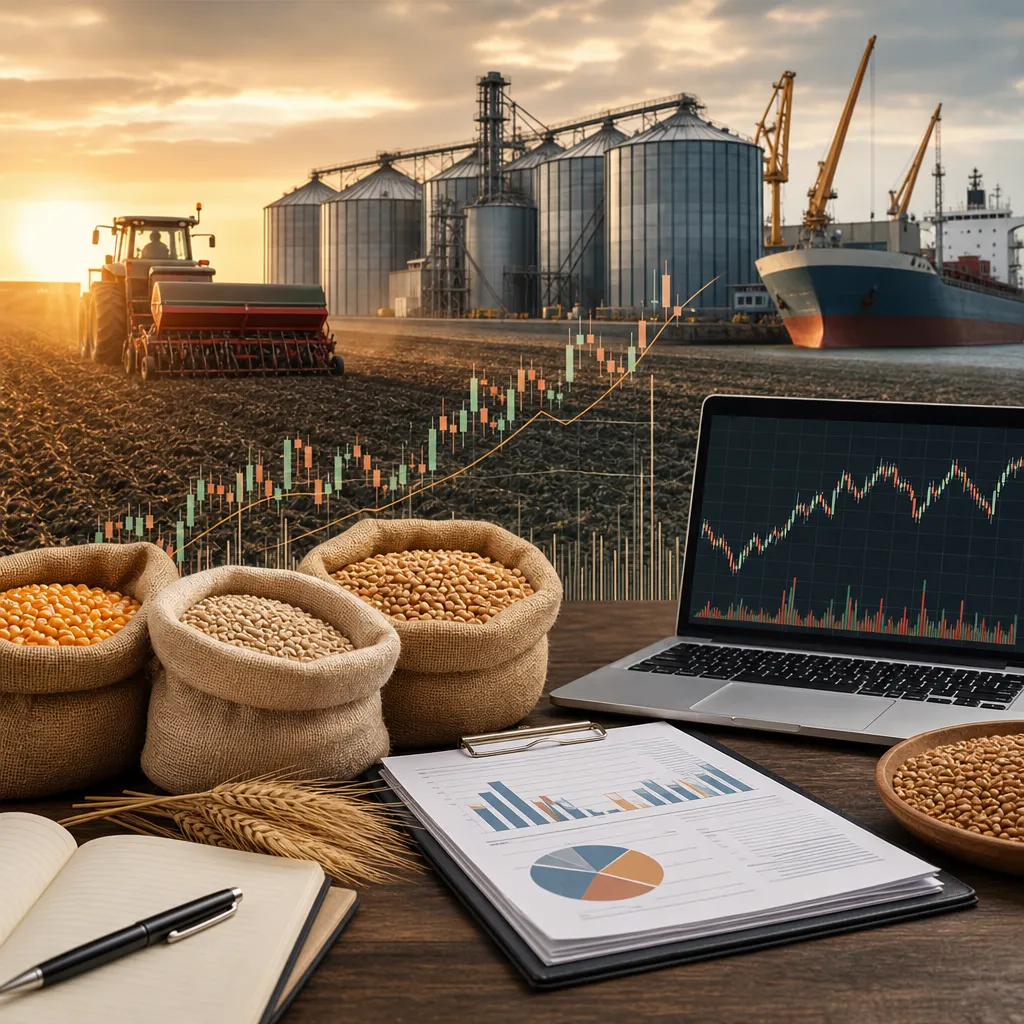
Grain prices during planting are driven less by what is already in the bin and more by what the market thinks will be harvested months later. At this stage, prices react quickly to acreage intentions, early weather, input costs, currency moves, and old-crop inventories, while local cash bids also reflect basis, freight, and elevator conditions. For farmers, merchandisers, and traders, the key is to separate exchange futures from physical cash prices and to know where each is quoted. Planting season is often when weather risk premium begins to build, but whether that premium becomes a sustained rally depends on acreage, crop condition, and demand.
In practice, planting-time grain pricing is observed in two markets at once. Futures trade on regulated exchanges such as CME Group for corn, soybeans, wheat and some related contracts, while physical grain is bought and sold through elevators, cooperatives, merchants, processors, exporters, and feed users. A farmer may see a futures market rise because of delayed planting, yet still receive a weaker local bid if storage is full, rail service is poor, or nearby end-user demand is soft.
Why planting season matters for grain prices
Planting is when production uncertainty becomes highly marketable. Before seed is in the ground, the market knows little about final acreage distribution, planting pace, emergence, and the chance of replanting. Small changes in expected planted area can materially change ending stocks, especially for crops with already tight balances.
For corn, soybeans, spring wheat, canola, sunflower seed, sorghum, barley, oats, and other row or small grains, planting season is also when the market starts comparing competing crop economics. If fertilizer is expensive, some acres may shift away from high-input crops. If soybean-to-corn price relationships favor soybeans, farmers and analysts may expect acreage switching. Those expectations can move futures before any actual yield outcome is known.
The strongest market reactions during planting usually come from:
- Acreage changes: fewer seeded acres can tighten future supply.
- Weather delays: excessive rain, cold soils, drought, or late snow can slow planting and raise risk.
- Old-crop stocks: low inventories make the market more sensitive to any threat to the next harvest.
- Demand resilience: strong exports, ethanol demand, crushing demand, or feed use can magnify planting risk.
- Logistics and currency: freight, port capacity, and exchange rates affect export competitiveness and local basis.
Where grain prices are quoted during planting
Readers should check three different price layers, because they answer different questions.
- Exchange futures prices: these are benchmark prices for standardized contracts. In the United States, major grain futures are listed by CME Group. These prices are used by hedgers, traders, analysts, and many elevators as a reference.
- Local cash bids: these are the actual prices a farmer may be offered at a nearby elevator, cooperative, processor, feed mill, or ethanol plant. They reflect futures plus or minus basis.
- Export or wholesale physical values: these include FOB port values, processor bids, merchant offers, or regional wholesale assessments used by exporters and commercial buyers.
Futures can be checked through the exchange itself, through brokerage platforms, and through commercial market-data providers. Local cash bids are usually checked directly on elevator or cooperative websites, in grain marketing apps, by phone with merchandisers, or through farm management and grain marketing software. Official market reporting agencies in some countries also publish regional cash prices, terminal values, or spot market summaries.
| Price type | Where to find it | What it represents | Main users |
|---|---|---|---|
| Futures price | Commodity exchange data, broker platform, market-data service | Standardized exchange-traded contract for a delivery month | Traders, hedgers, elevators, analysts |
| Local cash bid | Elevator, cooperative, processor, merchant website or direct quote | Actual nearby purchase price at a specific location and grade | Farmers, local buyers, feed users |
| Export physical value | Merchant desk, exporter quote, official market report | Port or vessel-oriented commercial value | Exporters, importers, traders, processors |
How planting affects futures and basis differently
During planting, futures often reflect broad weather and acreage risk, while basis reflects local supply chain conditions. This difference matters. A planting delay across a major producing region may lift new-crop futures, but if local elevators expect large old-crop movement or weak nearby demand, the basis may widen and reduce the local benefit.
Futures are most sensitive to national or international fundamentals: crop progress, drought maps, acreage reports, export pace, and macro risk. Basis is more local. It depends on transportation, storage congestion, processor demand, river levels, rail capacity, barge freight, and the urgency of nearby buyers.
For example, a corn grower might watch a December corn futures contract during planting, but the elevator bid for fall delivery is usually quoted as a futures month plus or minus basis. If futures rise because of delayed planting but harvest basis weakens because elevators expect heavy regional supply, the local forward contract price may not rise as much as the futures board suggests.
| Market element | What moves it during planting | Where it is used |
|---|---|---|
| Futures | Acreage expectations, national weather, stocks, export demand, macro sentiment | Hedging, trading, forward pricing reference |
| Basis | Local supply, freight, storage space, processor needs, river and rail conditions | Cash contracts, elevator bids, physical merchandising |
| Cash price | Combined result of futures and basis | Actual physical sale or purchase |
Which reports matter most during planting
Planting markets are heavily report-driven. The most watched public sources in the United States are published by USDA. Market participants use them to update acreage expectations, crop condition assumptions, and global balance sheets.
- USDA Crop Progress: shows planting pace and early crop condition by state. It is essential for comparing actual field progress with the normal pace.
- USDA Prospective Plantings: provides survey-based acreage intentions before planting is complete. It can shift new-crop futures sharply.
- USDA WASDE: the World Agricultural Supply and Demand Estimates report updates supply, use, trade, and ending stocks for major crops. During planting, it helps traders frame how sensitive the market is to production risk.
- USDA Export Sales: important when export demand is a major price driver, especially for soybeans, corn, and wheat.
- CFTC Commitments of Traders: shows how futures and options market participants are positioned. It does not predict direction by itself, but it helps explain whether the market is already heavily long or short.
- CME contract data: volume, open interest, and contract specifications help traders interpret which delivery months are most actively priced.
Outside the United States, readers should also check national agricultural ministries, crop agencies, and statistical offices, especially in major exporting regions. For global context, FAO and national customs or trade databases can help show import demand and export competition, although they are usually slower than exchange price action.
How farmers and buyers use planting-time prices in practice
Planting season is when many physical participants start pricing a portion of expected new-crop production or expected procurement needs. This does not require speculative trading. It often means using ordinary commercial contracts with an elevator, cooperative, processor, or merchant.
For farmers selling grain
Common tools include:
- Forward cash contracts: lock a delivered cash price for future delivery. These are arranged with a grain buyer, usually online, by phone, or at a local office.
- Hedge-to-arrive contracts: lock the futures component while leaving basis to be set later, if offered by the buyer.
- Basis contracts: lock basis now and price futures later, if local basis is attractive.
- Futures hedges: sell futures through a regulated futures broker to offset downside price risk. This requires a brokerage account and margin management.
- Options: buying put options can create a price floor while keeping upside open, but option premiums are a real cost.
For buyers such as mills, feed companies, or processors
Buyers may use forward purchase contracts, exchange hedges, or basis ownership strategies to secure supply. During planting, they watch whether weather risk is affecting futures more quickly than local basis. A processor may hedge futures on CME while negotiating physical premiums or basis with suppliers in its draw area.
Physical trade usually includes detailed terms: delivery window, grade, moisture, test weight, foreign material limits, protein if relevant, freight responsibility, scale location, and payment timing. Those terms matter as much as headline price.
Where trading happens: exchange, broker, elevator, or merchant
It is important to distinguish financial trading from physical grain commerce.
Exchange futures and options trading normally takes place through a regulated futures exchange and a licensed broker or futures commission merchant. The trader does not need to own grain, but must maintain margin and understand contract size, expiry, daily mark-to-market, and delivery rules. Many participants close or roll contracts before delivery notice periods, because they are managing price risk rather than shipping grain.
Physical grain buying and selling usually happens through country elevators, agricultural cooperatives, grain merchants, processors, feed manufacturers, mills, crushers, exporters, and sometimes brokers who arrange off-exchange deals. The transaction is tied to an actual lot of grain at a physical location. The buyer will care about quantity, quality, origin, loading capabilities, timing, and freight.
Online tools can support both markets, but they are not the same thing. A broker platform gives access to futures and options. An elevator bid app shows local bids. A grain merchant portal may allow contract initiation or settlement. A market-data terminal aggregates quotes and charts but does not necessarily allow physical sale. A warehouse receipt system, where available, can document stored grain ownership, but it is not a futures position.
Risks, costs, and limitations during planting
Planting-season marketing decisions are difficult because production is still uncertain. Pricing too much too early can create delivery stress if acreage falls or yields disappoint. Pricing too little can leave the operation exposed if weather improves and prices fall back after a spring rally.
Main risks include:
- Production risk: a seller may hedge or contract grain that is not ultimately produced.
- Basis risk: futures and local cash markets do not move perfectly together.
- Margin risk: exchange hedges can require cash variation margin even when the physical crop value is improving.
- Counterparty risk: in physical trade, payment reliability and contract performance matter.
- Quality risk: grain that does not meet grade can be discounted or rejected.
- Logistics risk: freight bottlenecks, delivery lineups, or storage shortages can reduce realized price.
Before using any pricing tool, participants should check contract terms, delivery point, quantity tolerance, cancellation provisions, quality discounts, and whether storage or drying charges may apply. Those details are especially important when weather disrupts planting and harvest timing later in the season.
Practical workflow for checking grain prices during planting
A disciplined approach usually works better than reacting to every weather headline.
- Check the relevant new-crop futures month for the crop being planted.
- Compare local bids from nearby elevators, processors, cooperatives, or merchants.
- Calculate basis to see whether the local market is strengthening or weakening relative to futures.
- Read the latest USDA Crop Progress and acreage-related reports to separate rumor from reported field conditions.
- Watch weather, but also old-crop stocks and demand, because planting delays matter more when inventories are tight.
- Choose the right pricing tool: cash contract, basis contract, hedge-to-arrive, futures hedge, or options strategy.
- Review delivery obligations carefully if selling expected production before the crop is established.
For analysts and traders, it is also useful to compare planting progress with historical pace, monitor open interest in new-crop contracts, and track spreads between old-crop and new-crop futures. Inverse or carry structure can reveal how urgently the market values nearby supply versus future production.
FAQ
Where can I check grain prices during planting?
Check exchange futures through CME Group data or a broker platform, and check actual local cash bids directly from elevators, cooperatives, processors, or grain merchants. Official agricultural market reporting services may also publish regional cash values.
Is the futures price the same as the price a farmer receives?
No. The futures price is a benchmark for a standardized contract. The farmer’s actual price is usually the local cash bid, which equals futures plus or minus basis and can also reflect quality and freight.
What grain contract month should I watch during planting?
Usually the new-crop delivery month is most relevant for pricing expected production, but the correct month depends on the crop and local marketing practice. Elevators and brokers normally indicate which futures month they are using as the pricing reference.
Can planting delays raise prices even if no crop loss is confirmed?
Yes. Markets price risk and uncertainty before final production is known. Delayed planting can support futures because it raises the chance of lower acreage, lower yield, or late-season weather exposure.
Where do physical grain sales actually take place?
Most physical transactions occur with local elevators, cooperatives, merchants, processors, mills, feed companies, and exporters. They may be negotiated by phone, through a merchandiser, on a buyer portal, or at a grain facility, but they are tied to physical delivery terms.
What is the main difference between hedging and speculation during planting?
Hedging offsets risk in grain the participant expects to produce, own, or buy physically. Speculation takes a market position without that underlying exposure. Both may use the same futures market, but the purpose and risk management approach are different.
Which reports are most important in planting season?
USDA Crop Progress, USDA Prospective Plantings, USDA WASDE, USDA Export Sales, and CFTC Commitments of Traders are among the most useful regular references for U.S.-focused grain markets.
Should storage decisions matter during planting?
Yes. Expected storage availability, harvest space, and carrying charges influence basis and forward bids. If storage is likely to be tight later, local buyers may structure new-crop bids differently even during planting.
Sources
- USDA National Agricultural Statistics Service
- USDA World Agricultural Outlook Board, World Agricultural Supply and Demand Estimates
- CME Group