









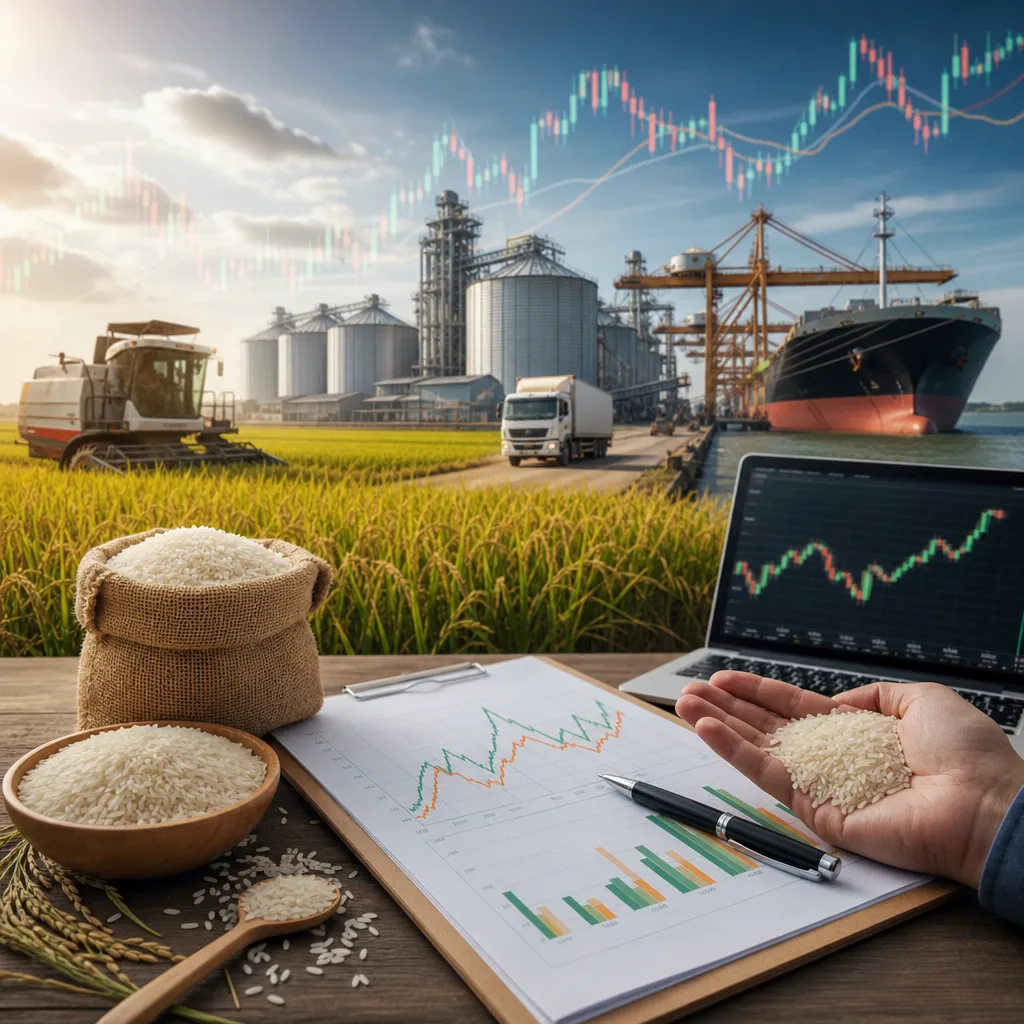
Rice prices do follow seasonal patterns, but those patterns are not as simple or as stable as many people assume. In most rice markets, prices are influenced by the timing of planting, harvest, storage capacity, milling demand, export programs, government policy, and weather risk, so the seasonal tendency is best treated as a framework rather than a rule. In practice, the most common pattern is harvest pressure followed by firmer prices later in the marketing year if supplies tighten, but the exact timing differs by country, crop cycle, and whether the market being discussed is rough rice futures, milled rice, export quotations, or local farm cash bids. To use seasonal analysis well, readers need to know where prices are quoted, how local cash markets differ from exchange prices, and which reports and physical market signals confirm whether a seasonal pattern is actually developing.
What seasonal rice price patterns usually mean
A seasonal price pattern is the tendency for prices to strengthen or weaken at certain times of year because supply and demand conditions repeat. In rice, these patterns often reflect when a crop is harvested, when it is moved into storage, when mills and exporters become active, and when domestic or international buyers step up coverage.
In a typical producing region, harvest increases nearby physical supply. Elevators, mills, merchants, and exporters may all receive larger volumes at the same time, which can pressure local cash bids if storage is limited or if buyers are already well covered. Later in the season, prices may recover if farmers hold back stocks, export demand improves, or quality rice becomes scarcer.
That said, rice is less globally uniform than corn or soybeans. Different countries grow different classes and qualities, harvest on different calendars, and trade under different policy frameworks. A seasonal pattern in U.S. rough rice may not match export pricing in Asia, and neither necessarily matches the price a farmer receives from a local mill.
How seasonality works in rice markets
The basic mechanism is straightforward: supply becomes most visible when harvest starts, while demand is spread across the year. If many sellers come to market at once, nearby prices often soften. If inventory is later drawn down and replacement supplies are not immediate, prices often strengthen.
Several moving parts determine whether this pattern is weak or strong:
- Harvest concentration: The shorter and larger the harvest window, the greater the potential for harvest pressure.
- Storage availability: If farmers, cooperatives, mills, or warehouses can store rice, they may avoid forced selling at harvest.
- Drying and milling capacity: Bottlenecks can widen discounts for wet, high-moisture, or lower-quality grain during peak intake periods.
- Export timing: Large tenders or government purchases can tighten supplies even near harvest.
- Policy intervention: Minimum support programs, import controls, or export restrictions can disrupt normal seasonal movement.
- Weather and quality: A crop can be big but lower quality, which may pressure one segment and support another.
For traders and commercial buyers, seasonal patterns are most useful when they are compared with basis behavior, stocks, freight, milling yields, and export pace. A chart showing average monthly movements is only a starting point.
| Seasonal factor | Typical effect on price | Why it happens |
|---|---|---|
| Harvest arrival | Often bearish nearby | Physical supply increases quickly and buyers may widen discounts if intake is heavy |
| Post-harvest storage | Can support prices later | Marketed supply tightens if growers or merchants hold inventory |
| Export demand cycle | Can override local seasonality | Government tenders, import demand, and freight shifts can rapidly change buying interest |
| Weather during growing season | Often bullish if yield or quality risk rises | Expected future supply falls even before harvest begins |
| Policy changes | Can sharply distort normal pattern | Tariffs, quotas, support buying, or export restrictions alter trade flows and local pricing |
Where rice prices are quoted and how to interpret them
Readers should separate three different things: exchange-traded prices, export quotations, and local physical cash prices.
Exchange prices
In the United States, rough rice futures are listed on CME Group. These are standardized futures contracts used by hedgers and speculators. They are not the same as the exact cash price a farmer receives at a local elevator or mill. Futures reflect a deliverable exchange contract with specific terms, while a farm cash transaction depends on location, quality, timing, and basis.
Futures are normally accessed through a regulated futures broker. A trader needs a brokerage account, must post margin, and faces leverage and mark-to-market risk. Financial trading on an exchange is different from buying truckloads or vessel cargoes of physical rice.
Local cash bids
Farm-level cash prices are usually checked through local elevators, cooperatives, mills, grain merchants, or rice buyers. In many producing regions, bids may be posted online, sent through text or farm marketing apps, or quoted directly by merchandisers. These bids often reference a basis over or under futures where a futures market is relevant, but in many regions cash rice is priced directly from local supply-demand conditions without a transparent exchange benchmark.
A local bid may include adjustments for:
- grade and quality,
- moisture,
- foreign material,
- milling yield,
- delivery point,
- freight responsibility,
- payment terms.
Export and wholesale quotations
International rice trade is often discussed through export quotations for specific origins and grades, such as milled white rice or parboiled rice. These are closer to merchant or exporter offers than to farmgate prices. They are useful for global trade analysis, but they should not be confused with a producer cash bid in an inland market.
How farmers, buyers, and traders actually use seasonal patterns
Seasonality is usually applied in one of four ways: marketing physical grain, planning storage, timing procurement, and structuring hedges.
For farmers and cooperatives
Growers and cooperatives often compare expected harvest pressure with available drying and storage. If local bids tend to weaken during harvest and strengthen later, storing rice may improve returns. But that only works if storage costs, shrink, interest, and quality risk are lower than the expected price improvement.
In practice, a farmer may:
- Check local harvest-time bids from mills, elevators, or cooperatives.
- Compare those bids with deferred delivery contracts if offered.
- Estimate on-farm or commercial storage cost.
- Monitor basis, quality spreads, and futures if relevant.
- Decide whether to sell at harvest, store unpriced, or use a hedge.
For mills, exporters, and feed users
Commercial buyers use seasonality to plan coverage. A mill may buy more aggressively when harvest pressure improves offers, then reduce spot buying later. Exporters may book stocks when inland movement is heavy and basis is weak, but they also watch ports, logistics, vessel lineups, and international competitor pricing.
For futures and options traders
Speculators may study historical seasonal charts in rough rice futures, but they still need to confirm whether current fundamentals support the pattern. Tight old-crop stocks, weather stress, or policy news can easily overwhelm average seasonality. Options may be used to express a view with defined premium risk, but they still involve volatility, time decay, and liquidity considerations.
Storage, quality, and basis: the practical side of seasonality
Rice seasonality is inseparable from storage and quality. A post-harvest recovery in price is only economically meaningful if the stored rice maintains value and can be sold into a market that recognizes its quality.
Physical rice may be stored on farm, at a cooperative, in a commercial warehouse, or within a merchant or milling system. The exact arrangement differs by country. Some sellers deliver at harvest and use a delayed pricing arrangement if available; others store independently and sell later. Before choosing storage, market participants normally check:
- drying requirements and cost,
- warehouse fees or handling charges,
- insurance responsibility,
- quality preservation risk,
- inspection or grading rules,
- who holds title during storage,
- when payment is made.
Basis matters as much as futures direction. A futures market can rise while a local basis weakens because freight becomes expensive, mills slow purchases, or quality discounts widen. Conversely, a flat futures market can still produce better local cash prices if basis improves after harvest movement slows.
| Market layer | Where it exists | Who uses it | Main caution |
|---|---|---|---|
| Futures market | Regulated exchange such as CME Group | Hedgers, merchants, funds, speculators | Not the same as a local farm cash bid |
| Local cash market | Elevators, mills, cooperatives, merchants, processors | Farmers, local buyers, commercial users | Price depends on basis, quality, and delivery terms |
| Export market | Merchant offers, tenders, port trade | Exporters, importers, trade houses, governments | Quoted values may not translate directly to inland values |
| Storage market | On-farm bins, warehouses, cooperative storage | Growers, merchants, processors | Carrying cost and quality risk can offset seasonal gains |
Which reports and data sources help confirm seasonal moves
Good seasonal analysis uses data, not only charts. The most relevant public sources depend on region, but several recurring categories matter.
USDA reports
For U.S. rice, USDA provides core information through reports such as WASDE, Rice Outlook, Crop Progress, Acreage, Grain Stocks, and export-related data. These reports help users test whether a normal seasonal tendency is being reinforced or contradicted by changing fundamentals. Analysts use them to track planted area, production prospects, ending stocks, export pace, and domestic use.
CME Group market data
CME Group provides contract specifications, settlement information, and futures market reference data for rough rice. This is where traders verify the contract being discussed, contract months, and standardized delivery framework. It is essential for anyone using futures seasonality rather than just physical market timing.
CFTC positioning data
The U.S. Commodity Futures Trading Commission publishes Commitments of Traders data for many futures markets. When available and relevant, positioning trends can show whether speculative participation is crowded or light, which may affect how seasonal tendencies play out.
International and national agencies
For world rice trade, FAO and national agriculture ministries or statistical agencies can help track production, consumption, and policy developments. In many countries, customs statistics, trade ministries, or official grain market information systems also provide import and export data that clarify whether international demand is likely to support prices after harvest.
Commercial data vendors and farm software providers may add charting, basis tracking, alerts, or historical seasonal tools. Those tools can be useful, but the user still needs to know whether they are showing futures, export offers, or local cash transactions.
Limits of seasonal analysis in rice
Seasonality is most reliable when the market structure is stable. Rice often is not. Government procurement, export restrictions, currency swings, or sudden weather damage can disrupt the expected pattern very quickly.
Common reasons the normal pattern fails include:
- a smaller-than-expected crop,
- quality problems that reduce usable supply,
- unexpected export demand,
- import policy changes in key consuming countries,
- currency shifts that alter competitiveness,
- logistics disruption at ports or inland transport routes,
- changes in competing grain prices that affect feed or acreage decisions.
This is why seasonal charts should be paired with current-market evidence. If basis is firm during harvest, exporters are bidding aggressively, and crop problems are reducing milling quality, a typical harvest low may be shallow or absent.
How to apply seasonal rice patterns in real decisions
A practical workflow is more useful than a broad seasonal opinion.
- Identify the market: U.S. rough rice futures, a local cash bid, a mill buying price, or an export quotation are different markets.
- Pull historical timing: Compare average monthly or weekly price tendencies for the same market and contract, not mixed series.
- Check current fundamentals: Use crop, stocks, and trade reports to see whether supply-demand conditions support the pattern.
- Measure basis and quality: Local cash decisions should include delivery point, grade, milling yield, and freight.
- Calculate carrying cost: Storage, financing, shrink, and handling must be smaller than the expected seasonal gain.
- Choose the tool: Cash sale, storage, forward contract, hedge, or options strategy each solves a different problem.
- Review execution risk: Counterparty terms, margin requirements, contract expiries, and delivery obligations all matter.
For physical sellers, the most common mistake is assuming that a historically stronger off-harvest period guarantees a better net price. For futures traders, the most common mistake is treating seasonality as sufficient on its own without regard to supply, policy, or liquidity.
Where can I check current rice prices?
For exchange-traded U.S. rough rice, check CME Group market data or a regulated futures broker platform. For local farm or processor prices, check bids from nearby elevators, mills, cooperatives, or grain merchants. For international trade values, use official market reports, exporter quotations, and trade reporting services. These are different price layers, so they should not be compared without adjusting for location and quality.
Are rice futures the same as the cash price paid to farmers?
No. Futures are standardized exchange contracts, while a farmer cash price depends on basis, quality, moisture, delivery point, timing, and local demand. A futures rally does not automatically mean a local cash bid rises by the same amount.
When do rice prices usually bottom seasonally?
They often weaken around peak harvest movement, but there is no universal date. Timing varies by region, crop calendar, and whether the market is domestic cash rice, export rice, or rough rice futures. Weather, export demand, and policy can also cancel the usual pattern.
How do farmers use seasonal patterns without trading futures?
They often compare harvest bids with stored or deferred-delivery opportunities from local buyers. The decision normally involves checking storage costs, expected basis changes, drying needs, quality risk, and payment terms from elevators, cooperatives, mills, or merchants.
Where does physical rice buying and selling usually take place?
Physical rice is commonly bought and sold through elevators, cooperatives, merchants, mills, processors, exporters, brokers, and direct contracts between commercial counterparties. Transactions are structured around quality, quantity, delivery point, freight, inspection, and payment terms rather than only a screen price.
Can seasonal analysis be used for hedging?
Yes, but it should be paired with basis analysis and crop fundamentals. A hedge using futures or options is accessed through a futures broker and involves margin or premium cost. Hedging reduces some price risk, but it does not remove basis risk or storage risk.
What reports matter most for rice seasonality?
For the U.S., USDA reports such as WASDE, Rice Outlook, Acreage, Crop Progress, Grain Stocks, and export data are central. For futures activity, CME Group contract information is important. For international context, FAO and national agricultural or trade agencies help track production, trade, and policy changes.
What is the biggest mistake in reading seasonal rice charts?
The biggest mistake is assuming the average historical pattern will repeat regardless of current conditions. Seasonal tendencies are only one input; they can be overwhelmed by weather damage, quality issues, freight bottlenecks, export tenders, or government intervention.
Sources
- USDA Economic Research Service and USDA Foreign Agricultural Service rice market publications
- CME Group rough rice contract specifications and market data
- FAO Rice Market Monitor