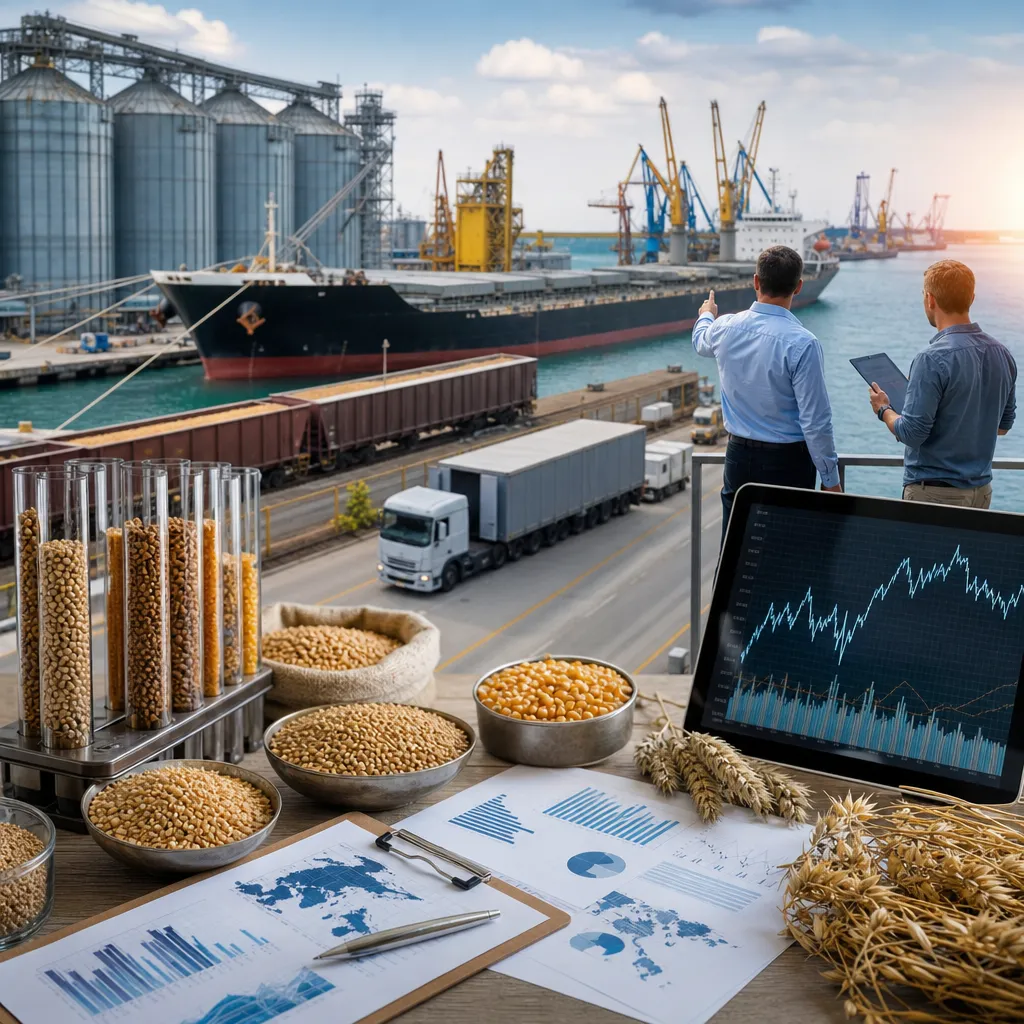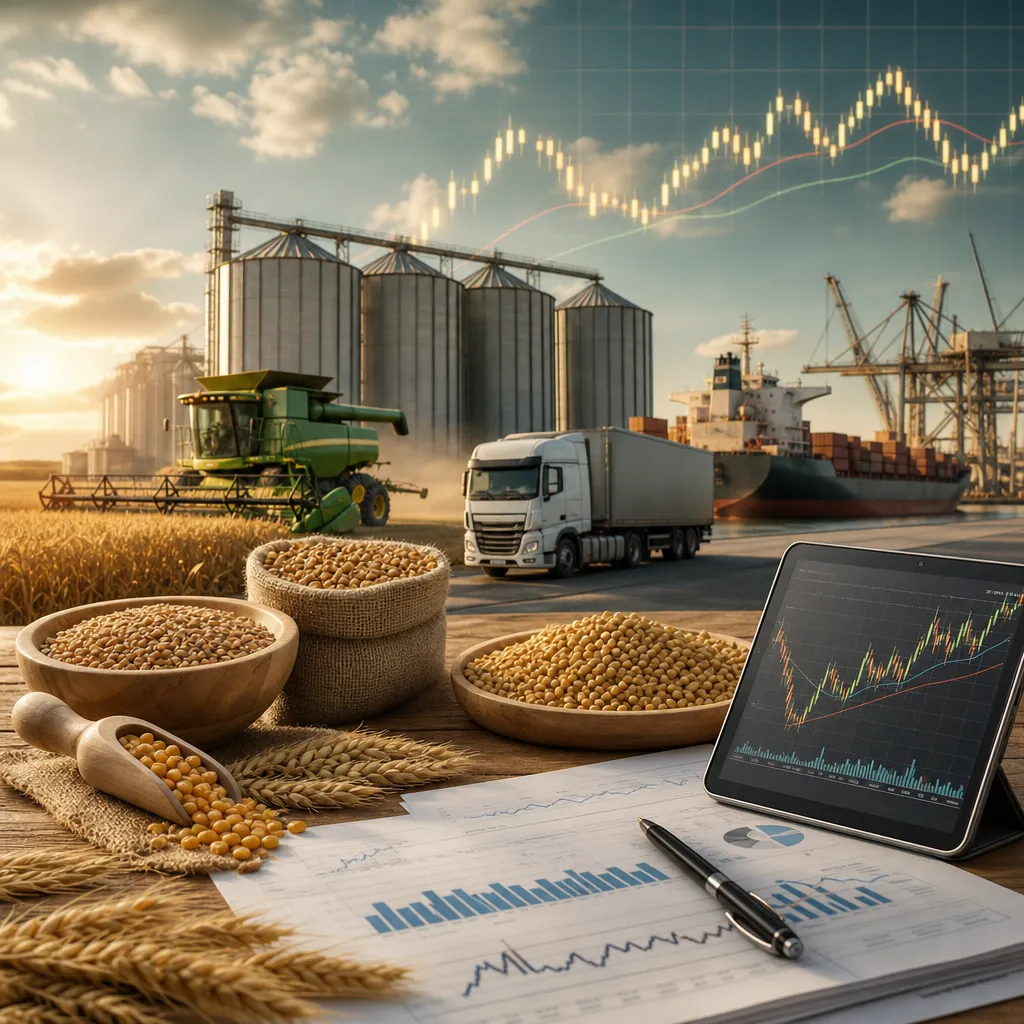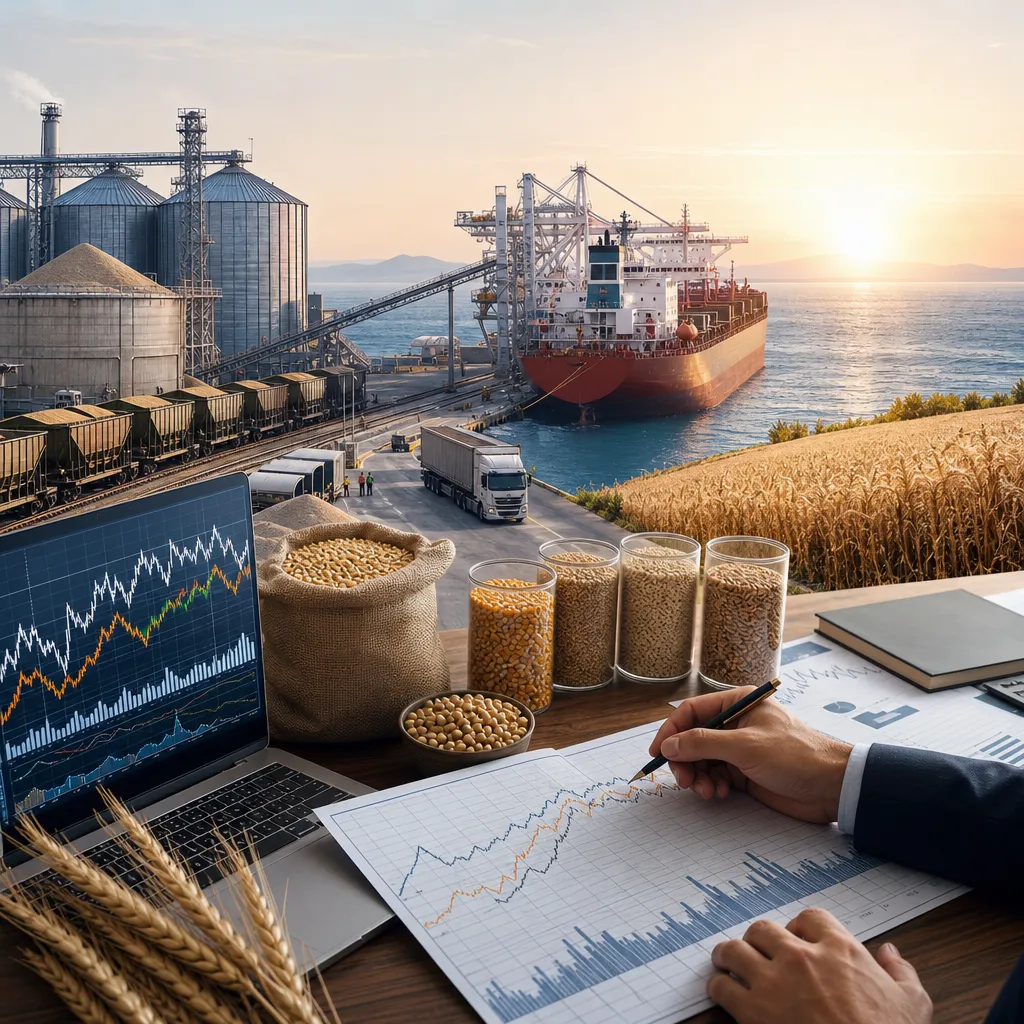
Grain prices often weaken after harvest because supply arrives all at once, elevators fill, and buyers gain more negotiating power in the nearby cash market. That pattern is common in wheat, corn, soybeans, barley, rice, sorghum, canola, and other grains, but it is not automatic: prices can also stay firm or rise after harvest if yields disappoint, quality is poor, exports are strong, or weather threatens the next crop. The key is to separate futures prices from local cash prices, because the post-harvest move farmers and buyers actually feel is usually driven by basis, storage pressure, freight, and local demand as much as by the exchange. To understand grain prices after harvest, a reader needs to know where prices are quoted, who is buying physical grain, how storage changes the market, and which reports and tools help confirm whether weakness is seasonal or fundamental.
Why grain prices often fall after harvest
After harvest, the physical market usually faces its largest seasonal increase in available supply. Farmers sell grain to generate cash flow, repay operating loans, free up on-farm space, and reduce quality risk. Elevators, cooperatives, processors, and exporters may lower nearby bids if they are already covered or if receiving capacity is tight.
This effect is most visible in the cash market. A local elevator bid can drop even if the futures market is stable, simply because the elevator is congested, basis weakens, or freight costs rise. In other cases, futures also decline after harvest because national or global production turns out larger than expected.
Common reasons for post-harvest price pressure include:
- Large seasonal movement of grain into commercial channels
- Limited storage space at elevators or export terminals
- Weaker basis as buyers do not need to bid aggressively
- Confirmation of better-than-expected yields in crop reports
- Slower export demand or weak processor margins
- Falling freight availability or logistics bottlenecks
However, prices do not always decline. If harvest reveals low protein wheat, damaged corn, tight oilseed supplies, or lower-than-expected national yields, nearby buyers may bid up for quality or immediate delivery. That is why “prices after harvest” should always be analyzed at both the exchange and local physical level.
Futures price versus local cash price
The most important practical distinction is this: a futures quote is not the same as the price a farmer receives locally. Futures are standardized contracts traded on commodity exchanges. Cash prices are physical grain bids made by buyers at a specific location for a specific quality and delivery period.
For example, corn or wheat futures may be quoted on CME Group in cents per bushel, while a local elevator posts a cash bid that reflects the futures month plus or minus basis. Basis is the difference between the local cash price and the relevant futures contract. After harvest, basis often becomes more negative because local supply is abundant.
| Market type | What price represents | Where it is checked | Who uses it |
|---|---|---|---|
| Futures market | Standardized exchange-traded contract for a delivery month | Exchange websites, broker platforms, market-data services | Traders, hedgers, merchandisers, analysts |
| Local cash market | Actual physical bid at a specific location and quality | Elevator bid sheets, cooperative apps, merchant quotes, local market reports | Farmers, feed mills, processors, local buyers |
| Forward cash contract | Negotiated physical sale for future delivery | Directly with elevator, cooperative, merchant, or processor | Farmers and commercial grain buyers |
| Basis contract or hedge-related contract | One component of price fixed separately from futures or cash timing | Through grain merchandisers or elevator contracting programs | Producers and commercial hedgers |
In practice, farmers normally check local bids from nearby elevators, cooperatives, ethanol plants, feed mills, crushers, flour mills, maltsters, rice mills, or export houses depending on the crop. Traders and analysts also watch futures spreads, basis maps, and port bids to judge whether post-harvest weakness is likely to persist.
Where grain prices are quoted and how to check them
If you want to know grain prices after harvest, you usually need two sets of information at the same time: the exchange market and the local physical market.
Online futures and benchmark prices
For major internationally traded grains and oilseeds, futures prices are commonly checked through exchange and brokerage data. Relevant venues may include CME Group for corn, wheat, soybeans, soybean products, oats, and other contracts, and ICE Futures Europe or ICE Canada for some oilseed-related benchmarks depending on the product and region. These quotes are standardized and are mainly used for price discovery, hedging, and trading.
Broker platforms, commercial market-data terminals, and exchange websites normally show:
- Contract month
- Unit of trade, such as bushels or metric tons
- Currency
- Last traded price, high, low, and settlement
- Volume and open interest
These are not physical farmgate bids. A person who wants to trade them usually needs a futures brokerage account, not a grain delivery contract.
Local cash bids and physical market prices
Cash bids are usually found through local elevators, cooperatives, grain merchants, processors, millers, feed manufacturers, crushers, exporters, and agricultural market reporting services. Many buyers publish daily or intraday bids on their websites or mobile apps. In some regions, official market news services or government agencies report spot bids, terminal prices, and export values.
When comparing bids, check:
- Delivery location
- Crop year
- Moisture and grade assumptions
- Protein, oil, test weight, or damage discounts if relevant
- Whether freight is included or deducted
- Payment timing
- Storage or drying charges
For export-oriented markets, port bids and FOB values may matter more than interior cash bids. But inland sellers still need to net back freight, handling, and quality adjustments before estimating what they can actually receive.
How storage affects grain prices after harvest
Storage is one of the main reasons post-harvest pricing is a commercial decision, not just a market opinion. A farmer or merchant may choose to sell at harvest, store unpriced grain, hedge and store, or lock in a basis or forward contract. Each choice has different risks and costs.
The logic behind storage is simple: if harvest pressure weakens prices temporarily, holding grain for later sale may capture stronger basis or seasonal futures improvement. But storage only makes sense if the expected improvement covers the cost and risk of storing the grain.
Main storage costs and risks include:
- Interest on the value of grain not yet sold
- Commercial storage fees or on-farm storage costs
- Aeration, drying, and handling expense
- Weight loss or shrink
- Quality deterioration, insects, mold, or spoilage
- Price decline while grain is in storage
- Basis risk if local demand weakens further
| Storage choice | How it works | Main advantage | Main limitation |
|---|---|---|---|
| On-farm storage | Grain is held in farm bins for later sale | Marketing flexibility and harvest logistics relief | Requires management, monitoring, and capital |
| Commercial elevator storage | Grain delivered to elevator and stored under commercial terms | Reduces on-farm handling burden | Storage and service charges can accumulate |
| Delayed pricing or related programs | Physical grain delivered, final price fixed later under provider terms | Can ease harvest movement | Counterparty terms and fees must be reviewed carefully |
| Hedge and store | Physical grain stored while futures risk is reduced with hedging | Separates flat-price risk from basis opportunity | Needs brokerage access, margin capacity, and basis discipline |
How buyers, elevators, and traders operate after harvest
In the physical market, grain rarely moves directly from field to final consumer. It usually passes through a chain of intermediaries. After harvest, this chain becomes especially important because handling capacity and logistics can be more valuable than the headline market price.
Typical participants include:
- Farmers selling to local buyers or storing grain
- Elevators and cooperatives receiving, grading, blending, storing, and reselling
- Merchants buying for domestic use or export channels
- Processors such as millers, crushers, ethanol plants, maltsters, and feed manufacturers
- Exporters moving grain to port positions and vessel programs
- Brokers arranging physical transactions between commercial counterparties in some markets
A physical grain sale commonly involves these steps:
- Buyer posts a bid or negotiates a purchase basis and delivery window.
- Seller confirms quantity, crop, grade, moisture, and delivery point.
- Grain is delivered to elevator, processor, warehouse, or terminal.
- Weight, inspection, and quality tests determine final settlement.
- Discounts or premiums are applied for moisture, protein, damage, oil, or other contract terms.
- Payment is made according to contract timing and local regulation.
After harvest, congestion can create large differences between nearby delivery points. A stronger bid at a distant processor may not be better once freight, waiting time, drying terms, and quality exposure are included.
Reports and data that matter after harvest
Post-harvest pricing is heavily influenced by official and exchange-based information. The most useful reports are those that clarify how large the crop really is, how fast it is moving, and whether demand is absorbing supply.
Important data sources often include:
- USDA WASDE for balance sheets, production, exports, imports, ending stocks, and global supply-and-demand context
- USDA Crop Production for yield and production estimates
- USDA Crop Progress during harvest for pace and condition updates
- USDA Export Sales for weekly export demand signals
- CFTC Commitments of Traders for futures and options positioning by broad trader category
- CME Group contract data for futures settlements, spreads, volume, and open interest
- FAO and national agriculture ministries or statistical agencies for global and country-specific production and trade context
Analysts use these reports to test whether harvest weakness is temporary or justified by surplus. For example, if harvest pressure is heavy but export demand is accelerating and ending stocks are tightening, the market may recover sooner than usual. If production is revised upward and demand is flat, weakness may last longer.
Futures, options, and hedging after harvest
Many participants manage post-harvest risk with futures or options, but these tools are not the same as buying or selling physical grain. Futures and options are financial contracts traded on regulated exchanges through licensed brokers or futures commission merchants. Physical grain is bought and sold through elevators, merchants, processors, cooperatives, and exporters.
Futures hedging is commonly used by farmers, elevators, feed buyers, millers, crushers, and merchants to reduce exposure to flat-price moves. A seller who stores grain after harvest may sell futures to protect against a market decline, then later sell the physical grain and offset the hedge. A buyer may use futures in the opposite direction to protect against rising prices.
Options can also be used to manage risk with limited but not zero cost, typically through the premium paid. They are often chosen when a hedger wants protection while retaining more upside flexibility than a straight futures hedge provides.
Key cautions:
- Futures require margin and can create cash-flow stress if the market moves against the position
- Hedging does not eliminate basis risk
- Contract expiry and delivery rules matter
- Options reduce some risks but involve premium cost and time decay
- Speculation is not the same as commercial hedging
If someone wants to trade these instruments, they normally need a futures broker and a regulated trading account. If someone wants to move physical grain, they need a commercial grain buyer or seller relationship, logistics, and quality terms.
What actually determines whether prices recover after harvest
Post-harvest recovery usually depends on whether supply pressure fades faster than demand weakens. The market watches several drivers at the same time.
| Driver | Typical effect after harvest | How to monitor it |
|---|---|---|
| Yield and production size | Large crops usually pressure prices; small crops can support them | Crop production reports, harvest results, trade estimates |
| Quality | Poor quality can weaken average prices but support premium grades | Elevator discount schedules, inspection data, milling or feed demand |
| Basis and storage capacity | Tight space often weakens harvest bids; later recovery can improve cash prices | Local bids, terminal bids, elevator communication, basis maps |
| Exports and domestic demand | Strong offtake helps absorb harvest supply | Export sales, port lineups, crusher or mill demand, feed usage indicators |
| Weather for the next crop | Threats to the next planting or growing season can support deferred prices | Weather models, crop progress, moisture conditions |
| Currency, energy, and freight | Affects export competitiveness and net cash value | FX markets, fuel prices, freight conditions, export basis |
This is why forecasts must be treated as scenarios, not certainties. A large harvest may already be priced in before combines roll. Conversely, a harvest rally can fail if storage is expensive and export demand stalls.
Practical ways to use post-harvest price information
Farmers, buyers, and traders use post-harvest pricing differently, but the practical workflow is similar: compare benchmark prices, local bids, quality terms, logistics, and storage economics before making a decision.
Useful steps include:
- Check the relevant futures contract month for the crop and delivery season.
- Collect multiple local bids from elevators, cooperatives, processors, or merchants.
- Separate the bid into futures component and basis if available.
- Review quality discounts, drying terms, and freight deductions.
- Calculate the full cost of storing grain, including interest and quality risk.
- Monitor official reports such as WASDE, crop production, and export sales.
- Decide whether the opportunity is in basis improvement, futures recovery, or immediate cash flow.
Common mistakes after harvest include comparing bids from different delivery periods, ignoring quality discounts, storing grain without an exit plan, watching futures but not basis, and treating online quote screens as if they were executable local cash bids.
Where can I check grain prices after harvest?
You normally check futures on exchange-related or broker data platforms, and local cash bids through grain elevators, cooperatives, processors, merchants, and official market reporting services. For an actionable selling price, local cash bids matter more than the exchange quote alone.
Why is my local grain bid lower than the futures price?
The difference is basis. Local bids reflect freight, storage pressure, quality, buyer demand, and handling costs. After harvest, basis often weakens because grain supply is concentrated in a short period.
Can I sell grain online at the futures price?
Not usually in the physical sense. Futures trading is a financial market accessed through a broker, while physical grain sales happen through buyers such as elevators, processors, and merchants. A farmer may use futures for hedging, but still needs a separate physical sale.
Is it always better to store grain after harvest?
No. Storage only helps if expected price or basis improvement exceeds all storage costs and risks. Spoilage, margin pressure on hedges, weak demand, or large carry costs can make immediate sale the better option.
Which reports are most useful for post-harvest grain pricing?
USDA WASDE, USDA Crop Production, USDA Export Sales, USDA Crop Progress, CFTC Commitments of Traders, and exchange contract data are among the most widely used sources. In non-US markets, national agriculture ministries and official statistics agencies are also important.
Who usually buys grain after harvest?
Typical buyers include local elevators, cooperatives, feed mills, flour mills, crushers, ethanol plants, maltsters, rice mills, grain merchants, and exporters. The best buyer depends on crop, quality, location, and freight economics.
How do quality issues affect prices after harvest?
Quality can change the price materially through discounts or premiums for moisture, protein, test weight, damage, oil content, or contamination. In some years, poor overall quality depresses average prices while premium-quality lots become more valuable.
What is the main risk of hedging grain after harvest?
Hedging reduces flat-price risk but does not remove basis risk, and futures positions require margin. A hedger can still face weaker local basis, quality problems, or cash-flow pressure if exchange prices move against the hedge before the physical sale is completed.
Sources
- USDA World Agricultural Supply and Demand Estimates
- CME Group Agricultural Products and Futures Contract Specifications
- CFTC Commitments of Traders