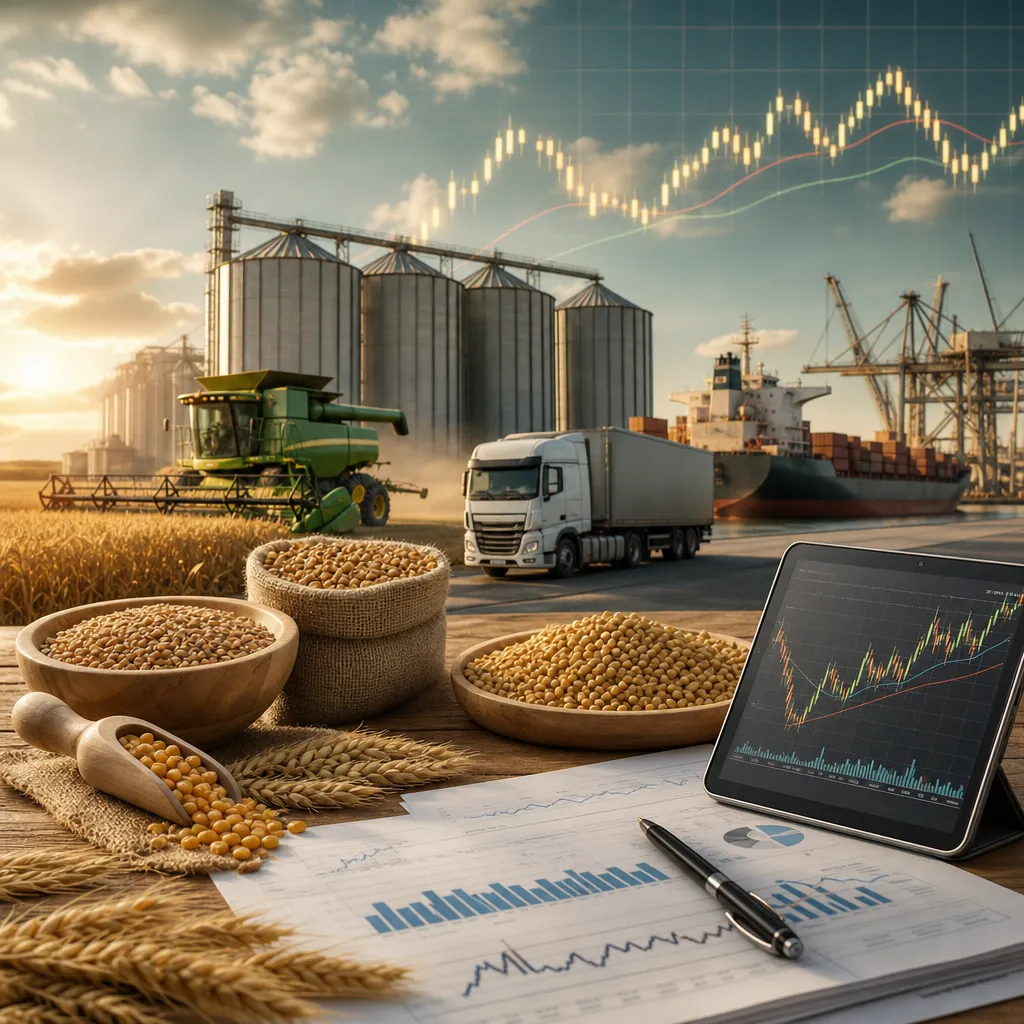






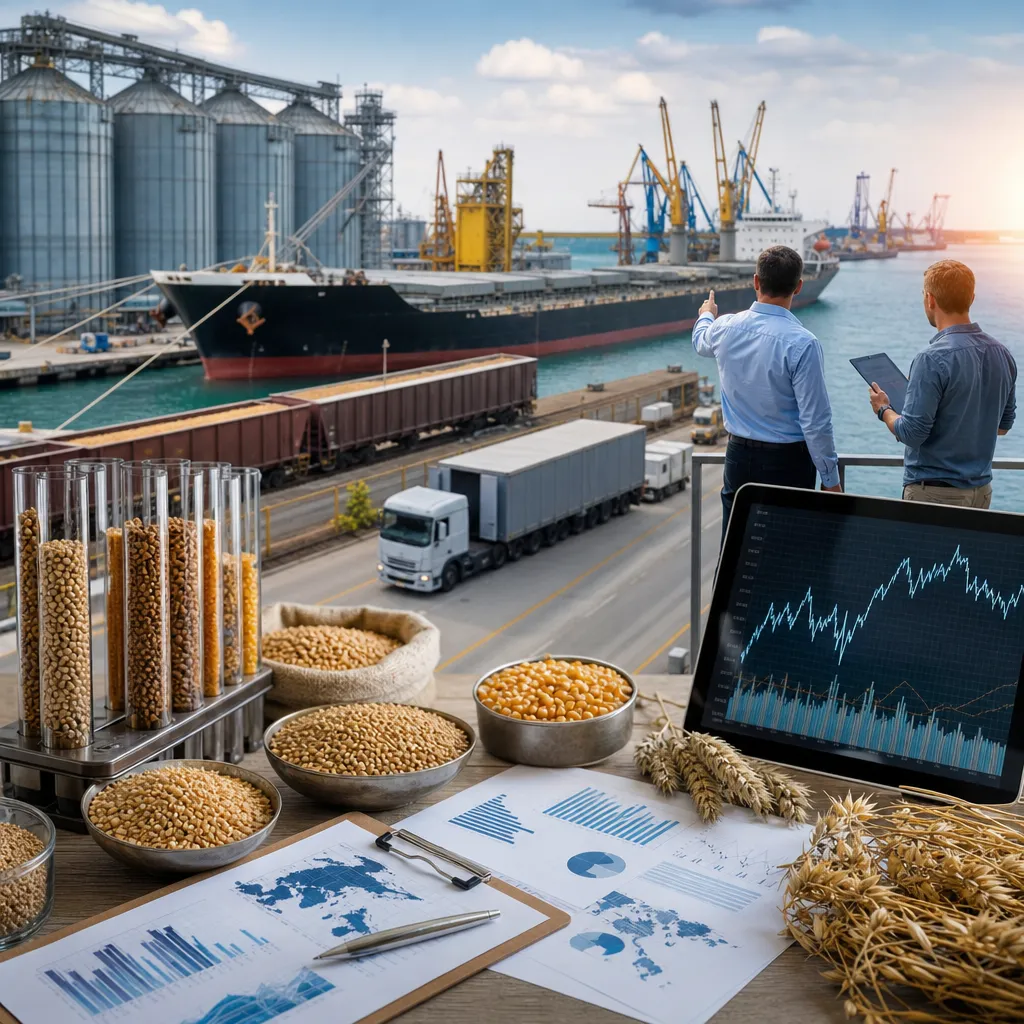
The Black Sea grain market is not a single exchange or one country’s cash market. It is a regional export system centered on the Black Sea and the Sea of Azov, linking major grain-producing areas in Eastern Europe and the former Soviet space with importers in the Middle East, North Africa, Europe, and Asia. In practice, when traders refer to “Black Sea grain,” they usually mean export wheat, corn, barley, sunflower products, and sometimes oilseeds moving through ports in countries such as Russia, Ukraine, Romania, and Bulgaria. Prices in this market are shaped by global benchmarks, local production, export logistics, freight, currency moves, policy risk, and port demand.
For a farmer, merchant, importer, or hedger, the key is to understand that Black Sea prices can be quoted in several different ways: farm-gate cash, inland delivered, port delivered, FOB export, or CIF import destination. The market operates both physically through contracts and logistics chains, and financially through futures and options used for risk management. Because local cash values can diverge sharply from exchange-traded futures, using the right reference price is essential.
What the Black Sea grain market includes
The Black Sea grain market is a regional physical export market rather than one centralized exchange. Its core geography includes the grain belts and export corridors of Russia, Ukraine, Romania, and Bulgaria. Depending on context, traders may also discuss neighboring Danube logistics and adjacent import/export flows connected to the region.
The most important commodities are usually:
- Wheat, especially milling wheat for export
- Corn for feed and export trade
- Barley, particularly feed barley
- Sunflower seed products, especially sunflower oil and meal
In commercial practice, Black Sea grain is often quoted in US dollars per metric ton for export trade. Domestic markets may use local currencies, such as Russian rubles, Ukrainian hryvnia, Romanian leu, or Bulgarian lev, usually on a per metric ton basis. International buyers, however, commonly negotiate seaborne cargoes in dollars.
The region matters because it is one of the world’s most important origins for competitively priced grain exports. That means Black Sea prices influence import tenders and destination markets well beyond the region itself.
Where the market operates physically
The Black Sea market operates through interior collection points, rail and truck corridors, river systems where available, storage networks, and export terminals. Grain is produced inland, assembled by local buyers and merchants, moved to silos or terminals, then loaded onto vessels for export.
In practical terms, the chain often looks like this:
- Farm sells to a local buyer, cooperative, merchant, crusher, mill, or elevator
- Grain is tested for quality and moisture
- It is stored, blended, or forwarded inland
- It is delivered to a port terminal or river loading point
- Exporter sells cargo on an FOB basis or to a destination buyer on a CIF basis
Romania’s Black Sea and Danube-linked export system is especially relevant for EU-connected trade. Russia’s southern export infrastructure is central for wheat flows. Ukraine’s grain trade remains highly dependent on available export corridors, port access, Danube routes, and political-security conditions. Bulgaria also participates as a Black Sea exporter, particularly within a wider EU context.
This means the “Black Sea market” is not just one port price. It is a network of inland and export values connected by transport cost, handling capacity, quality, and timing.
How Black Sea grain prices are formed
Price formation in the Black Sea market starts with global grain values but ends with a local, highly practical number: what a real buyer will pay for a defined quality at a defined place on a defined date.
The main reference points differ by transaction type:
| Price type | Where quoted | What it means |
|---|---|---|
| Farm-gate cash price | Village, elevator, first buyer | Price paid at or near the farm, before major transport to export position |
| Inland delivered price | Mill, crusher, feed plant, rail point, inland silo | Price including delivery to a specific inland destination |
| Port delivered price | Export terminal | Value of grain delivered into port or terminal position |
| FOB price | Export market | Free on Board price at the port of shipment, before ocean freight to destination |
| CIF price | Import market | Cost, Insurance, and Freight to destination port; used by importers and tenders |
| Futures price | Exchange screen | Financial benchmark for risk management, not the same as a local physical bid |
The difference between a local cash price and the relevant futures benchmark is often called basis. In Black Sea trade, basis can reflect:
- Protein level and other quality characteristics
- Port congestion or smooth export flow
- Railcar or truck availability
- Storage costs and harvest pressure
- Currency moves against the US dollar or euro
- Government policy, export procedures, or trade restrictions
- Competition among exporters, mills, crushers, and feed buyers
For example, an importer may watch a wheat futures market for direction, but a real Black Sea FOB wheat bid depends on local availability, loading demand, vessel line-up, and quality specifications. That is why an exchange quote should never be treated as the exact price a farmer or exporter receives.
Which benchmarks matter
No single futures contract perfectly represents the Black Sea market. Instead, traders usually combine a global benchmark with physical market intelligence.
The most commonly watched benchmarks are:
- CBOT wheat and corn futures for global directional influence
- Euronext wheat futures for European and EU-connected pricing relevance
- Physical export assessments from market reporting agencies and brokers
Euronext is often especially relevant for wheat pricing in EU-member Black Sea origins such as Romania and Bulgaria. CBOT remains globally important for broader grain sentiment, cross-market relationships, and fund activity. But Black Sea exporters and importers usually make physical decisions from actual offer sheets, port line-ups, freight, quality terms, and destination demand.
For sunflower products and some regional feed grain flows, physical market reporting can matter more than exchange futures because the hedge is less direct.
Where to check Black Sea grain prices and market information online
If you need a current or recent price, the correct approach is to identify the exact commodity, origin, quality, location, and delivery basis first. “Black Sea wheat price” on its own is too broad to be precise.
Useful places to check information include:
| Source type | What it provides | Practical use |
|---|---|---|
| CME Group | CBOT grain futures and options data | Track global benchmark direction for wheat and corn |
| Euronext | European grain futures prices and contract information | Monitor wheat benchmark relevance for EU-linked Black Sea trade |
| USDA | World supply-demand reports, export analysis, country outlooks | Understand broader balance sheet and trade context |
| European Commission market information | EU agricultural market and trade data | Useful for Romania and Bulgaria within the EU market structure |
| National ministries or statistics agencies | Crop, trade, and domestic market updates where available | Check official local production and policy information |
| Merchants, brokers, terminals, and local buyers | Actual bids, offers, delivery terms, quality premiums or discounts | Best source for real physical tradable values |
Importantly, a futures screen may be live, but many local Black Sea physical offers are negotiated privately. So if you are pricing a cargo or inland position, direct contact with merchants, exporters, brokers, or regular counterparties is often more useful than relying on a single public quote.
How grain is actually bought and sold in the Black Sea region
Physical grain trade
Physical grain is traded through contracts between farmers, collectors, cooperatives, merchants, processors, exporters, feed manufacturers, millers, and importers. The contract usually specifies:
- Commodity and crop year
- Quality terms such as protein, test weight, moisture, foreign matter, and damage
- Quantity tolerance
- Delivery point and delivery window
- Price basis: fixed price, formula price, or basis-related arrangement
- Payment terms
- Dispute and claims procedure
Export trade commonly uses FOB sales from a Black Sea port to an international buyer. The importer may then compare offers from several origins. A buyer in North Africa, for example, might compare Black Sea wheat against EU, US, or other origin wheat depending on quality and freight.
Counterparty risk matters. In practical trade, participants assess not just price but also execution reliability, financing, quality control, vessel timing, and documentary performance.
Futures and options
Futures and options are used for price risk management, not as a substitute for trucks, vessels, warehousing, or export certificates. A merchant may buy grain physically in the Black Sea region while selling futures on an exchange to reduce exposure to falling prices. A mill or importer might buy futures or call options to manage upside risk before fixing a physical purchase.
These instruments are accessed through a regulated broker or futures commission merchant, depending on jurisdiction and exchange access arrangements. Users must understand:
- Margin requirements
- Daily mark-to-market cash flow
- Contract months and expiry
- Basis risk between futures and actual local grain
- The difference between hedging and speculation
A farmer or merchant can monitor futures online every day, but the physical sale still happens with a real buyer on real specifications. That distinction is crucial.
Key drivers of Black Sea grain market trends
The Black Sea market can move quickly because it is exposed to both agricultural and geopolitical forces. The main drivers usually include:
- Weather: autumn planting conditions, winter survival, spring moisture, summer heat, and harvest weather
- Crop size and quality: especially wheat protein and corn yield potential
- Export corridor reliability: port access, inspections, operational disruptions, and route availability
- Currency: local-currency weakness can support export competitiveness in dollar terms, while strength can reduce it
- Freight and logistics: barge, rail, truck, storage, and vessel costs influence origin competitiveness
- Government policy: export administration, quotas, duties, or broader trade controls can alter market flows
- Importer demand: tender activity from major destination regions often affects nearby export values
- Competing exporters: prices from the EU, United States, South America, or other wheat and corn origins help set the competitive landscape
Forecasting this market is best done with scenarios, not certainty. A large crop with smooth logistics can pressure local basis even if futures are steady. A smaller crop or export disruption can tighten nearby physical values, even without a major futures rally.
Practical guide for market participants
If you are operating in or around Black Sea grain, a practical workflow helps avoid common mistakes.
- Define the market clearly: wheat, corn, or barley; domestic or export; inland or port; local currency or US dollars
- Identify the benchmark: CBOT, Euronext, or a physical export assessment
- Check the basis: quality, transport, and location can change the tradable value significantly
- Verify quality and contract terms: a headline price without clear specifications is not enough
- Understand logistics: availability of trucks, rail, barges, storage, and port slots can change true netback value
- Assess counterparty strength: execution risk can outweigh a slightly better headline bid
- Use futures/options carefully: hedge the price risk you can define, but do not assume hedge performance will equal local cash performance exactly
For importers, tender terms are especially important. A cheap FOB offer may not remain cheapest after freight, financing, insurance, discharge terms, and quality risk are considered. For farmers and inland sellers, the best apparent port price may not translate into the best farm net price once transport and waiting time are included.
FAQ
What does “Black Sea grain price” usually mean?
It usually refers to an export-oriented physical grain price from origins around the Black Sea, often quoted in US dollars per metric ton for wheat, corn, or barley. The exact meaning depends on whether the quote is farm-gate, delivered port, FOB, or CIF.
Which countries are most relevant in the Black Sea grain market?
Russia, Ukraine, Romania, and Bulgaria are the main countries typically associated with Black Sea grain trade. The exact relevance of each varies by crop, season, logistics, and policy conditions.
What is the main benchmark for Black Sea wheat?
There is no single perfect benchmark. Traders commonly watch Euronext wheat futures and CBOT wheat futures for direction, then adjust using local basis, quality, freight, and export demand.
Where can I check Black Sea grain prices online?
For benchmark futures, CME Group and Euronext are the main official exchange sources. For supply-demand context, USDA and European Commission market information are useful. For actual tradable physical values, market participants usually rely on merchants, brokers, exporters, and local buyers.
Why is the local cash price different from futures?
Because local cash prices include basis. Basis reflects quality, location, transport cost, storage, buyer competition, currency movements, and local supply-demand conditions. Futures show benchmark market direction, not the exact price at your farm, elevator, or port.
How is grain physically exported from the Black Sea region?
Grain is collected inland, tested and stored, transported by truck, rail, river, or a combination, delivered to port terminals, and loaded onto export vessels. The export sale is often made on an FOB basis, while importers may compare delivered CIF values.
Can traders hedge Black Sea grain with exchange futures?
Yes, many traders hedge price exposure with wheat or corn futures and sometimes options. But the hedge is not perfect because local Black Sea basis can change independently of futures.
What unit is normally used in Black Sea export trade?
Export grain is commonly quoted in US dollars per metric ton. Domestic trade may be discussed in local currency per metric ton, depending on the country and buyer.
Sources
- USDA Foreign Agricultural Service
- CME Group
- Euronext