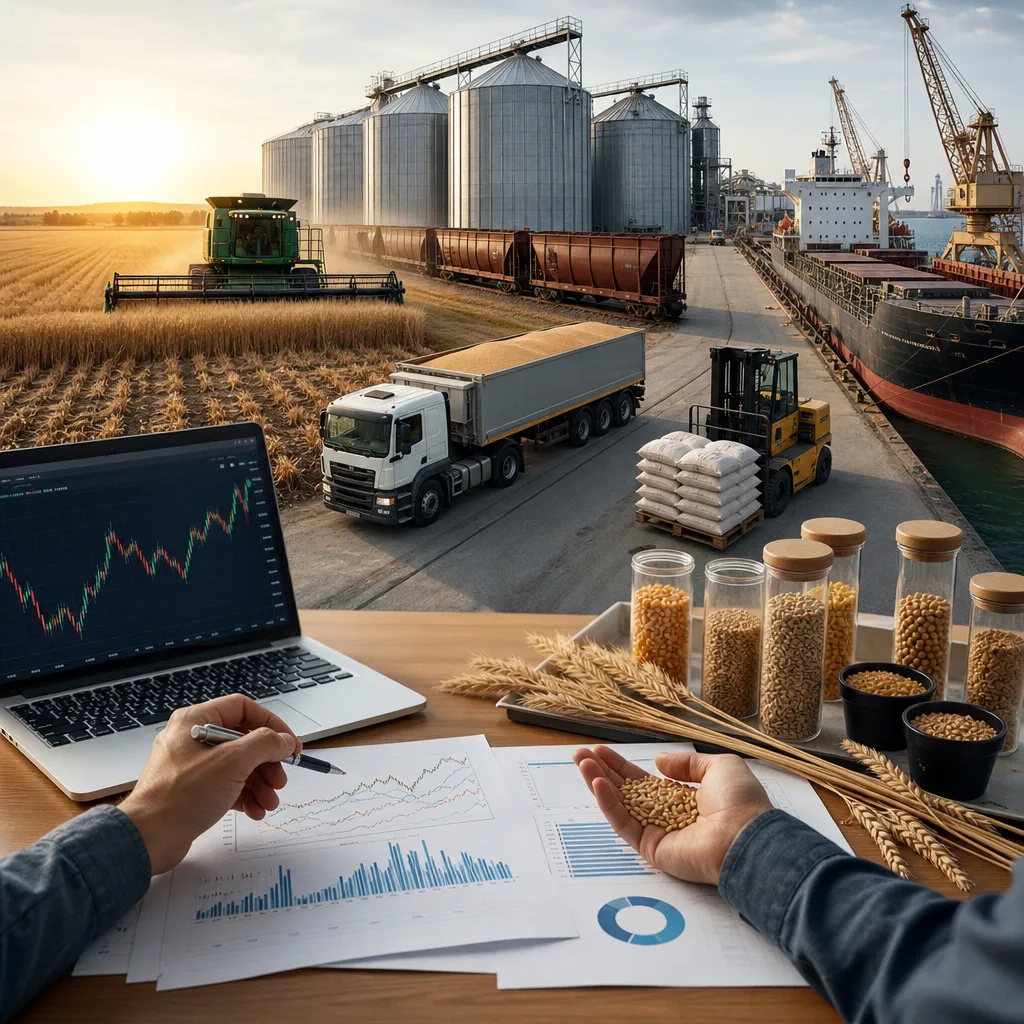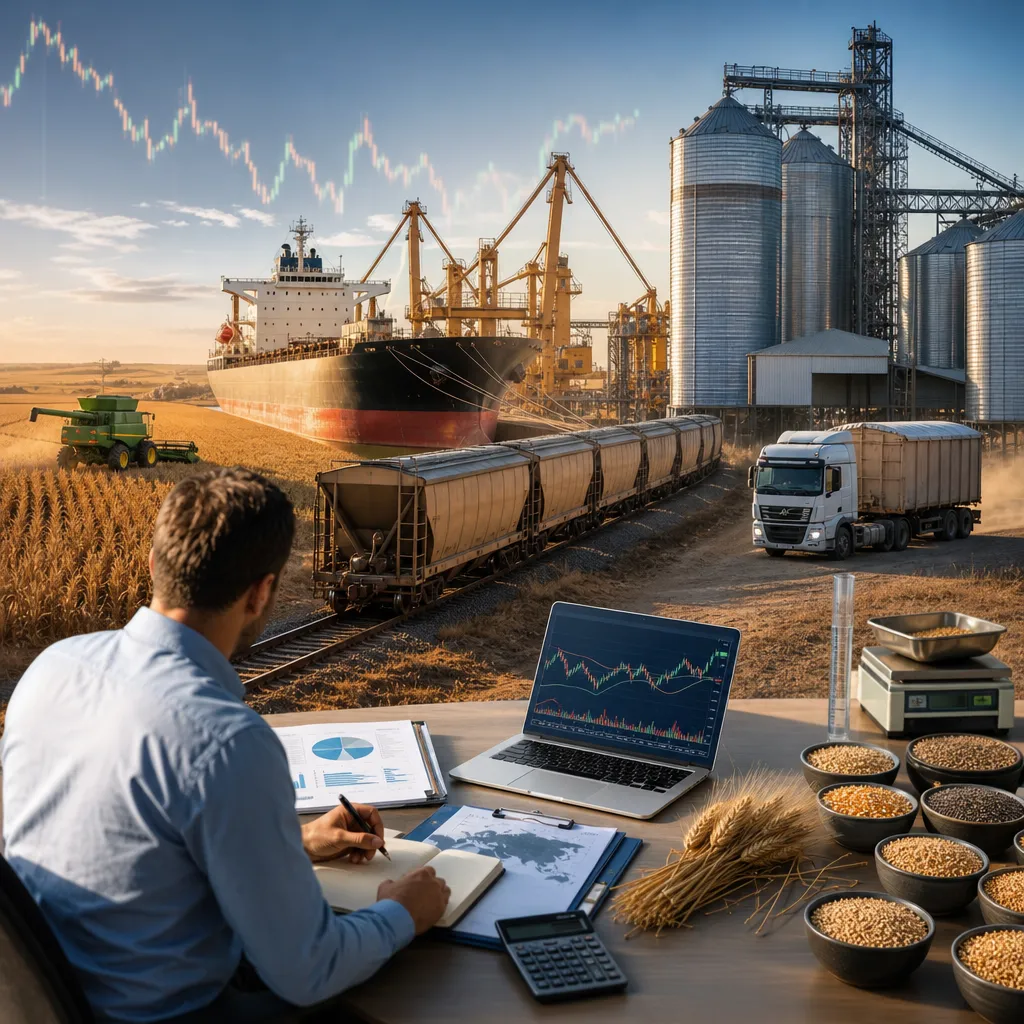



The EU rapeseed export market refers to the trade in rapeseed grown, sold, and shipped from European Union member states to buyers outside the EU, as well as the broader pricing environment that governs export competitiveness. Geographically, this market is spread across major producing countries such as France, Germany, Romania, Poland, and the Baltic states, with export flows moving through inland crushers, river systems, rail corridors, and seaports on the Atlantic, North Sea, Baltic, and Black Sea. In practice, rapeseed prices in the EU are influenced by local physical supply and demand, the Euronext rapeseed futures market, vegetable oil and biodiesel economics, currency movements, and competition from other oilseeds such as canola and soybeans. Anyone following the market needs to distinguish clearly between exchange-traded futures, inland cash prices, delivered crusher prices, and export values such as FOB offers at port.
Rapeseed is one of the EU’s most important oilseed crops. It is crushed mainly into rapeseed oil and meal, and the oil has strong links to the food market and to renewable fuel demand. That means the export market cannot be understood in isolation: even when the EU exports seed, domestic crushers, biodiesel policy, and rival oilseed imports all shape the available surplus and the level at which exporters can compete.
What the EU rapeseed export market is
The EU rapeseed export market is a physical commodity market. Exporters, merchants, cooperatives, and processors buy rapeseed from farmers or local collectors, assemble cargoes that meet agreed quality standards, and sell them to foreign buyers. Trade may involve truck, barge, rail, or vessel movement depending on origin and destination.
Rapeseed in Europe is usually priced in euro per metric tonne. The most widely watched benchmark for European rapeseed is the Euronext rapeseed futures contract, often still referred to in trade as MATIF rapeseed. That futures market is not the same thing as a physical export price, but it strongly influences how the trade values seed at country elevator, crusher, and port level.
Within the EU, rapeseed often moves first to domestic crushers. Only part of the crop becomes exportable surplus. As a result, the “export market” is not simply a port quote; it is the margin left after domestic demand, logistics, quality requirements, and international buying interest are taken into account.
Where the market operates
The market operates across several layers of geography.
- Farm and local collection points: Farmers sell to cooperatives, merchants, or local buyers.
- Inland processing zones: Crushers buy rapeseed for oil and meal production, often setting strong competition for nearby supply.
- Export corridors: Seed can move by rail, truck, and barge toward ports or neighboring EU states.
- Seaport export hubs: Cargoes are assembled for shipment outside the EU on FOB or similar terms.
France is central because it is a major producer and an important reference point for Euronext rapeseed. Germany is also a large producer and crusher. Romania and Bulgaria matter for Black Sea logistics. Poland and the Baltic region can matter for northern flows. The Netherlands and Belgium are more important as trading, crushing, and logistics centers than as large field producers.
Because the EU is a customs union, a lot of trade moves internally before any seed reaches a non-EU export destination. This is why “EU rapeseed export market” should not be confused with a single local cash market. It is a network of national and cross-border physical markets connected by one broad pricing structure.
| Market layer | Where it operates | Main function | Typical users |
|---|---|---|---|
| Farm/local cash market | Producing regions across EU member states | First sale and local collection | Farmers, cooperatives, merchants |
| Crusher delivered market | Near oilseed processing plants | Supply for oil and meal production | Processors, traders, logistics firms |
| Export port market | Atlantic, North Sea, Baltic, and Black Sea gateways | Cargo assembly and shipment | Exporters, ship brokers, foreign buyers |
| Futures market | Euronext | Benchmark pricing and hedging | Merchants, processors, funds, hedgers |
How EU rapeseed prices are formed
EU rapeseed prices are formed through a combination of benchmark futures and physical market adjustments. The benchmark most market participants watch is Euronext rapeseed futures, quoted in euro per tonne. But a futures quote is not the same as an exportable cargo value or a farm-gate bid.
In the physical market, buyers and sellers usually think in terms of:
- Futures price: The exchange-traded benchmark for a given delivery month.
- Basis: The premium or discount of a local physical price versus the futures benchmark.
- Cash bid: The price a local buyer offers at a collection point, often ex-farm or delivered.
- Delivered price: Price including transport to a crusher, warehouse, or port.
- FOB price: Free on board value at port, reflecting the price of loaded export cargo.
- CIF price: Cost, insurance, and freight to the destination market, used more from the importer’s perspective.
Basis can strengthen or weaken independently of futures. If crushers are short of supply, inland basis may improve even when futures are flat. If port logistics are congested or export demand is weak, export basis may soften even with supportive futures.
Other major price drivers include:
- EU crop size and quality
- Harvest timing and farmer selling pace
- Crushing margins for oil and meal
- Biodiesel and renewable fuel economics
- Competing oilseed supplies, especially canola and soybeans
- Euro exchange rate versus other major currencies
- Freight and logistics costs
- Import demand from non-EU buyers
| Price type | What it means | Why it differs |
|---|---|---|
| Euronext futures | Exchange benchmark for a contract month | Does not include local transport, quality, or immediate buyer demand |
| Local cash bid | Price offered by a merchant or cooperative inland | Reflects local competition, quality, and delivery terms |
| Crusher delivered price | Value delivered to a processing plant | Depends on crush demand, transport cost, and quality specs |
| FOB export price | Value of cargo loaded at port for export | Includes export margin, terminal costs, and port basis |
How grain is actually bought, sold, and exported
Physical rapeseed trade in the EU is usually relationship-driven and contract-based. Farmers may sell at harvest, store and sell later, or use forward contracts before harvest. Buyers include cooperatives, independent grain merchants, crushers, feed companies in some cases, and exporters.
A typical physical flow looks like this:
- Farmer delivers rapeseed to a cooperative, merchant, or processor under agreed quality terms.
- The buyer tests moisture, impurities, and other contract specifications.
- The buyer may store, blend, or move the seed onward by truck, rail, or barge.
- If export demand is attractive, a trader assembles larger lots into a vessel cargo.
- The exporter sells under negotiated international terms, often referencing FOB or destination-based pricing.
Export transactions are generally handled by professional trading houses, cooperatives with export capacity, or processors with trading desks. Importers may be foreign crushers, feed manufacturers, or commodity merchants. Documentation, quality certificates, phytosanitary compliance, and shipment terms are all critical. This is not a market where most participants simply click a button online and move physical grain internationally without commercial infrastructure.
Counterparty risk matters. Sellers need clarity on payment terms, quality standards, pass-through of shrink or dockage, and who bears transport risk at each stage. For international contracts, Incoterms and documentary requirements are especially important.
How futures and hedging fit into the market
The financial side of the EU rapeseed market mainly runs through Euronext. Futures and options are used for price risk management, not as a substitute for physical logistics. A cooperative, merchant, crusher, or exporter may buy physical rapeseed and hedge that exposure by selling futures. A processor needing future coverage may do the opposite depending on its position.
This matters because an exporter’s margin depends not only on the flat price of rapeseed, but also on basis changes. Futures hedge the benchmark component of price risk. They do not eliminate basis risk, freight risk, quality risk, or execution risk.
Access to futures is usually through a broker or authorized trading platform. Market participants post margin and face mark-to-market gains or losses. A speculative trader can gain price exposure through futures without owning any physical rapeseed. By contrast, a farmer or merchant in the real market still needs storage, transport, contracts, and settlement arrangements for the grain itself.
So the online market and the physical market are connected but different:
- Online/futures: Benchmark discovery, hedging, speculation, options strategies.
- Physical/cash: Ownership transfer, quality testing, delivery, logistics, and payment.
Where to check prices and market information online
If you need the current EU rapeseed market level, the most practical place to start is the Euronext rapeseed futures market. That gives the benchmark, contract month by contract month. But it does not give you a precise farm-gate or port cash price everywhere in the EU.
For physical market information, readers usually monitor a combination of:
- Euronext: For rapeseed futures and options benchmark prices.
- European Commission market information: For oilseeds context, trade developments, and policy-linked market information.
- Eurostat: For official EU trade data and country-level import/export statistics.
- USDA: For international oilseed balance sheets and comparative global market analysis.
- Local cooperatives and merchants: For real inland bids in producing regions.
- Processors/crushers: For delivered prices where available.
- Specialized broker or market-reporting services: For indicative FOB values, basis, and trade commentary.
Local cash prices may differ sharply from futures because of transport cost, crop quality, regional oversupply, nearby crusher demand, and export line-up conditions at port. For that reason, anyone asking for the “EU rapeseed price today” should specify whether they mean futures, ex-farm cash, delivered crusher, or FOB export value.
Main supply, demand, and trade drivers
The EU rapeseed export market is heavily shaped by domestic use. The EU is a major rapeseed producer, but also a major consumer because of crushing demand. In many seasons, the market can be tight enough that the EU remains an important importer of rapeseed or rapeseed products even while some member states or periods show export availability.
That creates a market with several moving parts:
- Production risk: Rapeseed is sensitive to establishment conditions, winter survival, spring weather, and harvest quality.
- Crush demand: Strong demand for oil and meal can pull seed into domestic plants instead of export channels.
- Biofuel policy: Renewable fuel economics can support oil values and therefore seed values.
- Competing exporters: Canada, Australia, Ukraine, and other oilseed origins shape global substitution.
- Currency: A weaker euro can improve EU export competitiveness; a stronger euro can do the opposite.
- Freight and logistics: Rail availability, river conditions, truck costs, and vessel freight affect netbacks.
Forecasting this market is therefore best done in scenarios rather than certainties. A large EU crop with slower crush demand could expand export availability and pressure basis. A smaller crop, weather damage, or stronger domestic demand could reduce export surplus and support inland prices versus export values.
Practical guidance for market participants
For farmers and physical sellers, the key decision is not only whether the futures market is high or low, but whether the local basis is attractive. In some periods, a strong nearby crusher bid can outperform an export-linked outlet. In others, merchants may pay up for export execution if port demand is active.
For exporters and traders, margin management depends on:
- Reliable origination from farms or cooperatives
- Quality compliance
- Transport timing
- Port handling access
- Hedge discipline on Euronext
- Currency awareness for cross-border sales
For international buyers, the crucial points are origin specification, shipment window, quality standards, and whether the seller is quoting FOB EU port or a destination-based CIF/CFR structure. Buyers should also understand that inland price spikes in producing regions can quickly affect export offers if crushers are competing aggressively for seed.
FAQ
What is the main benchmark for EU rapeseed prices?
The main benchmark is Euronext rapeseed futures, quoted in euro per metric tonne. It is the most widely followed reference for price discovery and hedging in Europe.
Is the Euronext rapeseed price the same as the farm price?
No. A farm price or local cash bid reflects futures plus or minus basis, as well as transport, quality, storage, and local buyer competition. Futures are only the benchmark component.
Where can I check current EU rapeseed prices?
For benchmark values, check Euronext. For trade data and broader market information, check the European Commission, Eurostat, and USDA. For actual local bids, check cooperatives, merchants, and processors in the relevant EU region.
How is rapeseed usually sold in the EU?
Most physical rapeseed is sold through cooperatives, merchants, crushers, or exporters under contract terms covering quality, delivery point, and payment. Trade may be spot, forward, or linked to a futures-based pricing formula.
What does FOB mean in the EU rapeseed export market?
FOB means free on board. It refers to the price of rapeseed loaded onto a vessel at the export port, before ocean freight to the destination is added.
Can I trade EU rapeseed online without handling the physical seed?
Yes, through futures or options on Euronext using a broker. But that gives financial exposure, not ownership of exportable physical grain.
Why does the EU both import and export rapeseed?
Because the EU is a large producer and also a large consumer. Internal regional imbalances, crushing demand, timing, quality, and relative price competitiveness can lead to both imports and exports in the same broad season.
What are the biggest drivers of the EU rapeseed export market?
The biggest drivers are EU crop size and quality, domestic crushing demand, biodiesel economics, global oilseed competition, currency moves, and freight/logistics conditions.
Sources
- Euronext
- European Commission
- Eurostat