

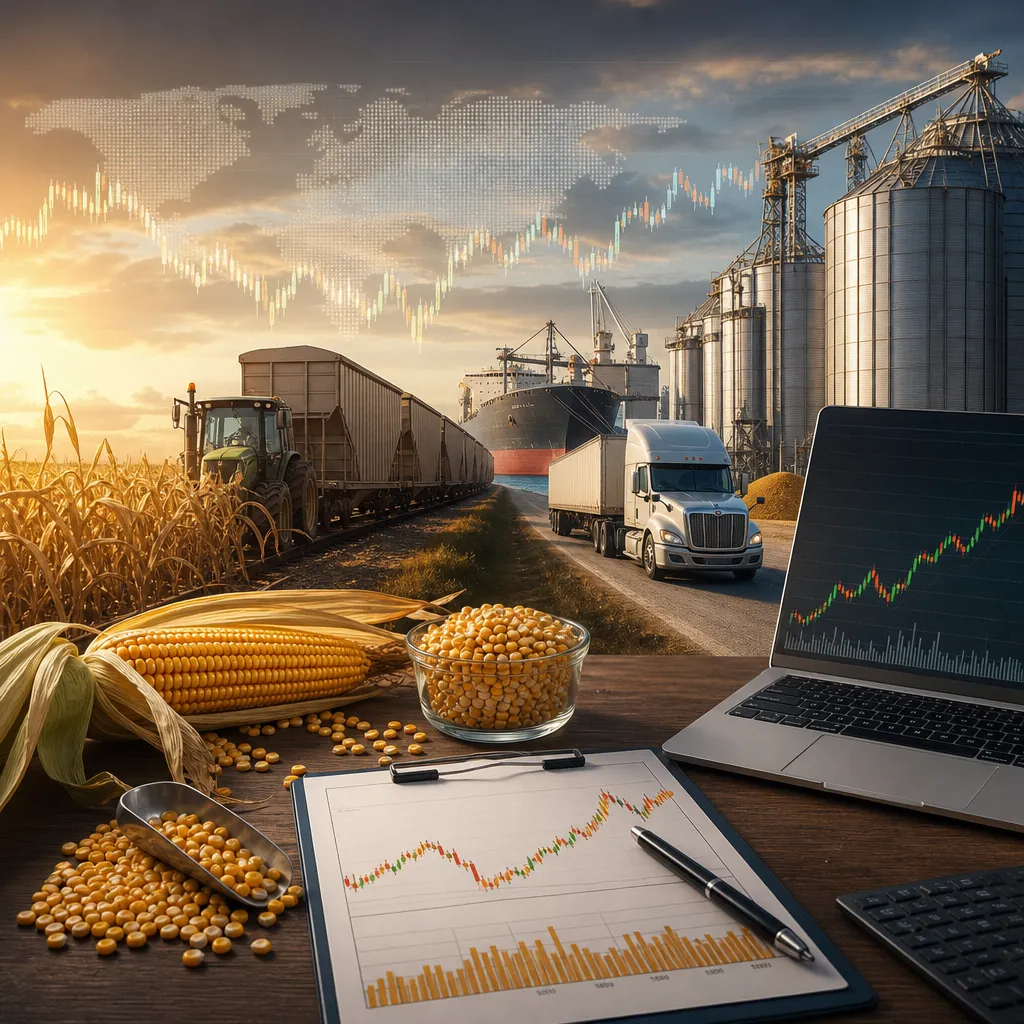
Corn prices can rise far higher than most market participants expect when several bullish forces hit at the same time: a weather-driven production shortfall, tight beginning stocks, strong export or ethanol demand, and slow farmer selling. In practice, there is no fixed ceiling, but corn rarely sustains extreme prices unless the world balance sheet becomes genuinely tight. The important question is not only how high futures can spike, but whether local cash bids at elevators, feed mills, processors, and export points follow those futures higher. To judge that, readers need to separate exchange-traded futures from physical grain prices, and then watch the reports, basis levels, storage incentives, and logistics that turn a rally into a real farmgate price.
What “high corn prices” really mean
When people ask how high corn prices can go, they may be talking about two different markets.
- Futures prices: standardized contracts traded on a regulated exchange, most notably CBOT corn futures through CME Group.
- Cash prices: what a farmer, merchant, feed buyer, or processor can actually buy or sell physical corn for at a local delivery point.
Those two prices are connected, but they are not the same. A futures rally can be dramatic, while a local cash market moves less because of weak basis, congested logistics, quality discounts, or high freight. The reverse can also happen: futures may be flat while a tight local market lifts cash bids sharply.
That is why the practical answer is this: corn prices can spike very high on the exchange in weather or supply shocks, but the price received in the physical market depends on location, timing, quality, and basis.
Where corn prices are quoted and how to check them
The most widely watched benchmark for U.S. corn is the CBOT corn futures market on CME Group. Futures are quoted by contract month, not as one single universal corn price. A trader looking at December corn is watching a different delivery month from someone looking at March or July.
For the physical market, farmers and buyers usually check:
- local elevator bid sheets, often posted online or in mobile apps
- cooperative bid pages
- ethanol plant bids
- feed mill and processor bids
- export terminal bids where available
- official agricultural market reporting services
In the United States, USDA Agricultural Marketing Service publishes cash grain reports for many regions. These reports help users compare terminal, rail, river, and processor markets. In other countries, cash market transparency varies more, so users often rely on merchants, cooperatives, brokers, port indications, or government market bulletins.
If you want to know whether corn is “high,” check three things together:
- the relevant futures month on CME Group
- the local basis or local bid at your delivery point
- nearby physical demand from feed, ethanol, export, or industrial users
| Market Type | Where It Exists | What It Shows | Who Uses It |
|---|---|---|---|
| Futures | Regulated exchange such as CME Group | Benchmark contract price by delivery month | Hedgers, traders, funds, merchants, analysts |
| Local cash bid | Elevator, cooperative, processor, feed mill, exporter | Actual buy or sell price at a named location | Farmers, local buyers, merchandisers |
| Basis | Physical market relative to futures | Local supply-demand and logistics pressure | Hedgers, elevators, grain merchants |
| Export indication | Port, terminal, merchant, freight market | Competitiveness in world trade | Exporters, importers, trade analysts |
The main factors that determine how high corn can go
Corn usually reaches extreme highs only when the market believes demand cannot easily be rationed without a major price rise. That happens through a combination of supply and demand pressure.
1. Weather and yield risk
The fastest route to sharply higher prices is adverse weather during planting, pollination, or grain fill. Heat and dryness in major producing areas can reduce yield potential quickly. Excess rain can also matter by delaying planting, cutting acreage, or hurting quality.
Weather is watched through government updates, private forecasters, satellite imagery, and crop-condition reports. In the U.S., USDA Crop Progress is a major weekly reference during the growing season.
2. Beginning stocks and stocks-to-use
A weather problem is far more explosive when old-crop supplies are already tight. If inventories are comfortable, the market can absorb a smaller crop more easily. If stocks are low, futures may rally aggressively because there is less buffer in the system.
3. Export demand
Corn is a global market. Import demand from major buyers and competition from other exporters can lift or cap prices. U.S. export sales reports, customs data, and shipping activity all matter. Currency shifts also matter because a stronger dollar can make U.S. corn less competitive, while a weaker dollar can support exports.
4. Ethanol and feed demand
In some markets, especially the U.S., ethanol demand is a major structural driver. High energy prices or supportive biofuel policy can help corn demand. Feed demand depends on livestock margins and on the relative price of substitute feed grains such as wheat, barley, sorghum, and feed-quality rice in some regions.
5. Farmer selling, storage, and logistics
Prices can rise sharply if producers hold grain tightly while end users need nearby supplies. River issues, rail constraints, port congestion, or weak storage capacity can intensify local shortages. This often appears first in basis rather than in outright futures.
How futures, basis, and local bids work together
A local cash price is often described as:
Cash price = futures price + basis
Basis may be positive or negative depending on geography and demand. A processor in a deficit area may bid strongly over futures. An oversupplied area with expensive freight to market may show a weak basis below futures.
This matters because even if CBOT corn rallies, a farmer’s local bid may not rise one-for-one. If transportation becomes easier, nearby demand drops, or quality concerns appear, basis can weaken and offset part of the futures gain.
Conversely, in an acute local shortage, the cash market can become much stronger than futures. Feed mills, ethanol plants, or exporters may raise bids to attract physical grain immediately.
| Bullish Factor | Effect on Futures | Effect on Local Cash Market | What to Check |
|---|---|---|---|
| Drought in major producing region | Usually strongly supportive | Often supportive, but basis response varies | Weather maps, crop-condition reports, yield revisions |
| Low stocks | Can magnify rallies | Nearby users may bid aggressively | Balance sheets, stocks reports, pipeline tightness |
| Strong export demand | Supportive if sustained | Most visible near export channels | Export sales, port bids, freight flow |
| Logistics disruption | Mixed; can be neutral nationally | Can sharply strengthen or weaken regional basis | River, rail, barge, truck, and port conditions |
| Demand rationing by high prices | Eventually limits upside | Processors may reduce bids if margins weaken | Feed substitution, ethanol margins, import behavior |
How high prices are discovered in futures markets
Corn futures trade on a regulated exchange, not through direct farm delivery. To trade them, a user normally needs a futures brokerage account. The contract is standardized for quantity, quality, and delivery terms, which makes price discovery efficient. But most financial participants close or roll positions before delivery; they are not taking truckloads of corn home.
This market includes:
- farmers and cooperatives hedging production
- elevators and grain merchants hedging inventory and basis exposure
- processors hedging input costs
- exporters managing sales risk
- speculators and funds trading price direction or spreads
If buying pressure enters the futures market during a weather scare, prices can move quickly because participants are repricing expected supply, not just current physical ownership. That is one reason futures sometimes overshoot local cash reality in the short term.
However, futures are not free money. Trading requires margin, and leverage can create large losses as well as gains. A farmer hedging corn futures still faces basis risk. A speculator who buys futures during a drought scare can lose heavily if later rains improve crop expectations.
Where the ceiling usually comes from
Corn does not rise indefinitely. Extremely high prices tend to create their own resistance through demand rationing and substitution.
The main limits are:
- Feed substitution: livestock feeders may switch part of rations toward wheat, barley, sorghum, or other alternatives where available.
- Ethanol margin pressure: if input costs rise faster than fuel values, plants may slow demand.
- Imports: deficit regions may import more if domestic prices become uncompetitive.
- Producer selling: very high prices often trigger more farmer marketing and merchant hedging.
- Acreage response: high prices can encourage larger planting the next season.
This means spikes are possible, but sustained highs usually require more than fear. They require a balance sheet that stays tight even after rationing begins.
How farmers, buyers, and traders should analyze the upside
A practical approach is to use scenarios rather than a single forecast.
For farmers
Compare your local bid with the relevant futures month and basis. Ask whether the rally is futures-led, basis-led, or both. Check storage economics carefully. If you hold grain, the question is not only whether price can rise further, but whether carrying costs, shrink, interest, and quality risk justify waiting.
Farmers normally market corn through elevators, cooperatives, direct processor contracts, or grain merchants. Common choices include spot cash sales, forward contracts, hedge-to-arrive structures where available, and futures or options through a broker. Each route changes who manages price risk, basis risk, and delivery obligations.
For processors and feed buyers
Watch nearby basis and replacement cost, not just board price. When corn gets expensive, alternative feed grains may become economical. Buyers often work through merchants, brokers, local elevators, or direct producer procurement networks depending on region.
For traders and analysts
Track the reports that alter the balance sheet: acreage, yield, stocks, exports, and demand revisions. Then compare those fundamentals with positioning and volatility. A bullish fundamental story can still fail if the market has already priced it in.
Best sources to judge whether corn can keep rising
Reliable analysis starts with official and exchange data, then moves to local market intelligence.
- USDA WASDE: global and U.S. supply-demand balance sheets. Used to assess stocks, production, exports, and use.
- USDA Crop Progress: weekly crop-condition and planting progress data in season.
- USDA Grain Stocks and Acreage reports: key for balance-sheet revisions.
- USDA Export Sales: helps track international demand.
- CME Group: futures contract specifications and benchmark price data.
- CFTC Commitments of Traders: shows positioning by major participant categories in futures and options.
- Local elevator, processor, and cooperative bids: critical for basis and actual selling opportunities.
A reader who wants to know how high corn can go should not rely only on a headline chart. The answer emerges from combining official balance-sheet data with real physical bids and logistics conditions.
FAQ
Where can I check current corn prices?
Check CME Group for benchmark CBOT corn futures and then compare that with local cash bids from elevators, cooperatives, processors, feed mills, or exporters. USDA Agricultural Marketing Service can also help with reported regional cash markets. The futures quote is not automatically your local cash price.
Can I buy physical corn online the same way I trade corn futures?
No. Futures are financial contracts traded through a regulated futures broker. Physical corn is bought and sold through elevators, cooperatives, merchants, processors, brokers, and direct contracts with delivery terms, quality specifications, and freight arrangements.
What is the difference between corn futures and a local elevator bid?
Corn futures are standardized exchange contracts by delivery month. A local elevator bid is a real physical price at a specific location and time, usually reflecting futures plus or minus basis. The elevator bid also reflects freight, local supply, storage pressure, and buyer demand.
How do very high futures prices affect farmers in practice?
They create opportunities, but the outcome depends on basis, delivery windows, contract terms, and whether the farmer still owns grain. A high board price does not help much if basis weakens sharply, transport is constrained, or quality discounts reduce the final net price.
What reports matter most when corn is rallying on weather?
USDA Crop Progress is important during the growing season, especially when crop conditions change quickly. USDA WASDE, Acreage, Grain Stocks, and Export Sales reports are also major references. Traders often combine these with weather models and local basis information.
Can corn prices rise because of logistics even if production is not very tight?
Yes, especially in regional cash markets. Rail delays, river issues, barge shortages, port congestion, or local processor demand can push basis higher even when national futures are not making new highs. This is why regional analysis matters.
How do farmers hedge if they think prices are high but want upside protection?
They may use futures, options, forward contracts, or other merchant-offered contracting tools depending on region and provider. Futures lock in board exposure but require margin. Options can provide downside protection with retained upside, but they involve premium cost and still require careful evaluation.
What usually ends a corn price spike?
Improving weather, better yield prospects, larger acreage, slower exports, reduced feed or ethanol demand, and increased producer selling can all cap the rally. Price spikes often end when the market decides the balance sheet is no longer tightening.
Sources
- USDA World Agricultural Supply and Demand Estimates
- CME Group Corn Futures Contract Specifications
- USDA Agricultural Marketing Service Grain Market Reports