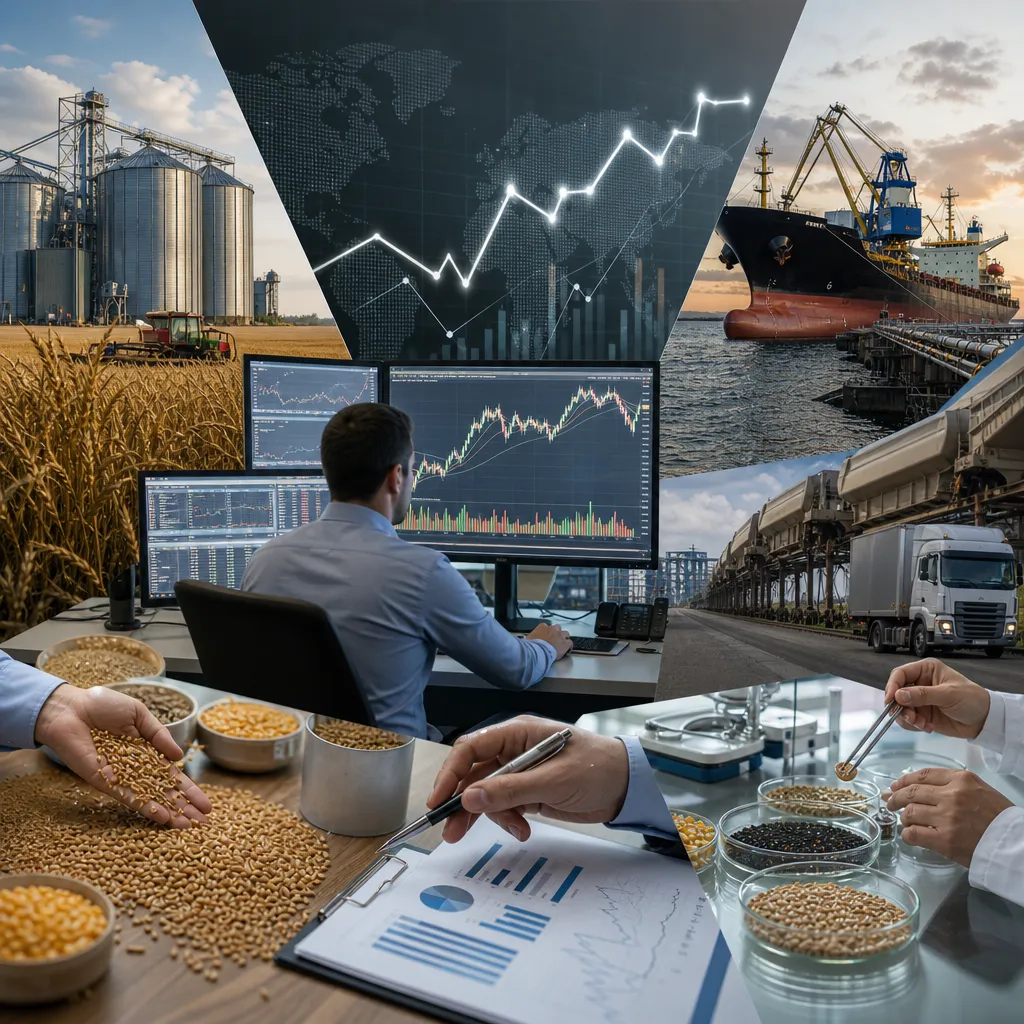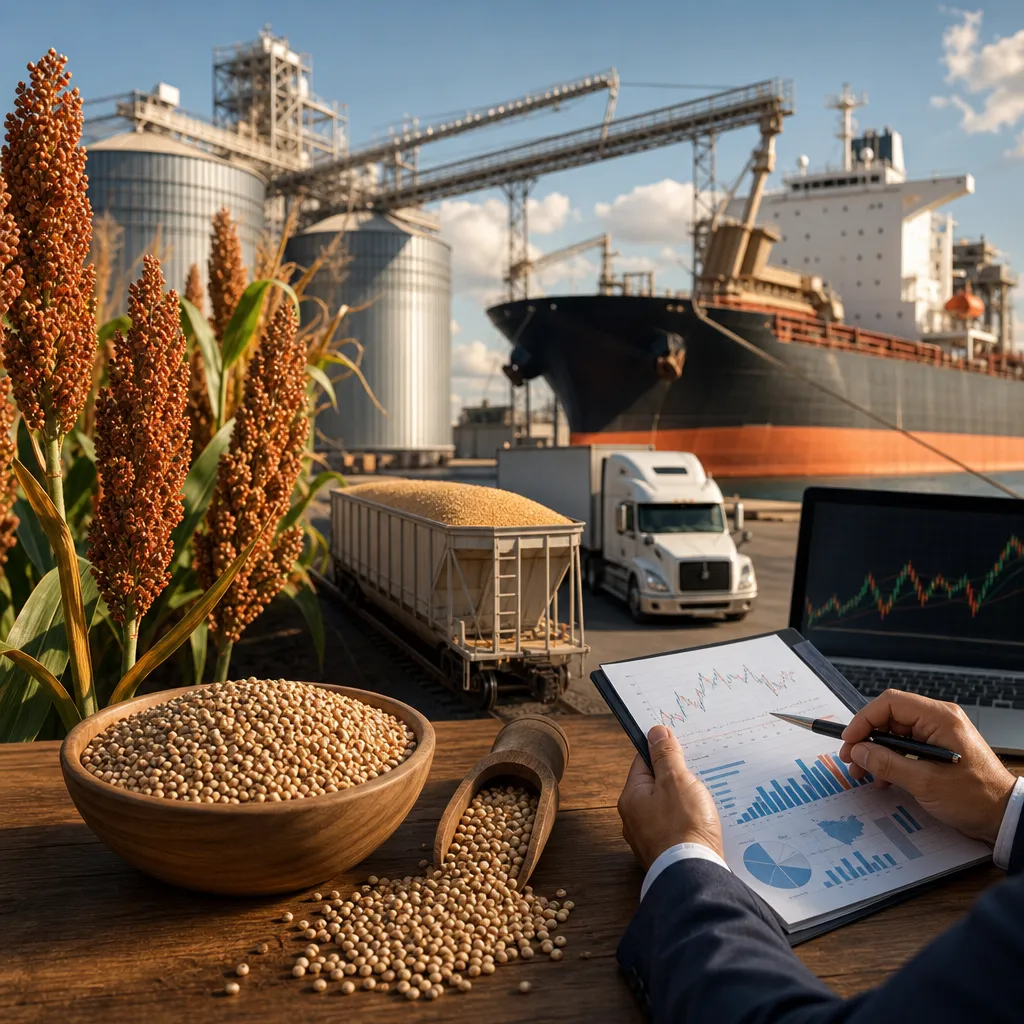



Traders hedge grain prices to reduce the risk that wheat, corn, soybeans, rice, barley, oats, rye, sorghum, canola, or other grain prices move against them before they can buy, sell, process, export, or feed the crop. In practice, hedging usually happens in futures and options markets linked to a physical grain position, not by guessing price direction. A farmer, elevator, feed mill, crusher, ethanol plant, exporter, or importer may all hedge differently depending on whether they own grain, need grain, or have already contracted grain to someone else. The key is that the hedge offsets price risk, while the physical grain still moves through elevators, warehouses, mills, rail terminals, barges, or ports.
Most grain hedging is done through regulated futures exchanges such as CME Group for major agricultural contracts, using a licensed futures broker and a margin account. Physical grain is bought and sold separately through cooperatives, elevators, merchants, processors, feed companies, exporters, and direct contracts. The exchange price is a benchmark, while the local cash price is usually the futures price plus or minus a basis, which reflects location, quality, freight, storage, and local supply and demand.
What grain price hedging actually means
Hedging is a risk-management method that aims to protect a margin, not necessarily to maximize the final sale price. A wheat farmer may fear prices will fall before harvest. A flour mill may fear prices will rise before it buys wheat. Both can use a hedge to reduce uncertainty.
The basic idea is simple:
- If you own or expect to own grain, falling prices are the main risk.
- If you need to buy grain later, rising prices are the main risk.
- If you buy from one party and sell to another, your risk may be the margin between purchase and sale prices, freight, and basis.
In grain markets, a hedge is usually placed against a recognized benchmark contract. For US markets this often means futures on corn, soybeans, soybean meal, soybean oil, wheat, rough rice, oats, or canola-related products where available on relevant exchanges. For some regional grain trades, hedging may reference other exchange contracts or over-the-counter agreements if no perfect futures contract exists.
Where grain prices are quoted and where hedging takes place
Many newcomers confuse three different things: futures prices, cash bids, and physical contract prices. They are related, but they are not the same.
| Market type | Where it exists | What price it shows | Who uses it |
|---|---|---|---|
| Futures market | Regulated exchange trading platforms accessed through futures brokers | Standardized exchange contract price for a specific delivery month | Farmers, elevators, merchants, processors, funds, commercial hedgers, speculators |
| Local cash market | Elevators, cooperatives, merchants, processors, mills, feed buyers, exporters | Bid or offer at a local delivery point, usually futures plus or minus basis | Farmers, local grain sellers, domestic buyers |
| Physical forward contract | Direct contract with a buyer or merchant | Negotiated price, basis, delivery window, and quality terms | Farmers, elevators, processors, exporters, feed manufacturers |
| OTC risk contract | Private agreement through merchant, bank, or commercial counterparty | Customized risk transfer terms rather than a public exchange quote | Larger commercial firms and counterparties with credit arrangements |
To check exchange prices, traders usually look at the exchange itself, broker platforms, market terminals, or commercial market-data services. For grain futures, CME Group is a core venue for major US agricultural benchmarks. To check local cash prices, farmers and grain sellers usually look at elevator bid sheets, cooperative apps, processor bids, merchant bid boards, local market reporting services, or regional agricultural media.
A futures quote is tradable electronically through a brokerage account. A local elevator bid is a physical grain offer for delivery to a particular place under stated quality and moisture rules. One should never assume they are interchangeable.
How a simple short hedge works for a farmer or grain owner
The classic hedge for someone who will sell grain later is a short futures hedge. The physical seller expects to own grain and fears a price decline.
- The farmer expects to harvest corn in October.
- Before harvest, the farmer sells corn futures for a month that roughly matches the expected sale period.
- If the futures market falls by harvest, the cash grain may sell for less, but the futures short position may gain value.
- If the futures market rises, the cash grain may sell for more, but the futures short may lose value.
- The goal is to reduce the impact of the futures market move and leave mainly basis risk.
This hedge is normally placed through a regulated futures broker. The farmer does not need to intend exchange delivery. In fact, most hedges are offset before futures delivery. The grain itself is usually delivered to a local elevator, cooperative, processor, or terminal under a separate physical transaction.
What the farmer still faces is basis risk. If local bids weaken relative to futures because harvest pressure is heavy, rail service worsens, quality is poor, or storage fills up, the hedge may not perfectly protect the final local cash price. That is why many producers follow both the board price and local basis.
How a long hedge works for mills, feed buyers, and processors
A grain buyer who needs inventory later often uses a long futures hedge. This is common for feed mills, flour mills, crushers, maltsters, and livestock operations that buy large volumes of grain or oilseeds.
Example:
- A feed manufacturer knows it will need corn over the next three months.
- It fears corn futures may rise before it can secure enough physical supplies.
- It buys corn futures now.
- Later, if local cash prices rise along with futures, the higher cost of physical corn may be partly offset by gains on the futures position.
- The buyer then purchases physical grain from merchants, elevators, or nearby suppliers as needed.
This type of hedge is especially useful when the buyer’s finished product pricing lags its raw material purchasing cycle. A processor may be able to manage input risk even if it cannot immediately pass price increases through to customers.
Using options instead of or alongside futures
Options are another common hedging tool. They are traded on exchanges through the same type of futures brokerage relationship, but they work differently from futures because they provide a right rather than an obligation.
- Put options are often used by grain sellers who want downside price protection while keeping some upside exposure.
- Call options are often used by grain buyers who want protection against rising prices while keeping some benefit if the market falls.
An option buyer pays a premium upfront. That premium is the known cost of price insurance, although the option may expire worthless. This makes options attractive when a hedger wants to limit adverse price moves without taking on the full daily variation exposure of a futures position.
However, options are not simple. Their value depends on futures price, time to expiration, volatility, and strike price. Commercial users often combine options with cash contracts or futures hedges. For example, a farmer may sell grain physically and re-own price exposure with a call option, or may buy a put while storing grain unpriced.
Basis, storage, freight, and quality: why hedges are never purely financial
The practical side of grain hedging is mostly about basis and logistics. Futures can hedge a benchmark price, but the physical market determines what grain is worth at a particular location.
| Physical factor | Why it matters | How it affects the hedge |
|---|---|---|
| Basis | Reflects local supply and demand versus futures | Can strengthen or weaken independently of futures |
| Freight | Truck, rail, barge, or vessel costs change delivered value | Affects net price at farm, elevator, processor, or port |
| Storage | Holding grain has cost, shrink, financing, and spoilage risk | Changes the economics of hedging grain over time |
| Quality and grade | Protein, moisture, damage, test weight, foreign material, oil content, and other specs affect value | Cash discounts or premiums may not be covered by futures |
| Delivery point | A local elevator price differs from a river terminal or export port price | Location mismatch creates basis risk |
For example, a soybean processor may hedge with soybean futures but still care deeply about local truck supply, basis at nearby elevators, protein and oil quality, and plant downtime. An exporter may hedge flat price on the exchange but still manage port line-up risk, vessel timing, inland freight, and destination contract terms separately.
Where physical grain hedges connect to real transactions
Grain does not move through a broker platform the way futures do. Physical grain usually moves through a chain of commercial participants.
- Farmers sell to elevators, cooperatives, feed mills, ethanol plants, crushers, flour mills, or merchants.
- Elevators and cooperatives buy from farmers, store and blend grain, and often hedge inventory and purchase commitments.
- Merchants and exporters aggregate grain, arrange logistics, and manage futures, basis, and freight risks.
- Processors buy grain to make feed, flour, malt, starch, oil, biofuel, or other products and often hedge input costs and sometimes product margins.
- Importers may use international merchants and also hedge currency and freight exposure.
A physical contract may specify delivery period, delivery location, moisture, grade, protein, dockage, test weight, inspection method, payment timing, and whether the price is fixed, basis-only, or tied to a later futures pricing decision. In export trade, contracts may also refer to Incoterms, loading terms, origin tolerances, and inspection certificates.
This is why practical hedging requires more than chart watching. The hedge must fit the real grain flow.
Reports, data, and tools traders use to manage grain price risk
Serious grain hedgers combine exchange prices with fundamental and positioning data. The most widely used public sources are government and exchange publications.
- USDA WASDE: widely followed for global and US supply, demand, stocks, and trade balance updates.
- USDA Crop Progress: tracks planting, crop conditions, and harvest pace, especially important during the growing season.
- USDA Grain Stocks and Acreage: major reports that can reset price expectations.
- USDA Export Sales: shows sales and shipments, useful for export-driven crops.
- CFTC Commitments of Traders: shows how various trader categories are positioned in futures and options markets.
- CME Group contract specifications and settlement data: needed to understand contract size, months, tick values, and expiration.
- FAO and national agriculture ministries or statistics offices: useful for international production and trade context.
Farmers often use local bid apps, cooperative portals, or farm marketing software to compare bids and track basis. Commercial merchants and processors often use broker systems, risk-management software, position accounting tools, and subscription market-data terminals. Physical buyers may also use internal freight systems, warehouse records, and quality databases.
If a reader needs current prices, the reliable method is to check the relevant futures contract month on the exchange or broker platform, then compare it with current local bids from nearby buyers. If the goal is to understand why the hedge is working or not working, local basis history and logistics conditions are usually as important as the benchmark futures price.
Main risks, costs, and common mistakes
Hedging reduces one risk while introducing other operational and financial demands.
- Margin risk: futures positions are marked to market daily. A correct commercial hedge can still require large cash margin calls before the physical grain is sold or bought.
- Basis risk: local cash prices may not move in line with futures.
- Contract mismatch: the hedge month, crop quality, or location may not align well with the physical exposure.
- Overhedging or underhedging: estimating the wrong production volume or purchase need can create new price exposure.
- Liquidity and timing risk: some contracts or deferred months may trade less actively.
- Operational errors: wrong contract month, forgotten expiration, poor documentation, or misunderstanding lot size can be costly.
- Counterparty risk in physical or OTC deals: a futures exchange reduces this in listed trading, but physical buyers and sellers still face payment and performance risk.
Common mistakes include treating speculation as hedging, ignoring basis, failing to plan for margin liquidity, and not matching the hedge to the timing of physical sales or purchases. Another frequent error is focusing only on futures price direction while neglecting storage economics, freight, and quality discounts.
Practical steps to hedge grain prices
A workable hedging process usually looks like this:
- Define the physical risk. Identify crop, volume, timing, location, and whether the risk is falling sale prices or rising purchase prices.
- Choose the benchmark. Select the futures contract or OTC reference that best matches the physical exposure.
- Check local basis. Review nearby elevator or processor bids and basis history for the intended delivery period.
- Secure market access. Futures hedging normally requires a brokerage account approved for commodity trading and an understanding of margin obligations.
- Place the hedge. Sell futures or buy puts for anticipated sales; buy futures or calls for anticipated purchases, depending on the preferred strategy.
- Monitor both legs. Track futures, basis, storage cost, freight, quality, crop conditions, and delivery plans.
- Execute the physical transaction. Sell or buy grain through the normal physical channel such as an elevator, processor, merchant, or exporter.
- Lift or offset the hedge. Close the futures or option position when the physical pricing event occurs or when risk policy requires.
- Review the result. Separate flat-price outcome from basis outcome, storage cost, and logistics performance.
For many farms and commercial firms, the best hedge is not the most complex one. It is the one that fits cash flow, local grain movement, and operational discipline.
Where can I check grain prices for hedging?
Check exchange futures prices through the relevant exchange or a futures broker platform, and check local cash bids through elevators, cooperatives, processors, merchants, or regional market reporting services. Use both, because the hedge benchmark and the local sale price are different.
Do I need to take delivery of grain through the futures exchange?
No. Most hedgers offset futures before delivery. Physical grain is usually sold or bought in the cash market through normal commercial channels such as elevators, mills, crushers, or exporters.
What is the difference between hedging and speculating?
Hedging offsets an existing or expected physical price risk. Speculating takes market exposure without an underlying business need in the physical grain. A farmer selling futures against expected production is hedging; a trader buying wheat futures with no physical exposure is speculating.
Can small farmers use hedging tools?
Yes, but size, margin capacity, and contract fit matter. Some farmers use simple futures or options through a broker, while others prefer forward cash contracts, hedge-to-arrive contracts, or minimum-price structures offered through local grain buyers, depending on local availability and terms.
Why does my local bid move differently from futures?
Because local bids include basis, which reflects freight, storage capacity, local competition, quality, and regional supply and demand. A futures hedge mainly covers benchmark price movement, not all local market changes.
Which reports matter most for grain hedgers?
USDA WASDE, Crop Progress, Grain Stocks, Acreage, and Export Sales are among the most watched public reports. CFTC Commitments of Traders helps show market positioning, and exchange contract specifications are essential for understanding the hedging instrument itself.
Are options safer than futures?
Options can limit downside to the premium paid for the buyer, which many users find easier to manage than open-ended futures variation. But options still involve timing, premium cost, and strike selection risk, and they may provide less direct protection than futures in some situations.
Where do exporters and processors hedge?
They usually hedge through regulated futures exchanges via commercial brokerage relationships, while arranging physical grain separately through country elevators, interior merchants, rail or barge networks, processors, and export terminals. Larger firms may also use OTC contracts alongside exchange hedges.
Sources
- USDA World Agricultural Supply and Demand Estimates
- CME Group Agricultural Products and Contract Specifications
- CFTC Commitments of Traders