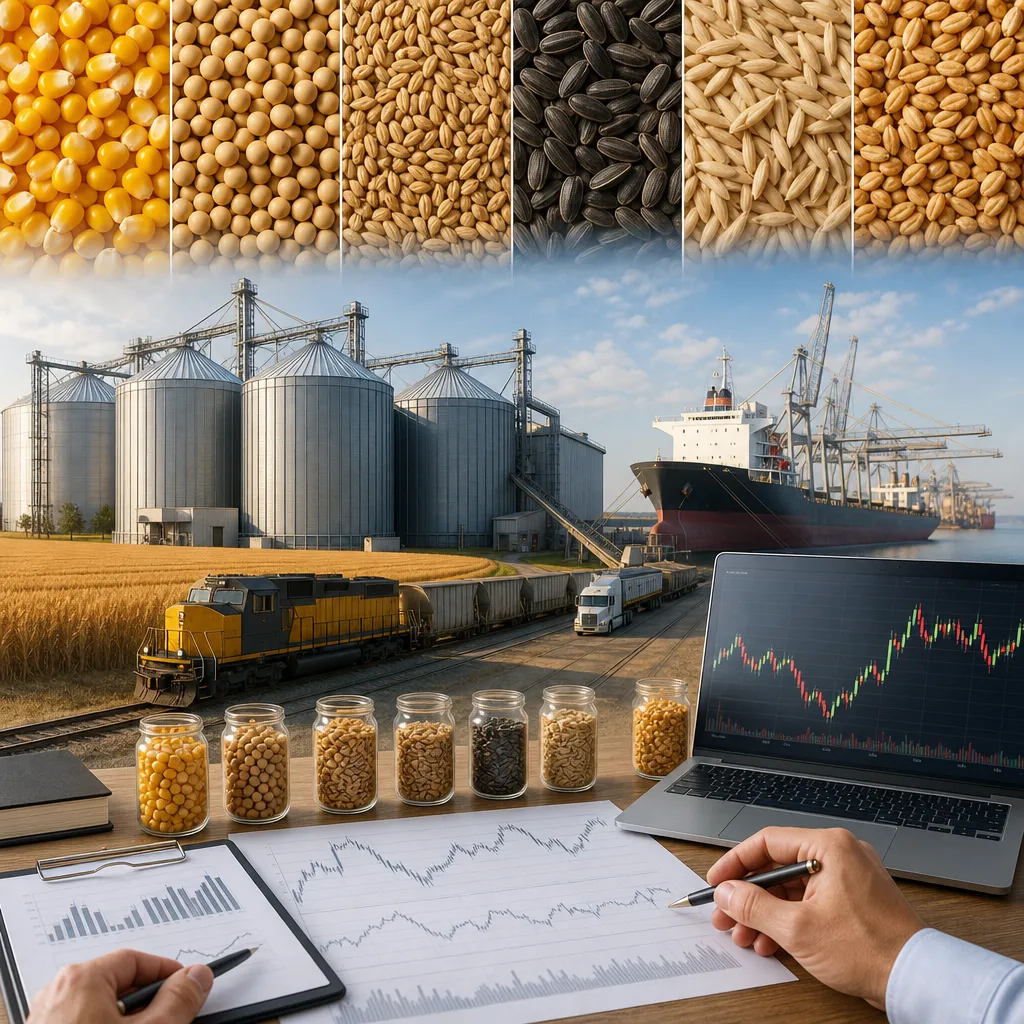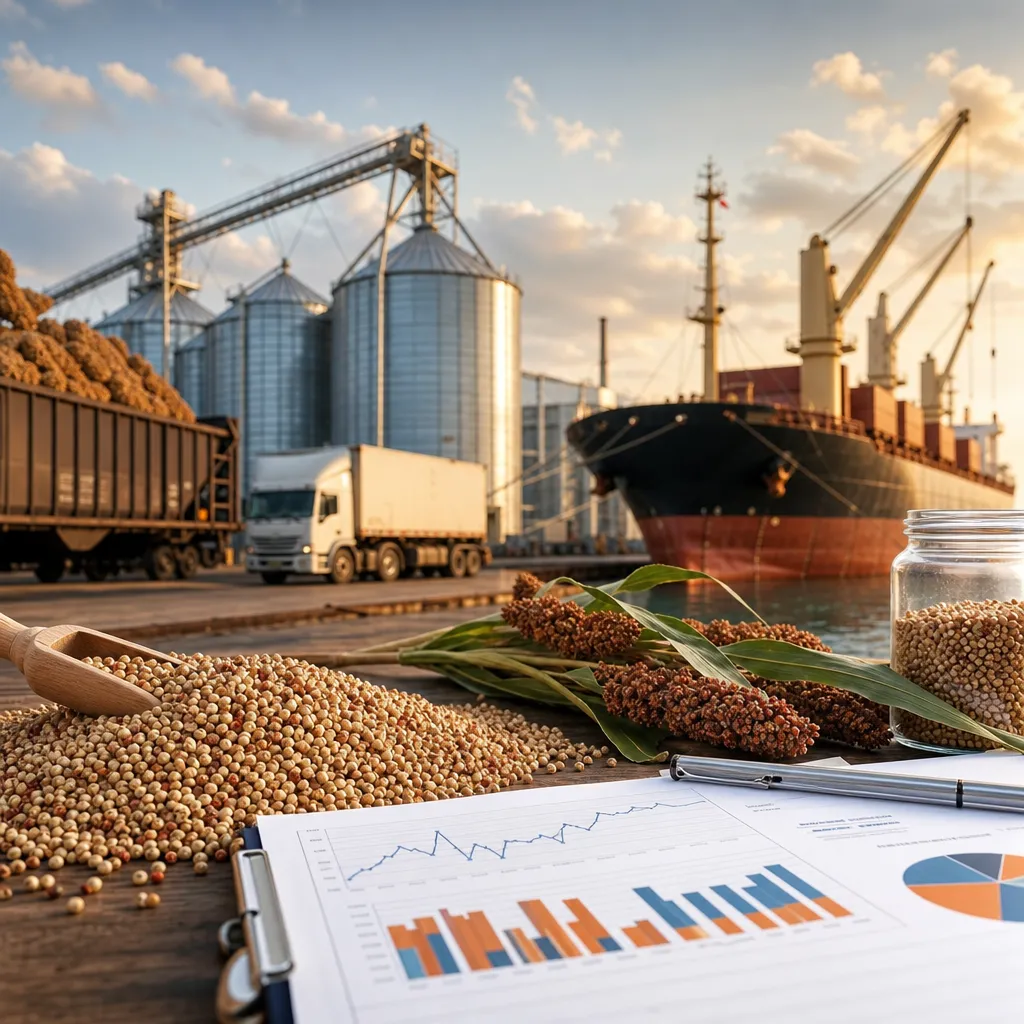








US sorghum price trends refer to how the value of sorghum changes across American cash markets, export channels, and related futures benchmarks over time. In the United States, sorghum is mainly a Plains crop, with pricing most relevant in major producing and handling areas such as Kansas, Texas, Oklahoma, Colorado, and nearby feed and export corridors. Prices are usually discussed in US dollars, commonly on a per bushel basis in farm and elevator markets, while export trade may also be discussed in dollars per metric ton. Because sorghum does not have a large dedicated US futures contract comparable to corn, its price is often formed in relation to other feed grains, especially corn, plus local basis, quality, freight, and export demand.
For readers looking for a “current” US sorghum price, the key point is that there is no single national live price that exactly represents every farm, elevator, or export terminal. A bid in western Kansas can differ materially from a bid in the Texas Panhandle or at the Gulf because transport cost, buyer competition, and export demand are different. That is why practical market analysis needs to separate benchmark grain values from local cash prices and export indications.
What the US sorghum market is
Sorghum in the United States is primarily a feed grain, although it also moves into some food, ethanol, and specialty uses. It competes most directly with corn in feed rations, so US sorghum prices are heavily influenced by corn market direction, but they do not move in lockstep. Sorghum can trade at a discount or premium to corn depending on regional supply, freight economics, and overseas demand.
The market operates through a network of country elevators, cooperatives, merchants, feed manufacturers, processors, rail loaders, and exporters. The physical market is local at the farm-gate and elevator level, but it is connected to national and international demand through rail and truck flows and, for export business, through terminal markets such as the US Gulf and occasionally the Pacific Northwest.
In practical terms, a farmer in Kansas or Texas usually sells physical sorghum to a local buyer on a cash basis. A merchant or exporter may then accumulate that grain, arrange rail or truck shipping, and sell it onward to a domestic feed customer or into export channels. The result is one national crop, but many different price points.
Where US sorghum prices are formed
US sorghum price formation starts in the physical cash market, not in a dedicated sorghum futures benchmark. Local bids are influenced by the broader feed grain complex, especially Chicago corn futures, but the actual transaction price depends on basis and market-specific conditions.
Important pricing regions include:
- High Plains production areas: especially Kansas and Texas, which are central to farm-level cash bids.
- Feed demand zones: livestock and feed users can support nearby delivered values.
- Export corridors: grain moving toward Gulf export positions may gain value when overseas demand is active.
- Rail-served markets: sorghum values can improve or weaken based on transportation availability and rail economics.
Because sorghum does not have a dominant standalone exchange contract in the way corn does, market participants often think in relative terms: sorghum versus corn, local sorghum basis, and delivered value to a domestic or export outlet. That makes local intelligence especially important.
| Price type | Where it is quoted | What it means |
|---|---|---|
| Local cash bid | Elevator, cooperative, merchant, processor | The price a local buyer is willing to pay for physical sorghum at a named location and delivery period. |
| Delivered price | Feed mill, processor, rail destination, livestock user | The value including transport to a specified destination. |
| Export bid | Merchant/export market indications | A buying indication tied to grain assembled for export shipment. |
| FOB export value | Export trade reporting | The value of sorghum loaded for shipment at the export point, excluding ocean freight. |
| Futures benchmark | Most often corn futures on CME Group | A financial benchmark used for hedging and price discovery, but not the same as a sorghum farm-gate cash price. |
How US sorghum prices are actually determined
The practical formula for many cash grain markets is benchmark futures plus or minus basis. For sorghum, however, the benchmark often comes indirectly through corn or through a buyer’s replacement value in feed or export channels. Basis is the local adjustment that reflects location, freight, supply, demand, and quality.
Key price drivers include:
- Corn market direction: when corn futures rise or fall sharply, sorghum often follows because both grains compete in feed demand.
- Local supply: harvest pressure can weaken bids in a producing region, while tight farmer selling can support them.
- Export demand: sorghum can strengthen when export buying becomes active, especially if overseas buyers see it as competitive against corn or other feed grains.
- Freight and logistics: truck availability, rail service, and transport cost matter because sorghum often moves long distances.
- Quality: test weight, moisture, damage, and other grain characteristics can affect discounts or acceptance.
- Competing demand: feed mills, ethanol users where relevant, and exporters may all compete for the same bushels.
- Weather and production outlook: drought or favorable growing conditions in the Plains can shift expectations quickly.
- Currency and world grain values: while US farm bids are in dollars, export competitiveness still depends on broader global grain pricing.
It is important not to confuse a futures quote with a local sorghum bid. A corn futures price is only a benchmark. The local sorghum cash bid may be higher or lower depending on basis and the buyer’s specific demand.
Where to check US sorghum prices online
If you need current US sorghum market information, the most reliable approach is to combine official data with local buyer bids. No single source captures every real-time physical deal in the country.
Useful places to check include:
- USDA Agricultural Marketing Service: market news can provide reported grain bids, regional trends, and some export-related information where available.
- USDA National Agricultural Statistics Service: useful for production, acreage, yield, and stocks context rather than live local bids.
- USDA Foreign Agricultural Service: export sales, world grain context, and trade-related reporting.
- CME Group: for corn futures prices, which are often used as a benchmark in sorghum pricing discussions and hedging.
- Local elevators and cooperatives: often the most relevant place to see actual cash bids available to producers in a specific county or region.
- Merchants and processors: direct buyer bid sheets or call programs may show spot, deferred, or delivered opportunities.
- Broker and market data platforms: useful for futures, spreads, and general grain market direction, but not a substitute for a local physical bid.
When checking a price online, always confirm:
- Whether it is sorghum or corn.
- Whether it is a cash bid, delivered bid, or futures quote.
- The location.
- The delivery period.
- Any quality assumptions or discounts.
| Source type | What it provides | Best use |
|---|---|---|
| USDA AMS | Reported cash market information and market commentary | Checking regional physical market tone |
| CME Group | Corn futures and options benchmark data | Following benchmark grain price direction and hedging reference |
| Local elevator or cooperative | Actual local sorghum cash bid | Knowing what a producer can really sell for nearby |
| USDA FAS | Export sales and trade context | Assessing export demand support or weakness |
US sorghum price trends: what usually moves the market
Over time, US sorghum prices tend to follow a mix of seasonal, domestic, and international forces. Harvest periods can weigh on local bids when supplies are abundant and storage space is tight. Post-harvest periods can see basis improvement if farmer selling slows and buyers need coverage.
Trend analysis usually focuses on the following themes:
- Planted area and yield expectations: lower acreage or weather damage can tighten supply and support prices.
- Relative value versus corn: if sorghum becomes cheap compared with corn, feed demand may improve; if it becomes expensive, users may switch away.
- Export competitiveness: strong international buying can quickly strengthen interior and terminal values.
- Stocks and carryout: tighter available supplies generally support stronger basis.
- Logistics constraints: congestion, rail issues, or high freight can separate interior prices from export values.
- Policy and trade conditions: shifts in trade relationships or phytosanitary conditions can affect export flow.
A useful practical distinction is that futures-led rallies and cash-led rallies are not the same. A futures-led rally comes from broader grain market optimism or risk, often driven by corn or soybeans. A cash-led sorghum rally usually reflects tight physical supplies, aggressive domestic bids, or export demand concentrated in specific locations.
Forecast outlook: bullish, neutral, and bearish scenarios
Any sorghum forecast should be treated as scenario analysis, not certainty. Because the crop is regionally concentrated and strongly linked to competing feed grain economics, even a sound outlook can change quickly if weather, exports, or corn prices shift.
| Scenario | Conditions | Likely implication for US sorghum prices |
|---|---|---|
| Bullish | Adverse Plains weather, tighter production, strong export demand, firm corn market | Higher cash bids and stronger basis, especially near active demand centers |
| Neutral | Average crop, stable feed demand, moderate exports, normal logistics | Prices move with broader grain markets, with ordinary seasonal basis patterns |
| Bearish | Large crop, weak exports, lower corn prices, heavy harvest selling | Softer cash bids and weaker basis, especially in surplus production areas |
Readers following forecasts should monitor USDA crop reports, weather conditions in the Plains, corn market direction, and export sales trends. Those factors often explain more than any single headline about sorghum alone.
How sorghum is physically bought, sold, and exported in the US
Physical sorghum trade in the United States happens through negotiated and posted cash bids. Sellers are usually farmers, commercial grain holders, or elevators. Buyers may include cooperatives, independent merchants, feed manufacturers, processors, and exporters.
Common transaction structures include:
- Spot cash sale: grain is sold at the current bid for nearby delivery.
- Forward cash contract: price and delivery period are agreed before harvest or before physical movement.
- Basis contract: basis is set now, while the futures component is fixed later using a benchmark such as corn.
- Minimum price or structured contract: offered by some commercial firms, often combining physical sale with option-based pricing features.
Before selling, the producer or holder normally confirms quality terms, moisture standards, delivery window, discount schedules, payment timing, and whether the bid is free on truck, delivered, or subject to freight adjustment. Counterparty reliability matters, especially in volatile markets.
For export, merchants typically originate sorghum inland, consolidate volume, arrange rail or truck movement to terminal facilities, and sell on an export basis such as FOB. Export values then influence inland bids if the spread between interior supply and terminal demand supports movement.
How hedging works when there is no major dedicated sorghum futures benchmark
US sorghum market participants often hedge price exposure using related futures, most commonly corn futures on CME Group, because corn is the closest broad feed grain benchmark. This is an imperfect hedge, since sorghum and corn do not always move together by the same amount. That difference is called cross-hedging risk or basis risk.
Physical and financial activity should be kept separate:
- Physical market: a farmer sells actual sorghum to an elevator, merchant, or processor.
- Futures/options market: a producer, merchant, or trader uses a brokerage account to manage price risk through exchange-traded instruments.
To hedge, a commercial participant may sell corn futures against expected sorghum ownership or purchase, then later offset that futures position when the physical grain is sold or bought. Options may also be used to create a price floor while preserving some upside. However, because this is not a perfect one-for-one hedge, users must monitor the sorghum-corn relationship carefully.
Speculators can also trade corn futures or options without ever handling grain, but that is financial exposure only. It is not the same as owning, storing, or merchandising physical sorghum.
Practical FAQs about US sorghum price trends
Where can I check a current US sorghum cash price?
The best place is usually a local elevator, cooperative, merchant, or processor serving the region where the grain would actually be delivered. USDA Agricultural Marketing Service reports can help with broader market context, but a local posted bid is more relevant for an actual sale.
What is the main benchmark for US sorghum pricing?
In practice, corn is the main benchmark grain because sorghum competes with it in feed markets and because corn futures are widely used for price discovery and hedging. But sorghum cash prices can diverge sharply from corn depending on basis and export demand.
Why is my local sorghum bid different from a futures quote?
A futures quote reflects a standardized exchange contract, not your local physical market. Your sorghum bid includes basis, freight, local supply and demand, buyer competition, quality, and delivery terms.
Is US sorghum mainly a domestic or export market?
It is both. Sorghum has domestic feed and other end uses, but export demand can be very important and at times can strongly influence inland values, especially in major producing regions connected to export logistics.
How is sorghum usually priced in the United States?
Local farm and elevator trade is commonly discussed in US dollars per bushel. Export business may also be discussed in dollars per metric ton, especially in international trade contexts.
Can farmers hedge sorghum on an exchange?
They often hedge indirectly using corn futures or options through a broker, because the US does not rely on a large standalone sorghum futures benchmark in the same way it does for corn or wheat. This is a cross-hedge, so it carries additional basis risk.
What usually causes the biggest sorghum price swings?
Weather in the Plains, changes in corn prices, export demand shifts, harvest pressure, and freight or logistics constraints are usually the most important drivers.
Sources
- USDA Agricultural Marketing Service
- USDA Foreign Agricultural Service
- CME Group