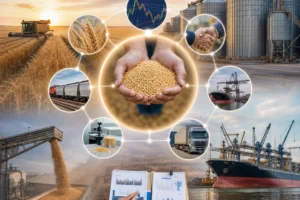
Soybean futures are standardized contracts traded on a regulated exchange that let market participants buy or sell soybeans for a future month at a price discovered in the marketplace today. They are used in two very different ways: as a financial risk-management tool by farmers, elevators, exporters, crushers, and feed users, and as a speculative instrument by traders who usually never handle physical beans. The key to understanding how soybean futures work is to separate the exchange futures price from the local cash price actually paid at an elevator, processor, or export point. Futures create a benchmark; the physical market adds basis, quality, freight, storage, and local supply-and-demand conditions.
In practice, soybean futures are most closely associated with the Chicago Board of Trade, now part of CME Group. Market participants watch those futures quotes online through CME data, broker platforms, market-data services, agricultural websites, and farm marketing tools. Physical soybean sales, however, normally happen through country elevators, cooperatives, grain merchants, crushers, processors, river terminals, or export houses, not by clicking a futures quote alone.
What soybean futures are
A soybean futures contract is a standardized agreement traded on an exchange. The exchange sets the contract size, delivery months, quality specifications, trading rules, and clearing procedures. Standardization is what allows many buyers and sellers to trade the same instrument continuously.
For soybeans, the benchmark U.S. contract is the CBOT Soybean futures contract. Instead of negotiating every detail privately, all participants trade the same contract terms and compete only on price. That makes soybean futures a transparent reference point for pricing physical grain and managing price risk.
Most users do not hold soybean futures all the way to delivery. A farmer who sells futures to hedge an expected crop usually buys the futures back before the contract enters delivery. A crusher that buys futures as a hedge for future soybean needs often sells out the hedge before taking physical ownership elsewhere through its normal procurement network. The financial futures position and the physical grain transaction are related, but they are not the same thing.
How the contract works in practice
When you trade a soybean futures contract, you are not usually paying for a truckload of soybeans up front. You are posting margin, which is a performance bond required by your futures broker and the clearing system. Because only margin is posted, futures are leveraged instruments. That means relatively small price moves can produce large gains or losses relative to the cash committed.
The contract has a listed delivery month. As trading continues, the futures price changes with expectations for acreage, yield, weather, export demand, crush demand, currency moves, competing crops, and broader financial conditions. Profit and loss are settled daily through the broker account. If the market moves against a trader, additional funds may be required.
Users normally access soybean futures through:
- Regulated futures brokers, which provide the required trading account, risk disclosures, and platform access.
- Broker trading platforms, where orders are entered electronically.
- Commercial hedging desks at grain companies or processors, which may manage futures positions alongside physical grain programs.
- Market-data platforms, which provide quotes and charts but may not execute trades unless connected to a broker.
Trading soybean futures online is a financial market activity. Buying physical soybeans is a separate commercial process involving counterparties, logistics, quality terms, and delivery arrangements.
| Market | What is traded | Where it happens | Who uses it |
|---|---|---|---|
| Futures market | Standardized soybean contracts | Regulated exchange access through futures brokers | Farmers, elevators, crushers, exporters, funds, speculators |
| Cash market | Physical soybeans | Elevators, cooperatives, processors, merchants, terminals | Producers, buyers, feed users, exporters, processors |
| Forward cash contract | Physical soybeans for future delivery | Direct agreement with local buyer | Farmers, elevators, processors |
| OTC risk management | Privately negotiated price instruments | Banks, merchants, commercial counterparties | Larger commercial users |
How futures prices connect to local soybean prices
The most important bridge between futures and cash soybeans is basis. Basis is the difference between the local cash bid and the relevant futures contract. If a local elevator bids below futures, basis is negative. If the local market is bidding above futures, basis is positive.
Local soybean prices depend on more than the exchange quote. A processor that needs beans immediately may bid aggressively. A region with heavy harvest deliveries and limited storage may show weaker cash bids. Freight to river, rail, or export channels matters. Quality can matter too, especially if moisture, damage, or foreign material discounts apply.
This is why a farmer should not assume the futures price on a screen equals the farmgate value. The normal way to check a real selling opportunity is to compare local bids from:
- Country elevators and cooperatives
- Soybean crushers and processors
- Grain merchants and exporters
- River terminals or domestic feed buyers where relevant
- State or regional agricultural market reporting services, where available
- Farm marketing software or local bid tools that aggregate participating buyers
Many elevators publish cash bids online or through mobile apps, but these are still buyer-specific offers and can change during the day. The futures quote is an exchange benchmark; the local bid is a physical purchase offer tied to a delivery location and terms.
Who uses soybean futures and how
Farmers use soybean futures to hedge expected production. If they fear prices may fall before harvest, they may sell futures now. If cash prices do fall later, losses in the physical market may be partly offset by gains on the futures hedge. This does not eliminate basis risk, and it does not protect against production shortfalls.
Elevators and cooperatives use futures to manage inventory and forward-contract exposure. If an elevator buys soybeans from farmers for later resale, it may sell futures to reduce flat-price risk while holding physical stocks.
Crushers and processors buy soybeans as an input for meal and oil production. They may use soybean futures, and sometimes related soybean meal and soybean oil futures, to manage input and margin exposure.
Exporters and merchants use futures as part of pricing cargoes and managing positions between inland procurement and destination sales. Their cash business is heavily affected by freight, port capacity, loading schedules, and global demand.
Speculators trade soybean futures purely for price movement. They provide liquidity, but they also take on market risk without a physical offset.
| Participant | Typical objective | How futures are used | Main limitation |
|---|---|---|---|
| Farmer | Protect crop sale value | Sell futures against expected production | Basis risk and margin calls |
| Elevator | Manage inventory risk | Sell futures against owned grain | Storage, freight, and basis exposure remain |
| Crusher | Manage raw material cost | Buy soybean futures or hedge crush margin | Operational and product-price risk |
| Speculator | Profit from price moves | Buy or sell futures without physical grain | High leverage risk |
Delivery, expiry, and why most traders close out
Soybean futures are deliverable contracts, but that does not mean every contract turns into a railcar or truck shipment. Delivery under exchange rules is a specific process with approved locations, grades, timings, and documentation. It is mainly relevant to commercial firms that understand exchange delivery procedures and have the operational capacity to perform.
Most participants close their futures before first notice day or before liquidity shifts to a later contract month. A speculator has no interest in arranging warehouse receipts or approved delivery logistics. A farmer is usually selling physical soybeans to a local buyer, not delivering directly through the exchange. Even many commercial firms prefer to settle futures positions financially and conduct actual grain movement through their normal cash channels.
If you plan to use futures, you must know the contract month you are trading, the broker’s position rules, and the timing around notice periods and expiration. Failing to monitor those dates is a basic but costly mistake.
How to trade or hedge soybean futures step by step
The practical process differs depending on whether you are a hedger or a financial trader, but the broad steps are similar.
- Define the objective. Are you hedging physical soybeans, managing input costs, or speculating on price direction?
- Choose a regulated futures broker. You normally need a futures trading account, identity verification, and risk disclosures.
- Understand the contract. Know the delivery month, contract size, tick value, trading hours, and margin rules from official exchange and broker materials.
- Select the relevant month. Hedgers often choose the futures month most closely related to the timing of physical purchase or sale.
- Place the trade electronically. This is usually done on the broker’s platform.
- Monitor margin and basis. A hedge can work on price direction but still leave basis changes, while a speculative position can trigger margin calls quickly.
- Offset or roll before delivery if appropriate. Most users close the position before delivery exposure becomes operationally relevant.
- Execute the physical transaction separately. Farmers and buyers still complete cash sales or purchases through elevators, processors, merchants, or terminals.
Common mistakes include hedging the wrong month, ignoring basis, underestimating margin risk, confusing a cash forward contract with a futures contract, and assuming online futures trading is the same as selling real soybeans.
Where to check soybean futures, cash bids, and market reports
For official exchange contract information, contract specs, and futures market references, CME Group is the primary source for CBOT soybean futures. A reader can use CME materials to verify contract months, delivery structure, and general market conventions.
For government market intelligence, USDA is essential. Different USDA reports serve different purposes:
- WASDE for broad supply-and-demand balance sheets and global context
- Crop Progress for planting, condition, and harvest developments during the season
- Grain Stocks for inventory information
- Prospective Plantings and acreage-related releases for area expectations
- Export Sales for weekly export demand signals
- AMS market news for some cash market reporting and basis context where available
For positioning data, the U.S. Commodity Futures Trading Commission publishes the Commitments of Traders report. Analysts use it to see how different categories of market participants are positioned in futures and options markets. It does not predict price by itself, but it helps interpret crowding and sentiment.
Local cash bids are usually found through elevator websites, cooperative bid sheets, processor procurement pages, phone calls to grain buyers, or farm marketing systems that collect participating bids. Physical buyers, not the futures exchange, are the right place to confirm delivery location, moisture terms, discounts, storage charges, and payment timing.
Main price drivers for soybean futures
Soybean futures respond to expected changes in supply and demand, not just current truck bids. Weather is a central driver during planting and growing seasons, especially in major producing regions. Acreage shifts versus corn or other competing crops matter because they affect total production potential.
Demand is also critical. Soybean crush margins influence processor buying interest. Export demand depends on global import programs, especially from major importing countries, as well as currency moves and competition from other exporters. Biofuel policy can matter through soybean oil demand. Freight and logistics influence local cash markets more directly, but they also shape spreads and basis relationships.
Because soybean futures are a benchmark, not a complete physical price, analysts usually combine exchange prices with basis data, weather maps, crop reports, export inspections, and balance sheet updates.
Risks, costs, and limitations
The main risk in soybean futures is leverage. A trader can be right about the long-term market and still be forced out by short-term adverse price moves and margin calls. Futures are efficient, but they are unforgiving if position size is too large.
For hedgers, futures reduce flat-price risk but do not remove:
- Basis risk
- Production risk
- Quality discounts
- Storage losses or charges
- Freight changes
- Counterparty and operational risks in the cash market
There are also transaction costs such as brokerage commissions and exchange-related fees through the broker, although exact charges depend on provider and account type. Commercial users should also consider internal financing costs, hedge accounting, and administrative burden.
That is why many farms and grain businesses use soybean futures as one part of a broader marketing program rather than as a stand-alone solution. Futures are a tool for transferring price risk, not a guarantee of profit.
Where can I check soybean futures prices?
You can normally check benchmark soybean futures through CME Group market information, futures broker platforms, and commercial market-data services. Those prices are exchange benchmarks. To see what a local buyer is paying for physical soybeans, check elevator, cooperative, processor, or merchant bids separately.
Is soybean futures trading the same as selling physical soybeans?
No. Futures trading is a regulated financial market activity. Selling physical soybeans is a commercial grain transaction involving a real buyer, delivery point, quality terms, freight, and payment arrangements. The two are linked by basis, but they are not the same trade.
Who usually uses soybean futures for hedging?
Farmers, country elevators, cooperatives, crushers, processors, exporters, and some feed users commonly use soybean futures to manage price risk. Each uses the contract differently depending on whether they are protecting inventory value, input cost, or forward purchase and sale commitments.
Do I need to take delivery if I trade soybean futures?
Usually no. Most traders and many hedgers close or roll positions before delivery becomes relevant. Delivery is mainly handled by commercial participants that understand exchange procedures and approved delivery locations.
Why is my local soybean bid different from the futures price?
Because the local bid includes basis, which reflects freight, local supply and demand, storage pressure, processor demand, export access, and other regional conditions. Quality discounts or premiums may also apply in the cash market.
What reports matter most for soybean futures?
Commonly watched reports include USDA WASDE, Crop Progress, Export Sales, Grain Stocks, and acreage-related releases. Many analysts also monitor CFTC Commitments of Traders for futures positioning and CME contract information for market structure.
Can soybean futures be traded online?
Yes, through a regulated futures broker and its trading platform. But online futures trading gives access to the financial contract, not to truck-by-truck physical soybean procurement. For physical sales or purchases, you still need a grain buyer such as an elevator, processor, or merchant.
What is the biggest practical risk for beginners?
Confusing hedging with speculation and underestimating margin risk. Beginners also often ignore basis, contract month selection, and delivery timing rules. Understanding those mechanics is more important than simply watching the headline futures price.
Sources
- CME Group
- USDA
- U.S. Commodity Futures Trading Commission