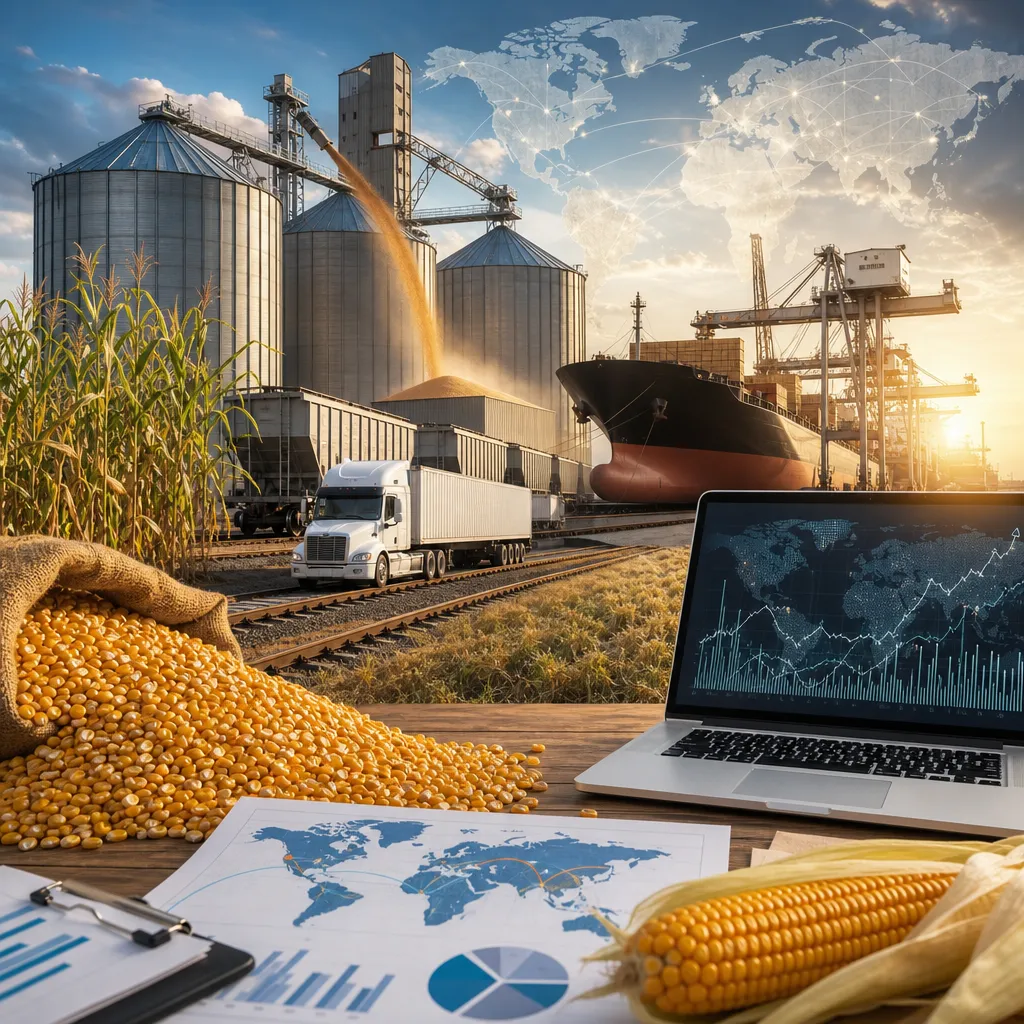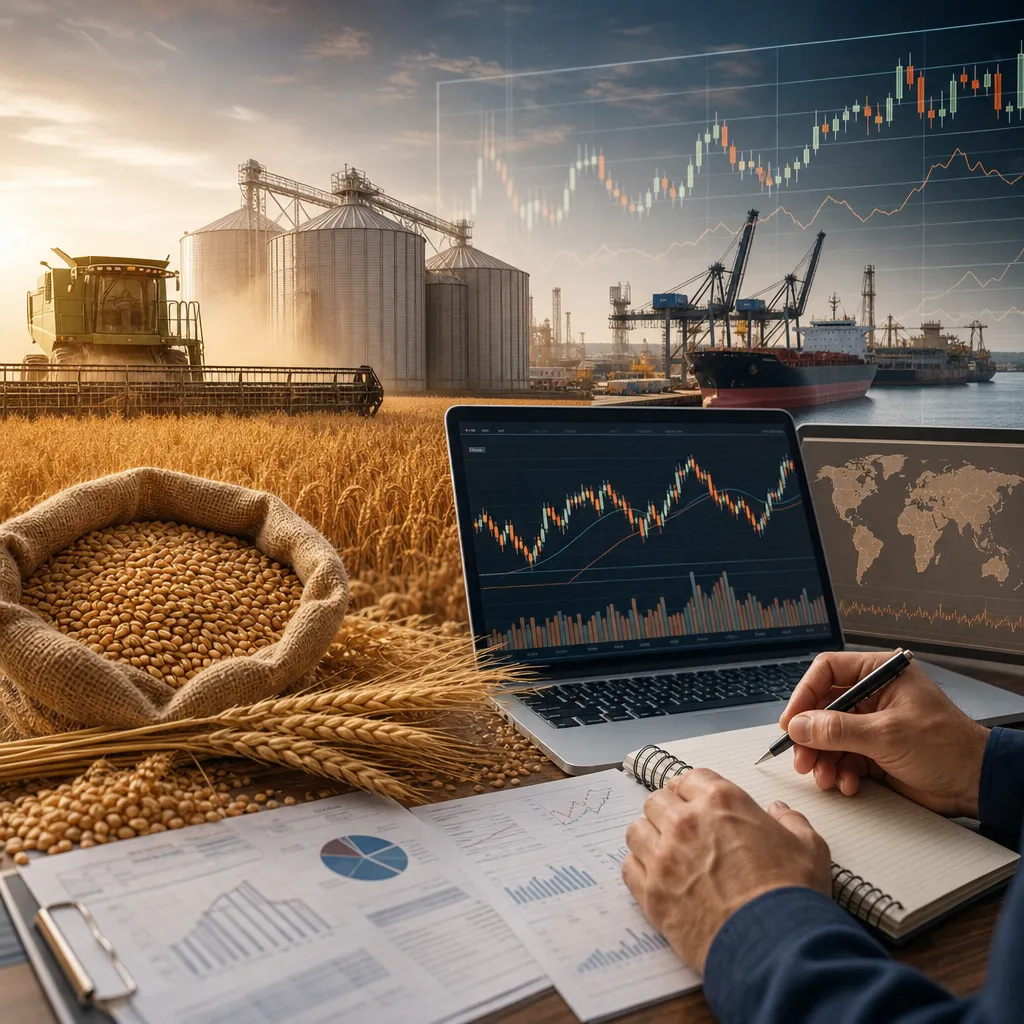


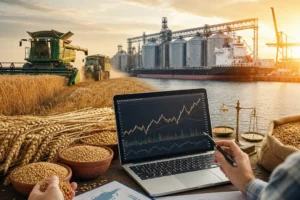

Ukraine grain prices today usually refers to current cash bids, export indications, or port-delivered values for wheat, corn, barley, and sometimes sunflower-related feed ingredients in the Ukrainian physical market. Ukraine is one of the world’s important grain-origin countries, so its domestic prices are closely linked to global benchmarks, export logistics, and Black Sea trade conditions. In practice, there is no single nationwide “live” price for Ukrainian grain: values differ by region, crop quality, delivery point, payment terms, and whether grain is quoted at the farm, elevator, inland terminal, or export port. Readers looking for today’s level should treat any quoted futures market only as a benchmark, not as the exact price a Ukrainian farmer or merchant will receive.
Geographically, this market operates across Ukraine’s grain-producing regions and through its inland storage, rail, river, and seaport logistics chain where available. Prices are commonly discussed in hryvnia per metric ton for domestic trade and in US dollars per metric ton for export-oriented trade, especially for port or FOB-related discussions. The main crops normally followed are milling wheat, feed wheat, corn, and barley, with local cash values often influenced by broader Black Sea competition and by benchmarks such as Chicago wheat and corn futures or Euronext wheat futures.
What “Ukraine grain prices today” actually means
When market participants talk about grain prices in Ukraine today, they may mean several different things:
- Farm-gate cash price: what a farmer may receive at the farm or nearby collection point.
- Elevator or inland bid: a price offered by a storage operator, processor, merchant, or rail-loading point.
- Delivered port price: a price for grain delivered into a port terminal or export collection hub.
- Export bid: an exporter’s purchase indication, often tied to shipment windows and quality.
- FOB indication: a theoretical or actual export price quoted free on board at a seaport, not the same as inland cash price.
That distinction matters because Ukraine is primarily an export-oriented grain origin. A local bid inland must absorb transport, handling, storage, financing, and risk costs before grain becomes exportable. As a result, two buyers on the same day can offer different prices for the same crop in different regions.
| Price type | Where quoted | What it means |
|---|---|---|
| Farm-gate cash | Farm or local buyer | Net price closest to producer level before major logistics |
| Elevator/inland bid | Warehouse, rail point, inland terminal | Price for grain delivered to a specified domestic point |
| Port-delivered price | Export collection point or seaport terminal | Value after inland transport into the export channel |
| FOB export price | Black Sea export trade context | Cargo price loaded on board for export, not equivalent to farm price |
| Futures benchmark | CBOT or Euronext | Financial benchmark used for price discovery and hedging |
Where the Ukrainian grain market operates
Ukraine’s grain market begins in producing regions where wheat, corn, and barley are grown and marketed by farms of different sizes. Grain then moves into local elevators, processors, rail-loading points, river logistics where available, and export channels. Because Ukraine is structurally important in international grain trade, prices are shaped not only by domestic harvest conditions but also by access to export corridors and shipment capacity.
In practical terms, the most watched pricing zones are usually:
- Producing regions, where farmers first sell or store grain.
- Inland commercial hubs, where merchants aggregate cargoes.
- Port-related markets, where exporters compete for grain to fill vessels or nearby shipment programs.
Ukraine’s role is far more export-oriented than many grain-consuming countries. That means local values often move with seaborne trade sentiment, freight feasibility, insurance and logistics conditions, and the strength of export demand from importers in regions such as North Africa, the Middle East, and parts of Europe.
How grain prices are formed in Ukraine
Ukrainian grain pricing combines international benchmarks with local basis. The benchmark may come from world wheat or corn futures, nearby Black Sea export values, or importer demand for specific qualities. The local basis is the difference between that benchmark and the actual Ukrainian cash price at a particular location.
Several factors shape that final price:
- Global benchmark moves: wheat and corn futures can influence export parity calculations.
- Crop quality: protein, moisture, test weight, damage, and contamination matter, especially for milling wheat.
- Location: grain near efficient logistics and export channels usually prices differently from remote production areas.
- Transport cost: truck, rail, storage, and handling directly affect inland bids.
- Export demand: stronger nearby vessel demand can support port-delivered prices.
- Currency moves: domestic hryvnia pricing and export dollar pricing can diverge as exchange rates shift.
- Seasonality: harvest pressure can weaken nearby cash bids, while later-season tightness can support them.
- Policy and logistics risk: any disruption affecting movement or trade can widen or narrow basis quickly.
A simple way to think about it is this: the exporter starts from what overseas buyers are willing to pay, subtracts freight, loading, handling, financing, margin, and risk, and arrives at a purchase bid. That bid is then lower still once inland transport to the port is deducted. This is why a futures rally abroad does not automatically produce the same-sized increase in a local Ukrainian farm bid.
Where to check Ukraine grain prices online
Because current prices change constantly and vary by location, the safest approach is to use market information sources rather than rely on a single headline quote. For Ukraine, readers normally check a mix of official reporting, exchange benchmarks, and commercial cash-market indications.
Useful places to monitor the market include:
- Ministry of Agrarian Policy and Food of Ukraine: useful for policy context, sector updates, and market-relevant official information.
- State Statistics Service of Ukraine: useful for production, stocks, area, and trade context rather than live cash bids.
- USDA: especially World Agricultural Supply and Demand Estimates and Ukraine-related production/trade context.
- CME Group: benchmark futures for corn and wheat used globally in risk management and price direction.
- Euronext: an important wheat benchmark for European and Black Sea trade analysis.
- Local merchants, exporters, elevators, and farm trading desks: often the most practical source for actual purchasable or sellable spot bids.
- Market reporting agencies and broker screens: used by traders for day-to-day export parity and cash market indications.
If you are looking for “today’s price,” check three things together: the benchmark futures market, the relevant export market tone, and actual buyer bids at the delivery point you care about. Without all three, the number can be misleading.
| Source type | What you can check | Best use |
|---|---|---|
| Official Ukrainian institutions | Production, harvest, trade, policy context | Understanding supply and domestic market conditions |
| USDA reports | Global and Ukraine balance-sheet context | Comparing Ukraine with competing exporters |
| CME Group and Euronext | Futures benchmarks for wheat and corn | Tracking international price direction and hedging references |
| Local buyers and exporters | Actual local cash bids and delivery terms | Making selling or purchasing decisions |
Cash prices versus futures in the Ukraine market
One of the most common mistakes is to treat a futures quote as if it were the price of physical grain in Ukraine. Futures are standardized financial contracts traded on exchanges. Ukrainian grain is a physical commodity sold under specific quality, delivery, and payment terms. The two are connected, but they are not identical.
Futures price reflects a tradable benchmark for delivery under exchange rules. Cash price reflects what a real buyer offers for real grain at a real place in Ukraine. The difference between them is called basis. In Ukraine, basis can be heavily influenced by export capacity, domestic logistics, and risk conditions.
For example, milling wheat delivered toward export channels may price differently from feed wheat sold inland. Likewise, corn prices can strengthen relative to futures if nearby exporter demand is strong, or weaken if logistics become congested and buyers widen discounts.
How grain is actually bought and sold in Ukraine
The physical grain market in Ukraine is built around direct trade between producers and commercial buyers. Those buyers can include local merchants, storage operators, processors, feed producers, flour mills, and exporters. Transactions are usually negotiated on a delivered or ex-farm basis with specific quality clauses.
Physical grain trading
- Seller identifies the crop and quality: wheat, corn, or barley, with moisture, protein, and other quality measures where relevant.
- Buyer issues a bid: this may be ex-farm, delivered elevator, delivered rail point, or delivered port.
- Parties agree terms: volume, quality tolerances, delivery window, payment timing, and responsibility for transport.
- Grain is tested and delivered: final settlement may depend on actual quality and weight.
- Payment is made according to contract terms: counterparty reliability matters, especially when markets are volatile.
Many producers monitor prices online but still execute sales through direct relationships with merchants or local buyers. That is normal. Watching prices digitally does not mean the transaction itself happens on an exchange.
Export trade
For export, merchants and international trading houses aggregate cargoes from inland suppliers, assemble specifications, deliver grain into terminals, and sell on terms such as FOB or other shipment-based conditions. Importers may be state buyers, private millers, feed manufacturers, or other trading firms abroad. The final exportable value feeds back into inland Ukrainian bids after logistics and commercial costs are deducted.
How hedging and futures access work
Hedging grain exposure is different from owning grain physically. A Ukrainian producer, merchant, or end-user may use financial markets to reduce price risk, but that hedge normally takes place through a brokerage relationship giving access to futures or options on exchanges such as CME Group or Euronext when relevant.
Futures and options
- Where it happens: on regulated exchanges through a broker, not by delivering farm grain directly into most contracts.
- Who uses it: exporters, merchants, processors, and sophisticated producers or risk managers.
- Why use it: to lock in or protect against adverse price moves.
- Main risk: basis risk remains, because the hedge may move differently from the local Ukrainian cash market.
- Financial reality: futures involve margin, mark-to-market, and leverage, so they require discipline and risk controls.
A farmer may sell physical corn to a local buyer and separately use futures to manage benchmark price exposure. A trader may buy or sell futures without ever touching physical grain in Ukraine. Those are different activities and should not be confused.
Main drivers of the Ukraine grain price outlook
Any forecast for Ukraine grain prices should be framed as a scenario, not a certainty. The market is highly sensitive to both agricultural fundamentals and trade-channel conditions.
The most important drivers usually include:
- Weather and yield: planting, winter survival, spring development, and summer moisture all matter.
- Harvest pace and quality: delays or quality problems can affect milling versus feed spreads.
- Export corridor functionality: the smoother the grain can move to buyers, the stronger export parity may be.
- Global competition: prices also depend on crops from other major exporters.
- Currency movement: hryvnia and dollar relationships affect domestic pricing.
- Input costs: fertilizer, fuel, and financing influence producer selling behavior and acreage decisions.
- Feed and food demand: local livestock, milling, and industrial demand can support specific crops.
If global wheat or corn benchmarks rise while Ukrainian export logistics remain workable, local prices may strengthen. If world prices are firm but logistics deteriorate, inland bids may lag. If harvest is large and producer selling accelerates, nearby cash markets may come under pressure even when longer-term demand remains constructive.
Practical points for buyers, sellers, and market watchers
Anyone following Ukraine grain prices today should first define the exact commodity and delivery point. “Wheat price” is incomplete unless you know whether it is milling or feed quality, where it is located, and whether the quote is ex-farm, delivered inland, or delivered port.
For sellers, the most useful comparison is often between several real bids from merchants or elevators, not just a benchmark chart. For buyers, it is important to understand whether a quote includes transport, elevation, financing, and quality adjustments. For traders, the key is to separate flat-price risk from basis and logistics risk.
In short, the Ukrainian grain market is both local and global at the same time: local because delivery and quality determine cash value, global because export parity and world grain benchmarks heavily influence price direction.
Frequently asked questions
Where can I check Ukraine grain prices today?
Check local buyers, exporters, and elevator bids for actual cash market levels, then compare them with benchmark futures on CME Group or Euronext and broader balance-sheet context from USDA. Official Ukrainian institutions are useful for market background, not necessarily for live local bids.
Are Ukrainian grain prices quoted in hryvnia or US dollars?
Both are used. Domestic physical transactions are often discussed in hryvnia per metric ton, while export-oriented trade is commonly evaluated in US dollars per metric ton.
What is the main benchmark for Ukraine wheat and corn prices?
There is no single Ukrainian exchange benchmark that replaces global markets. Traders often watch Chicago wheat and corn futures and Euronext wheat futures, then adjust for Ukrainian basis, quality, and logistics.
Why is the local cash price different from futures?
Because cash prices include basis. Basis reflects location, quality, freight, storage, handling, buyer competition, export demand, currency effects, and local supply-demand conditions.
Can a farmer in Ukraine sell grain directly on a futures exchange?
Normally, physical grain is sold to a merchant, elevator, processor, or exporter. Futures access is financial and usually takes place through a broker for hedging or speculation, not as a simple substitute for local physical marketing.
How is grain exported from Ukraine?
Exporters buy grain inland, move it through storage and transport networks, assemble cargoes, and sell to foreign buyers on shipment-based terms. Inland prices are derived from export values after logistics and commercial costs are deducted.
What crops matter most in the Ukrainian grain market?
Wheat, corn, and barley are the main grains typically monitored. Their relative price strength depends on quality, domestic demand, export demand, and competing supply from other origins.
What are the biggest short-term drivers of Ukraine grain prices?
Weather, harvest pace, export logistics, global futures direction, buyer competition, currency movement, and the condition of international trade routes are usually the key short-term drivers.
Sources
- Ministry of Agrarian Policy and Food of Ukraine
- USDA Foreign Agricultural Service
- CME Group