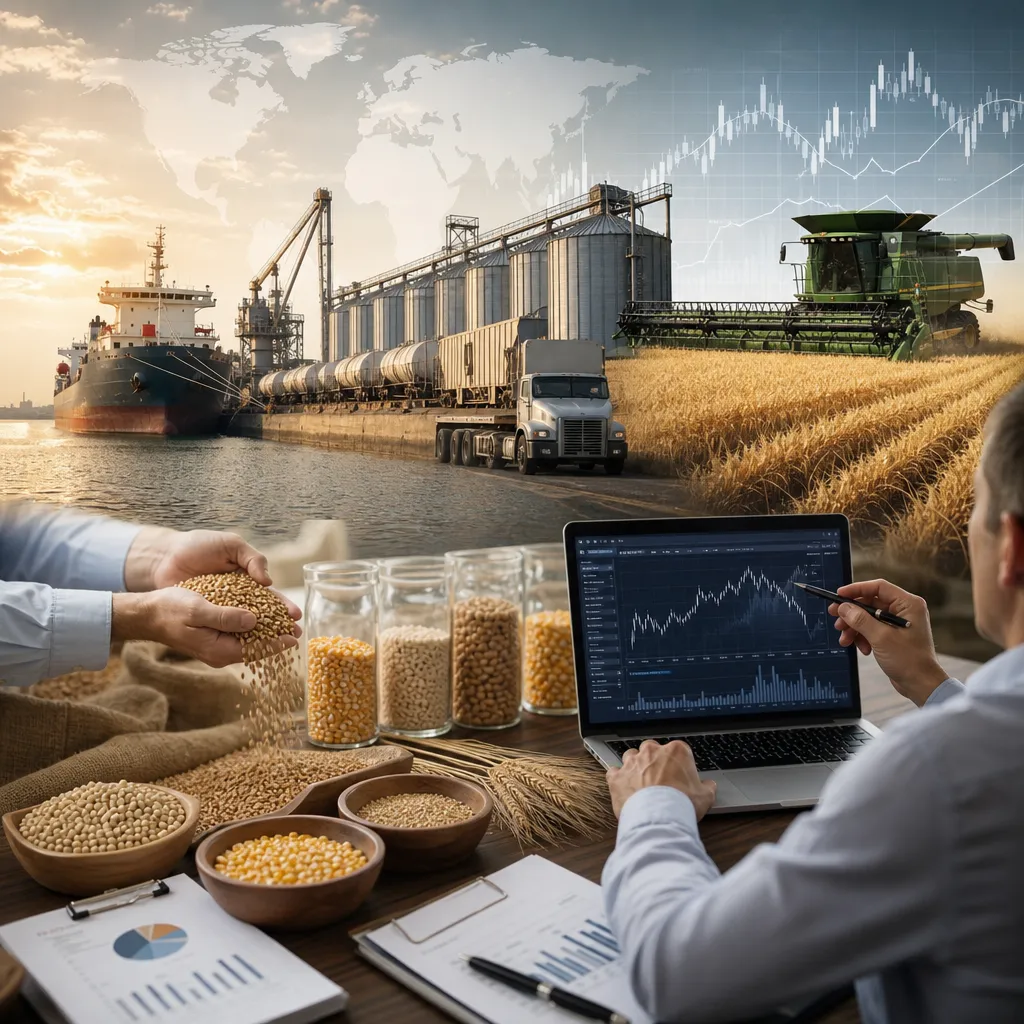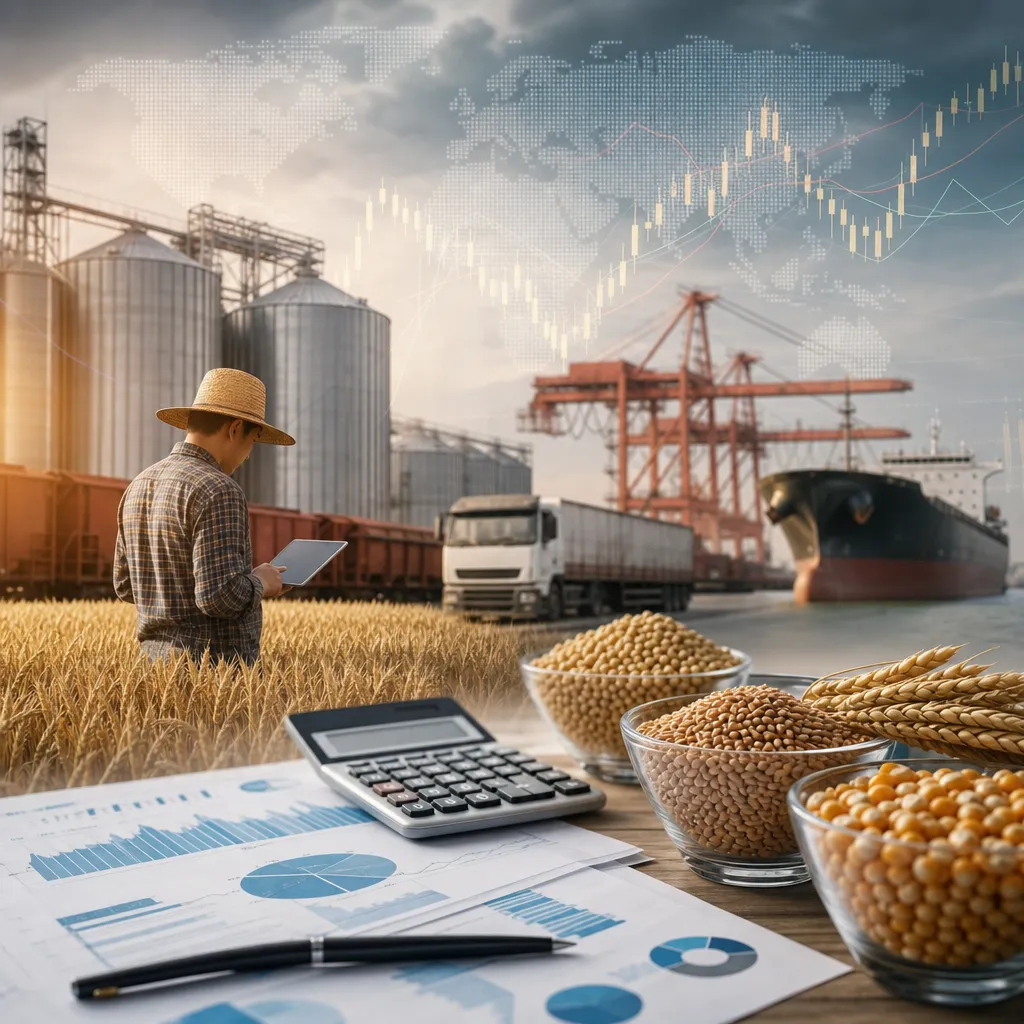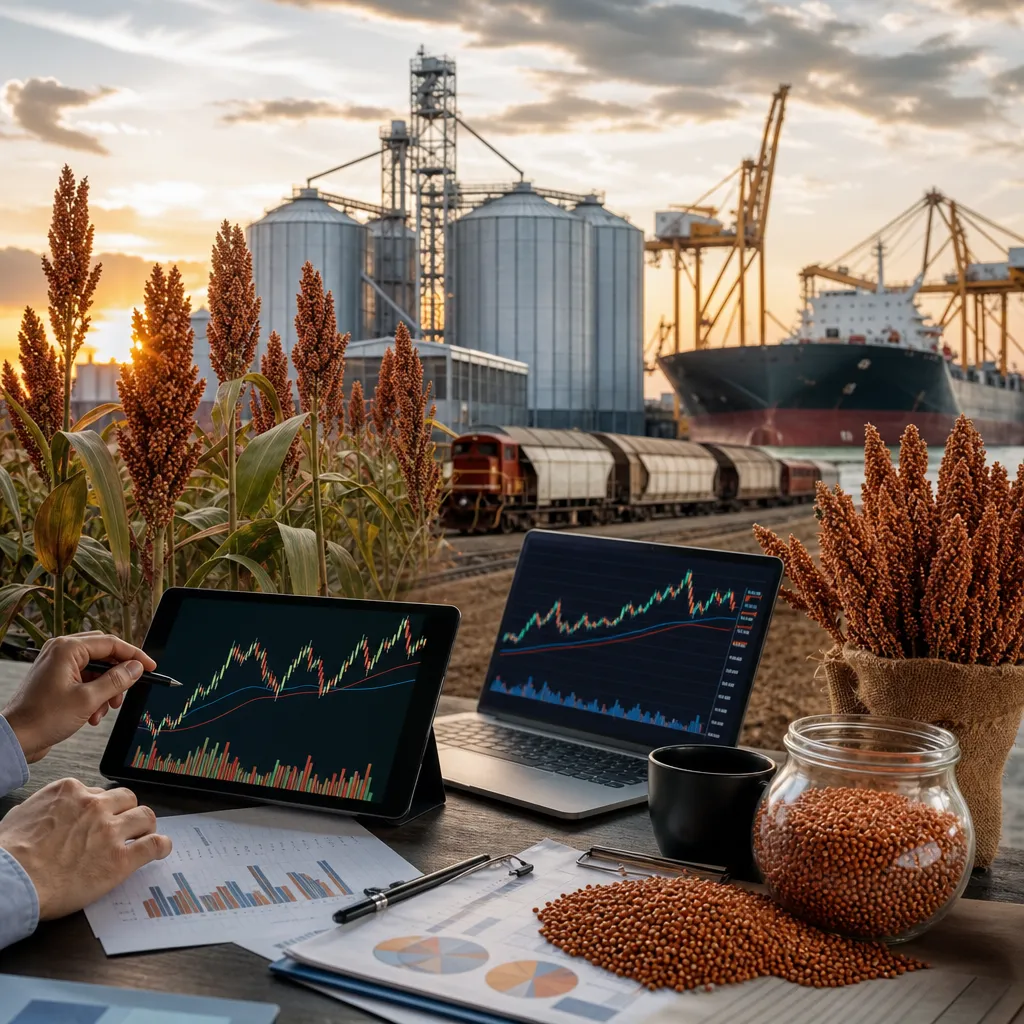


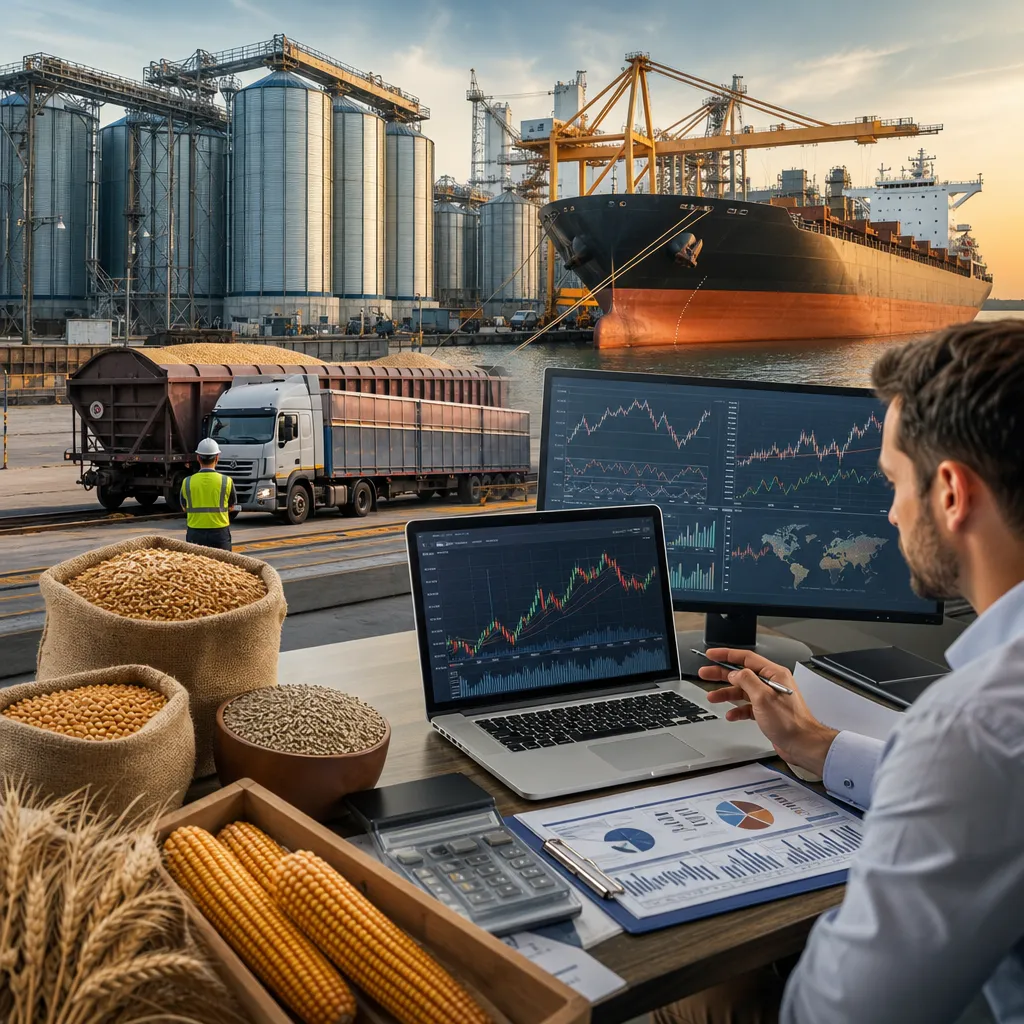
Managing grain price volatility starts with one practical rule: separate the exchange price from the price you can actually buy or sell at locally. Grain prices move because supply, demand, weather, currency, freight, policy, and fund activity all change the value of grain at different places and times. The right response is rarely a single tactic. In practice, farmers, elevators, feed buyers, processors, exporters, and traders manage volatility by combining market information, cash marketing, storage decisions, freight planning, and where appropriate, futures and options hedging.
Volatility is not just a futures-market issue. A wheat producer may face falling futures but improving basis, while a feed mill may see flat futures but sharply rising local cash offers because trucks are short or nearby stocks are tight. That is why grain risk management must connect online price discovery with the physical market: local elevator bids, processor bids, export demand, quality specs, warehouse space, and logistics capacity.
What grain price volatility really means
Grain price volatility is the speed and size of price changes over time. It affects both benchmark futures prices and local cash prices. Volatility can rise quickly around crop reports, extreme weather, export policy changes, currency moves, transport disruptions, or sudden shifts in feed and biofuel demand.
For practical decision-making, it helps to split the price into two parts:
- Futures price: a benchmark traded on an exchange such as CME Group for crops including corn, soybeans, wheat, oats, rough rice, canola-related markets in some regions, and related oilseed products.
- Basis: the local difference between the futures benchmark and the cash price at a specific location and quality standard.
- Cash price: what a local elevator, cooperative, merchant, feed mill, crusher, maltster, exporter, or processor is willing to pay or charge at a specific delivery point.
A farmer does not normally receive the futures quote shown on a financial screen. The final local price depends on basis, quality discounts or premiums, freight, moisture, test weight, protein where relevant, and timing of delivery.
| Market element | What it shows | Where it is usually checked | Who uses it |
|---|---|---|---|
| Futures price | Exchange benchmark for a standardized contract month | Exchange websites, broker platforms, market-data terminals, farm marketing apps | Traders, hedgers, analysts, elevators, processors |
| Cash bid | Local buying price at a named facility or delivery point | Elevator websites, cooperatives, merchants, direct buyer quotes | Farmers, truckers, merchandisers, local buyers |
| Basis | Local premium or discount versus futures | Bid sheets, grain contracts, merchandiser quotes | Hedgers, elevators, producers, end users |
| Delivered physical offer | Price including freight to a processor, feed mill, or port | Negotiated contracts, brokers, merchants, tenders | Commercial buyers, sellers, importers, exporters |
Where grain prices are quoted and how to interpret them
Most publicly visible benchmark prices come from regulated futures exchanges. In the United States, CME Group is central for corn, soybeans, soybean meal, soybean oil, wheat contracts, oats, and rough rice. These markets are financial and commercial risk tools first; they are not the same as an elevator bid in a farming district.
Local physical prices are normally checked through:
- Grain elevators and cooperatives: Many publish daily cash bids by location and delivery period.
- Processors: Flour mills, feed mills, ethanol plants, crushers, maltsters, and rice mills may post direct bids or provide them on request.
- Grain merchants and brokers: They arrange spot and forward physical sales, often by phone, email, or proprietary systems.
- Government market reporting services: In some countries, official agencies publish regional cash price summaries, basis indications, transport spreads, or export values.
When checking a price, always confirm the unit, currency, crop year, delivery month, quality specification, and delivery point. Corn quoted in cents per bushel on an exchange screen is not directly comparable to a delivered feed-wheat price quoted in local currency per metric ton at a mill.
Main drivers of grain price volatility
Some price drivers are global and some are highly local. The most important skill is knowing which ones matter for your crop and region at the moment.
| Driver | Typical effect | How market participants monitor it |
|---|---|---|
| Weather | Can change yield expectations quickly during planting and growing season | Forecast models, soil moisture maps, crop tours, satellite data, local agronomy reports |
| Stocks and stocks-to-use | Tighter inventories usually increase sensitivity to shocks | USDA WASDE, national balance sheets, trade and inventory reports |
| Exports and imports | Strong export demand or import buying can tighten nearby supply | USDA Export Sales, customs data, port lineups, tender activity |
| Currency moves | A weaker exporter currency can improve competitiveness | FX markets, central bank releases, exporter pricing comparisons |
| Freight and logistics | Truck, rail, barge, or vessel constraints can widen local basis | Freight quotes, river conditions, port congestion, rail service updates |
| Government policy | Export bans, tariffs, mandates, or biofuel policy can move prices sharply | Official announcements, ministry releases, trade publications |
Volatility often rises when several drivers change at once. For example, a drought may tighten supply, while low river levels increase transport costs and a weaker local currency changes export incentives. In that situation, local cash prices may act very differently from futures alone.
How farmers and grain buyers manage volatility in the physical market
Physical grain risk management is based on contract structure, timing, storage, and logistics. It usually happens through elevators, cooperatives, merchants, processors, and feed manufacturers rather than through a retail financial app.
Common physical tools
- Spot sale: Grain is sold for nearby delivery at the current cash bid.
- Forward cash contract: Price and delivery period are agreed ahead of harvest or shipment.
- Basis contract: Basis is fixed now while futures are priced later, or the reverse, depending on local practice.
- Minimum-price or structured contracts: Offered by some commercial firms, often combining a cash sale with an option-related feature. These require careful review because costs and pricing mechanics vary.
- Storage: Grain is held on-farm or in commercial storage to wait for a better cash market, carry, or basis improvement.
To use these tools well, sellers and buyers need to compare more than headline price. Check:
- Delivery point: farm pickup, elevator, plant, mill, warehouse, rail terminal, or port.
- Quality terms: moisture, foreign material, test weight, protein, oil content, falling number, mycotoxins, damage, and grading rules where relevant.
- Freight responsibility: who pays and who arranges transport.
- Timing: harvest delivery, deferred delivery, or storage period.
- Payment terms: when cash is paid after delivery and grading.
- Counterparty risk: whether the buyer or seller is financially dependable.
Commercial grain trades may also involve inspection agencies, weighbridges, warehouse receipts, and standard trade terms. In export business, Incoterms, vessel timing, and port elevation matter. In local farm trade, truck availability and receiving hours can matter just as much as price.
Using futures and options to hedge price risk
Futures and options are most useful when a business wants to reduce exposure to price changes without immediately moving physical grain. They are normally accessed through a regulated futures broker, not through an elevator unless the elevator offers a linked commercial contract.
How futures work
A futures contract is a standardized exchange-traded commitment tied to a specified commodity, quantity, quality standard, and delivery month. Most users offset the position before delivery rather than making or taking physical delivery through the exchange mechanism.
A farmer expecting to sell corn later may hedge by selling corn futures. A feed manufacturer expecting to buy corn later may hedge by buying futures. If the cash market moves against their physical exposure, gains on the futures position may offset part of the loss. But basis risk remains, and margin calls can occur even when the hedge is economically sound overall.
How options work
Options provide the right, but not the obligation, to buy or sell a futures contract at a stated strike price before expiry. A put option can help a grain seller set a floor while keeping some upside if prices rise. A call option can help a grain buyer limit upside price risk. Options require paying a premium, and that cost reduces net benefit if the market does not move enough.
| Tool | Typical use | Main risk or limitation | Where it is normally accessed |
|---|---|---|---|
| Short futures | Producer hedges expected sale | Margin calls, basis risk, contract mismatch | Regulated futures broker and exchange |
| Long futures | Buyer hedges expected purchase | Margin calls, basis risk, timing mismatch | Regulated futures broker and exchange |
| Put option | Seller seeks downside protection with upside retained | Premium cost, time decay | Regulated futures broker and exchange |
| Call option | Buyer caps upside risk | Premium cost, expiry risk | Regulated futures broker and exchange |
| Forward cash contract | Lock local sale or purchase terms | Production risk, delivery obligation, counterparty risk | Elevator, cooperative, merchant, processor |
Hedging is not the same as speculation. A hedge starts with a real physical exposure. A speculative futures trade is a view on price direction without needing to produce, own, or consume grain physically.
Storage, logistics, and quality: the hidden side of volatility management
Storage can turn immediate price pressure into a timing choice, but only if the economics work. Holding grain makes sense when expected carry, basis improvement, or seasonal demand offsets storage cost, shrink, interest, quality risk, and freight uncertainty.
On-farm storage gives flexibility, but it requires aeration, monitoring, pest control, and segregation by quality. Commercial storage through elevators or warehouses can reduce handling burden and support later marketing, but users should check charges, ownership documents, insurance arrangements, and loadout terms.
Quality is often the difference between a useful hedge and a disappointing net sale. A futures hedge may protect broad price exposure, but it does not remove the risk of discounts for high moisture, low test weight, low protein, damaged kernels, or contamination. For specialty grain, identity preservation and traceability can matter more than benchmark futures.
Logistics also reshapes volatility. A strong port market does not always help inland sellers if trucks are expensive or rail service is disrupted. Likewise, a weak futures market can coincide with strong nearby basis if local users urgently need supply.
Best data sources and tools for monitoring volatility
Reliable grain risk management depends on timely and official data. Public sources are useful for benchmarks and fundamentals, while commercial tools often add speed, charting, alerts, and location-specific bid aggregation.
Core public sources
- USDA WASDE: widely used for global and U.S. supply-demand balance sheets for major grains and oilseeds.
- USDA Crop Progress: tracks planting, condition, and harvest pace, especially important during the growing season.
- USDA Export Sales: shows weekly export commitments and can move markets when demand shifts.
- CFTC Commitments of Traders: shows positioning by trader category in futures and options, useful for understanding fund exposure.
- CME Group contract information and market data: contract specifications, delivery points, trading hours, and benchmark futures activity.
- FAO and national agriculture ministries or statistics offices: useful for broader global supply-demand context and country data.
Commercial tools may include broker platforms, charting software, farm marketing systems, and merchant bid platforms. These tools are designed for different users. A broker platform is for trading or monitoring futures and options. A grain merchant system or cooperative portal is for cash bids and delivery management. Farm management software may help compare stored inventory, contracts, freight, and break-even levels.
A practical framework for managing grain price volatility
The most effective approach is a written process, not a guess.
- Define your exposure: Are you a producer, feeder, miller, crusher, exporter, or importer? Volatility affects each differently.
- Track both futures and basis: Monitor exchange benchmarks and local bids separately.
- Know your break-even or procurement limit: Marketing decisions are stronger when tied to margins, not only market opinion.
- Use staged decisions: Price portions over time rather than trying to pick one perfect top or bottom.
- Match tools to risk: Use cash contracts for delivery certainty, futures for benchmark hedge, options for flexible protection.
- Check logistics early: Storage space, truck supply, drying capacity, and receiving hours can become bottlenecks during volatile periods.
- Review counterparty terms: Understand delivery penalties, grading procedures, and payment timing.
- Reassess after major reports: USDA releases, weather shifts, and export changes can alter both board price and basis outlook.
A common mistake is to focus only on headline futures and ignore basis, carrying cost, quality risk, or contract obligations. Another is using leveraged futures without a clear hedge plan or enough liquidity for margin variation.
FAQ
Where can I check grain prices reliably?
Check futures benchmarks on exchange-related market data and broker platforms, and check local cash bids with elevators, cooperatives, processors, and merchants. Use official reports such as USDA for fundamentals. Always confirm unit, location, quality, and delivery period.
What is the difference between a futures price and a cash grain price?
A futures price is an exchange-traded benchmark for a standardized contract month. A cash price is the actual local buying or selling price at a named location, adjusted for basis, freight, quality, and timing.
Where does physical grain buying and selling usually take place?
Most physical grain trade happens through grain elevators, cooperatives, merchants, processors, feed mills, crushers, exporters, and warehouses. Transactions may be arranged by posted bid, direct negotiation, brokerage, or forward contract.
Can I manage grain price risk without trading futures myself?
Yes. Many users rely on forward cash contracts, basis contracts, staged sales, storage, and negotiated delivery programs through commercial grain buyers. Futures are useful, but they are not the only risk-management tool.
What are the main risks of using futures and options?
Futures involve leverage and margin calls. Options require paying a premium and can expire worthless. Both can still leave basis risk, timing mismatch, and contract-size mismatch if the hedge does not closely fit the physical exposure.
How do storage decisions affect volatility management?
Storage can delay sale into a weak harvest market and allow later pricing, but it adds cost, quality risk, shrink, interest, and operational demands. The decision should be based on expected carry, basis opportunity, and condition risk.
Which reports matter most for grain market volatility?
For many market participants, the most important recurring reports are USDA WASDE, USDA Crop Progress, USDA Export Sales, and CFTC Commitments of Traders. These help explain changes in supply, demand, crop condition, export pace, and trader positioning.
Sources
- USDA World Agricultural Supply and Demand Estimates
- CME Group
- U.S. Commodity Futures Trading Commission, Commitments of Traders