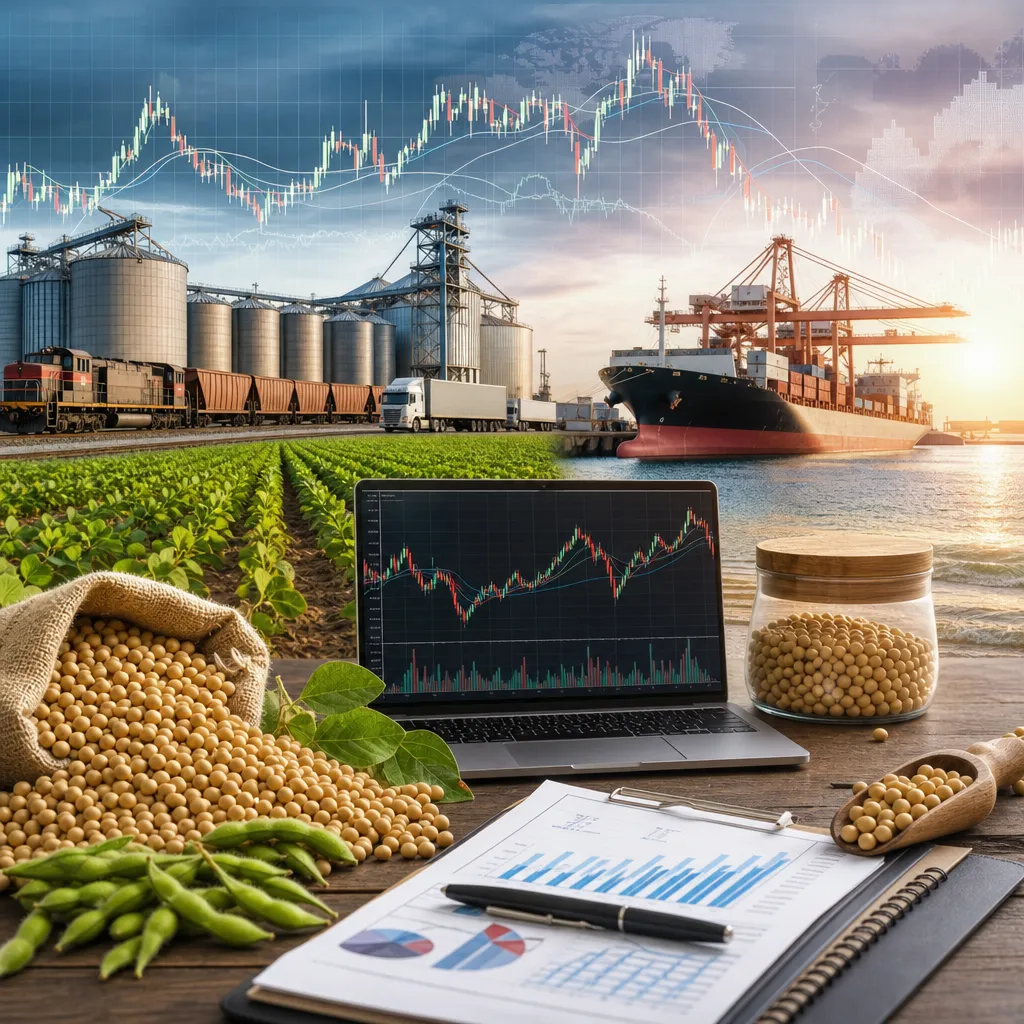






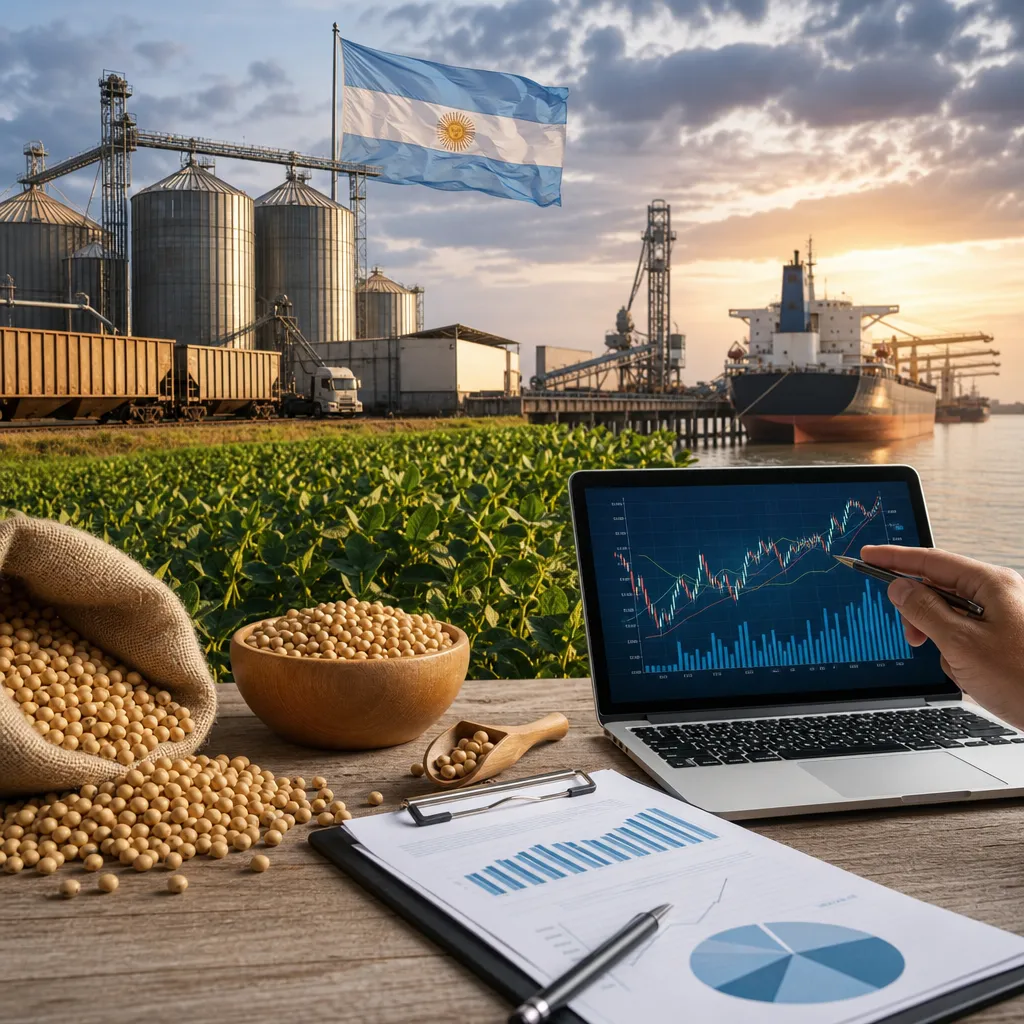
Argentina is one of the world’s most important soybean markets, but “Argentina soybean prices today” can mean several different things. It may refer to cash prices paid inside the country, export values at the river ports, soybean meal and oil values linked to crushers, or futures prices used as a benchmark by traders and hedgers. Argentina’s soybean market is centered in the Pampas production region and in the main export corridor around Greater Rosario on the Paraná River, where crushers and exporters compete for grain. Because of that structure, there is no single national soybean price; the number a farmer, trader, crusher, or exporter sees depends on location, quality, delivery terms, currency, and whether the quote is physical or futures-based.
For readers looking for today’s price, the safest approach is to check official and active market sources rather than rely on generic quoted numbers. In Argentina, soybean prices are commonly discussed in Argentine pesos or U.S. dollars per metric ton, while global benchmarks are often tied to Chicago soybean futures and export parity. A local cash bid in Santa Fe or Córdoba should not be treated as the same thing as a Chicago futures quote or a FOB export price.
What “Argentina soybean prices today” usually means
Argentina is a major soybean producer, processor, and exporter of soybean meal and soybean oil. Unlike some countries where whole bean exports dominate, Argentina is especially important as a crush-and-export origin, so domestic soybean pricing is closely linked to processor demand as well as export economics.
When market participants talk about soybean prices in Argentina, they may mean:
- Local cash price: the spot or nearby bid offered by a buyer in the inland physical market.
- Delivered price: a bid for soybeans delivered to a crusher, plant, or port zone.
- Export parity-based value: a trader’s estimate of what soybeans are worth after accounting for export market prices, processing margins, logistics, and costs.
- Futures price: a standardized derivative quote used for price discovery and hedging, not necessarily the exact price paid for physical grain.
- FOB value: the export price at the port shipment point, relevant for international trade rather than farm-gate sales.
That is why the word “today” must be handled carefully. A real-time screen quote may move all day, while a local physical bid may be updated less frequently and reflect buyer demand, trucking, quality, meal and oil margins, and export conditions.
Where the Argentina soybean market operates
The soybean market operates across the main agricultural provinces of the Pampas, particularly areas such as Buenos Aires, Córdoba, Santa Fe, Entre Ríos, and parts of neighboring producing regions. The physical heart of commercial pricing is the Rosario area, especially the Up-River export and crushing corridor along the Paraná River. This is where many of the country’s major crushing plants, export terminals, and trading houses are concentrated.
In practice, soybeans are produced inland, assembled through local buyers and commercial channels, and then moved by truck to crushers, warehouses, or port-linked facilities. Because logistics matter, a price in an inland producing district can differ meaningfully from a price in the Rosario area.
Argentina’s domestic market uses the metric ton as the normal physical trading unit. Prices may be discussed in:
- Argentine pesos per metric ton for local cash transactions, depending on the buyer and contract structure.
- U.S. dollars per metric ton for export-oriented trade, parity calculations, and some commercial references.
Internationally, the most watched benchmark for soybeans is usually the Chicago Board of Trade soybean futures market, now part of CME Group. However, Argentina’s local physical market is not a simple copy of Chicago because crushing demand, river logistics, domestic policy, and currency effects can all reshape the local price.
How soybean prices are formed in Argentina
Argentina soybean prices are built from a combination of global and local variables. The global side includes Chicago futures, world soybean supply-demand conditions, South American weather, U.S. crop prospects, and broader vegetable oil and meal markets. The local side includes basis, freight, crush demand, crop quality, harvest pressure, domestic financial conditions, and the peso-dollar relationship.
In commercial terms, the price formation chain often works like this:
- A global benchmark provides the base reference, often Chicago soybeans.
- Exporters and crushers calculate what they can pay after considering product values, freight, processing margins, and port economics.
- Local buyers then post cash bids or negotiate directly with suppliers.
- The final farm or warehouse price reflects timing, location, quality, payment terms, and buyer competition.
Basis is central here. Basis is the difference between a local cash price and the relevant benchmark futures price after aligning units and commercial terms. A strong local basis can occur when crushers urgently need supply. A weak basis can appear during harvest pressure, transport bottlenecks, or when export economics deteriorate.
Quality also matters. Moisture, foreign material, damage, and protein or oil characteristics can influence the net value to the buyer. So can delivery timing: prompt delivery is not always priced the same as deferred delivery.
| Price type | Where quoted | What it means |
|---|---|---|
| Local cash bid | Interior buyer, cooperative, merchant, crusher, or exchange-linked daily market information | What a buyer is willing to pay for physical soybeans at a named location and time |
| Delivered plant or port bid | Crusher or port-zone market | Price including delivery to a specified facility or region |
| Futures price | Exchange market | Standardized contract used for price discovery and hedging, not the exact farm-gate price |
| FOB export value | Export market and trade reporting | Value of soybeans loaded for export at the port, before ocean freight to the buyer |
| Crush-equivalent value | Processor economics | Value implied by soybean meal and oil returns after processing costs and margins |
Where to check Argentina soybean prices online
Because current prices move constantly and because not every quote represents the same market, readers should use reliable institutional or commercial sources. The most relevant official market source inside Argentina is the Bolsa de Comercio de Rosario, which publishes market information that is widely followed in the domestic grain trade. For agricultural futures and derivatives relevant to the local market, readers also monitor Matba Rofex.
For global benchmark context, many traders watch CME Group soybean futures. That helps frame world price direction, but it still does not replace a local Argentine cash bid. For export and supply-demand background, the USDA is heavily used by international grain trade participants, especially for world balance sheets and South American crop updates.
In practical day-to-day use, readers can normally check:
- Bolsa de Comercio de Rosario: local market references, commercial commentary, and physical-market context.
- Matba Rofex: Argentina-relevant derivatives and pricing information used by commercial hedgers and traders.
- CME Group: Chicago soybean futures benchmark for global price discovery.
- USDA reports: international supply-demand, crop outlooks, and trade balance context.
- Local cooperatives, acopios, crushers, and merchants: actual bids for physical soybean delivery.
If a reader wants the price they can really sell at, the most useful number is usually the bid from a local buyer for a specific delivery point and date. If a reader wants the market direction, futures and exchange-linked information matter more.
| Source type | What it helps with | Best use |
|---|---|---|
| Argentine exchange/market institution | Domestic market references and physical trade commentary | Checking local tone, bids, and market structure |
| Derivatives exchange | Futures and hedging tools | Tracking benchmark movement and managing price risk |
| Global benchmark exchange | International soybean direction | Comparing Argentina with world market trends |
| Government or multilateral reporting | Supply, demand, trade, and crop outlook | Building market scenarios rather than checking a tradable cash bid |
| Local commercial buyers | Actual executable bids | Determining what a farmer or holder can sell for today |
Cash market, export market, and futures: the key differences
A common mistake is to treat all soybean prices as interchangeable. They are not. In Argentina, the distinction between the physical market and the paper market is especially important because producers, crushers, and exporters are active in both.
Physical or cash market: This is where actual soybeans change hands. A farmer or holder sells to a cooperative, acopio, merchant, crusher, or exporter. The contract sets quantity, quality, place of delivery, date, and payment terms.
Export market: This market values soybeans or soybean products for shipment abroad. Traders and exporters think in FOB terms, freight positioning, vessel programs, and international demand. These export values influence what can be paid inland, but there is no guarantee that the inland bid equals export value.
Futures market: This is where standardized contracts trade on an exchange. Futures help discover price and manage risk. A futures position can hedge a physical inventory or expected sale, but it does not by itself move grain from farm to port.
For example, a producer may watch Chicago or Matba Rofex prices online, but still sell the real crop to a nearby commercial buyer. Likewise, a trading firm may hedge export commitments using futures while separately purchasing physical beans in the Argentine cash market.
How soybeans are actually bought, sold, and exported in Argentina
Physical trade normally starts with production at farm level and moves through commercial channels toward processors or export facilities. Buyers can include:
- Cooperatives
- Acopios and local merchants
- Crushing companies
- Exporters
- Integrated trading houses
The sale can be spot, forward, or structured with pricing terms linked to a benchmark. Before a deal is completed, the commercial terms usually define:
- Commodity and grade
- Quantity
- Delivery window
- Delivery location
- Price or pricing formula
- Payment conditions
- Quality discounts or premiums
After purchase, soybeans are moved through storage and logistics systems to crushing plants or port-linked elevators. Argentina’s export system is tightly connected to the Paraná River corridor, especially around Rosario, because that is where processing and export loading capacity has historically been concentrated.
For international trade, exporters sell whole beans or, more importantly in Argentina’s case, derived products such as soybean meal and soybean oil. That means domestic soybean prices are influenced not only by bean export demand but by the economics of crushing and selling products into world markets.
How hedging works for Argentine soybean market participants
Hedging is different from selling physical grain. A hedge is a financial position used to reduce price risk. A farmer, elevator, crusher, or exporter may use futures or options while still holding or planning to trade physical soybeans separately.
Physical grain trading
Physical soybean transactions take place with real buyers and real delivery obligations. The main risks are commercial and operational: price changes before sale, quality disputes, logistics delays, and counterparty payment risk. This market is usually accessed through established trade relationships with cooperatives, merchants, crushers, or exporters.
Futures and options trading
Futures and options are accessed through brokers connected to the relevant exchange. Users need an approved account and must understand margin, contract expiry, and basis risk. Hedging is designed to offset adverse price moves, while speculation seeks profit from market movement. A hedge can reduce risk, but it does not remove local basis risk or quality differences in physical trade.
For example, if a producer expects to sell soybeans later, futures may help protect against a broad price decline. But the final cash result will still depend on the local Argentine basis, delivery point, and buyer conditions at the time of physical sale.
Main drivers of Argentina soybean prices
Argentina soybean prices respond to both domestic and international forces. The most important drivers usually include:
- Weather: drought, excessive rain, and heat can strongly affect production in the Pampas.
- Harvest pace: when harvest pressure is heavy, local cash markets can weaken even if futures are steady.
- Crushing demand: active processor buying can support local bids.
- Chicago futures direction: Argentina remains connected to world soybean pricing.
- Soybean meal and oil markets: these are especially important because Argentina is a major processor and product exporter.
- Currency conditions: local pricing is sensitive to peso-dollar dynamics.
- Logistics and river conditions: transport costs and navigational constraints can affect port economics.
- Government policy: taxes, trade rules, and export-related policy can influence market incentives and basis.
- Competition from Brazil and the United States: global buyer demand shifts between origins depending on price and seasonal availability.
Any forecast for soybean prices in Argentina should therefore be treated as a scenario, not a certainty. A supportive scenario could involve weather losses, firm crushing margins, and strong export demand. A weaker scenario could stem from large regional supplies, slower demand, softer product markets, or local logistical pressure.
Practical reading of the market today
If you need an actionable view of Argentina soybean prices today, start by identifying which market you mean. If you are a farmer or physical seller, the relevant number is the buyer’s bid at your delivery point. If you are a trader assessing direction, you will likely monitor both Argentine market references and Chicago futures. If you are looking at export competitiveness, port-zone values and soybean product markets matter as much as bean prices themselves.
A good working routine is to compare:
- Local cash or delivered bids from Argentine sources or direct buyers.
- Matba Rofex and Chicago futures for benchmark direction.
- Rosario-area market commentary for domestic trade tone.
- USDA global reports for international supply-demand background.
That combination helps avoid the most common error in price reporting: confusing a tradable local soybean bid with a benchmark quote from a different market.
Frequently asked questions
Where can I check Argentina soybean prices today?
The most practical places are the Bolsa de Comercio de Rosario for domestic market references, Matba Rofex for exchange-traded derivatives relevant to Argentina, CME Group for the global soybean benchmark, and direct bids from local cooperatives, merchants, crushers, or exporters for actual physical sale opportunities.
Are Argentina soybean prices quoted in pesos or dollars?
Both can be used depending on the market context. Domestic physical trade is commonly discussed in Argentine pesos per metric ton, while export-oriented values and international comparisons are often referenced in U.S. dollars per metric ton.
Is the Chicago soybean futures price the same as the Argentina cash price?
No. Chicago is a benchmark futures market. The Argentina cash price reflects that benchmark plus or minus local basis, quality, freight, currency effects, storage, and buyer competition.
What is the main export and pricing hub for soybeans in Argentina?
The Greater Rosario and Up-River corridor on the Paraná River is the key commercial hub because it concentrates crushing plants, export terminals, and major grain trading activity.
How are soybeans usually sold by farmers in Argentina?
Farmers normally sell physical soybeans to cooperatives, acopios, merchants, crushers, or exporters under contracts that specify quality, quantity, delivery point, timing, and payment terms. The sale may be spot, forward, or linked to a pricing formula.
Can someone hedge Argentina soybean prices online?
Yes, hedging can be done through futures or options using a broker connected to the relevant exchange, such as Matba Rofex or, for global exposure, CME-linked access. But hedging is financial risk management; it is not the same as selling physical beans.
Why do soybean prices differ between inland Argentina and Rosario?
The difference mainly reflects transport costs, local supply-demand conditions, buyer urgency, storage, and the value of being closer to crushers or export loading points.
What matters more in Argentina: whole soybean exports or crushing demand?
Crushing demand is especially important because Argentina is a major exporter of soybean meal and soybean oil. As a result, meal and oil market conditions often influence what processors can pay for soybeans domestically.
Sources
- Bolsa de Comercio de Rosario
- Matba Rofex
- USDA Foreign Agricultural Service