



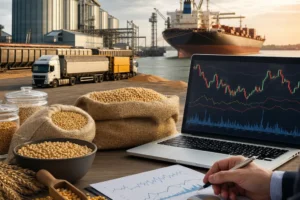

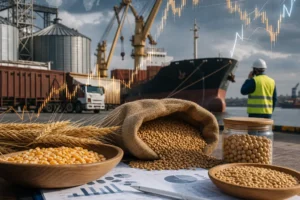
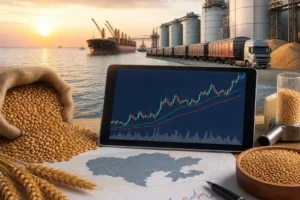

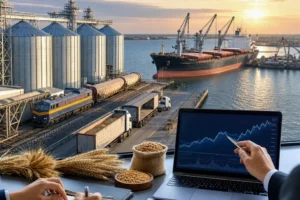

The Black Sea wheat import market is not a single exchange or port. It is the network of import demand centered on wheat shipped from the Black Sea export zone, mainly Russia, Ukraine, and Romania, into destination markets in the Middle East, North Africa, parts of Asia, and occasionally other regions. In practice, when traders discuss this market, they usually mean imported milling or feed wheat priced on a seaborne basis such as CIF or C&F, with the Black Sea serving as the origin. The market operates through private tenders, government tenders, merchant-to-merchant trades, and risk management linked to international futures and export benchmarks.
Geographically, the key origins are Black Sea loading regions and ports connected to wheat-producing areas in Russia, Ukraine, Romania, and sometimes Bulgaria. The import side is spread across consuming countries that rely on seaborne wheat because domestic production is insufficient, variable, or quality-specific. Prices are commonly discussed in US dollars per metric ton for export and import business, even when inland domestic trade in the destination country is conducted in local currency. The most relevant international benchmarks are usually export offers from Black Sea origins and wheat futures on major exchanges such as CME Group wheat contracts and Euronext milling wheat futures.
What the Black Sea wheat import market means
The Black Sea wheat import market refers to wheat purchased by importing countries from sellers sourcing grain in the Black Sea export basin. It is primarily a physical grain market, not a futures market. Buyers include state grain agencies, flour millers, feed manufacturers, trading houses, and importers that need prompt or forward shipment.
Most imported wheat in this market is bought according to clear commercial terms:
- FOB: free on board at the export port. The buyer arranges ocean freight.
- CIF: cost, insurance, and freight included to the destination port.
- C&F/CFR: cost and freight included, but insurance handled separately.
- Delivered: sometimes used for inland sales after port discharge, including domestic transport to mills or users.
This market matters because Black Sea origins are among the world’s major wheat suppliers. Their crop size, export pace, logistics, quality, and government policy can strongly influence import costs for countries that depend on wheat shipments for bread flour or feed use.
Where the market operates
On the export side, the market begins in inland grain-producing regions, rail or truck corridors, storage and elevation systems, and deep-water ports connected to the Black Sea. On the import side, it operates at destination ports where wheat is discharged and transferred to mills, feed users, warehouses, or inland logistics networks.
The import market is especially relevant for countries in:
- North Africa, where imported milling wheat is a strategic food commodity.
- Middle Eastern markets, where domestic output often does not cover consumption.
- Parts of Asia, where buyers may compare Black Sea wheat with EU, Australian, or North American origins.
- Occasional Mediterranean buyers, depending on crop quality, freight, and tender terms.
Physical trade is often organized through international grain merchants and local importers. In some countries, public grain agencies issue tenders. In others, private millers buy directly from trading houses. The market therefore functions across both public procurement channels and private commercial channels.
| Market element | Where it operates | Why it matters |
|---|---|---|
| Origin cash market | Inland producing areas in Black Sea exporting countries | Determines farmer and local merchant selling levels before export elevation and freight |
| Export port market | Black Sea loading ports and terminals | Sets FOB export competitiveness and loading availability |
| Ocean trade market | International freight and merchant trading channels | Converts origin FOB values into CIF or C&F import values |
| Import port market | Destination ports in importing countries | Determines landed cost and availability for domestic buyers |
| Domestic delivered market | Inland milling and feed-consuming regions | Reflects final cost after discharge, storage, finance, and inland transport |
How prices are formed
Black Sea wheat import prices are built from several layers, not from one simple quote. A buyer importing wheat is not paying only for the wheat itself. The final number also reflects quality, location, freight, timing, currency, and risk.
The starting point is often one of two reference points:
- An export-origin offer, usually FOB Black Sea.
- An international futures benchmark, used indirectly for market orientation and hedging.
From there, traders build a price that may be suitable for a tender or private cargo purchase. The final import price can include:
- Protein and other quality specifications
- Seller margin and financing cost
- Elevation and terminal charges
- Ocean freight
- Insurance when quoted CIF
- Port discharge costs, depending on contract terms
- Currency risk
- Political or logistical risk premiums
Basis is important. In grain trading, basis usually means the difference between a local physical price and a relevant futures benchmark. Black Sea import deals are not always quoted explicitly as a classic basis contract in the same way as some North American cash markets, but the same concept applies: local physical values move relative to futures depending on spot supply, export competition, freight, and buyer urgency.
It is essential not to confuse price types:
| Price type | What it means | Typical use in the Black Sea import market |
|---|---|---|
| Futures price | Exchange-traded benchmark for wheat contracts | Reference for market direction and hedging, not the exact landed import cost |
| Local cash bid | Physical bid in an inland market | Relevant in origin regions or domestic destination markets, not a seaborne cargo price by itself |
| FOB export bid/offer | Price at export port before ocean freight | Key starting point for Black Sea-origin cargo valuation |
| CIF or C&F import price | Price delivered to the destination port | Main trade price for import tenders and landed cargo buying |
| Delivered inland price | Port-landed wheat moved to final user | Useful for mills and feed users comparing import cost with domestic grain |
Which benchmarks matter most
The Black Sea wheat import market usually watches several benchmarks at once rather than relying on one universal contract. The exact benchmark depends on cargo origin, destination, quality, and deal structure.
Common reference points include:
- CME Group wheat futures, especially when global traders hedge broad wheat price risk.
- Euronext milling wheat futures, especially for trade involving European wheat competition or Mediterranean demand.
- Physical export offers from Black Sea origins, often more important than futures for nearby cargo values.
- Government or private tender results, which can reveal actual import buying interest and perceived market clearing levels.
No single futures contract perfectly matches Black Sea-imported wheat. Futures provide a broad risk-management tool, while physical values reflect protein, test weight, origin reputation, vessel timing, sanctions risk where relevant, and freight availability. That is why a futures move and an import tender result may not change by the same amount on the same day.
How grain is actually bought, sold, imported, and financed
In the real world, Black Sea wheat imports are usually transacted through a sequence of commercial steps. A miller or importer rarely buys “the market” in an abstract sense. It buys a cargo with origin, quality, shipment period, and payment terms.
Physical grain trade
- Demand is identified by a mill, feed company, grain agency, or importer.
- Specifications are set, such as protein, moisture, foreign matter, shipment window, and origin eligibility.
- Offers are requested from merchants or through a formal tender.
- Price is quoted as FOB, C&F, or CIF in US dollars per metric ton.
- Contract terms are agreed, including quality arbitration, payment timing, vessel age limits, shipment period, and discharge terms.
- Seller covers origin procurement and loading, while freight may be seller’s or buyer’s responsibility depending on the contract.
- At destination, the wheat is discharged, inspected, and moved into local distribution.
Counterparty risk matters. Importers need to evaluate supplier reliability, documentary compliance, and quality performance. Sellers need confidence in payment security, often through letters of credit or other trade finance structures.
Futures and options use
Financial hedging is separate from physical ownership. A trader, importer, or exporter may use futures or options through a broker to manage price risk, but that does not by itself move a cargo or transfer title to grain. Physical operators may hedge expected purchase or sale exposure, then offset the futures position when the physical deal is fixed or delivered.
Key distinctions:
- Physical trade happens between commercial counterparties and results in actual wheat movement.
- Futures/options trade happens on an exchange through a brokerage account and provides price exposure, not a standard commercial import shipment.
- Basis risk remains because a futures contract may not move exactly like a specific Black Sea CIF cargo value.
Where readers can check prices and market information online
Because the Black Sea wheat import market is largely a physical cargo market, there is no single “live price” screen that perfectly represents every destination and quality. Readers should check a combination of benchmark futures, official market reports, tender results, and local commercial indications.
Practical sources include:
- CME Group for wheat futures benchmarks used in global hedging and price discovery.
- Euronext for milling wheat futures relevant to European and Mediterranean trade.
- USDA Foreign Agricultural Service and USDA World Agricultural Supply and Demand Estimates for global wheat balance sheets, trade outlook, and importer/exporter context.
- European Commission market information for EU grain trade and market monitoring where EU competition affects Black Sea pricing.
- Official tender announcements and results from state buying agencies where available publicly.
- Local agriculture ministries, grain agencies, millers, and importers for domestic landed or delivered indications in the importing country.
- Commercial brokers and grain merchants for day-to-day FOB, CIF, and freight indications.
Readers should remember that a futures quote is not the same as a destination port landed price. A CIF offer incorporates freight and commercial terms that are not captured by an exchange quote. Likewise, a landed import price is not the same as the domestic flour mill’s final delivered cost after discharge, transport, and storage.
Main drivers of the Black Sea wheat import market
Several factors regularly move this market, sometimes more than futures alone would suggest.
- Crop size and quality in origin countries: production, protein, and harvest pace affect exportable supply.
- Weather: drought, winterkill, excessive rain, and harvest disruption can change both quantity and milling quality.
- Export policy: taxes, quotas, inspections, or restrictions in exporting countries can alter seller behavior and FOB values.
- Freight costs and vessel availability: ocean freight directly affects CIF import prices.
- Currency movements: although many seaborne trades are priced in US dollars, origin and destination currencies influence farmer selling, local affordability, and importer margins.
- Competing export origins: EU, Australian, North American, and other wheat suppliers influence tender competition.
- Import tender timing: large government tenders can reset market expectations for nearby shipment periods.
- Geopolitical and insurance risk: regional conflict or shipping risk can widen the gap between futures prices and actual cargo values.
Outlook: what to watch in a forecast
Any forecast for the Black Sea wheat import market should be framed as a scenario, not a certainty. Import values can shift quickly when weather, policy, or freight assumptions change.
Useful scenarios to watch include:
| Scenario | Conditions | Possible implication for importers |
|---|---|---|
| Large Black Sea crop | Good yields, smooth harvest, active farmer selling | Greater cargo availability and more competitive FOB pricing |
| Quality downgrade | Rain damage or lower protein in export origins | Milling wheat premiums may strengthen even if feed wheat remains available |
| Higher freight or insurance costs | Tighter vessel supply or elevated shipping risk | CIF import prices can rise even without a major increase in FOB wheat values |
| Stronger importer demand | Low domestic crops or large public tenders | Nearby cargoes may command premiums and shipment windows can tighten |
| Policy disruption | Export restrictions, sanctions changes, or customs intervention | Trade flows may shift rapidly toward alternative origins |
For importers, the practical lesson is to monitor both origin fundamentals and destination purchasing conditions. A cheap futures market does not always mean cheap landed Black Sea wheat. Conversely, a firm futures market can sometimes be offset by lower freight or aggressive origin competition.
Practical FAQ
What is the standard pricing unit in the Black Sea wheat import market?
Most international import and export deals are quoted in US dollars per metric ton. Domestic resale in the importing country may then be converted into local currency per metric ton.
Is there one official live Black Sea wheat import price?
No. The market is fragmented by origin, protein, shipment period, freight route, and destination. Readers usually need to combine futures benchmarks, export offers, tender results, and local landed indications.
What is the difference between FOB Black Sea and CIF import price?
FOB is the value at the export port before ocean freight. CIF includes the cost of freight and insurance to the destination port. CIF is normally more relevant for import buyers comparing landed cargo costs.
Can an importer hedge Black Sea wheat price risk with futures?
Yes, many commercial firms use wheat futures or options for broad price-risk management. However, they still face basis risk because a futures contract may not track a specific Black Sea-origin cargo exactly.
Where should a miller or buyer check market information?
Useful starting points are CME Group, Euronext, USDA, public tender results where available, and commercial indications from grain merchants, brokers, or local import channels.
Why can local mill-delivered wheat prices differ from seaborne import prices?
Because inland transport, port handling, storage, financing, quality adjustments, taxes or duties where applicable, and local buyer competition all affect the final delivered cost after import.
Who actually buys Black Sea wheat imports?
Typical buyers are state grain agencies, flour mills, feed manufacturers, importers, and international trading houses acting for destination customers.
What are the biggest risks in this market?
The main risks are origin crop changes, policy intervention, logistics disruption, freight volatility, currency moves, counterparty risk, and quality mismatch between contract specifications and actual shipment.
Sources
- USDA Foreign Agricultural Service
- CME Group
- Euronext