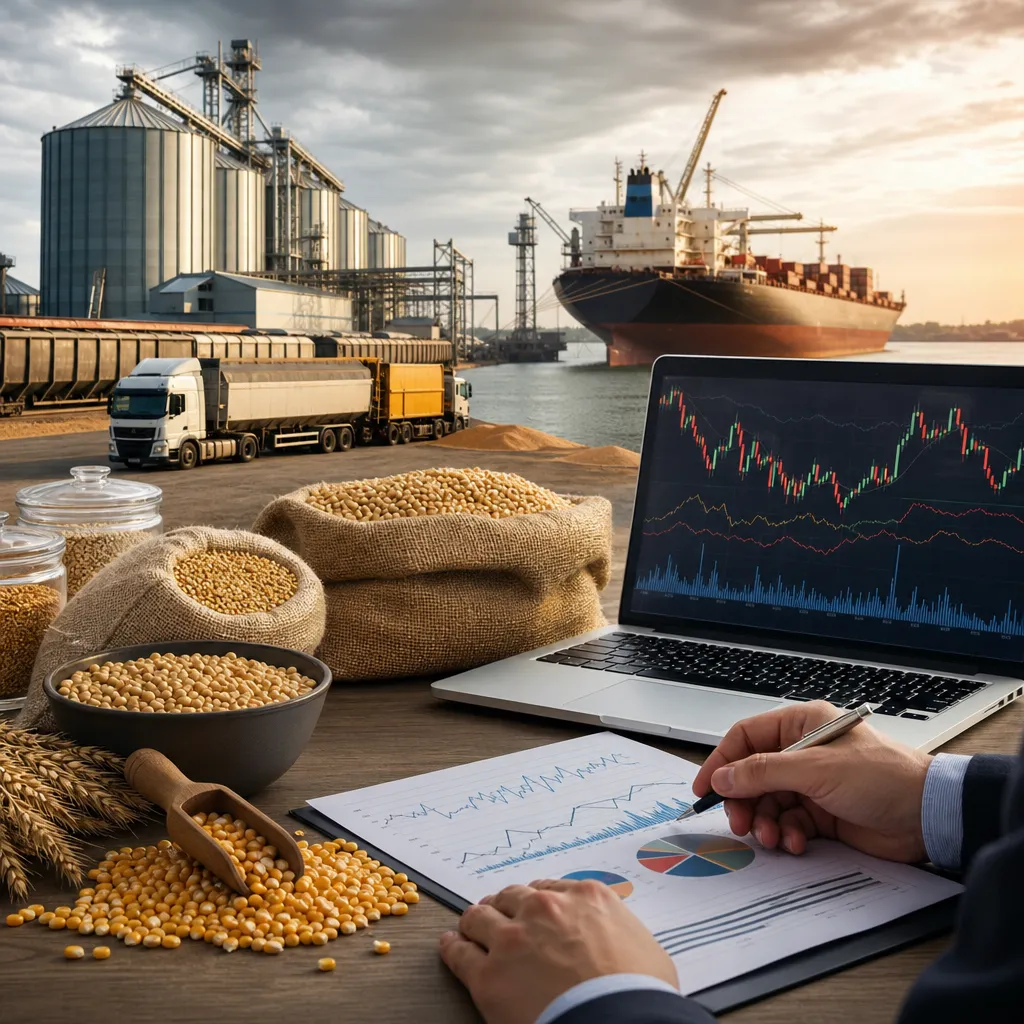





The Black Sea wheat export market is not a single exchange or one port. It is a regional export system centered on the wheat-producing and shipping corridors of the Black Sea, especially Russia, Ukraine, and Romania, with Bulgaria and nearby Danube logistics also relevant. In practice, traders use the term to describe physical wheat offered for export from Black Sea origins, usually quoted in U.S. dollars per metric ton on an FOB or similar basis. It matters because this region is one of the world’s most important suppliers of milling and feed wheat to importers in the Middle East, North Africa, Asia, and beyond.
For farmers, exporters, millers, and importers, the Black Sea market connects inland grain production to global benchmark prices through ports, rail, river, storage, inspection, freight, and currency. Prices are shaped by world wheat futures, export competition, crop quality, state policy, weather, logistics, and the ability to move grain reliably out of the region. Anyone following this market should separate exchange-traded futures from actual export offers, because the benchmark on a screen is not the same as a cargo price at a Black Sea port.
What the Black Sea wheat export market means
In grain trade, the Black Sea wheat export market refers to the physical export trade of wheat loaded from origins around the Black Sea basin. The leading origins are typically Russia, Ukraine, and Romania, while Bulgaria also participates and Danube river routes can be important for moving grain toward sea export channels. The market is primarily a physical cash market, not a dedicated regulated futures exchange.
The wheat involved is usually quoted by quality and shipment period. Commercial discussions often refer to protein level, test weight, moisture, and other contract terms. Export business may be priced as FOB at a Black Sea port, CIF into the destination market, or on a delivered basis into an inland elevator, terminal, or processor.
Because the trade is international, the usual export reference currency is U.S. dollars, and the usual unit is metric tons. Inland markets may use local currency for farmgate or domestic delivered trade, but export tenders and cargo negotiations are generally dollar-denominated.
Where the market operates
Geographically, the market spans wheat-growing interior regions and export routes that feed ports on the Black Sea and connected waterways. Russia is a major origin because of its large wheat-producing areas and export orientation. Ukraine remains structurally important as a producing and exporting country, though its logistics and export flows can be heavily affected by conflict and infrastructure risks. Romania is a major European Union origin on the western side of the Black Sea, while Bulgaria also contributes exportable wheat.
The market operates through a chain of inland collection, storage, transport, port execution, and overseas shipment. Wheat may move by truck, rail, barge, or vessel depending on country and route. The final export price depends not only on global demand but also on whether grain can physically reach a terminal and be loaded on time.
| Market area | Role in the Black Sea wheat trade | Usual pricing context |
|---|---|---|
| Russia | Major wheat producer and exporter with strong influence on regional export competition | Export offers often discussed in U.S. dollars per metric ton, commonly FOB |
| Ukraine | Important producer and exporter; trade conditions can be strongly shaped by logistics and security constraints | Physical export pricing linked to destination demand, corridor access, and shipment risk |
| Romania | Key EU Black Sea origin and export gateway for domestic and sometimes regional grain flows | Export values influenced by EU market conditions and global wheat competition |
| Bulgaria | Smaller but relevant regional exporter | Physical cash trade connected to Black Sea export demand and regional freight economics |
How prices are formed
Black Sea wheat prices are formed by a combination of global benchmark values and local physical market conditions. A wheat futures contract on a major exchange can provide a reference for world price direction, but a Black Sea export price is a separate physical number built on top of that benchmark.
The most important distinctions are:
- Futures price: a standardized exchange-traded contract reflecting market expectations, risk transfer, and speculative as well as commercial activity.
- Cash bid: the price offered by a local buyer such as an elevator, merchant, mill, or exporter for actual wheat.
- Export bid or offer: the price for wheat intended for export, often tied to quality and shipment window.
- FOB price: the value of wheat loaded on board a vessel at the export port, excluding ocean freight to the buyer’s destination.
- CIF price: the delivered import price including cost, insurance, and freight to the destination port.
- Basis: the difference between the local cash price and the benchmark futures value or another reference export value.
In the Black Sea region, basis can be affected by port congestion, storage availability, railcar supply, barge access, export taxes or restrictions, vessel line-up, and political risk. Currency movements also matter. Even if a benchmark futures contract rises, a local exporter’s bid can fall if freight worsens, quality is weak, or export execution becomes more difficult.
| Price type | Where it is quoted | What it means in practice |
|---|---|---|
| Futures | Exchange screen | Financial benchmark, not the exact farmgate or port cash price |
| Local cash bid | Elevator, merchant, processor, cooperative | Price for actual grain at a defined location and quality |
| Delivered port | Trader or exporter quote | Price including movement to the port or terminal |
| FOB export | Export market reports, tender discussions | Cargo value loaded at origin port for overseas shipment |
| CIF import | Importer tenders and destination market reports | Delivered cost into the importing country’s port |
Which benchmarks matter most
The Black Sea physical wheat market is often evaluated against major international benchmarks rather than a single local futures contract. The most widely followed benchmarks include CBOT wheat through CME Group and Euronext milling wheat, especially for European-linked trade. These contracts help traders estimate price direction, hedge exposure, and compare Black Sea offers with other export origins.
That said, an export cargo from the Black Sea is not automatically priced off only one benchmark. Depending on the buyer, quality, and origin, traders may compare Black Sea values with French, German, U.S., or other international wheat offers. Import tenders from major buyers can also become a live benchmark because they reveal which origin is most competitive for actual shipment.
For Romania and Bulgaria, Euronext often has practical relevance because they are in the European market environment. For Russia and Ukraine, global tender competition and OTC merchant pricing may matter at least as much as exchange futures. The key point is that futures guide price discovery, but cargos clear in the physical market.
How wheat is actually bought, sold, and exported
Physical trade starts with grain ownership and movement. Farmers or local holders sell wheat to elevators, cooperatives, merchants, processors, or exporters. The buyer evaluates quality, moisture, foreign material, protein, and sometimes falling number or other milling specifications. The contract should define quantity, quality basis, delivery point, delivery period, payment terms, and dispute resolution.
Exporters then assemble exportable lots from inland origins, move them to storage or terminal facilities, and sell to overseas importers, trading houses, mills, or state purchasing agencies. Large importers may buy via international tenders. In those tenders, Black Sea origins often compete directly against EU, U.S., or other suppliers.
The export chain usually includes several commercial layers:
- Producer or initial holder of wheat
- Local collector, elevator, or merchant
- Exporter or trading house
- Port terminal and inspection process
- Vessel loading and shipping documents
- Importer, miller, feed user, or government buyer
Online tools are used heavily for communication, market monitoring, risk management, and brokerage. But the grain itself still moves through physical infrastructure. Watching a futures chart online does not mean the user owns grain. Likewise, booking a ship cargo requires physical execution, financing, documentation, and quality control.
How hedging works for Black Sea wheat
There is an important difference between physical grain trading and futures or options trading. Physical wheat trading transfers ownership of actual grain. Futures and options transfer price risk, not necessarily physical wheat.
A trader exposed to Black Sea wheat prices may hedge with exchange-traded wheat futures through a broker. Commercial users may also hedge currency risk separately if the grain is bought in local currency and sold in U.S. dollars. The hedge is imperfect because of basis risk: the Black Sea cash market may move differently from the exchange contract used as a hedge.
Typical practical structure:
- Physical side: buy wheat from farmers or inland merchants, move it to port, sell export cargo.
- Financial side: use futures or options to reduce exposure to adverse price moves before the cargo is sold or while inventory is held.
Access to futures normally requires a brokerage account, margin funding, and understanding of leverage and expiry. This is separate from owning or storing wheat. Many market participants follow futures online every day but settle their actual business through origin buyers, merchants, or export contracts.
Where to check prices and market information online
For current Black Sea wheat values, readers should avoid relying on a single headline quote. There is no single official live cash price for the whole region because values vary by origin, quality, shipment month, and export term. Instead, market participants typically combine several sources.
Useful places to check include:
- CME Group: for CBOT wheat futures and options benchmarks.
- Euronext: for European milling wheat futures benchmarks.
- USDA Foreign Agricultural Service and WASDE-related materials: for export competition, crop outlook, and global wheat balance context.
- European Commission market information: helpful especially for Romania and Bulgaria within the EU grain framework.
- National ministries or official statistical agencies: for crop, trade, and domestic market context where published.
- Merchants, exporters, and local elevators: for actual cash bids and delivered levels.
- International tender results: useful for seeing which origin won business and at what relative competitiveness.
If you are looking for a “today” price, identify five things before using the number: wheat quality, origin country, loading port or inland point, delivery month, and pricing term such as FOB or delivered. Without those details, a quote is not very useful. A futures price on CME or Euronext should never be treated as the exact Black Sea farmgate or FOB cash price.
Main market drivers and outlook scenarios
The Black Sea wheat export market is highly sensitive to both agricultural and geopolitical factors. Weather during planting, winter dormancy, spring development, and harvest can alter production and quality expectations quickly. Export policy, inspections, taxes, quotas, corridor rules, port accessibility, and insurance conditions can affect trade flows just as strongly as yield.
Other major drivers include:
- Global wheat supply from competing exporters
- Import demand from North Africa, the Middle East, and Asia
- Ocean freight and inland transport costs
- Currency moves against the U.S. dollar
- Protein quality and milling suitability
- Farmer selling pace and port stocks
- Energy and fertilizer costs
Because this market can change rapidly, outlook should be considered in scenarios rather than certainties.
| Scenario | Conditions | Likely market implication |
|---|---|---|
| Large crop, smooth logistics | Good yields, normal movement to port, active export competition | Pressure on export values unless global demand is strong |
| Crop stress or quality loss | Weather damage, reduced milling quality, lower exportable surplus | Supportive for higher-quality wheat premiums |
| Logistics disruption | Port constraints, rail bottlenecks, higher risk or freight costs | Wider local basis swings and uneven inland-versus-port pricing |
| Strong importer demand | Active tenders and destination buying | Firmer FOB offers if Black Sea origins remain competitive |
Practical trading considerations
For physical participants, the most important commercial issues are quality assurance, contract clarity, logistics reliability, and counterparty risk. A nominally attractive wheat price is less valuable if payment risk is unclear or execution at the port is uncertain. Traders normally focus on inspection standards, timing, storage losses, and the gap between inland purchase price and achievable export sale value.
For financial participants, the main practical issues are contract choice, margin risk, hedge ratio, liquidity, and basis behavior. A hedger using CBOT or Euronext against Black Sea wheat should understand that the futures leg may not move one-for-one with the regional cash market. The hedge reduces risk, but it does not eliminate execution and origin-specific exposure.
What is the Black Sea wheat export market?
It is the physical international wheat trade from Black Sea origins, mainly Russia, Ukraine, Romania, and Bulgaria, where wheat is sold for export to overseas buyers.
Which currency and unit are usually used?
Export wheat is commonly quoted in U.S. dollars per metric ton. Inland domestic trade may also be quoted in local currency depending on the country and buyer.
What benchmark should I watch?
CBOT wheat and Euronext milling wheat are the most common benchmark futures to monitor, but actual Black Sea cargo prices are physical market values and may move differently.
Where can I check current Black Sea wheat prices?
Check futures on CME Group or Euronext, then compare with export market reports, merchant indications, official market commentary, and tender results. There is no single official live cash number for the whole region.
Why is the futures price different from the Black Sea cash price?
Because futures are standardized financial contracts, while Black Sea cash prices reflect location, quality, export term, freight, basis, buyer demand, currency, and logistics conditions.
How is wheat physically sold in this market?
Usually through contracts between farmers, elevators, merchants, exporters, mills, or international buyers, with terms covering quantity, quality, delivery point, shipment period, and payment.
Can a trader hedge Black Sea wheat with futures?
Yes, many participants use exchange-traded wheat futures or options through brokers, but basis risk remains because the hedge benchmark is not identical to the regional cash market.
What are the biggest price drivers?
Crop size and quality, export policy, port access, freight, currency, importer tenders, and competition from other exporting origins are usually the main drivers.
Sources
- USDA Foreign Agricultural Service
- CME Group
- European Commission