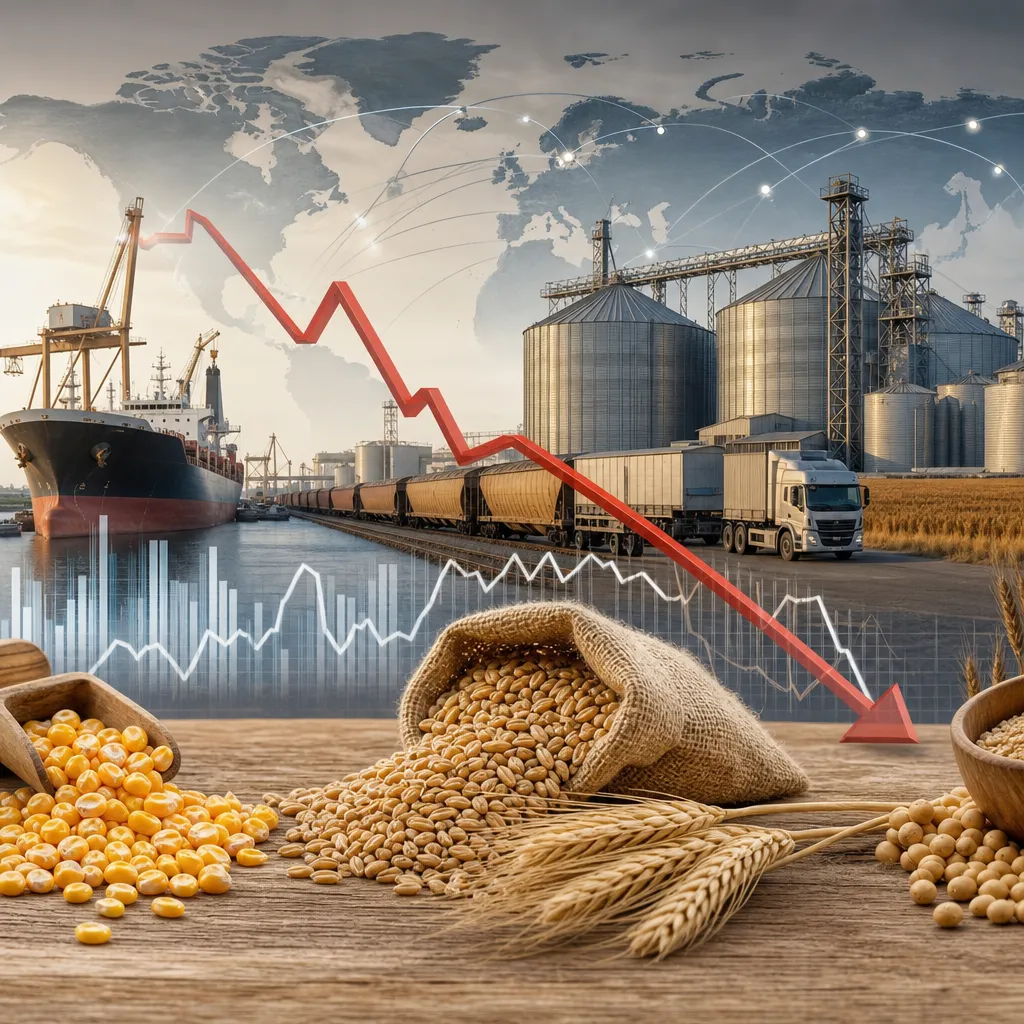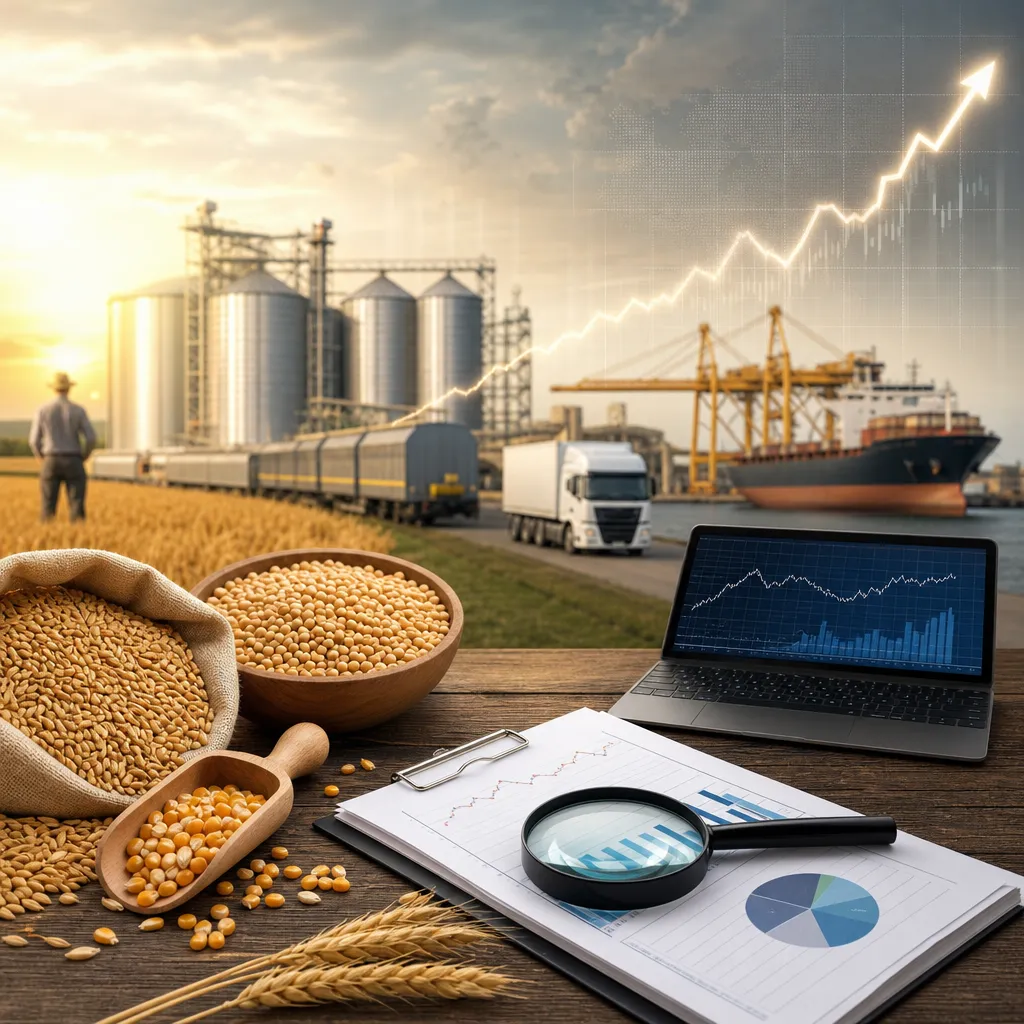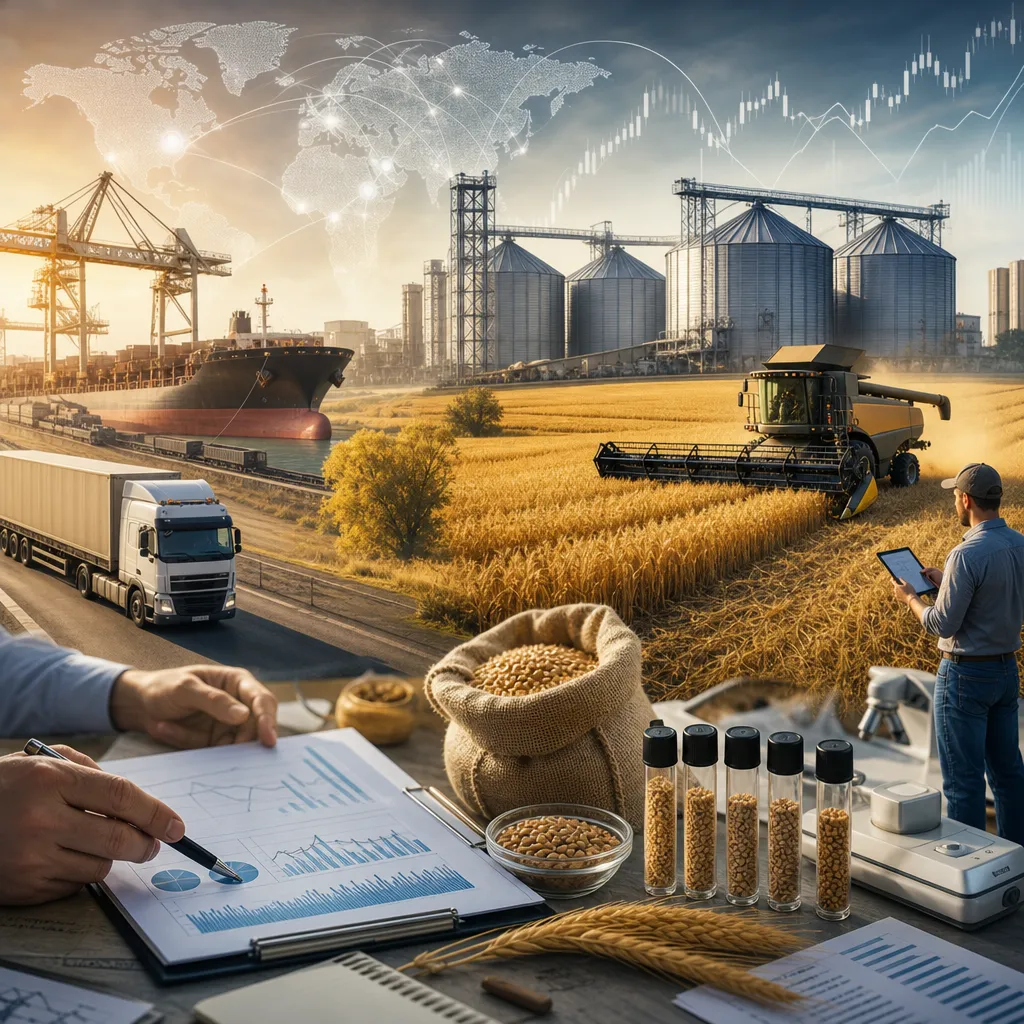
EU wheat price trends refer to how wheat values move across the European Union’s physical and financial grain markets over time. The key geography is the EU single market, with major producing countries such as France, Germany, Romania, Poland, and parts of Central and Eastern Europe, and with export pricing strongly influenced by ports on the Atlantic, Channel, Baltic, Black Sea, and Mediterranean corridors. In practice, the most closely watched benchmark for milling wheat in the EU is the Euronext wheat futures market, historically associated with MATIF, while real-world cash prices are formed locally between farmers, cooperatives, merchants, mills, feed compounders, and exporters. Anyone following EU wheat prices needs to separate exchange futures from local cash bids, because transport, quality, currency, and port demand can move them apart.
What “EU wheat price trends” usually means
In the EU context, wheat price trends usually mean changes in the value of common wheat, especially milling wheat, across the bloc’s domestic and export-oriented market. The discussion may involve futures prices on Euronext, inland cash prices in producing regions, delivered prices to mills or feed users, or export offers from major ports.
The EU is both a large wheat producer and a major participant in world wheat trade. Some member states are structurally export-oriented in good crop years, while others are more focused on domestic milling and feed demand. Because the EU is not one single physical marketplace, there is no single farm-gate wheat price. Instead, there are many regional markets connected by logistics, quality standards, buyer demand, and benchmark futures.
Most professional market participants follow EU wheat trends through three layers:
- Benchmark futures on Euronext for price discovery and hedging.
- Regional cash markets where grain is bought and sold physically in euros per metric tonne.
- Export market quotations for wheat loaded at ports or sold on FOB terms, which connect EU grain to global competition.
Where the EU wheat market operates
The EU wheat market operates across many national and regional grain belts rather than from one central cash exchange. France is especially important because it is a major producer and exporter and because the Euronext milling wheat contract is widely used as the financial benchmark for EU wheat risk management. Germany, Romania, Poland, Bulgaria, Hungary, and other member states are also relevant, depending on crop size, quality, feed demand, and export logistics.
Physical wheat moves through inland silos, farmer cooperatives, private merchants, river systems where available, rail routes, and export terminals at seaports. End users include flour mills, feed manufacturers, starch plants, bioethanol plants where relevant, and exporters serving North Africa, the Middle East, and other destinations.
Prices are usually discussed in euros per metric tonne. International comparison often involves Black Sea export wheat offers, Chicago futures, or other world benchmarks, but for EU trading the most relevant benchmark is generally Euronext milling wheat.
| Market layer | Where it operates | What it shows | Typical users |
|---|---|---|---|
| Futures benchmark | Euronext | Forward market value and hedging reference | Merchants, mills, exporters, funds, hedgers |
| Local cash market | Farm regions, silos, cooperatives, merchants | Actual bid for physical grain at a given place and quality | Farmers, local buyers, processors |
| Delivered consumer market | Mills, feed plants, processors | Price including delivery to the user | Processors, feed compounders, merchants |
| Export market | Major EU ports and export channels | FOB competitiveness in world trade | Exporters, importers, trading houses |
How EU wheat prices are formed
EU wheat prices are formed by a combination of benchmark futures and local physical market conditions. The futures market gives the trade a transparent reference for nearby and forward months. But no farmer or mill is paid exactly the futures quote unless all local conditions align perfectly, which is rare.
The practical cash price is often understood as:
Cash price = futures benchmark + or – basis
Basis is the difference between the local physical price and the benchmark futures price. Basis can strengthen or weaken depending on nearby supply, buyer competition, storage pressure, transport availability, and export demand.
Several price types matter in the EU wheat market:
- Futures price: the exchange-traded benchmark for a standard contract month.
- Local cash bid: the price offered by a cooperative, elevator, or merchant for wheat at a specific inland location.
- Delivered price: the price including transport to a mill, feed plant, or other industrial user.
- FOB price: free on board at a port, showing the export value once grain is loaded for shipment.
- CIF price: cost, insurance, and freight to the destination market, more relevant to importers than to farm-gate sellers.
Quality also matters. Wheat with milling specification, especially in protein, falling number, test weight, and other contract-relevant criteria, may price differently from feed wheat. In some years, a crop with large volume but poorer milling quality can create very different trends between feed and milling segments.
The role of Euronext wheat futures
Euronext is the main exchange benchmark for EU milling wheat. It is a futures and options market, not a farm cash market. Traders, exporters, mills, cooperatives, and large commercial participants use it to manage price risk, while financial traders also participate for investment or speculative reasons.
The futures contract serves several purposes:
- It provides price discovery for current and forward periods.
- It allows hedging against adverse price moves.
- It offers a common benchmark for contracts negotiated in the physical market.
A grain merchant buying wheat from farmers may hedge by selling futures. A mill buying future wheat needs may hedge by buying futures. This does not replace physical grain procurement; it only manages financial exposure. The physical grain still has to be sourced, tested, transported, and delivered separately.
Access to Euronext futures is normally through a broker or trading platform offering exchange access. That is different from selling wheat to a cooperative or merchant in the countryside. Futures involve margin, mark-to-market risk, and contract expiry, so they are not simply a digital version of physical grain trading.
Why EU wheat prices rise or fall
EU wheat price trends are driven by both local and global factors. Because the EU is a major participant in international trade, domestic prices can react quickly to world developments even when local supply has not yet changed.
| Driver | Typical effect | Why it matters in the EU |
|---|---|---|
| Weather and yields | Can tighten or expand supply | Rain, drought, heat, or excessive moisture affect both volume and milling quality |
| Harvest pressure | Often weighs on nearby cash bids | Large seasonal deliveries can widen basis if storage and logistics are tight |
| Export demand | Supports port and inland prices | Competitive sales to overseas buyers can pull grain toward ports |
| Black Sea competition | Can cap EU export values | Importers compare EU wheat with other origins on landed cost and quality |
| Euro exchange rate | Affects export competitiveness | A stronger euro can make EU wheat less competitive in world tenders |
| Freight and logistics | Changes local basis and delivered values | River levels, trucking availability, rail costs, and port congestion matter |
| Feed and milling demand | Supports specific qualities or regions | Domestic consumers can compete with exporters depending on margins |
| Policy and trade rules | Can alter flows and sentiment | Sanctions, import rules, and internal EU policy can redirect trade |
Where to check EU wheat prices online
If you want current or recent EU wheat pricing, the first step is to identify which price you need: futures, local cash, delivered mill price, or export market indication. They are not interchangeable.
For benchmark futures, the most relevant reference is Euronext. Market participants use it to follow the milling wheat contract and related trading activity.
For EU physical market context, readers often monitor publications and data from the European Commission, including market dashboards and trade information. This helps place price moves in the context of crop conditions, trade, and internal market developments.
For global balance sheet and trade context, the USDA is widely used, especially its World Agricultural Supply and Demand Estimates and grain-related reports. These are not EU cash quotes, but they shape international sentiment and comparative supply-demand analysis.
For actual local bids, the practical source is usually one of the following:
- farmer cooperatives,
- local grain merchants,
- mills and feed manufacturers buying in the region,
- specialized agricultural market information services active in the relevant country.
These local bids may differ from futures because they include basis, quality adjustments, transport terms, drying charges where relevant, and the bargaining position of nearby buyers.
How wheat is actually bought and sold in the EU
Physical wheat trading in the EU usually starts with a contract between a farmer and a first buyer such as a cooperative or merchant. The contract may be spot, forward, minimum-price, or linked to a formula using a futures benchmark plus basis. Grain is then delivered to a collection point, tested for quality, and either stored, sent to a processor, or moved into export channels.
Common features of physical trade include:
- Quality specifications for moisture, protein, specific weight, impurities, and other criteria.
- Delivery terms such as ex-farm, delivered silo, or delivered destination.
- Payment terms based on contract conditions and post-delivery verification.
- Counterparty risk management, especially in volatile markets.
Export trade works differently. An exporter assembles wheat inland, arranges transport to port, manages quality segregation, books terminal capacity, and sells to an overseas buyer under internationally recognized trade terms. The export bid at port influences inland values, but inland cash prices are reduced by handling and transport costs back from the port.
Import activity inside the EU is more selective and can include specific qualities or regional deficits. In deficit zones, imported wheat or cross-border intra-EU movement may support local prices, while surplus regions may trade at a discount if logistics are congested.
How market participants hedge EU wheat exposure
Physical grain and futures trading should be treated as related but separate activities.
Physical grain market: this is where actual wheat ownership changes hands. Farmers sell to cooperatives, merchants, mills, feed companies, or exporters. The trade depends on quality, logistics, legal terms, and delivery performance.
Futures and options market: this is where price risk is managed financially on Euronext through a broker. A hedger does not need to move physical wheat at the moment of placing a hedge, and a speculator may trade the contract without any intention of owning grain. Futures involve leverage and margin obligations, so they are not a substitute for cash-flow planning in the physical business.
A simple example is a merchant buying wheat from farmers for later resale. If prices fall before resale, the merchant may lose on inventory value. Selling futures can offset part of that risk. But the hedge is never perfect because of basis risk: the local cash market may not move exactly in line with the futures contract.
Practical outlook framework for EU wheat price trends
Forecasting EU wheat prices is best done through scenarios rather than certainty. The market is highly sensitive to weather, crop quality, export pace, and outside competition.
A supportive scenario for prices would usually involve some combination of smaller harvest potential, quality downgrades reducing milling supply, firm import demand from destination markets, logistical constraints in competing origins, or a weaker euro improving export competitiveness.
A softer scenario would more likely involve a large and good-quality EU harvest, aggressive competition from other exporters, slow export demand, stronger currency conditions, or heavy farmer selling during or after harvest.
For practical monitoring, readers should watch:
- crop condition updates during spring and early summer,
- harvest progress and quality reports,
- European Commission trade data and market commentary,
- Euronext wheat price direction and contract spreads,
- overseas tender activity and comparative export competitiveness.
Frequently asked questions
What is the main benchmark for EU wheat prices?
The main financial benchmark is Euronext milling wheat futures. It is widely used for pricing reference and hedging, but it is not the same as a local farm cash price.
In what currency and unit are EU wheat prices usually quoted?
EU wheat is commonly discussed in euros per metric tonne. Some export comparisons may also involve dollar-denominated international values, especially in global trade analysis.
Where can I check current EU wheat prices?
For futures, check Euronext. For market context and trade flows, the European Commission is relevant. For local physical prices, check cooperatives, merchants, mills, or country-specific agricultural market reporting services, because actual cash bids are regional.
Why is my local wheat bid different from the Euronext price?
Because your local bid reflects basis. That includes quality, location, transport costs, storage pressure, local supply and demand, and buyer competition. Futures are only the benchmark component.
How is wheat sold physically in the EU?
Usually through cooperatives, grain merchants, processors, or exporters under contracts that define quality, delivery point, quantity, and payment terms. Physical trade involves testing, logistics, and contract execution.
Can I trade EU wheat online without handling real grain?
Yes, through futures or options on Euronext via a broker, subject to account and margin requirements. That gives financial exposure, not physical ownership of wheat in a silo or at a farm.
Do EU wheat prices depend only on the EU crop?
No. They also depend on world wheat supply, Black Sea competition, international tenders, currency moves, freight conditions, and broader commodity market sentiment.
Are export port prices the same as inland farm prices?
No. Port values are usually higher than inland origin values because inland prices must account for transport, handling, storage, and margin between the farm area and the export terminal.
Sources
- Euronext
- European Commission
- USDA Foreign Agricultural Service