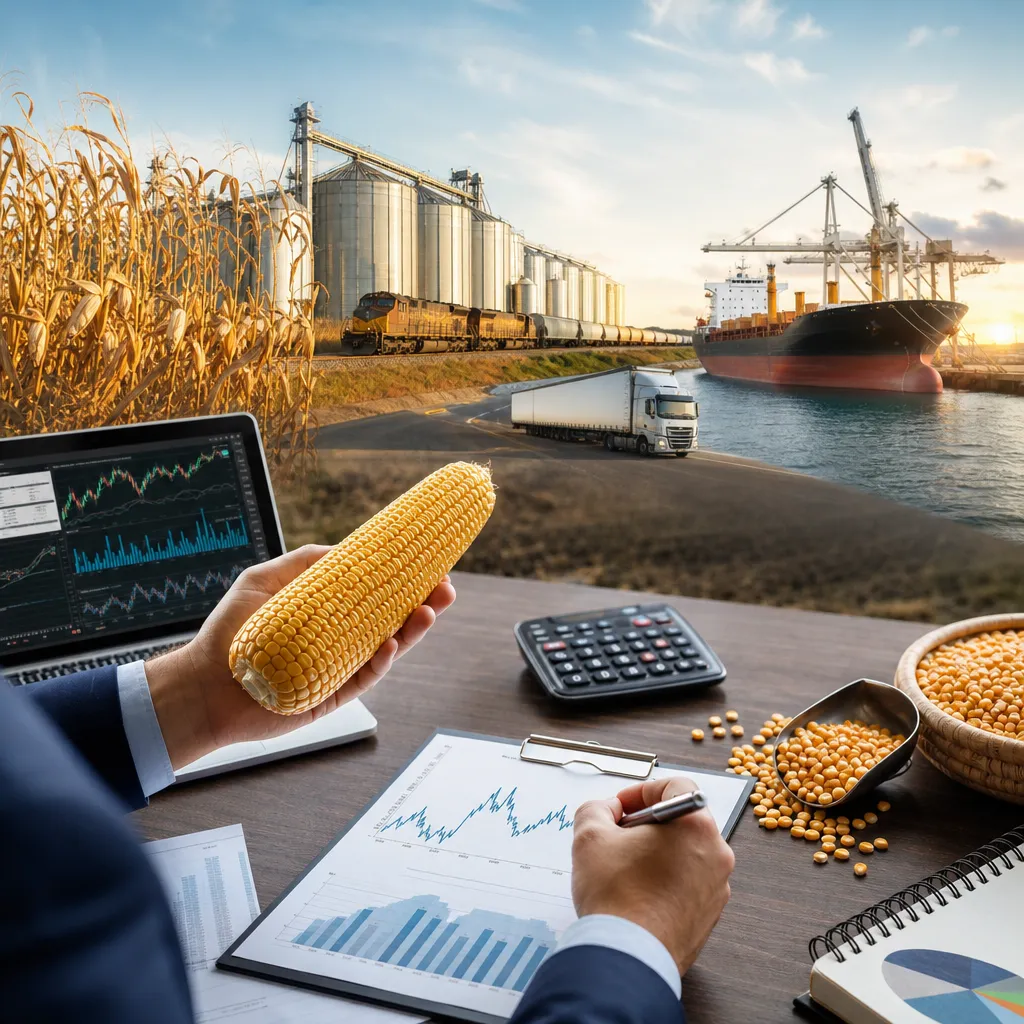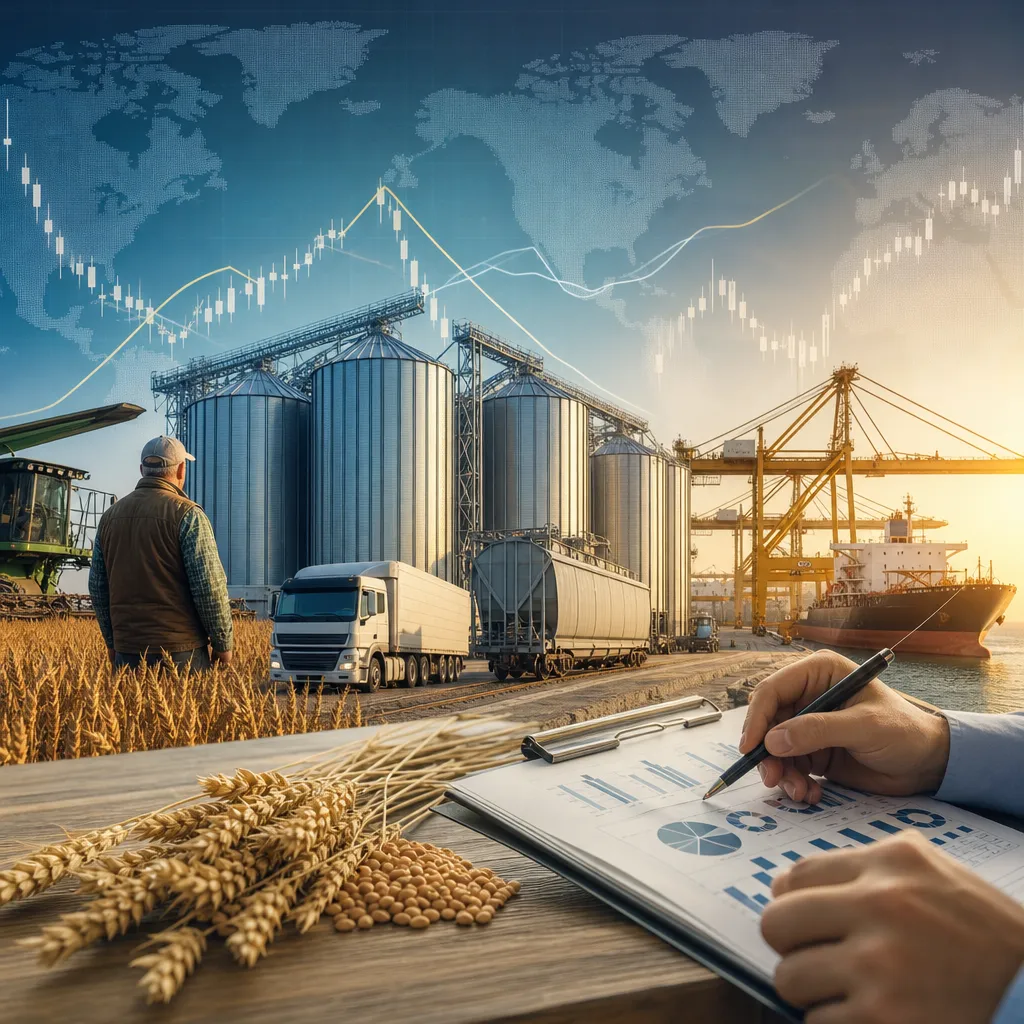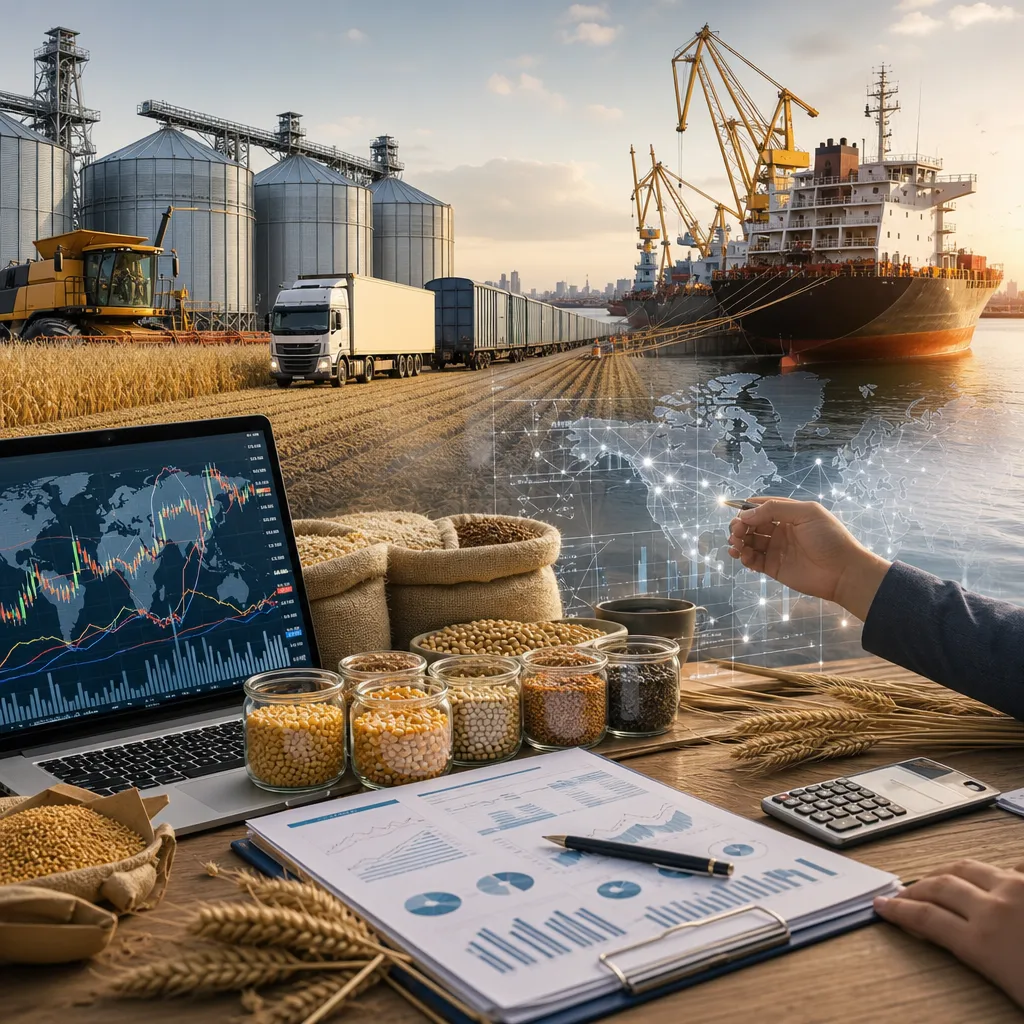
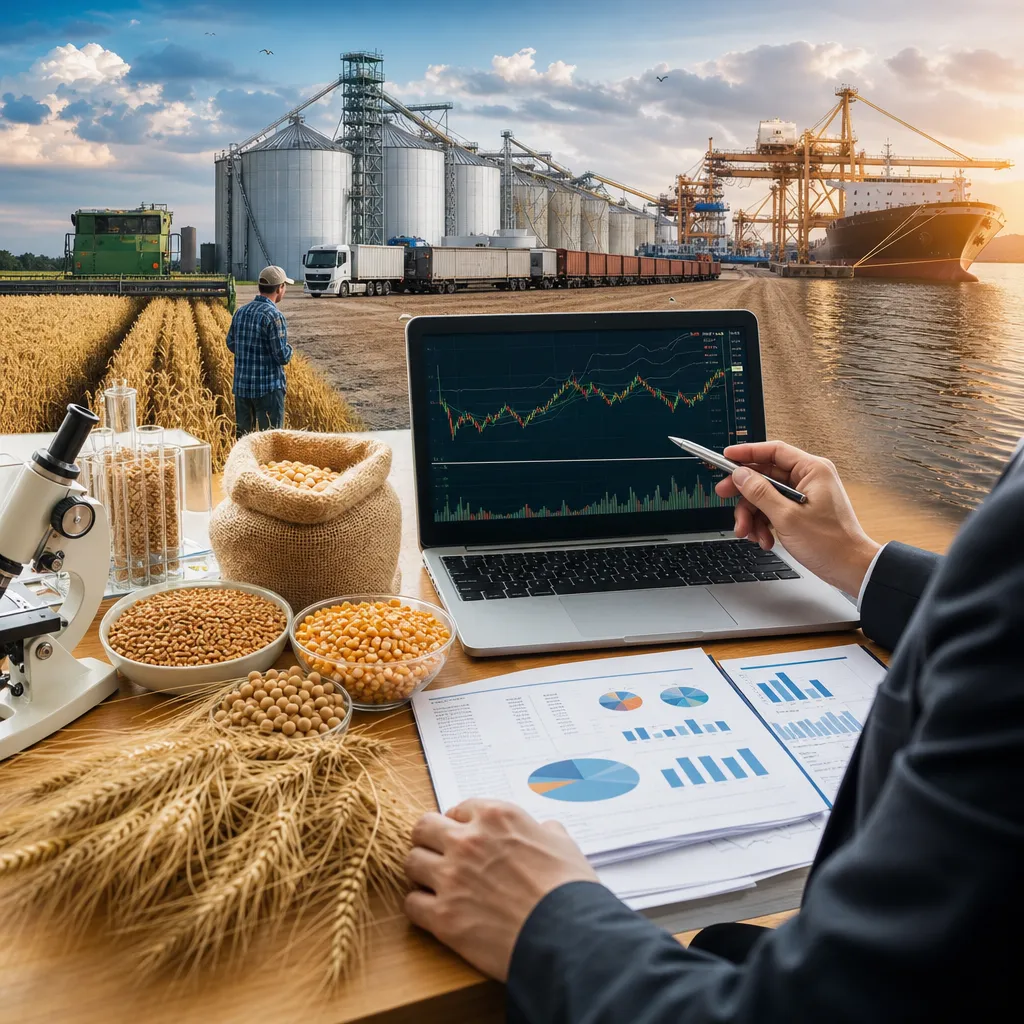
The European Union grain market is not a single local cash market but a large, integrated regional system linking farm production, feed demand, food processing, inland logistics, ports, and futures trading. In practice, “EU grain supply and demand” usually refers to wheat, maize, barley, and sometimes durum, rye, and oats across the 27-member bloc. Prices are commonly discussed in euros per metric tonne, while international comparisons often use Black Sea, U.S., or other export benchmarks alongside Euronext wheat and rapeseed futures. To understand the market, readers need to separate physical grain flows inside Europe from financial price discovery on exchanges and from export pricing at major ports.
The EU is one of the world’s major wheat producers and an important participant in barley and maize trade, but its role changes by crop and by season. Some member states are structural exporters of milling wheat or barley, while others are more dependent on maize imports for feed. Supply and demand therefore must be read at several levels at once: farm output, intra-EU movement, import needs, processing demand, livestock feeding, and export competitiveness.
What “EU grain supply and demand” means
In market terms, supply and demand describes the balance between available grain and the industries or buyers that need it. Supply includes opening stocks, the new harvest, and imports. Demand includes animal feed, flour milling, starch, industrial use, biofuels where relevant, seed demand, exports, and stocks held over into the next season.
For the EU, this balance is more complex than for a single country because grain moves freely across many internal borders. A surplus wheat crop in France, Romania, Germany, or Bulgaria can help supply millers, feed compounders, or exporters elsewhere in the Union. At the same time, maize deficits in some regions may be covered by imports from outside the EU or by shipments from surplus member states.
The main grain categories watched by traders and commercial users are:
- Common wheat, especially milling wheat and feed wheat
- Maize, largely a feed grain but also used in starch and industry
- Barley, used for feed and malting
- Durum, important for pasta production in some member states
Where the EU grain market operates
The EU market operates at three connected levels: local physical markets, regional logistics corridors, and exchange-based price discovery.
At the local level, grain is bought and sold between farmers and first buyers such as cooperatives, merchants, feed mills, flour mills, maltsters, and crushers where relevant. These transactions happen in inland elevators, collection centers, processing plants, and farm pickup arrangements. The price here is the local cash price.
At the regional level, grain moves by truck, rail, river barge, and seaborne vessel. Major producing areas include France, Germany, Romania, Poland, and parts of Central and Eastern Europe, though production patterns differ by crop. Exportable grain often moves toward Atlantic, North Sea, Baltic, Mediterranean, or Black Sea ports depending on origin and destination.
At the financial level, the best-known benchmark relevant to EU grains is Euronext, especially for milling wheat. Futures do not replace the physical market, but they are central to price discovery, hedging, and risk management across Europe. Commercial firms may buy physical wheat from farmers while simultaneously hedging price exposure through futures.
| Market layer | Where it operates | What happens there | Typical users |
|---|---|---|---|
| Local cash market | Farmgate, inland silo, cooperative, mill, feed plant | Physical grain is bought, sold, delivered, and paid for | Farmers, cooperatives, merchants, processors |
| Export/import market | Ports and vessel-loading locations | FOB export offers, import purchases, freight and destination trade | Exporters, importers, trading houses, brokers |
| Futures market | Exchange platform such as Euronext | Price discovery, hedging, speculative trading, risk transfer | Commercial hedgers, funds, brokers, traders |
How EU grain prices are formed
EU grain prices are formed from a combination of benchmark futures, local basis, grain quality, logistics costs, and immediate supply-demand conditions. There is no single “EU grain price” valid for every buyer and every location.
A practical way to think about pricing is to separate the benchmark from the local adjustment:
- Futures price: the exchange-traded benchmark, often Euronext for European milling wheat price discovery
- Basis: the local premium or discount relative to the benchmark
- Cash price: the actual physical bid in a local market
- Delivered price: the price including transport to a named destination such as a mill or feed plant
- FOB price: a port export price, typically free on board the vessel at the export point
- CIF price: a destination price including cost, insurance, and freight to the importing point
For example, a French, German, or Romanian physical buyer may look at a futures benchmark but pay a different local cash price depending on quality specification, protein, falling number, test weight, moisture, origin, loading period, and transport cost. A port exporter may bid more aggressively when export demand is strong, while an inland feed mill may price off local feed grain conditions rather than export parity alone.
Currency also matters. Much EU grain is priced in euros, but the Union competes in a world market where trade is often compared in U.S. dollars. A stronger euro can reduce export competitiveness; a weaker euro can improve it, all else equal. Energy costs, freight, and fertilizer economics can influence both current prices and future planting decisions.
| Price type | Usually quoted where | What it means |
|---|---|---|
| Futures | Exchange screen | Standardized benchmark for future delivery month |
| Local cash bid | Cooperative, merchant, local buyer | Actual bid for physical grain at a specific location |
| Delivered price | Processor or feed buyer | Price including movement to the final destination |
| FOB export price | Port/export market | Value of grain loaded on board at export point |
| CIF import price | Import destination market | Landed value including freight and insurance to buyer’s port |
EU supply: production, weather, and stocks
On the supply side, the key driver is harvest size, which depends on seeded area, weather, and yields. The EU grows winter and spring grains across very different climates, so drought, excessive rain, winterkill, heat stress, or harvest delays can affect some regions while leaving others relatively stable.
Quality matters almost as much as tonnage. A large wheat crop does not guarantee abundant milling-quality wheat. Rain at harvest or poor grain fill can push more crop into feed channels, changing trade flows and price relationships between milling wheat and feed wheat. The same applies to malting barley quality versus feed barley use.
Stocks are another important part of supply. Carryover from the previous marketing year can cushion a smaller crop, while tight beginning stocks make the market more sensitive to weather. In the EU, stocks are distributed across countries and private holders rather than existing as a single pool, so accessibility and logistics matter as much as aggregate totals.
EU demand: feed, food, industry, and exports
Demand inside the EU is broad-based. Feed demand is especially important for maize, feed wheat, and barley, and it is heavily influenced by livestock margins and by the relative price of substitute grains. Flour milling demand supports wheat consumption, while starch, alcohol, and other processors add industrial demand.
Export demand is highly significant for EU wheat and barley in competitive years. When EU origin is attractively priced relative to Black Sea or other suppliers, port demand can tighten inland markets in exporting regions. When the EU is not competitive on the world market, more grain may stay within the internal market, putting pressure on local cash values unless domestic users absorb the surplus.
Imports are especially relevant for maize and, in some years, for wheat or feed grains depending on local supply shortages and freight economics. The EU market therefore can be both an exporter and an importer at the same time, depending on the crop, the member state, and the season.
How grain is actually bought, sold, exported, imported, and hedged
Physical grain trade
Physical grain in the EU is usually traded through merchants, cooperatives, collectors, processors, and exporters rather than through an exchange delivery process for most participants. A farmer may sell at harvest, store and sell later, or contract grain forward before harvest. Contracts typically specify commodity, quality, quantity, delivery period, place of delivery, and payment terms.
Common physical channels include:
- Farmer to cooperative or local merchant
- Farmer or merchant to flour mill, feed mill, or maltster
- Merchant to exporter for port shipment
- Importer to feed compounder or processor in deficit regions
Counterparty risk, quality disputes, and logistics execution matter. In practice, the “best price” is not just the headline number; it also depends on moisture deductions, protein premiums or discounts, haulage responsibility, payment timing, and reliability of the buyer.
Futures and options
Futures and options are used for price risk management, not as the normal route for buying truckloads of grain for domestic use. A trader, cooperative, processor, or farmer may hedge using futures through a broker with exchange access. This requires a trading account and margin management, and it introduces basis risk because the local cash market may not move exactly in line with the futures contract.
A hedge helps manage benchmark price exposure, but it does not fix every component of the final physical price. Quality, location, and logistics still matter. That is why a company may hedge exchange risk online while negotiating the physical basis separately in the real market.
Where to check EU grain prices and market information online
Readers looking for current or recent EU grain prices should avoid assuming that a futures screen equals the exact local farmgate value. The most practical sources depend on whether the goal is benchmark futures, official supply-demand data, or local physical bids.
- Euronext for exchange-traded benchmark futures relevant to European grain pricing, especially milling wheat
- European Commission for agricultural market information, policy context, and EU-level market reporting
- Eurostat for official statistics on production, trade, and agricultural structure
- USDA, especially global grain balance sheets and international market context
- Local cooperatives, merchants, and processors for actual spot and forward cash bids in specific regions
- Port and trade market reporting services used by commercial participants for export indications and competitive positioning
If a reader wants the “current EU wheat price,” the correct follow-up questions are: Which wheat? Which country? Which quality? Which delivery month? Farmgate, inland delivered, or FOB port? Without those details, a single number is misleading.
Main drivers of EU grain market trends and forecasts
Forecasting EU grain supply and demand is best done through scenarios rather than certainty. The most important variables are weather and yield, but several others can move the market quickly.
- Acreage: planting decisions react to relative crop economics and input costs
- Weather: drought, excessive rain, frost, and heat shape both yield and quality
- Stocks: low carry-in increases market sensitivity
- Feed demand: livestock margins and substitute grains alter consumption patterns
- Export competitiveness: euro exchange rate, freight, and rival origins matter
- Imports: especially relevant for maize-deficit areas
- Energy and fertilizer costs: influence cropping decisions and farm profitability
- Policy and trade rules: tariffs, sanitary rules, and market interventions can affect flows
A bullish scenario for EU grain prices would typically involve reduced production, quality problems, tight stocks, and competitive export demand. A bearish scenario would more likely involve a large crop, comfortable stocks, weak exports, and soft feed demand. In reality, wheat, maize, and barley can move differently at the same time, so crop-specific analysis is essential.
Practical interpretation for farmers, importers, traders, and processors
For farmers, the EU market means that local bids are often part of a much larger pricing chain. Monitoring Euronext can help understand direction, but physical sale decisions should be based on local basis, quality premiums, storage costs, and cash flow needs.
For processors and feed buyers, the key issue is not only headline market direction but replacement cost. Delivered grain values, freight, and reliability of origin can matter more than the nearest futures month.
For exporters and importers, the relevant comparison is usually origin competitiveness in export parity or import parity terms. A port market may strengthen even when inland areas remain softer if vessel demand is concentrated and logistics are tight.
For financial traders, EU grain exposure usually comes through futures and options rather than physical ownership. But even purely financial positions should respect physical realities such as crop quality, logistics bottlenecks, and the gap between benchmark futures and regional cash markets.
What is the main benchmark for EU grain prices?
Euronext milling wheat is the main exchange benchmark widely followed in European grain trade, but it is not the same as every local cash price across the EU.
In what currency and unit are EU grain prices usually discussed?
Most EU physical grain trade is discussed in euros per metric tonne. Export markets may also be compared in U.S. dollars per tonne for international competitiveness.
Where can I check current EU grain prices?
For benchmark futures, check Euronext. For EU-level market context, check the European Commission and USDA. For actual cash bids, check local cooperatives, merchants, processors, or regional market reporting services.
Why is the local cash price different from the futures price?
Because cash prices include basis, which reflects location, transport, quality, storage, buyer competition, and immediate local supply-demand conditions. Futures are only the benchmark component.
Is the EU mainly a grain exporter or importer?
It depends on the crop and season. The EU is often a major wheat and barley exporter, while maize imports can be important in some years and regions.
How is physical grain normally sold in the EU?
Usually through cooperatives, merchants, processors, feed manufacturers, or exporters under contracts that specify quality, quantity, place, and delivery period.
Can a farmer or commercial user hedge EU grain prices online?
Yes, through futures and options via a broker with exchange access, typically linked to Euronext for European benchmarks. That hedges benchmark price risk, not every local cash market difference.
What are the biggest drivers of EU grain supply and demand?
Weather, acreage, yields, stocks, feed demand, export competitiveness, imports, currency moves, logistics, and policy developments are the main drivers.
Sources
- European Commission, Agriculture and Rural Development
- Euronext
- USDA Foreign Agricultural Service