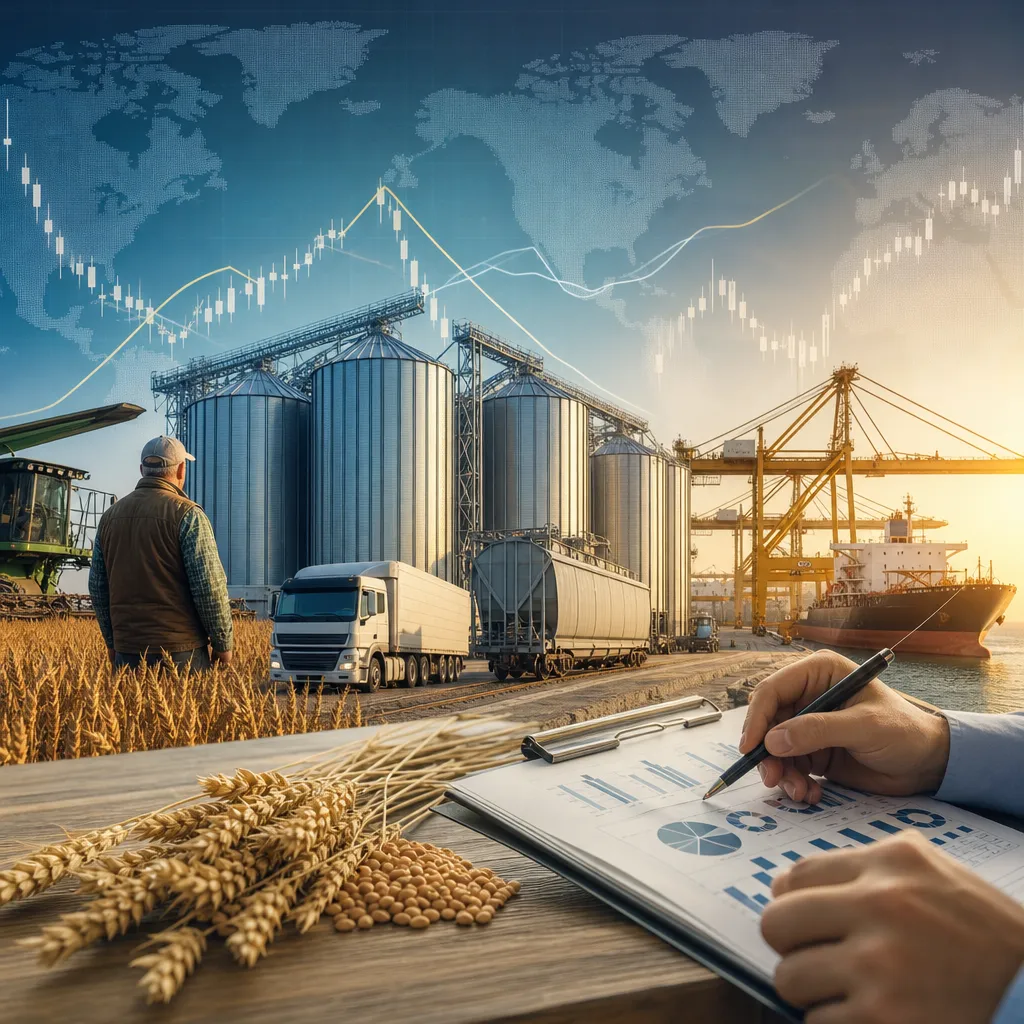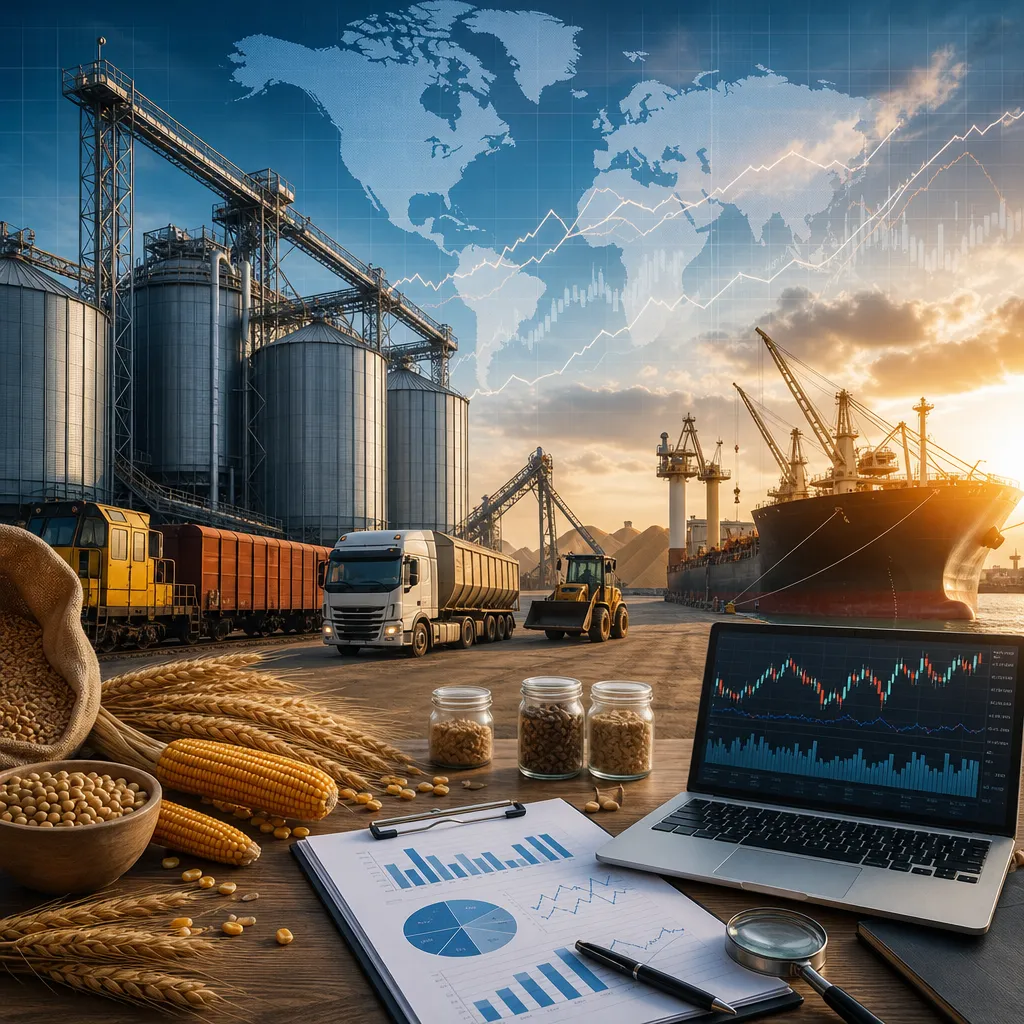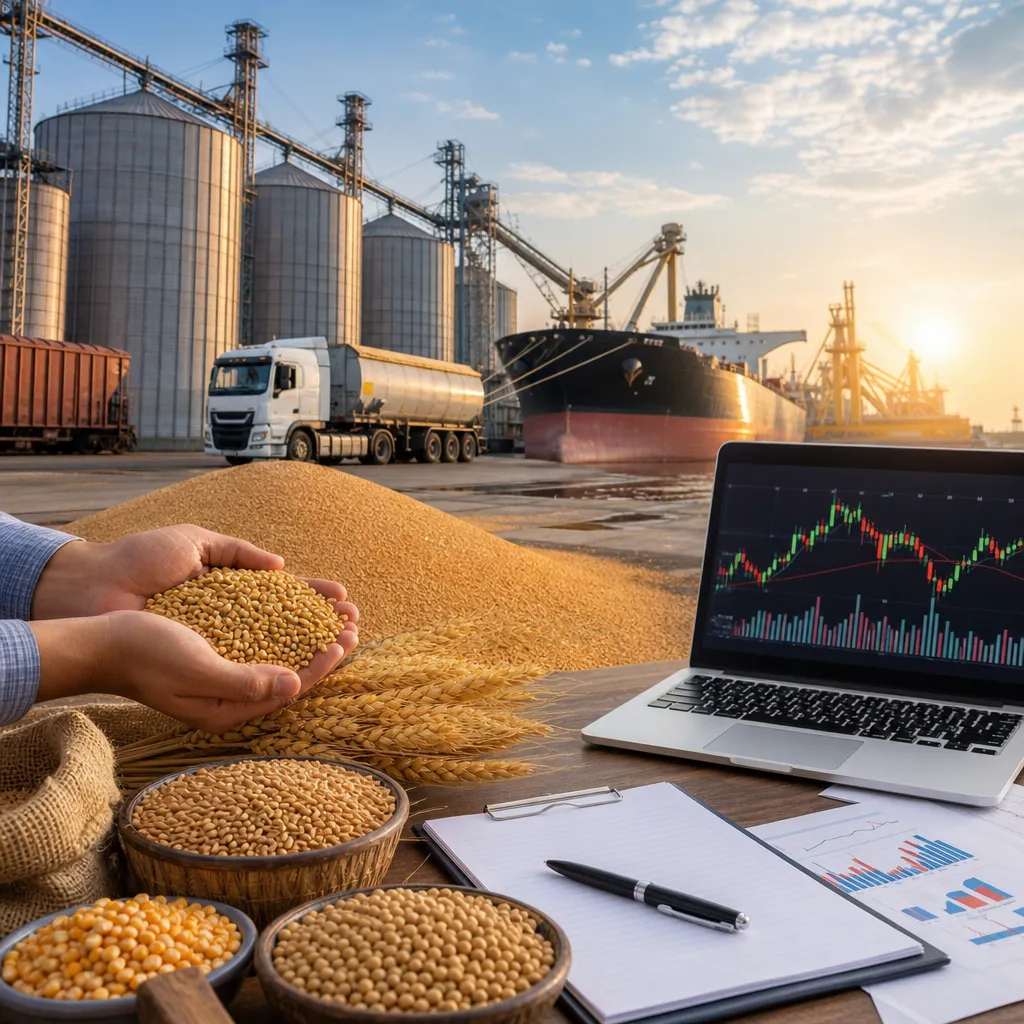
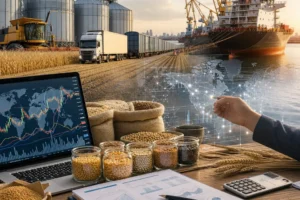
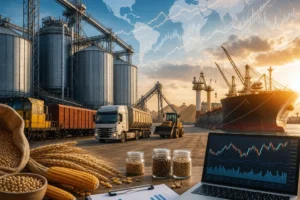
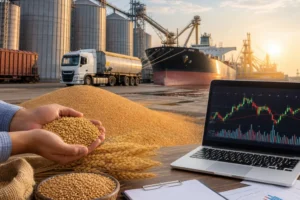
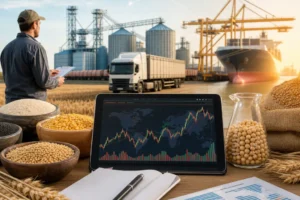
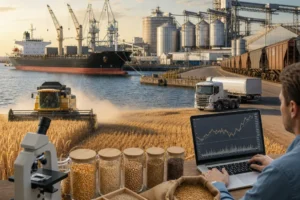
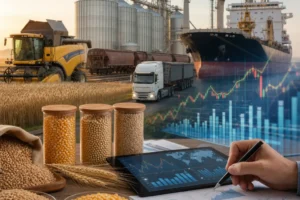
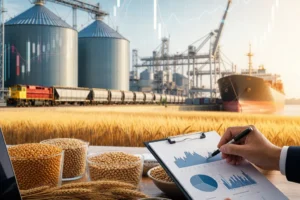
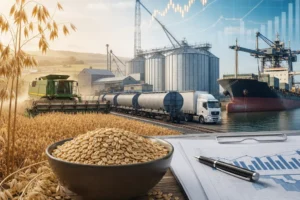
The EU grain import market is the cross-border market through which wheat, maize, barley, oats, rye, sorghum, and some processed grain products enter the European Union. It operates across all EU member states, but pricing and trade are strongly influenced by major consuming countries, coastal ports, inland feed regions, and the EU’s common trade framework. In practice, this is not one single physical marketplace: it is a network of import tenders, merchant trades, port offers, inland delivered markets, and futures-based risk management. Readers following this market need to distinguish between international offers such as CIF import prices, local port values, and inland cash prices paid by feed mills, starch plants, or traders.
The European Union is both a large grain producer and a significant grain importer, depending on crop year, grain type, quality, and region. The EU commonly imports large volumes of maize for feed, and in some seasons it also imports milling wheat, durum, barley, or specialty grains when internal supply is tight or price spreads favor imports. Most commercial grain trade is priced in euros per metric tonne, while international reference markets may also use U.S. dollars per tonne for seaborne trade. That means currency movements, freight, and quality spreads matter as much as headline futures prices.
Anyone trying to understand the EU grain import market should look at three layers at once: global benchmark values, import parity at EU ports, and the inland destination market where grain is actually consumed. A cargo can look cheap on paper at origin but become less competitive after freight, insurance, port costs, customs treatment, and internal transport are added. For that reason, import economics in the EU are always local as well as international.
What the EU grain import market includes
The market covers physical grain entering the customs territory of the European Union for use by feed manufacturers, flour millers, starch producers, maltsters, traders, and in some cases biofuel producers. The main imported grains are usually maize and wheat, though actual import needs vary widely by season. Durum wheat can also be important for pasta-making markets, while specialty feed demand can support sorghum or oats imports when pricing works.
The market is shaped by the EU’s role as a major consumer with a large livestock sector, substantial milling demand, and uneven regional crop balances. Some member states are structurally surplus in grain, while others are more dependent on imports, especially where feed demand is concentrated or where domestic harvest quality is inconsistent.
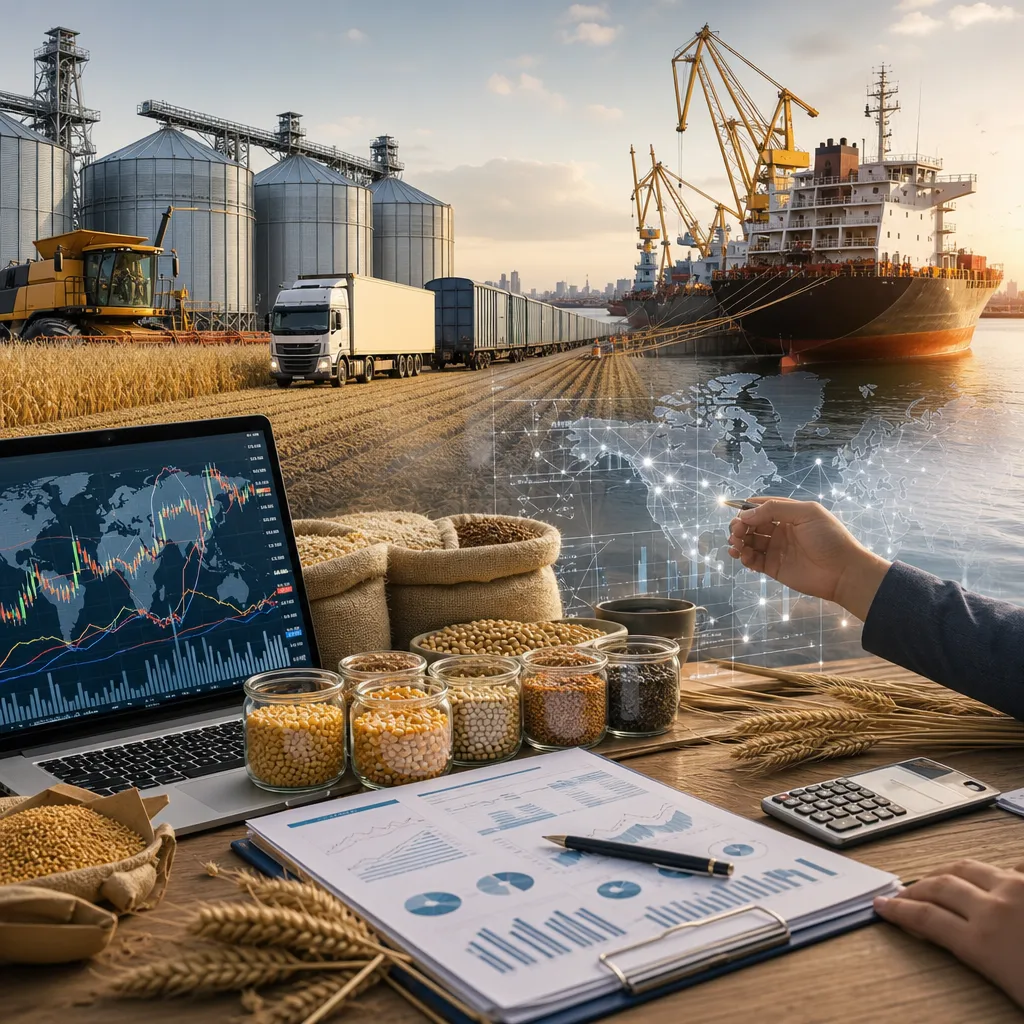
Imports arrive by sea, river, rail, and truck. Seaborne imports are particularly important because they connect the EU to Black Sea, North and South American, and other global suppliers. Once unloaded, grain may be stored at port, transferred to barges or trains, or moved directly by truck to processors and feed compounders.
Where the market operates inside the EU
The EU grain import market operates across many entry points rather than one exchange or one port. Coastal ports in countries such as Spain, Italy, the Netherlands, Belgium, Germany, and France are important because they receive large bulk cargoes and redistribute grain inland. Mediterranean ports matter for feed import demand in southern Europe, while North Sea ports matter for both direct consumption and onward movement into northwest Europe.
Inland, the real market often becomes a delivered market. A feed mill in Spain, a starch plant in the Benelux region, or a flour mill in Italy may not think primarily in terms of a world FOB export price. It thinks in terms of the delivered cost and suitability of grain at its plant gate. That is why port values and inland logistics are central to EU import pricing.
The relevant geographic unit is therefore both pan-EU and highly regional. EU law, customs rules, and some trade measures are common at Union level, but local supply-demand balances differ sharply by member state and even by sub-region. A drought in a feed-deficit area can strengthen import demand there even if the broader EU crop is acceptable overall.
| Market layer | Where it operates | Why it matters |
|---|---|---|
| International origin market | Exporting countries and FOB export ports | Sets the starting point for import economics |
| EU import port market | Seaports and terminals in member states | Reflects CIF cargo values, discharge costs, and nearby demand |
| Inland physical cash market | Feed mills, flour mills, merchants, cooperatives, processors | Determines the end-user price actually paid or received |
| Futures and options market | Primarily Euronext, with global benchmarks also monitored | Used for price discovery and hedging, not the same as a local delivered price |
How prices are formed
EU grain import prices are formed by combining global grain values with freight, quality, currency, and local demand. In practical terms, a buyer may start with an export offer at origin, add ocean freight and insurance, then compare the resulting CIF cost into an EU port with local alternative supplies. If the grain still works versus domestic grain or competing imported grain, the trade can be done.
Several price concepts are important:
- Futures price: a standardized exchange-traded benchmark, often used as a reference for hedging and price direction.
- Cash bid: a physical bid from a buyer for a certain location, quality, and delivery period.
- Delivered price: the cost of grain delivered to a mill, feed plant, or warehouse.
- FOB price: the value of grain loaded on a vessel at the export port.
- CIF price: the value including cost, insurance, and freight to the import destination.
- Basis: the difference between a local cash price and the relevant futures benchmark.
Basis is especially important. A weak basis can mean that inland supply is comfortable, logistics are congested, or local buyers are not competing aggressively. A strong basis can result from tight nearby demand, port congestion, quality shortages, or expensive inland transport. Two buyers in different EU regions can therefore pay very different prices even when they are both watching the same benchmark futures contract.
Currency is also critical. Many seaborne grain offers are evaluated against dollar-denominated export values, while many EU transactions are settled in euros per tonne. A weaker euro can make imports more expensive even if world grain prices are unchanged. Conversely, a stronger euro can improve import competitiveness.
Benchmarks, futures, and their link to imports
The most relevant exchange benchmark for much of the EU grain trade is Euronext, particularly its wheat futures complex, because it is a core reference for European grain pricing and hedging. For global context, market participants also watch U.S. grain futures and broad international cash markets, especially when comparing EU import parity with Black Sea or American origin offers.
Futures do not equal physical import prices. They are standardized financial instruments with specific delivery concepts and contract terms. Physical import prices differ because cargoes have actual origin, protein or test-weight characteristics, phytosanitary conditions, freight costs, and discharge timing. A mill or feed buyer may use futures to hedge price exposure while separately negotiating basis, freight, and quality in the physical market.
Importers, merchants, and processors often hedge one part of the risk and leave another part open. For example, they may lock a flat price, or they may hedge futures first and later fix basis. The choice depends on liquidity, risk policy, and how closely the physical grain matches the benchmark contract.
| Price type | Typical unit/currency | What it represents |
|---|---|---|
| Euronext futures | Usually euros per metric tonne | Benchmark for price discovery and hedging |
| FOB export offer | Often U.S. dollars per metric tonne | Value at origin port before ocean transport to the EU |
| CIF EU port value | Often euros or U.S. dollars per metric tonne | Landed import value into an EU port |
| Inland delivered price | Usually euros per metric tonne | Actual cost to the final user after inland logistics |
| Local cash bid | Usually euros per metric tonne | Buyer’s physical offer for a given quality, place, and timing |
How grain is actually bought, sold, imported, and hedged
Physical grain imports into the EU are usually handled by merchants, trading houses, feed manufacturers, millers, processors, and sometimes cooperatives. A buyer may purchase a cargo directly from an exporter or through an intermediary merchant. The contract will normally specify origin, quality, shipment period, discharge window, weight and quality determination, payment terms, and dispute rules.
Once the vessel arrives, grain is discharged into port storage or directly into onward logistics chains. From there it may move by barge, rail, or truck to inland users. In some cases, import cargoes are presold before arrival. In others, traders import grain speculatively and sell it into the domestic market once discharge is complete.
Futures and options are separate from physical ownership. A company can hedge grain cost risk on an exchange without owning grain, and it can own physical grain without hedging, though that increases exposure. Access to exchange-traded futures and options is normally through a broker or clearing member, with margin requirements and marked-to-market gains and losses. That is very different from buying a physical cargo, where the risks include quality, logistics, counterparty performance, and storage.
For end-users, import decisions often come down to replacement economics. A feed mill compares domestic grain offers with imported alternatives of equivalent feeding value. A flour mill compares milling performance and protein quality, not just headline price. That is why quality spreads can be decisive in EU grain imports.
What drives EU grain import demand
Import demand changes from season to season and region to region. The biggest drivers are the size and quality of the EU harvest, livestock feed demand, industrial use, and the competitiveness of non-EU origins. Weather matters twice: once for the EU crop itself, and again for competing exporters that may offer grain into Europe.
Other important drivers include:
- Crop quality: a large crop is not enough if milling or feed quality is uneven.
- Regional deficits: some areas may require imports even when the EU overall has sizable production.
- Currency movements: euro strength or weakness directly affects landed import cost.
- Ocean and inland freight: freight can change the competitiveness of origin supplies quickly.
- Policy and trade measures: tariffs, quotas, sanitary rules, and temporary trade arrangements can alter trade flows.
- Biofuel and starch demand: industrial users can tighten local grain balances.
- Competition among exporters: offers from Black Sea, the Americas, or other suppliers may shift buying patterns.
Scenario analysis is more reliable than fixed-point forecasting. If the EU harvest is large and feed demand is stable, import needs may ease. If regional drought reduces maize supply in deficit zones while global exporters are competitive, imports can increase. If the euro weakens sharply, EU buyers may reduce imports unless local grain becomes even tighter.
Where to check EU grain import market information online
For practical market monitoring, readers should combine official trade data, EU market dashboards, exchange prices, and physical market intelligence. No single source gives the entire picture.
The most relevant places to check are:
- European Commission: for EU agricultural market information, trade monitoring, and sector overviews.
- Eurostat: for official trade statistics, including imports by commodity and member state, although data may lag real-time trade.
- Euronext: for European grain futures and options benchmark information.
- USDA: for global supply-demand context, major exporter competition, and broad trade balance analysis.
- National agriculture ministries and customs/statistics offices: for country-level data where available.
- Commercial merchants, brokers, and price reporting services: for day-to-day physical market indications, port values, and delivered bids.
- Local mills, feed compounders, and cooperatives: for actual buying interest in specific regions.
Readers looking for a “current EU grain import price” should be careful. What is available publicly may be a futures quote, a delayed customs value, or an indicative port offer rather than a live executable inland cash bid. The exact price depends on commodity, origin, quality, vessel timing, port, and final destination. That is why a posted futures value should never be treated as the exact price a feed mill or importer pays today.
Practical differences between online market access and the real physical market
Online pricing tools are useful for monitoring benchmarks, but most physical grain imports into the EU are negotiated privately. A trader may watch Euronext live on screen, but the actual import deal is still done by contract between counterparties. The physical market includes vessel nomination, documents, quality certificates, insurance, financing, and discharge coordination. None of that is visible in a futures quote.
An importer hedging online is managing price risk, not necessarily arranging supply. A physical buyer still needs a seller, agreed quality, shipping schedule, and logistics chain. Likewise, a farmer or inland merchant may track futures online but sell grain physically to a local buyer at a basis-adjusted cash price. The online market and the physical market are connected, but they are not the same thing.
Key risks for traders, importers, and end-users
The main risks in the EU grain import market are price volatility, basis changes, currency exposure, freight changes, quality disputes, and logistics delays. Importers can also face timing risk: a cargo bought against one market condition may arrive into a very different nearby market. Sudden changes in local supply, policy, or transport availability can shift margins quickly.
For hedgers, basis risk is especially important. Even if a futures hedge performs as expected, the local physical differential can widen or narrow unexpectedly. For physical buyers, credit and contract performance also matter. Grain trading is not only about getting the market direction right; it is also about execution and risk control.
FAQ
What is the main benchmark for EU grain pricing?
Euronext is the main exchange benchmark watched in much of the EU grain market, especially for wheat. However, imported grain values also depend on international FOB and CIF prices, freight, currency, and local basis.
Are EU grain import prices quoted in euros or dollars?
Both can be relevant. EU domestic and inland physical prices are commonly discussed in euros per metric tonne, while international seaborne offers are often evaluated in U.S. dollars per metric tonne before conversion into euro import parity.
Where can I check current EU grain import prices?
There is rarely one official live price for the whole EU import market. Readers should monitor Euronext for benchmark futures, the European Commission and Eurostat for market and trade information, and commercial merchants or brokers for current port and delivered physical indications.
Why is a futures quote different from an EU import cash price?
A futures quote is a standardized exchange price. An import cash price reflects actual origin, quality, freight, insurance, port handling, timing, and inland delivery costs. Basis and currency can also create large differences.
Who buys imported grain in the EU?
The main buyers are feed manufacturers, flour millers, starch processors, maltsters, merchants, and trading houses. Some purchases are for immediate processing, while others are for resale or inventory management.
How is imported grain physically moved inside the EU?
After discharge at port, grain may move into storage or continue by barge, rail, or truck to inland consumers. The chosen route depends on port location, destination, cost, and timing.
Can a company hedge EU grain imports without taking delivery on an exchange?
Yes. Many companies use futures or options through a broker to hedge price risk while trading the physical grain separately. Exchange hedging manages financial exposure; it does not replace the physical purchase contract.
What usually drives a change in EU grain import demand?
The main drivers are EU harvest size and quality, feed demand, relative competitiveness of foreign origins, euro exchange rates, freight costs, and regional supply shortages inside the Union.
Sources
- European Commission, Agriculture and Rural Development
- Euronext
- Eurostat