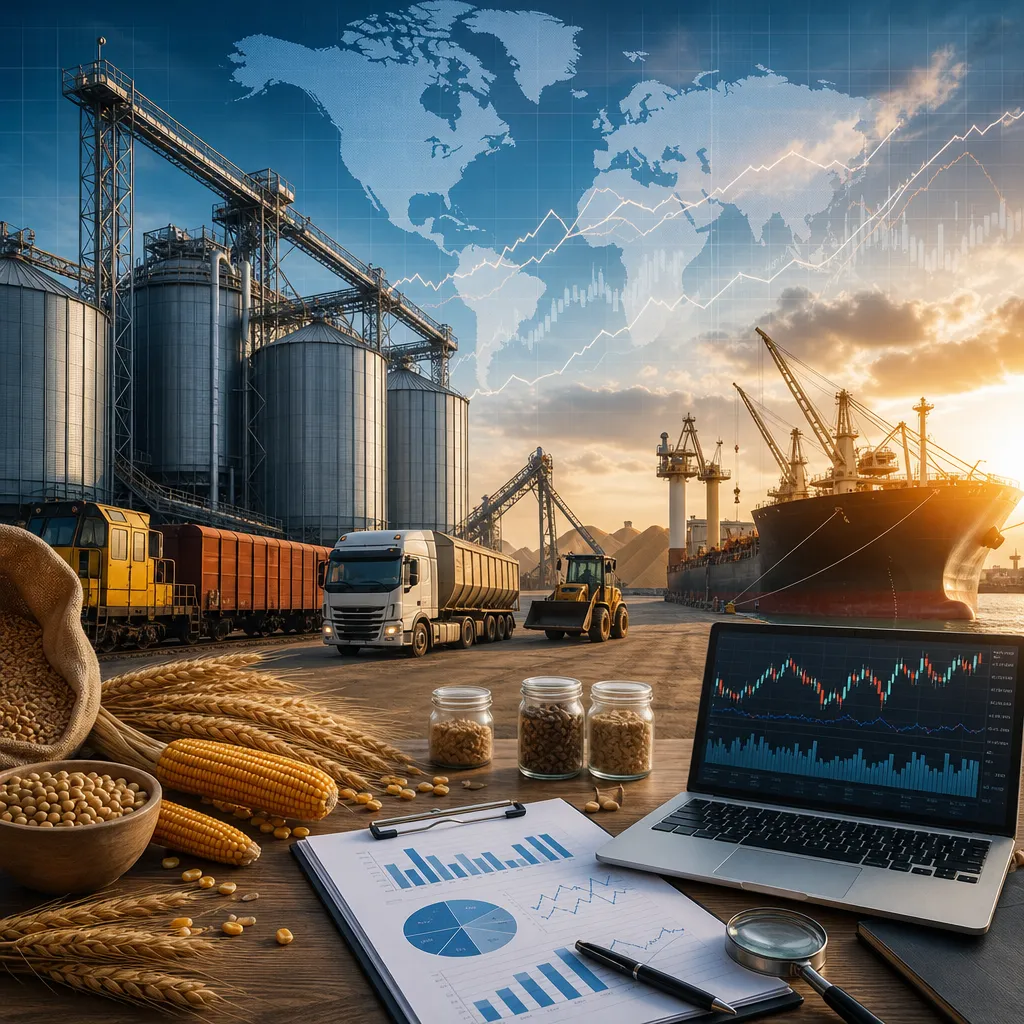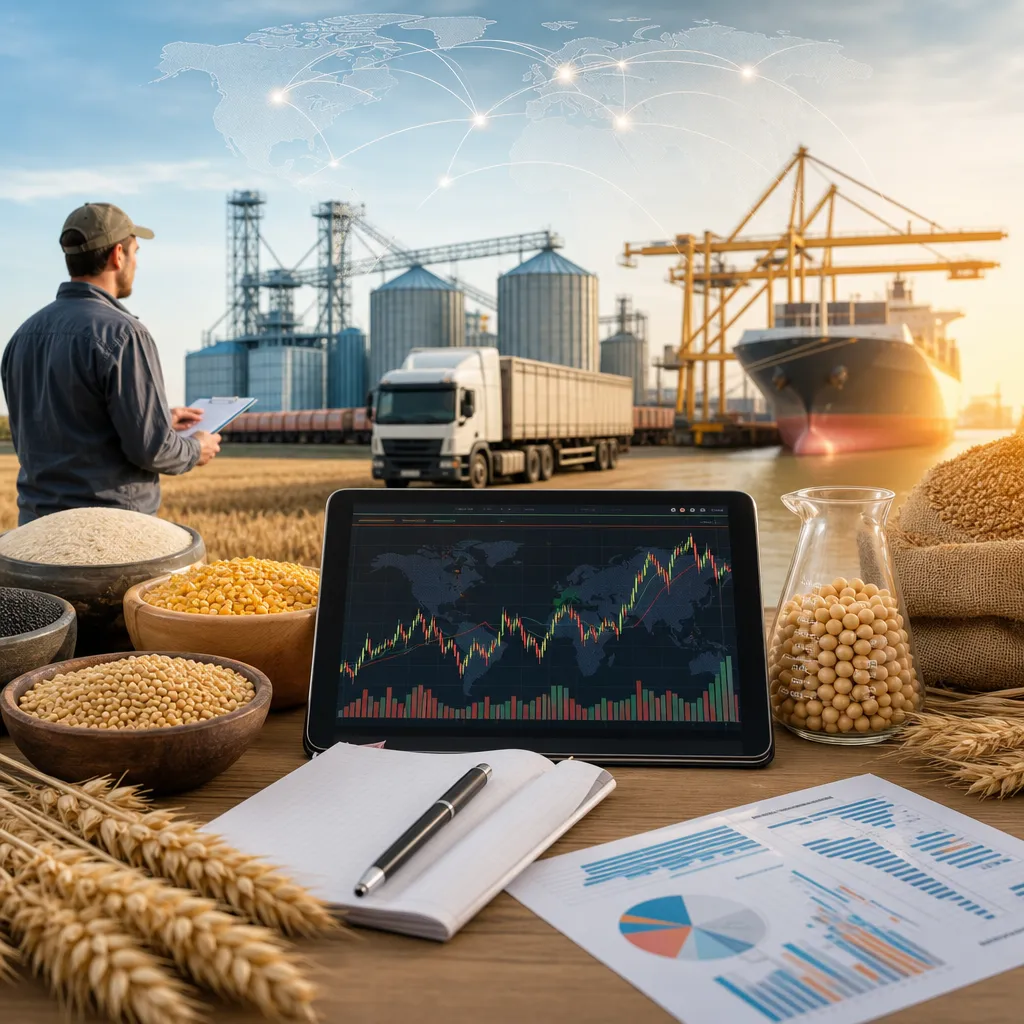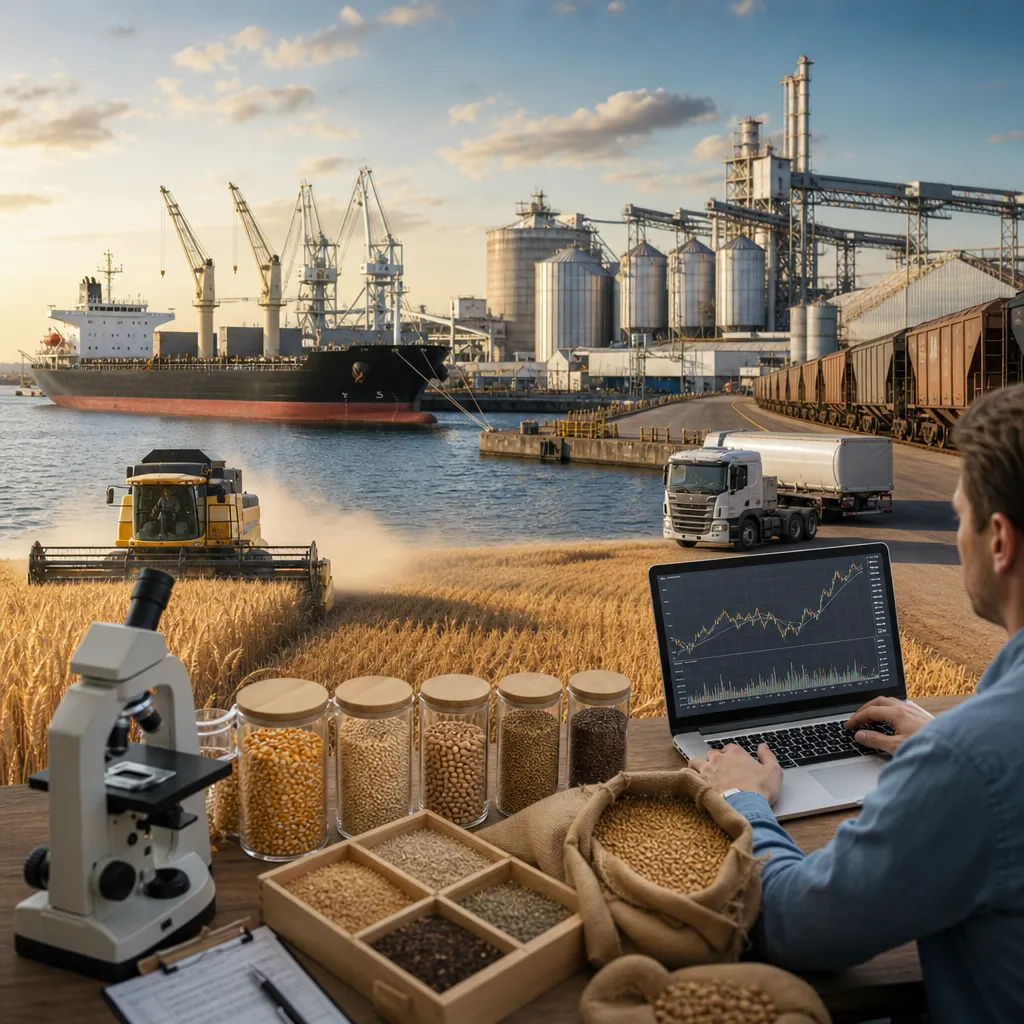
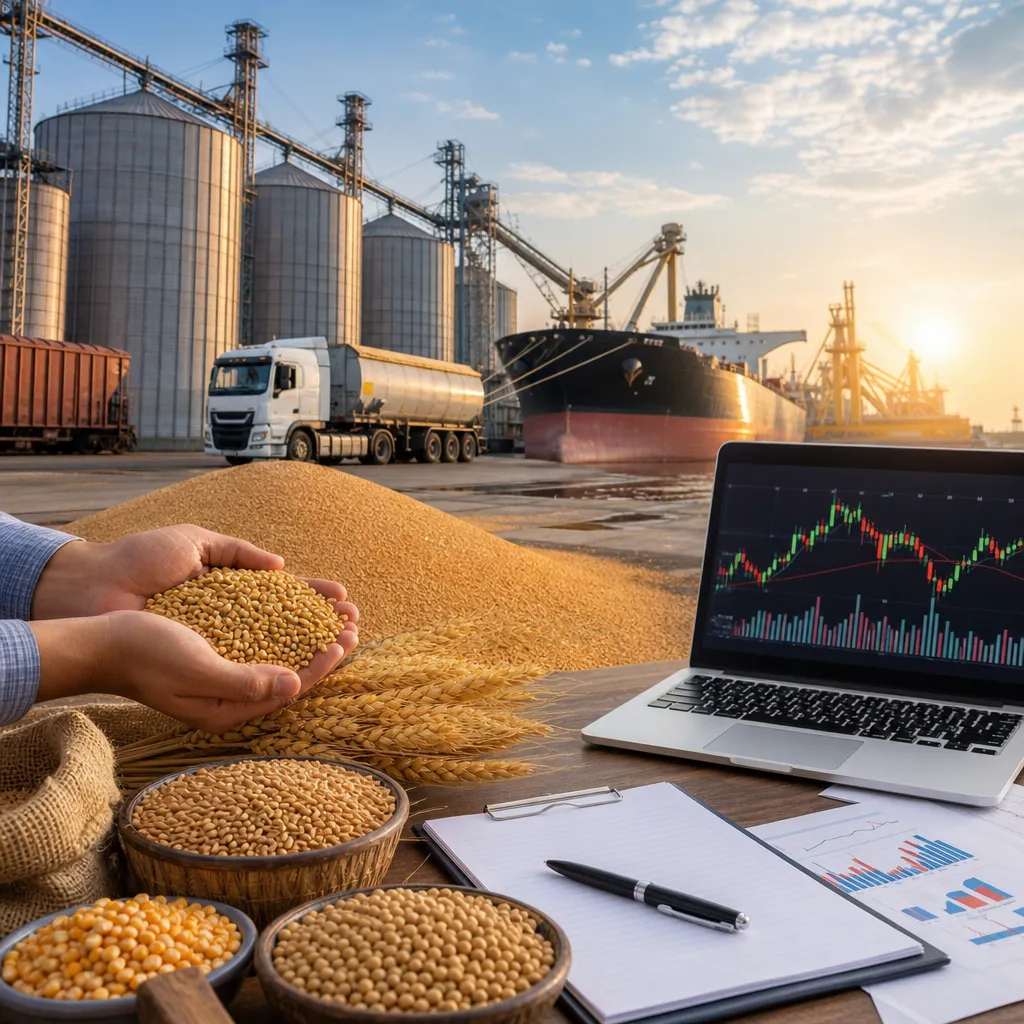
The EU grain export market is the network through which wheat, barley, maize, and some other cereals produced inside the European Union are sold from inland origins to overseas buyers or to nearby importers. It is not a single exchange or one port market: it is a linked system of farm production, inland cash trade, river and rail logistics, export terminals, shipping, and risk management anchored by the Euronext grain futures market and by global Black Sea, US, and South American competition. In practice, traders watch both physical export bids and futures prices, but the two are not the same thing. Anyone trying to understand this market needs to know where trade happens physically, how export prices are built, and where official information can be checked.
What the EU grain export market means
The European Union is a major global participant in grain trade, especially in common wheat and barley. The market covers grain grown in member states and moved through domestic and export channels to buyers in North Africa, the Middle East, sub-Saharan Africa, and other destinations depending on crop quality, freight economics, and world competition.
Within the EU, the most export-relevant cereals are usually:
- Common wheat, often the leading export grain
- Barley, both feed and malting grades depending on quality
- Maize, which can be both imported and exported depending on regional balance and crop conditions
- Durum wheat, important in some Mediterranean-producing regions but more specialized
The market operates in euros for most internal and export trade. Physical grain is commonly quoted in euros per metric tonne. On global trade terms, export offers may be discussed as FOB or CIF prices, also usually per metric tonne. Futures in Europe are most closely associated with Euronext milling wheat, which serves as a benchmark for much of the region’s wheat price discovery.
Where the market operates inside the EU
The EU grain export market is geographically spread across producing areas, inland collection points, crushers and feed mills, river systems, and seaports. France is often central in wheat exports. Romania and Bulgaria matter greatly for Black Sea-facing exports. Germany, Poland, and the Baltic member states can also play important roles depending on crop size, quality, and destination demand. Spain, Italy, the Netherlands, Belgium, and others are significant consumers, traders, or logistics hubs even when they are not the largest exporters.
Physical trade usually starts far from the port. Farmers sell to cooperatives, merchants, collectors, mills, feed compounders, or exporters. Grain may then move by truck, rail, barge, or vessel to export terminals. The final export market is therefore shaped both by inland supply and by port competitiveness.
| Market layer | Where it operates | Main role |
|---|---|---|
| Farm and local collection | Producing regions across EU member states | Primary sale, storage, and quality segregation |
| Inland cash market | Elevators, cooperatives, merchants, mills, feed buyers | Cash bids, domestic movement, basis formation |
| Export logistics | River systems, rail corridors, export terminals, ports | Assembly, loading, freight coordination, shipment |
| Benchmark futures | Euronext futures market | Price discovery and hedging reference |
| Export market | FOB offers at competitive EU ports and destination tenders | International sales to importers |
How EU grain export prices are formed
EU grain export pricing is built from several layers, not one number. The benchmark futures market may indicate general wheat value, but an actual export cargo price also depends on origin, quality, protein, moisture, local availability, transport cost, terminal handling, vessel line-up, freight, currency, and demand from destination buyers.
The main pricing concepts are:
- Futures price: the exchange-traded benchmark, most notably Euronext milling wheat for much EU wheat trade
- Cash bid: the price offered by a local buyer at silo, mill, feed plant, or collection point
- Delivered price: a price to a specific destination such as a port, processor, or domestic buyer
- FOB price: free on board, meaning the grain value loaded onto a ship at the export port
- CIF price: cost, insurance, and freight to the destination port, more relevant for the importer’s side
- Basis: the difference between local cash value and the benchmark futures price
Basis is especially important. A trader may say a cargo is priced at a premium or discount to a benchmark. That premium or discount reflects quality, local supply pressure, inland freight, export demand, and port conditions. A strong export program can lift inland cash prices even if futures are unchanged. Conversely, weak port demand or large nearby farmer selling can pressure the local cash market.
Currency matters too. Since much EU grain is priced in euros while world trade often compares values across multiple currencies, exchange-rate moves affect competitiveness. A change in the euro can alter how attractive EU grain is relative to Russian, US, Ukrainian, Argentine, or Australian origin.
The role of Euronext and the link to physical trade
The exchange most relevant to the EU grain export market is Euronext, especially for milling wheat futures. It is a financial and hedging venue, not the whole physical market. Exporters, merchants, processors, and speculative participants use futures to manage or express price risk. The futures contract helps create a transparent benchmark, but an exporter still has to buy physical grain, meet quality terms, secure logistics, and execute a shipment.
This distinction is essential:
- A farmer or cooperative may monitor Euronext online every day
- The actual grain sale may still be a physical contract with a local merchant or processor
- An exporter may hedge wheat exposure on Euronext without intending to keep an open price risk
- A speculative trader may trade futures without owning any grain at all
Futures are useful because they can be traded electronically through authorized brokers, and they allow market participants to lock in or protect against broad price moves. But they do not eliminate basis risk, meaning the local cash differential can still change even if the futures position works as intended.
| Price type | Where quoted | What it means |
|---|---|---|
| Euronext futures | Exchange screen via broker or market data service | Benchmark paper market price for hedging and price discovery |
| Local cash bid | Cooperative, merchant, mill, feed buyer | Actual purchase offer at a local delivery point |
| Delivered port price | Trader or exporter quotation | Value of grain delivered to export position |
| FOB export offer | Export market reports, trader indications, tenders | Cargo value loaded on vessel at port |
| CIF import price | Destination-side tenders or import quotations | Landed cost to importer including freight and insurance |
How grain is actually bought, sold, exported, and imported
In the physical market, grain is usually traded through contracts between commercial counterparts. Farmers often sell to a cooperative or merchant. Merchants may resell to domestic processors or assemble larger lots for export. Exporters build cargoes that meet destination specifications, often around grade, test weight, moisture, protein, falling number, impurities, and phytosanitary requirements depending on the commodity and buyer.
A typical commercial flow may look like this:
- Farmers harvest grain and store it on-farm or deliver to a local collector
- A cooperative or merchant offers a cash bid in euros per tonne for a named quality and delivery period
- Grain is tested, contracted, and moved to inland storage or directly to a processor or export chain
- An exporter buys enough volume to build a vessel parcel
- The exporter books inland logistics and port elevation
- The cargo is sold FOB to an overseas buyer, or sometimes sold on destination terms through an importer tender
Imports into the EU work similarly in reverse. Users such as feed manufacturers, starch producers, or processors may source imported grain when domestic supply is tight, quality is unsuitable, or import parity is more competitive than internal supply. In that case, the key comparison is between EU inland values and imported CIF values plus discharge and internal logistics.
How hedging and online trading differ from physical grain trade
Physical grain trade and futures trading should be kept separate. Owning a futures position does not mean owning grain in a silo, and selling physical grain does not automatically mean the seller has hedged the price. Each activity has different tools, risks, and participants.
Physical grain trade usually happens through:
- Farm-to-cooperative sales
- Farm-to-merchant contracts
- Processor procurement programs
- Exporter-origin buying
- Spot, forward, or harvest-time contracts
Futures and options trading usually happens through:
- An account with an authorized broker
- Exchange-traded contracts on Euronext
- Margin requirements and mark-to-market accounting
- Rolling or closing positions before expiry if no delivery intention exists
A practical hedge for an exporter might involve buying physical wheat in the cash market while selling futures to reduce exposure to a general price drop before the export cargo is priced or shipped. A farmer may use forward selling through a merchant rather than opening a futures account directly. This is often simpler, though the embedded pricing still reflects futures and basis logic.
Where to check EU grain export prices and market information online
If someone wants the current EU grain export market, they should not rely on a single screen price. Export values change by port, crop quality, shipment period, and destination. The practical approach is to combine benchmark futures data with official trade and market reports.
Useful places to check include:
- Euronext for benchmark grain futures and contract information relevant to European wheat pricing
- European Commission market and trade publications for cereals and broader agricultural monitoring
- Eurostat for official trade statistics and structural data
- USDA, especially global grain reports and foreign market analysis, for comparative world supply-and-demand context
- National agriculture ministries or statistical agencies in major exporting member states for crop, quality, and harvest information
- Cooperatives, merchants, and processors for local cash bids, delivered prices, and contract terms
- Trade tenders and recognized market reporting services for FOB indications and destination demand signals
The most important practical warning is that a futures quote is not the same as a farm-gate or delivered-port cash price. Local cash prices differ because of basis, quality premiums or discounts, storage cost, road or rail distance, and buyer competition. Export offers differ again because they include port logistics and loading economics.
Main factors that drive the market
The EU grain export market is highly sensitive to both internal and external drivers. Since the EU competes directly with other major exporting origins, local harvest size alone never tells the whole story.
| Factor | Why it matters | Typical market effect |
|---|---|---|
| EU weather and yields | Determines production volume and quality | Changes exportable surplus and cash basis |
| Quality distribution | Export buyers may require milling or feed specifications | Premiums for scarce quality, discounts for off-spec grain |
| Black Sea competition | Direct competition in key destinations | Pressures or supports FOB values |
| Euro exchange rate | Affects EU export competitiveness | Can shift demand toward or away from EU origin |
| Freight and logistics | Influences port margins and destination competitiveness | Widens or narrows export basis |
| Domestic feed and processing demand | Competes with export channels for grain | Supports inland prices when local users are active |
| Policy and trade rules | Can affect flows, documentation, and competitiveness | Alters market access and trade direction |
Practical outlook: how to think about forecasts
Forecasting the EU grain export market should be done in scenarios rather than fixed certainty. A larger, good-quality wheat crop can increase exportable surplus, but that does not automatically mean stronger prices. If competing exporters also have large crops, world demand may be met at lower values. On the other hand, a smaller EU crop may still support exports if quality is strong and competing origins face logistical or policy disruptions.
Useful forecast questions include:
- Is the EU crop large enough to create a strong export surplus?
- What share of the crop meets milling rather than feed quality?
- How competitive is EU origin versus Black Sea and US supplies?
- Is the euro helping or hurting export sales?
- Are North African and Middle Eastern tenders favoring EU specifications?
- Are inland logistics and ports moving grain efficiently after harvest?
For traders and commercial users, the best forecast is often not a single price target but a map of conditions under which basis, futures, or export flow could strengthen or weaken.
FAQ
What is the main benchmark for EU grain prices?
For wheat, the main benchmark is generally Euronext milling wheat futures. However, actual physical grain prices in the EU also depend on basis, quality, location, and logistics.
Are EU grain export prices quoted in euros or dollars?
Inside the EU, physical grain is commonly discussed in euros per metric tonne. International comparisons may also use dollar-denominated FOB or CIF references, but the internal market is strongly euro-based.
Where can I check current EU grain prices online?
Check Euronext for benchmark futures, then compare that with European Commission market information, Eurostat trade data, and local cash bids from cooperatives, merchants, or processors. For export-specific indications, professional market reporting and tender results are also important.
Is a futures price the same as the farm-gate grain price?
No. A futures quote is a benchmark financial market price. A farm-gate or local cash price reflects basis, quality, transport distance, storage, local competition, and timing of delivery.
How is grain physically exported from the EU?
It is assembled from farms and inland silos, moved to export terminals by truck, rail, or barge where available, loaded onto vessels, and sold under trade terms such as FOB. Exporters, merchants, terminal operators, and importers all play a role.
Can a farmer or small trader hedge EU grain prices directly?
Possibly, through a broker that provides access to Euronext futures or options. But many farmers prefer indirect hedging through forward contracts with a cooperative or merchant because direct futures trading involves margin, leverage, and basis risk.
Why do EU export prices change even when futures do not move much?
Because export prices reflect more than futures. Port demand, shipment timing, vessel availability, inland freight, currency moves, and changes in crop quality can all move the export basis independently.
Does the EU only export grain, or does it also import?
The EU does both. It is a major exporter of some cereals, especially wheat and barley in many seasons, but it may also import maize or other grains depending on regional supply, quality needs, and relative international prices.
Sources
- European Commission, Agriculture and Rural Development
- Euronext
- USDA Foreign Agricultural Service