

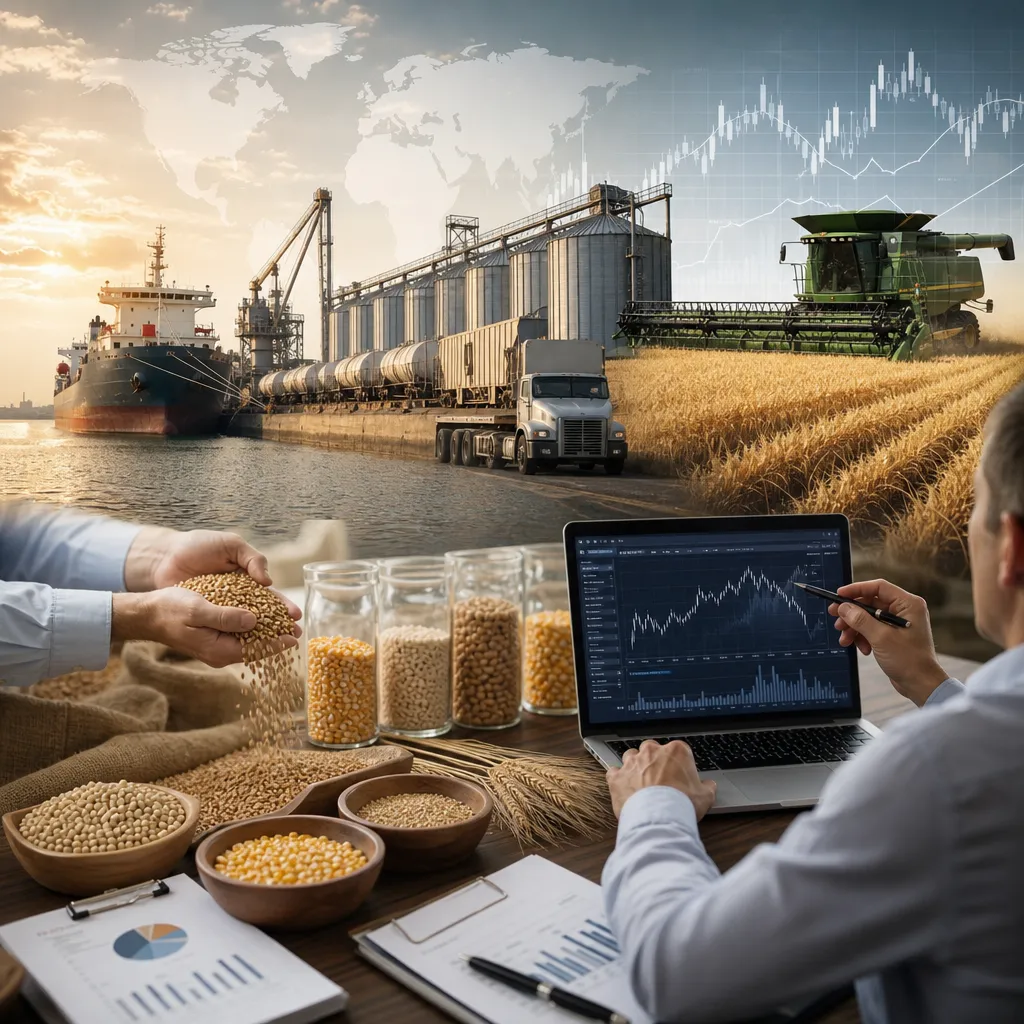
Grain trading strategies work best when they connect three markets at once: the exchange market for futures and options, the local cash market where physical grain is bought and sold, and the information market where weather, crop reports, freight, and export demand shape prices. A good strategy is not just about predicting whether wheat, corn, or soybeans will rise or fall; it is about knowing which price matters, where to trade it, and how to control risk. Farmers, elevators, feed mills, processors, exporters, and speculators all use different tools for different goals. The practical advantage comes from matching the tool to the exposure: futures for price hedging, options for flexible insurance, and cash contracts for actual grain movement.
What grain trading strategies actually involve
In practice, grain trading strategies fall into three broad groups. The first is physical grain marketing, where a farmer, merchant, or end user buys or sells real grain through an elevator, cooperative, processor, mill, feed company, or exporter. The second is exchange-traded futures and options, usually used for hedging or speculation through a regulated broker account. The third is spread and basis trading, where the trader focuses on the relationship between futures months, locations, or qualities rather than outright price direction.
The most important distinction is that an exchange quote is not automatically the same as the price paid at a local delivery point. A Chicago futures price for corn or wheat is a benchmark for a standardized contract. The local cash bid at an elevator or processor reflects that futures benchmark adjusted by basis, freight, quality, storage pressure, and regional supply-demand conditions.
| Market type | How it works | Where it is used | Main users |
|---|---|---|---|
| Cash or physical market | Real grain is bought or sold for delivery to a specific location under agreed quality and payment terms | Elevators, cooperatives, processors, mills, feed plants, export terminals, merchants | Farmers, grain companies, processors, importers, exporters |
| Futures market | Standardized contracts trade on an exchange and are marked to market daily | Regulated commodity exchanges through futures brokers and trading platforms | Hedgers, merchants, funds, proprietary traders, analysts |
| Options market | Rights on futures contracts used for price protection or structured strategies | Same exchanges and broker channels as futures | Farmers, commercial hedgers, risk managers, speculators |
| Basis or spread market | Focus is on the difference between futures months or between futures and local cash prices | Commercial grain trade, elevators, merchant desks, hedging accounts | Elevators, merchandisers, exporters, experienced traders |
Core strategies used in grain markets
The most practical grain strategies are usually simple in structure even if they require disciplined execution.
Directional futures trading
This is the most visible strategy. A trader buys futures if expecting prices to rise or sells futures if expecting prices to fall. It is done on regulated exchanges through a futures broker. In the grain sector, the benchmark contracts are commonly found on CME Group for crops such as corn, soybeans, soymeal, soyoil, wheat, oats, canola-linked products through related markets, and other agricultural benchmarks depending on region.
This strategy is liquid and transparent, but it carries leverage and margin risk. A small price move in the underlying grain can create a large gain or loss in the trading account. It is a financial trade, not a purchase of grain in a warehouse unless the contract is held into a delivery process and the trader is equipped for that process.
Hedging physical grain
Hedging is the most important commercial strategy. A farmer with corn in the field may sell futures to protect against a price drop before harvest. A feed mill that will need wheat later may buy futures to protect against a price rise. A soybean crusher or exporter may hedge inventories and forward sales by taking offsetting positions in futures.
The hedge does not remove all risk. It mainly reduces exposure to the futures component of price. The trader still faces basis risk, meaning the local cash price may not move exactly with the exchange contract. For example, local harvest pressure, freight bottlenecks, port congestion, or quality discounts can widen basis even if futures are stable.
Options for flexible protection
Options are widely used when the participant wants protection but does not want a full futures obligation. A farmer may buy put options to establish a minimum futures price floor while keeping upside open if the market rallies. A grain buyer may use call options as protection against rising prices.
Options involve a premium paid upfront. They can reduce margin stress compared with a naked futures position, but they still require understanding time decay, strike selection, and volatility. They are accessed through the same type of futures brokerage infrastructure used for futures.
Basis trading
Basis trading is especially important in physical grain handling. An elevator may buy grain from farmers at a local cash bid and hedge futures separately, with profit depending on storage, freight, carry, and basis movement. This is less about forecasting headline prices and more about understanding local supply, transportation, and demand from processors or exporters.
Carry and storage strategies
When futures prices for later delivery months are higher than nearby months, the market may offer a carry. Merchandisers and farmers with storage may hold grain, hedge it, and aim to earn storage returns if futures carry and local basis improvement justify the cost. This only works if storage losses, financing, shrink, aeration, and interest do not outweigh the market reward.
Where grain trading happens and how to access it
Futures and options trading happens on regulated exchanges, but access normally comes through a licensed futures broker or introducing broker. The trader opens a margin account, completes identity and risk documentation, funds the account, and then trades through the broker’s platform. Exchange data may be available on the broker platform, on the exchange website, or through market-data providers.
Physical grain trading happens through commercial relationships. Farmers often sell to local elevators, cooperatives, merchants, ethanol plants, feed mills, flour mills, crushers, or export channels. Deals may be spot cash sales, forward contracts, hedge-to-arrive contracts, basis contracts, or deferred pricing arrangements, depending on local practice and provider offerings.
OTC and merchant-negotiated trade also exists, especially in international trade and large commercial flows. Grain merchants, importers, exporters, and processors may negotiate cargoes directly under agreed quality, origin, shipment period, vessel terms, and payment terms. Those are not the same as small exchange-traded positions and often involve inspection certificates, trade finance, and Incoterms.
How to build a practical grain trading strategy
A workable strategy begins with defining the exposure. Are you trying to market harvested grain, protect future input costs, trade price volatility, or profit from spreads? The answer determines the instrument.
- Identify the grain and exposure. Corn, wheat, soybeans, rice, barley, canola, and sorghum each have different contract benchmarks, quality issues, and logistics patterns.
- Choose the relevant market. Use local bids for physical sales decisions, futures for benchmark pricing and hedging, and options when flexibility matters.
- Track basis and delivery point. The same grain may have different value at a country elevator, processor, rail terminal, or export port.
- Know the contract month. The right futures month should match the timing of harvest, storage, or expected purchase.
- Set risk limits. Decide maximum account drawdown, margin tolerance, and an exit plan before entering a trade.
- Monitor reports and logistics. Weather, export inspections, crop ratings, vessel lineups, and rail conditions can all move grain values.
- Review results by basis and execution. Good strategy can still fail if execution, freight, storage, or quality discounts are ignored.
For farmers and commercial handlers, one of the biggest mistakes is treating a futures hedge as if it guarantees a final cash price. It does not. The final net result depends on basis, grade, moisture, dockage, freight, and local demand.
Reports, data, and tools that matter most
Reliable grain strategy depends on public and commercial data. The core public sources are widely used across the market.
| Source | What it provides | How traders use it |
|---|---|---|
| USDA WASDE | Global and U.S. supply, demand, production, exports, imports, and ending stocks | Benchmark for balance sheet changes and medium-term pricing direction |
| USDA Crop Progress | Planting, emergence, condition, and harvest progress in season | Tracks weather impact and crop development risk |
| USDA Export Sales and Export Inspections | Sales commitments and shipment pace | Measures demand strength and competitiveness in world trade |
| CFTC Commitments of Traders | Positioning by trader category in futures and options | Shows fund length, commercial hedging patterns, and crowding risk |
| CME Group contract data | Contract specifications, months, settlement information, and market data | Used to match the proper futures instrument to the grain exposure |
For international context, traders also use FAO market information, national agriculture ministries, official statistics agencies, customs databases, and port or inspection data where available. A physical grain trader may also rely on local elevator bid sheets, processor bid boards, merchant emails, broker indications, warehouse stocks, and freight quotations from truck, rail, or vessel markets.
Software needs vary by user. A retail futures trader may only need a broker platform and charting package. A grain elevator or merchant usually needs merchandising software, inventory control, contract management, hedge accounting, scale integration, and logistics scheduling. Analysts often use spreadsheet models, exchange data feeds, weather tools, and API-based datasets from approved data vendors.
Storage, logistics, and quality as trading variables
Many grain strategies fail because they focus only on price charts and ignore movement and condition of grain. In physical markets, grain value depends on where it is, when it can move, and whether it meets contract grade.
Storage can create opportunity when basis improves after harvest or when futures carry pays for holding grain. But storage also adds cost and operational risk: shrink, moisture migration, spoilage, insects, fumigation, insurance, financing, and lost flexibility if logistics tighten.
Logistics matter because grain is bulky and freight-sensitive. Truck availability, rail performance, barge conditions, and export terminal capacity can all change local cash values independent of futures. A river disruption or port congestion can weaken inland basis even if world wheat or corn futures rise.
Quality matters because not all grain is interchangeable. Protein in wheat, oil content in oilseeds, test weight, moisture, damage, foreign material, mycotoxins, and grade certifications may all affect value. In international trade, inspection and phytosanitary compliance are often essential before shipment and payment.
Major risks and common mistakes
The first risk is confusing speculation with hedging. A hedge is tied to a real commercial exposure. A speculative futures trade is a separate risk decision and should be treated as such.
The second risk is underestimating leverage. Futures are efficient but unforgiving. Margin calls can force liquidation at the wrong time even if the long-term market view later proves right.
The third risk is ignoring basis. This is especially costly for farmers and grain handlers. A strong futures rally may not fully improve the local bid if basis weakens because storage is full or freight is expensive.
The fourth risk is neglecting contract details. Futures contracts have specified delivery months, grades, tick sizes, and settlement rules. Physical contracts have delivery windows, tolerance clauses, quality standards, payment timing, and freight responsibilities. Always confirm those before trading.
The fifth risk is relying on a single data point. No serious grain strategy should depend only on a chart pattern or one USDA report. Grain prices respond to weather, acreage, yield, stocks, exports, currency shifts, energy prices, and policy changes at the same time.
FAQ
Where can I check grain prices?
Check futures benchmark prices on exchange-related market data, broker platforms, or data vendors. Check local cash prices through elevator bid sheets, cooperative websites, processors, merchant bid boards, or regional agricultural market reporting services. The cash price is what matters for physical delivery, while the futures price is the benchmark used for hedging and price discovery.
Where do farmers usually sell physical grain?
Most physical grain is sold to local elevators, cooperatives, processors such as mills or crushers, feed manufacturers, ethanol plants where relevant, or grain merchants connected to domestic or export channels. The transaction usually specifies quantity, grade, moisture, delivery window, delivery point, and payment terms.
Where can I trade grain futures and options?
Grain futures and options are normally accessed through a regulated futures broker that connects to a commodity exchange. You need a brokerage account approved for futures trading, and positions are subject to margin requirements and exchange rules.
What is the difference between futures price and cash price?
The futures price is the exchange-traded benchmark for a standardized contract. The cash price is the actual local value for grain delivered at a specific place and time. Cash price equals the relevant futures benchmark plus or minus basis, with basis reflecting local supply, demand, freight, and quality factors.
How do grain buyers and processors hedge?
They often buy futures to protect against rising input costs, sell futures against inventory, or use options to create more flexible protection. The choice depends on whether they are exposed to buying risk, selling risk, or margin sensitivity.
Which public reports are most important for grain trading strategies?
USDA WASDE is central for supply and demand. USDA Crop Progress helps monitor growing-season conditions. USDA Export Sales and Export Inspections show demand pace. CFTC Commitments of Traders helps track market positioning. Exchange contract specifications are also essential before placing any futures or options trade.
Can I use futures to take delivery of real grain?
In theory some grain futures include delivery mechanisms, but most participants offset their positions before delivery. Buying physical grain in practice is usually done through merchants, elevators, cooperatives, or processors rather than by taking exchange delivery.
What is the most common mistake in grain strategy?
The most common mistake is focusing only on headline futures prices and ignoring basis, freight, storage cost, and quality. In physical grain marketing, those factors can matter as much as the exchange market itself.
Sources
- USDA Foreign Agricultural Service and World Agricultural Outlook Board, World Agricultural Supply and Demand Estimates
- CME Group, Agricultural Futures and Options Contract Specifications
- U.S. Commodity Futures Trading Commission, Commitments of Traders