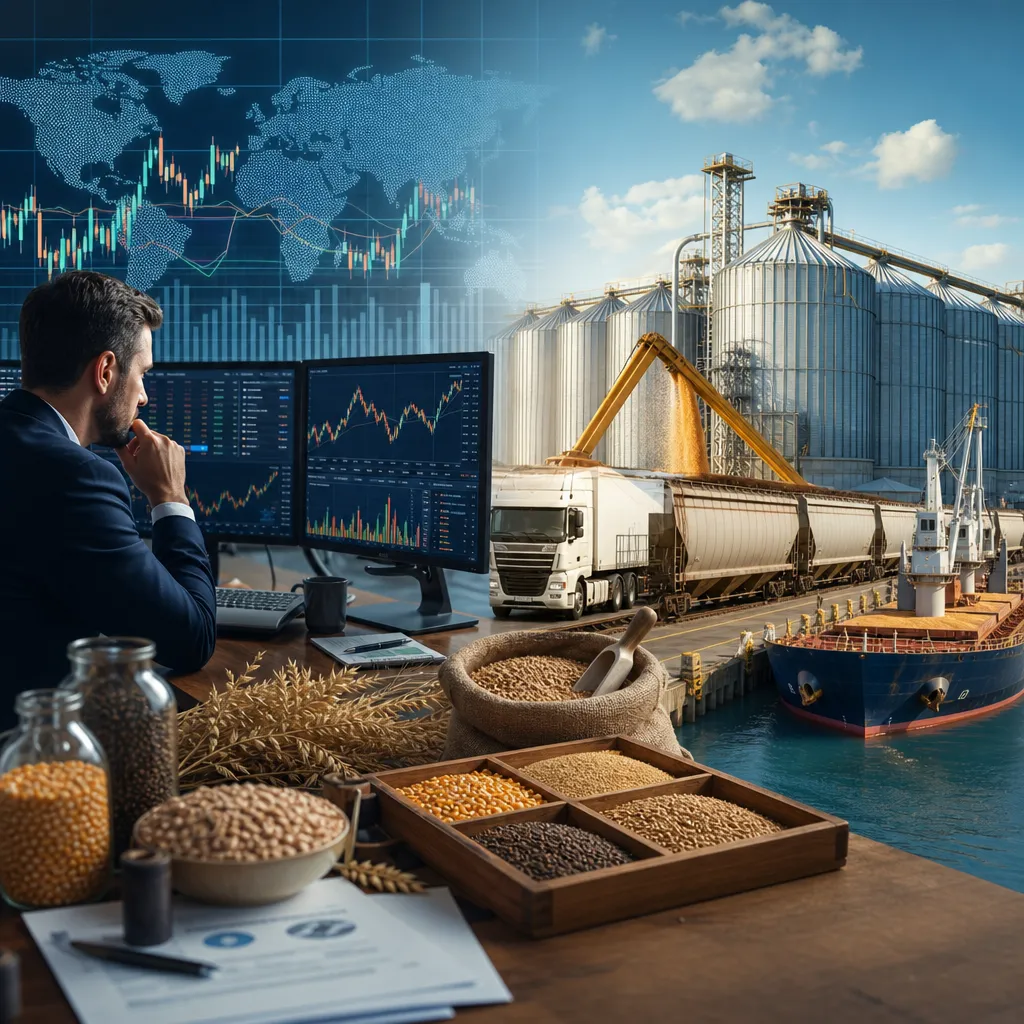
Grain futures and physical grain are connected, but they are not the same market and they do not produce the same price. Futures are standardized financial contracts traded on regulated exchanges, while physical grain is the actual commodity bought and sold through elevators, cooperatives, merchants, processors, exporters, and end users. A wheat, corn, or soybean futures quote is a benchmark, not automatically the amount a farmer receives or a buyer pays in a local market. To use either market well, you need to understand where each price is formed, how contracts work, and how basis, quality, location, freight, and timing change the final value.
In practice, futures help manage price risk and discover broad market value, while physical grain markets handle ownership transfer, grading, storage, transport, and payment. Farmers, feed mills, mills, ethanol plants, crushers, exporters, and traders often use both at the same time. A seller may price grain off a futures market but deliver the crop to a local elevator under a cash contract. A buyer may hedge grain ownership with futures while arranging rail, truck, barge, or vessel logistics in the physical market.
What grain futures are
Grain futures are exchange-traded contracts for standardized quantities and grades of grain to be delivered during a specific delivery month at approved locations under exchange rules. In the United States, major grain futures trade on CME Group exchanges, including contracts for corn, soybeans, soybean meal, soybean oil, wheat, oats, rough rice, and some related products. Other regions may use different exchanges or rely more heavily on cash trade and export benchmarks.
These contracts trade electronically through regulated futures brokers. A trader does not normally need to buy or store actual grain to trade a futures contract. Instead, the trader opens a futures account with a licensed broker, posts margin, and buys or sells contracts. Positions are marked to market daily, meaning gains and losses are credited or debited as prices change.
Most futures positions are closed before delivery. That is why futures trading should not be confused with buying trucks of wheat or loading a vessel of corn. The futures market is mainly used for hedging and speculation, even though the contract is linked to a deliverable commodity.
What physical grain is
Physical grain is the real commodity moving through the supply chain. It exists on farms, in country elevators, inland terminals, mills, crushing plants, feed plants, export houses, port terminals, and warehouses. Physical transactions involve ownership transfer, quality specifications, delivery terms, freight, timing, storage, and settlement.
A farmer selling corn to a cooperative, a flour mill buying wheat from a merchant, or an exporter accumulating soybeans for shipment is operating in the physical market. Transactions may be negotiated directly or through an intermediary such as a grain broker, merchant, or elevator. The contract may be a spot cash sale, forward contract, basis contract, minimum-price structure, storage agreement, or export sale under commercial trade terms.
Physical grain is not perfectly interchangeable. Protein, moisture, test weight, damage, foreign material, mycotoxins, variety, and origin can all affect price and usability. That is why local bids can differ sharply from exchange values even when futures are stable.
Futures vs physical grain: the essential differences
| Feature | Grain Futures | Physical Grain |
|---|---|---|
| What it is | Standardized exchange contract | Actual grain bought, sold, stored, and moved |
| Where it trades | Regulated futures exchange through a broker | Elevators, cooperatives, merchants, processors, exporters, private contracts |
| Price basis | Exchange quote for a contract month | Cash bid or negotiated value adjusted for basis, quality, and freight |
| Main use | Hedging and speculation | Commercial ownership and supply chain execution |
| Key risks | Leverage, margin calls, contract timing, volatility | Quality loss, storage cost, freight, counterparty risk, basis movement |
The most important practical distinction is that futures create a reference price, while physical grain creates a delivered price. A futures market may be rising while a local cash market weakens because elevators are full, river logistics are disrupted, export demand is poor, or harvest pressure is high. The reverse can also happen when nearby physical supply becomes tight and basis strengthens.
How prices are formed and where to check them
Futures prices are quoted on exchange and broker platforms by contract month and in the standard unit used by that market. For major U.S. grain contracts, readers normally check CME Group market data, broker trading platforms, financial terminals, agricultural market services, and farm marketing software that incorporates exchange data. Price vendors may also display delayed or end-of-day futures values.
Physical grain prices are usually checked through local buyers, not through the exchange alone. Farmers and commercial grain owners commonly monitor:
- Country elevators and cooperatives
- Regional grain merchants
- Processors such as mills, crushers, ethanol plants, and feed manufacturers
- Export elevator bids where accessible
- Government or regional agricultural market reporting services where available
Local cash bids are often published on elevator websites, mobile apps, customer portals, phone systems, and agricultural market pages. A cash bid is commonly expressed as futures plus or minus a basis adjustment, or as a flat cash price. Basis reflects local supply and demand, transport cost, storage pressure, quality, and the buyer’s operating margin.
A farmer should not use a Chicago wheat futures quote as if it were the exact farmgate price of wheat in another state or country. The more distant the delivery point and the more different the quality specification, the less direct the comparison becomes.
How futures are used for hedging
Hedging means using futures or options to reduce price risk on physical grain. A farmer with unpriced corn in the field may sell corn futures to protect against a futures price decline before harvest. A feed mill expecting to buy corn later may buy corn futures to reduce the risk of higher prices. A crusher that owns soybeans may hedge the inventory by selling soybean futures while managing crush margins with meal and oil markets.
The process normally works like this:
- Open a futures trading account with a regulated broker.
- Choose the relevant contract month that best matches the physical marketing window.
- Sell or buy futures as a hedge against physical exposure.
- Monitor margin requirements and market movement.
- Later offset the futures position when the physical grain is sold or purchased.
- Evaluate the final net result, including changes in basis.
Hedging does not remove all risk. It mainly offsets futures price movement. Basis can still widen or narrow unexpectedly. There is also execution risk if the hedge month does not match the physical timing well, and liquidity may differ across contracts and crop years. Options may be used instead of straight futures when a participant wants downside or upside protection with more flexibility, but options introduce premium cost and strategy complexity.
How physical grain transactions work in practice
A physical grain sale usually starts with a seller contacting a buyer or checking posted bids. The buyer may be a local elevator, cooperative, merchant, processor, warehouse operator, or exporter. The parties agree a quantity, delivery period, location, quality terms, pricing formula, and payment arrangement. For cross-border or seaborne trade, Incoterms and shipping terms become critical.
Common practical points in a physical grain deal include:
- Delivery point: on-farm pickup, elevator delivery, processor intake, rail terminal, river terminal, or port
- Quality and grade: official grade factors and buyer-specific limits
- Basis or flat price: whether the price floats against futures or is fixed
- Freight: who pays truck, rail, barge, or vessel cost
- Storage: whether grain is delivered immediately or stored under agreement
- Weights and inspection: whose scale, whose grade determination, and whether third-party inspection applies
- Payment terms: timing of payment, discount schedule, and any advance or settlement conditions
Commercial buyers often source grain through established supplier networks or merchants rather than through a futures broker. Physical grain is usually bought from firms that can receive, grade, finance, and move the commodity. That is why a trading platform for futures is not a substitute for a grain elevator or exporter.
Who uses each market and why
| Participant | How they use futures | How they use physical grain market |
|---|---|---|
| Farmers | Hedge production or use options for price protection | Sell to elevators, cooperatives, processors, or merchants |
| Elevators and cooperatives | Hedge inventory and forward purchases | Buy, store, blend, and resell grain |
| Processors | Manage input cost risk and product margins | Buy grain for milling, crushing, feed, or fuel production |
| Exporters and merchants | Hedge origin and destination exposure | Accumulate grain and execute domestic or export logistics |
| Speculators and funds | Take price views without owning grain | Usually not active in handling grain physically |
This distinction matters because each participant sees a different price. A fund may focus on the futures curve and macro drivers. A feed mill cares about nearby physical coverage and delivered cost. A farmer may care most about harvest basis, drying charges, and storage economics.
Reports, data, and tools that connect both markets
Good grain analysis usually combines exchange data with official crop, demand, and positioning reports. Key public sources include:
- CME Group: futures contract specifications, settlement data, delivery rules, and market information for exchange-traded grain contracts
- USDA WASDE: monthly global and U.S. supply-and-demand balance sheets used widely for corn, soybeans, wheat, and related markets
- USDA Crop Progress: weekly planting, emergence, condition, and harvest updates that influence yield expectations and short-term market sentiment
- USDA Export Sales: weekly export commitments and shipments that help track demand
- CFTC Commitments of Traders: positioning data showing how different trader categories are set in futures and options
- FAO and national agriculture agencies: broader international production, food balance, and policy context
Commercial users may also rely on subscription market-data services, risk platforms, and farm management software. These tools can combine futures prices, local bids, hedge positions, grain inventory, and contract status. The important practical point is to know whether a screen shows exchange futures, delayed data, indicative bids, or firm physical buying interest.
Storage, logistics, and quality: why physical grain can diverge from futures
Physical grain value depends heavily on whether the grain can be stored safely and moved economically. Storage adds drying, aeration, shrink, handling, insurance, working capital, and quality risk. Logistics add truck availability, rail performance, barge conditions, port congestion, and vessel timing. These factors can strengthen or weaken local basis independently of futures.
Quality matters just as much. Grain that fails buyer limits for moisture, damage, vomitoxin, protein, oil content, or foreign material may face discounts or rejection. Futures contracts define broad deliverable standards, but many real buyers have narrower requirements. A mill may pay more for protein in wheat. A crusher may care about oil yield in soybeans. A maltster may use barley specifications very different from feed barley trade.
As a result, owning physical grain involves operational skill, not just market opinion. A correct futures view cannot fully compensate for poor storage, weak logistics, or quality deterioration.
Practical risks, costs, and common mistakes
The biggest mistake is assuming futures and cash move one-for-one at all times. They are linked, but basis can change enough to alter the outcome materially. Another common mistake is using futures without understanding margin. A hedge can be economically sound and still create cash-flow stress if the market moves against the futures position before the physical grain is sold.
Other practical risks include:
- Using the wrong contract month for the hedge
- Ignoring local basis history and seasonal patterns
- Not reading quality discount schedules before delivery
- Underestimating storage and financing cost
- Relying on delayed market data for fast decisions
- Confusing a negotiable indication with a firm physical bid
- Taking counterparty risk lightly in private cash contracts
For most commercial users, the best approach is to treat futures, basis, storage, and logistics as one combined margin decision rather than separate issues.
Where can I check grain futures prices?
Grain futures prices are normally checked through CME Group market information, regulated broker platforms, financial market terminals, and agricultural data services. Make sure you know whether the quote is live, delayed, settlement-only, or from a specific contract month.
Where can I find real local grain cash bids?
Local cash bids are usually found through country elevators, cooperatives, grain merchants, processors, and sometimes government or regional market reporting systems. Elevator websites and customer portals are common sources, but bids may still depend on delivery period and quality.
Can I buy physical grain through a futures broker?
Usually no, at least not in the same practical sense as sourcing truckloads or vessel cargoes from the commercial trade. A futures broker provides access to exchange-traded contracts, while physical grain is normally bought through merchants, elevators, processors, exporters, or brokers active in commodity logistics and handling.
Does a futures contract mean I must take delivery of grain?
Usually not. Most futures traders offset the contract before delivery. Delivery is possible under exchange rules, but commercial participants use it selectively and many financial traders avoid it entirely.
Why is my local wheat or corn price different from the exchange price?
The difference comes from basis, freight, storage, local supply and demand, quality, and buyer competition. Exchange futures provide a benchmark, but the physical bid reflects the reality of your specific region and delivery point.
What reports matter most for grain futures and cash markets?
USDA WASDE, USDA Crop Progress, USDA Export Sales, and CFTC Commitments of Traders are among the most widely followed reports for U.S.-linked grain markets. Commercial users also watch local harvest progress, weather, freight conditions, and buyer demand in their own region.
Is hedging with futures risk-free for farmers or buyers?
No. Hedging reduces exposure to futures price changes, but basis risk, margin calls, timing mismatch, and operational issues remain. It is a risk-management tool, not a guarantee of profit.
What matters most when selling physical grain?
The key points are delivery location, basis or cash price, quality specifications, freight responsibility, storage terms, and payment conditions. In many cases, a slightly better posted price can be less attractive once transport cost, shrink, and discount schedules are considered.
Sources
- CME Group
- United States Department of Agriculture, World Agricultural Supply and Demand Estimates
- U.S. Commodity Futures Trading Commission, Commitments of Traders