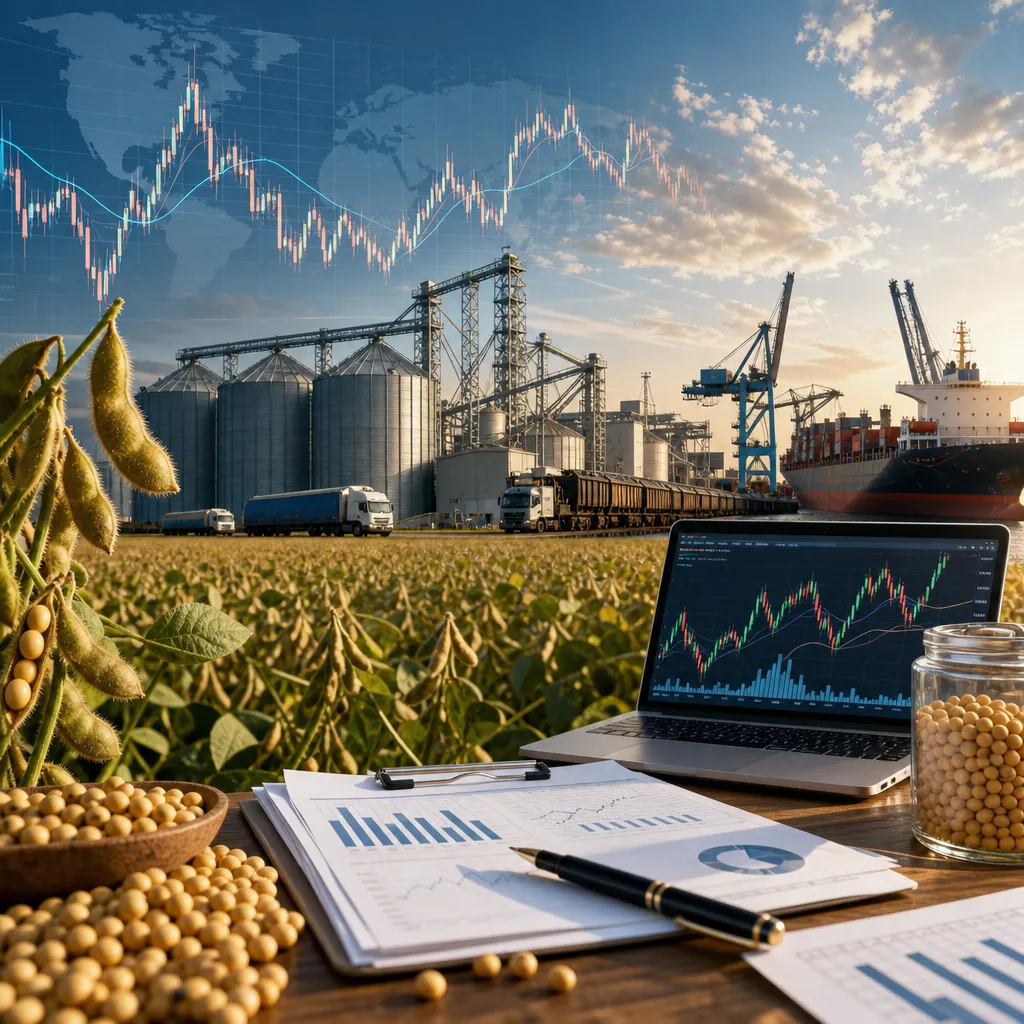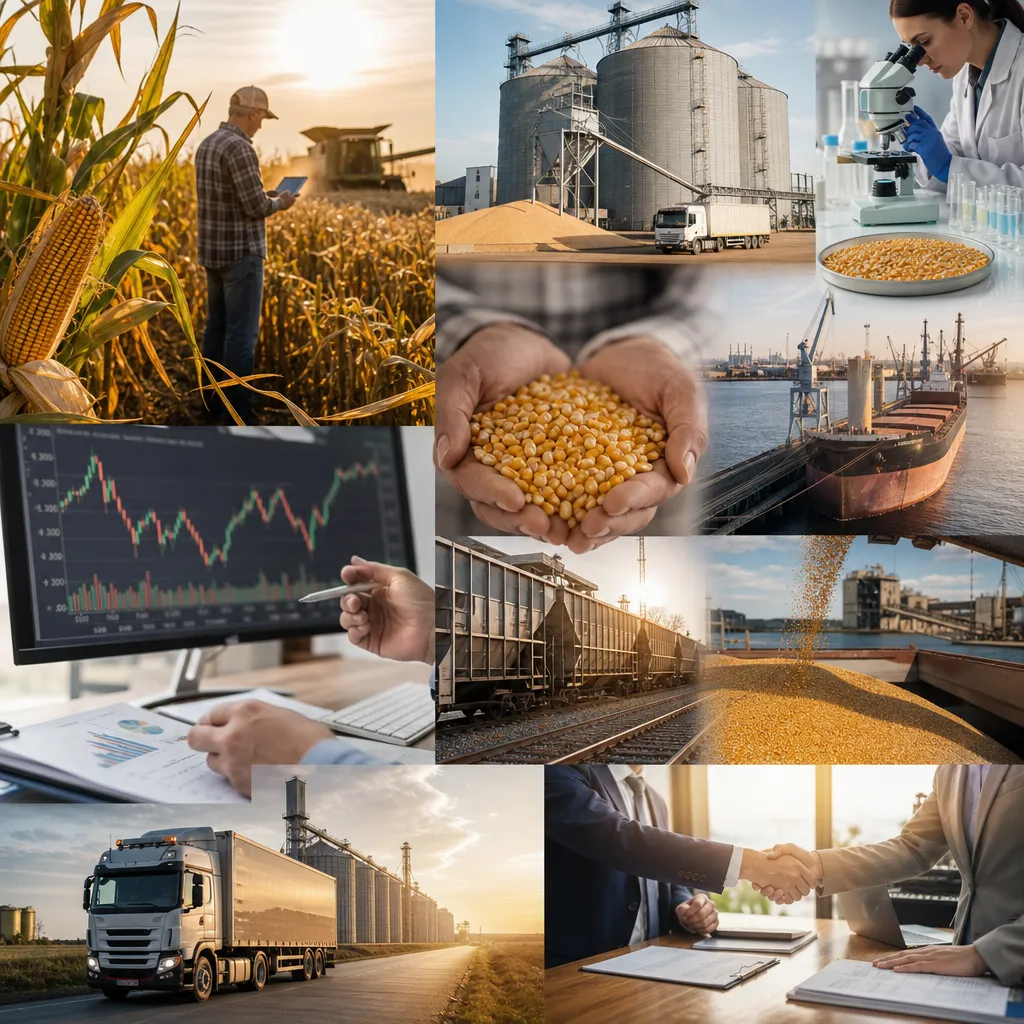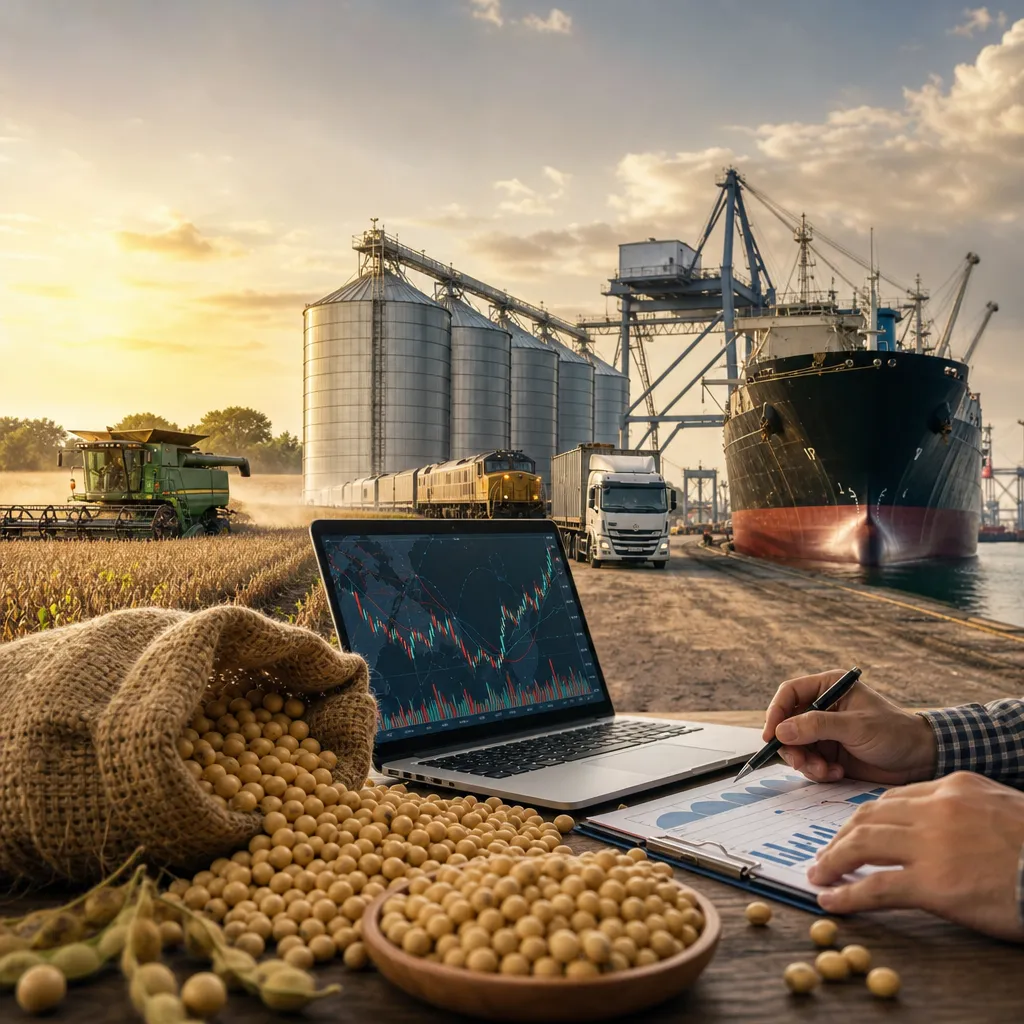
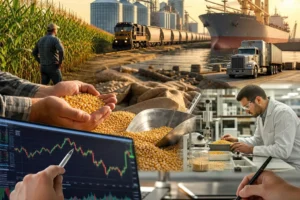

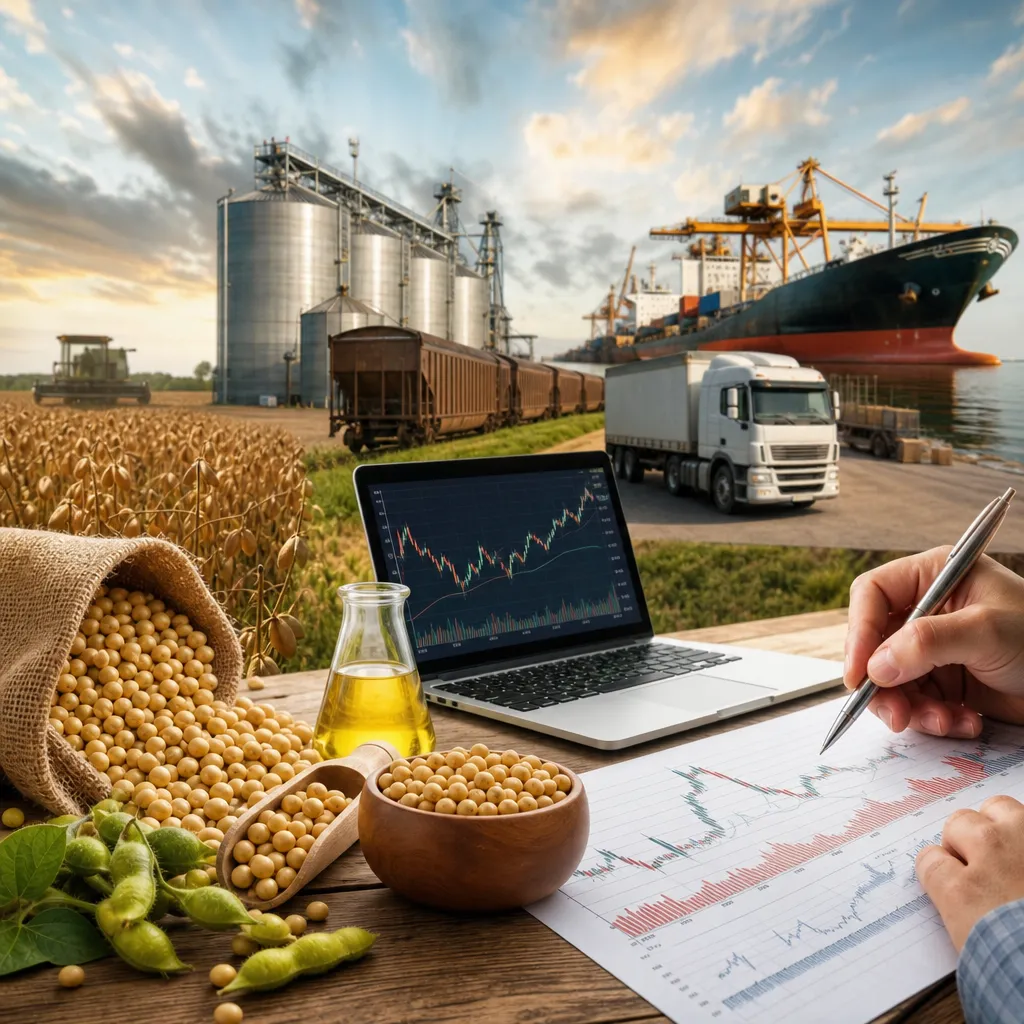
Soybean trading means dealing either in physical soybeans or in soybean-related financial contracts such as futures and options. Beginners often confuse these two markets, but they work differently, involve different counterparties, and serve different purposes. In practice, physical soybeans are bought and sold through elevators, cooperatives, processors, exporters, and merchants, while futures and options are traded through regulated exchanges and brokerage accounts. The most useful starting point is to learn how soybean prices are formed, where those prices are quoted, and how local cash bids differ from exchange prices.
Soybeans are one of the world’s most actively traded agricultural commodities because they feed several industries at once: animal feed, vegetable oil, food processing, and biofuels. That makes the market highly sensitive to weather, acreage, yields, export demand, and crushing margins. For a beginner, successful soybean trading starts with understanding the relationship between futures, basis, logistics, quality, and the crop reports that move the market.
What soybean trading includes
There are two broad ways to participate in soybean trading.
- Physical soybean trading: actual soybeans are bought and sold for delivery to an elevator, processor, crushing plant, feed mill, river terminal, rail terminal, or export port.
- Futures and options trading: standardized contracts are traded on an exchange, usually for price exposure, hedging, or speculation rather than for taking actual delivery of beans.
Physical trading is common for farmers, grain merchants, processors, feed manufacturers, exporters, and importers. Financial trading is common for hedgers, commodity funds, proprietary traders, commercial firms, and individual traders with a futures brokerage account.
The benchmark futures market for soybeans is the CME Group market, specifically Chicago Board of Trade soybean futures. These futures are widely used as a global reference price, but they are not the same as the local cash price a farmer receives at a country elevator or processor.
| Market type | What is traded | Where it happens | Typical users |
|---|---|---|---|
| Physical cash market | Actual soybeans | Elevators, cooperatives, processors, merchants, export channels | Farmers, buyers, crushers, exporters, feed companies |
| Futures market | Standardized soybean contracts | Regulated exchange through futures brokers | Hedgers, traders, funds, commercial firms |
| Options market | Rights on soybean futures | Regulated exchange through futures brokers | Hedgers seeking flexibility, speculators limiting risk |
| OTC cash contracts | Privately negotiated delivery agreements | Directly with merchants, processors, or counterparties | Commercial participants |
How soybean prices work
Beginners should separate futures price from cash price.
The futures price is quoted on the exchange and reflects the market’s value for a standardized soybean contract for a specific delivery month. This is the price most financial news services, broker platforms, and market apps display.
The cash price, also called the local bid, is what a local buyer will actually pay for physical soybeans at a specific location and quality specification. It may differ from futures because of:
- basis, meaning the local premium or discount to futures,
- freight and access to transportation,
- storage situation and harvest pressure,
- local processor demand,
- export terminal demand,
- quality, moisture, foreign material, and damage,
- regional oversupply or shortage.
In practical terms, a farmer usually checks local soybean bids through nearby grain elevators, cooperatives, processors, or grain merchants. Many of these companies publish daily bids online or through mobile apps. In some regions, government or exchange-adjacent market reporting services also publish cash market summaries, but actual tradable bids still come from the local buyer.
A trader looking at futures prices will usually check exchange data through a broker platform, CME Group contract pages, or commercial market-data services. That tells you the benchmark market, not the exact farmgate value.
Where soybean trading takes place
Physical market
Physical soybean trading usually happens through a chain of commercial participants:
- Farmers sell harvested soybeans.
- Country elevators and cooperatives buy, store, blend, and ship beans.
- Processors or crushers buy soybeans to produce meal and oil.
- Merchants and exporters assemble grain for domestic use or export.
- Feed mills and food processors may buy directly or through merchants.
- Warehouses and terminals hold inventory in transit.
Transactions may be spot sales, forward contracts, basis contracts, or deferred delivery arrangements. The exact form depends on the local market structure and the buyer.
Futures and options market
Futures and options trading takes place on a regulated exchange through a futures commission merchant or broker. A beginner cannot normally trade soybean futures directly with the exchange without an approved brokerage relationship. The broker provides market access, account onboarding, risk disclosures, margining, and a trading platform.
Most non-commercial traders close their futures position before delivery. Physical delivery mechanisms exist in futures markets, but beginners should not assume that buying a futures contract is the normal way to source truckloads of soybeans.
How to buy or sell physical soybeans
If your goal is real soybeans rather than financial exposure, the process is commercial and logistical.
- Identify the counterparty: seller, elevator, cooperative, merchant, processor, or broker.
- Define quantity and quality: moisture, damage, test weight, foreign material, grade, and any contract specifications.
- Agree the pricing method: flat price, futures plus/minus basis, or formula linked to a benchmark.
- Set the delivery point: farm pickup, warehouse, mill, crushing plant, rail point, river terminal, or port.
- Clarify freight: who pays transport, who arranges trucks or rail, and whether the quote is delivered or ex-farm.
- Confirm timing: prompt shipment, harvest delivery, deferred delivery, or shipment window.
- Check inspection and weighing: who determines quality, where scales are located, and how disputes are handled.
- Review payment terms: payment timing, documents required, and counterparty risk.
In export trade, soybeans may move under internationally recognized commercial terms, but those terms vary by transaction. In domestic trade, buyers often use their own purchase contracts. Beginners should read contract language carefully, especially around discounts, rejections, arbitration, and delivery windows.
How soybean futures and options work
Soybean futures are standardized contracts that represent a fixed quantity of soybeans for a specified delivery month. Because the contract is standardized, traders can enter and exit positions easily compared with custom physical contracts.
To trade futures, you normally need:
- a futures brokerage account,
- identity and financial suitability information required by the broker and jurisdiction,
- sufficient funds for margin,
- access to a trading platform and exchange market data.
Margin is not a down payment on soybeans. It is a performance bond designed to cover market risk. Futures are leveraged, meaning a relatively small amount of capital controls a much larger notional value. That can amplify gains, but also losses.
Options on soybean futures give the buyer the right, but not the obligation, to buy or sell a futures contract at a set strike price before expiry. Farmers and processors may use options when they want price protection with more flexibility than a straight futures hedge, though the option premium is a real cost.
| Instrument | Main use | How accessed | Key risk |
|---|---|---|---|
| Cash sale | Sell real soybeans | Elevator, merchant, processor, cooperative | Local price weakness, quality discounts |
| Forward contract | Lock price or delivery terms ahead of time | Direct contract with buyer | Production shortfall, contract performance risk |
| Futures | Hedge or speculate on benchmark price | Exchange via futures broker | Margin calls, leverage, basis mismatch |
| Options | Flexible price protection or directional trade | Exchange via futures broker | Premium cost, time decay, complexity |
What moves soybean markets
Soybean prices react to a wider set of factors than many beginners expect. The most important drivers usually include:
- Weather: drought, excessive rain, heat stress, and harvest delays can affect yield and quality.
- Acreage and planting pace: more or fewer planted acres shape supply expectations.
- Yield expectations: even small changes in major producing countries can move global balance sheets.
- Stocks and stocks-to-use: tighter ending stocks generally increase market sensitivity.
- Export demand: large importers, especially in feed and oilseed markets, strongly influence price direction.
- Crush demand: soybeans are processed into meal and oil, so margins in those products matter.
- Competing oils and meals: palm oil, canola/rapeseed, sunflower oil, and other feed ingredients can influence demand substitution.
- Currency moves: export competitiveness changes when major producer currencies strengthen or weaken.
- Freight and logistics: river levels, rail congestion, port lineups, and vessel availability affect basis and export flow.
- Government policy: trade restrictions, tariffs, biofuel policy, and sanitary rules can change demand patterns.
Because soybeans are a globally traded oilseed, a beginner should watch not only domestic conditions but also the major export origins and import demand centers.
Where to check soybean prices, reports, and market data
Reliable soybean analysis depends on separating official sources from delayed commentary or unverified social media content.
Useful categories of sources include:
- Exchange data: CME Group provides contract specifications and futures market information for benchmark soybean trading.
- Government crop and balance-sheet reports: USDA publishes highly watched reports on world and U.S. production, exports, stocks, crop conditions, acreage, and grain inspections.
- Positioning data: CFTC publishes Commitments of Traders, showing how major trader categories are positioned in futures and options markets.
- Local buyer bids: elevators, cooperatives, merchants, and processors often post local cash bids on their own websites or apps.
- Commercial data services: broker platforms and market-data vendors provide charts, depth, historical data, and analytics, usually with account-based access.
Important USDA publications for soybean traders often include WASDE, Crop Progress, Grain Inspections, and Export Sales. These reports are used by farmers, merchants, processors, and speculative traders to assess supply, demand, and shipment pace.
If you need local physical information, official national or regional agricultural market reporting services may help, but they usually complement rather than replace the quote from the actual buyer.
Storage, logistics, and quality in the physical soybean market
Physical soybean value depends not just on futures direction but also on whether beans can be stored safely and moved efficiently.
Common storage points include:
- on-farm bins,
- commercial warehouses,
- country elevators,
- river terminals,
- rail terminals,
- port export facilities.
Storage matters because basis can change over time. A weak harvest-time cash price may improve later, but only if storage costs, shrink, quality risk, financing costs, and logistics allow it. Soybeans are sensitive to moisture and handling damage, so poor storage management can erase any pricing gain.
Quality disputes can affect tradeability. Buyers commonly care about moisture, damaged kernels, foreign material, and condition. Processors and exporters may also have tighter standards than local feed channels. Beginners should never assume that all soybeans of the same weight are equally marketable.
Beginner risks and common mistakes
The biggest mistake is treating soybean trading as a single market. It is really a connected system of benchmark futures, local basis, logistics, quality, and counterparty relationships.
Common beginner errors include:
- assuming the exchange price equals the local cash bid,
- trading leveraged futures without understanding margin calls,
- ignoring basis risk when hedging physical grain,
- entering forward contracts without considering production risk,
- overlooking freight, drying, storage, and quality deductions,
- using unofficial data instead of verified exchange or government reports,
- holding a futures contract too close to delivery without understanding expiry and notice procedures.
A practical beginner approach is to start by monitoring one local cash market and one benchmark futures contract side by side. That helps you learn how basis behaves under harvest pressure, strong processor demand, or export movement.
FAQ
Where can beginners check soybean prices?
For benchmark prices, check soybean futures through CME Group market information or a regulated broker platform. For actual physical sale prices, check local bids from elevators, cooperatives, processors, or merchants in your area. The physical bid is the relevant price for a real soybean sale.
Can I buy physical soybeans online?
Sometimes, but usually through a commercial relationship rather than a simple retail checkout process. Physical soybean purchases are normally arranged with grain merchants, cooperatives, processors, brokers, or feed suppliers, and the transaction still requires delivery, quality, and payment terms.
Where are soybean futures traded?
Benchmark soybean futures are traded on CME Group’s Chicago Board of Trade market through approved futures brokers. Retail and commercial participants generally need a brokerage account, exchange data access, and margin funding.
What is the difference between soybean futures and a cash soybean sale?
A futures trade is a financial contract linked to a benchmark market. A cash sale is the sale of actual soybeans at a specific place, quality, and time. Futures are useful for hedging or speculation; cash sales are how physical grain changes hands.
How do farmers hedge soybeans?
Farmers may hedge by selling soybean futures, buying put options, or using a forward or basis contract with a grain buyer. The method depends on the farmer’s storage, production certainty, local basis conditions, and risk tolerance.
What reports matter most for soybean trading?
USDA reports such as WASDE, Crop Progress, Export Sales, and Grain Inspections are widely followed. CFTC Commitments of Traders helps show market positioning in futures and options. These reports are used alongside local cash market information.
Why does my local soybean bid differ from futures?
The difference is mainly basis. Basis reflects local supply and demand, freight, storage pressure, processor demand, export access, and quality adjustments. A strong local market can bid above what a weak area offers even when futures are unchanged.
Do futures traders usually take delivery of soybeans?
No. Most financial traders close or roll positions before delivery procedures become relevant. Physical soybean users may use futures for hedging, but actual grain procurement usually happens through cash contracts and commercial logistics channels.
Sources
- USDA Foreign Agricultural Service and USDA World Agricultural Supply and Demand Estimates
- CME Group
- U.S. Commodity Futures Trading Commission